Wind-Up Car with Different Numbers of Turns
Diagram 1.
 Source: https://www.publicdomainpictures.net/en/view-image.php
image=167903&picture=car-wind-up
Phenomenon:
Students use a small wind-up toy car. When they wind it only a little, the car moves slowly and travels a short distance. With more turns of the key, the car moves faster and travels farther. When wound up a lot, the car moves the fastest and can even push small objects out of the way. Students ask: Does giving the car more turns (and more speed) give it more energy?
Wind-up cars are a great way to explore how speed and energy are related. Inside the toy car is a spring that stores energy when you twist the key. The more turns you give the key, the more energy is stored in the spring. When you let go, the spring unwinds and releases that stored energy, making the car move forward.
If the car is wound just a little, only a small amount of stored energy is released. The car moves slowly and usually stops quickly. When the car is wound more times, it has more stored energy to release. This causes the car to move faster and travel farther before stopping. If the car is wound a lot, it releases even more energy and may move fast enough to push objects out of its way.
Scientists study patterns like these by measuring how speed and energy change together. Students can test the car with different numbers of turns, record how fast it moves, and observe how far it travels or what objects it can move. These measurements help show that faster motion means more energy, which can cause greater changes.
Table 1.
Number of Turns | Speed (m/s) | Distance Traveled (m) | Blocks Pushed |
|---|
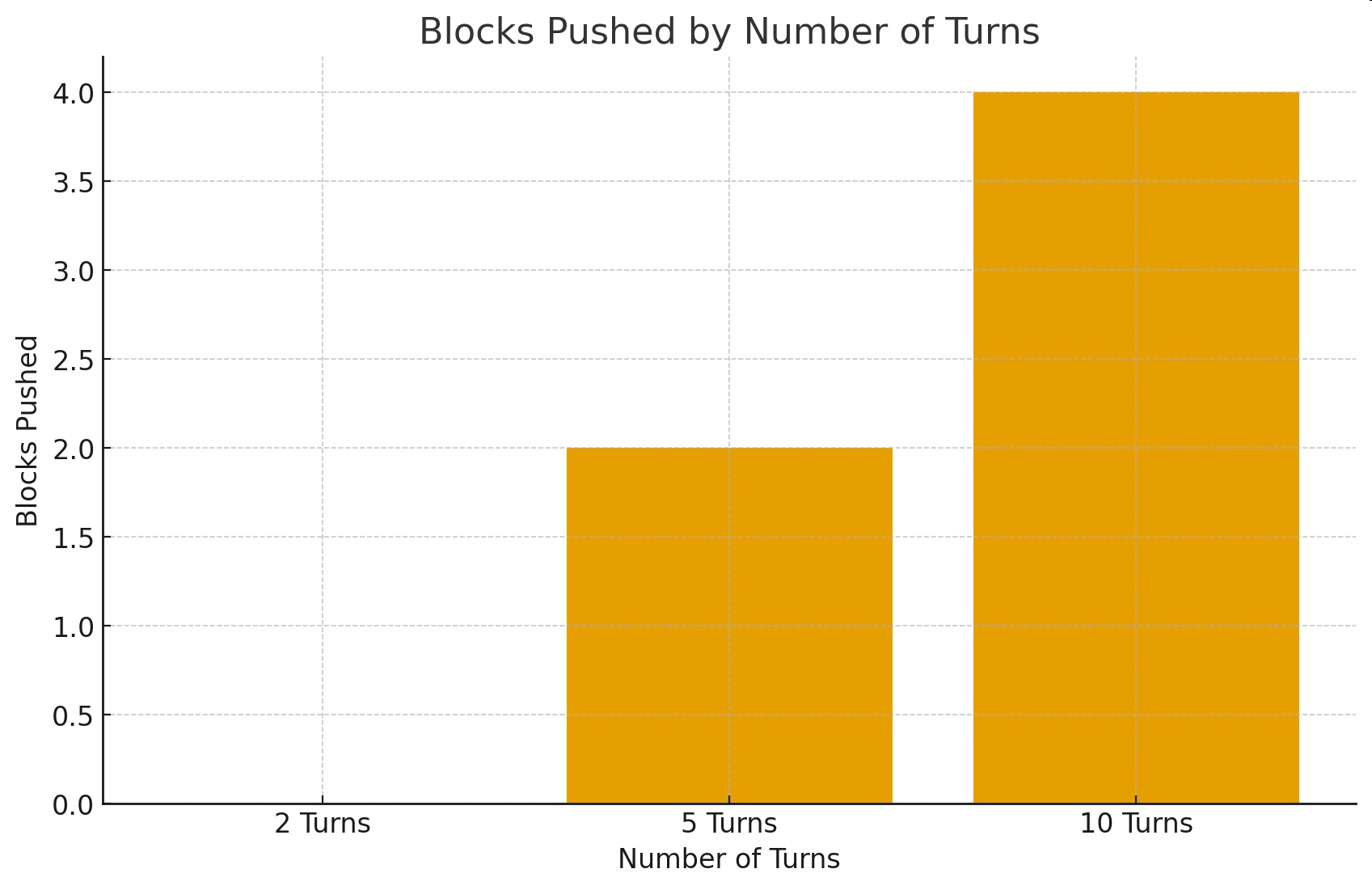
2 Turns | 1.2 | 3 | 0 |
5 Turns | 2.6 | 9 | 2 |
10 Turns | 4 | 17 | 4 |
Graph of Information - Figure 1.
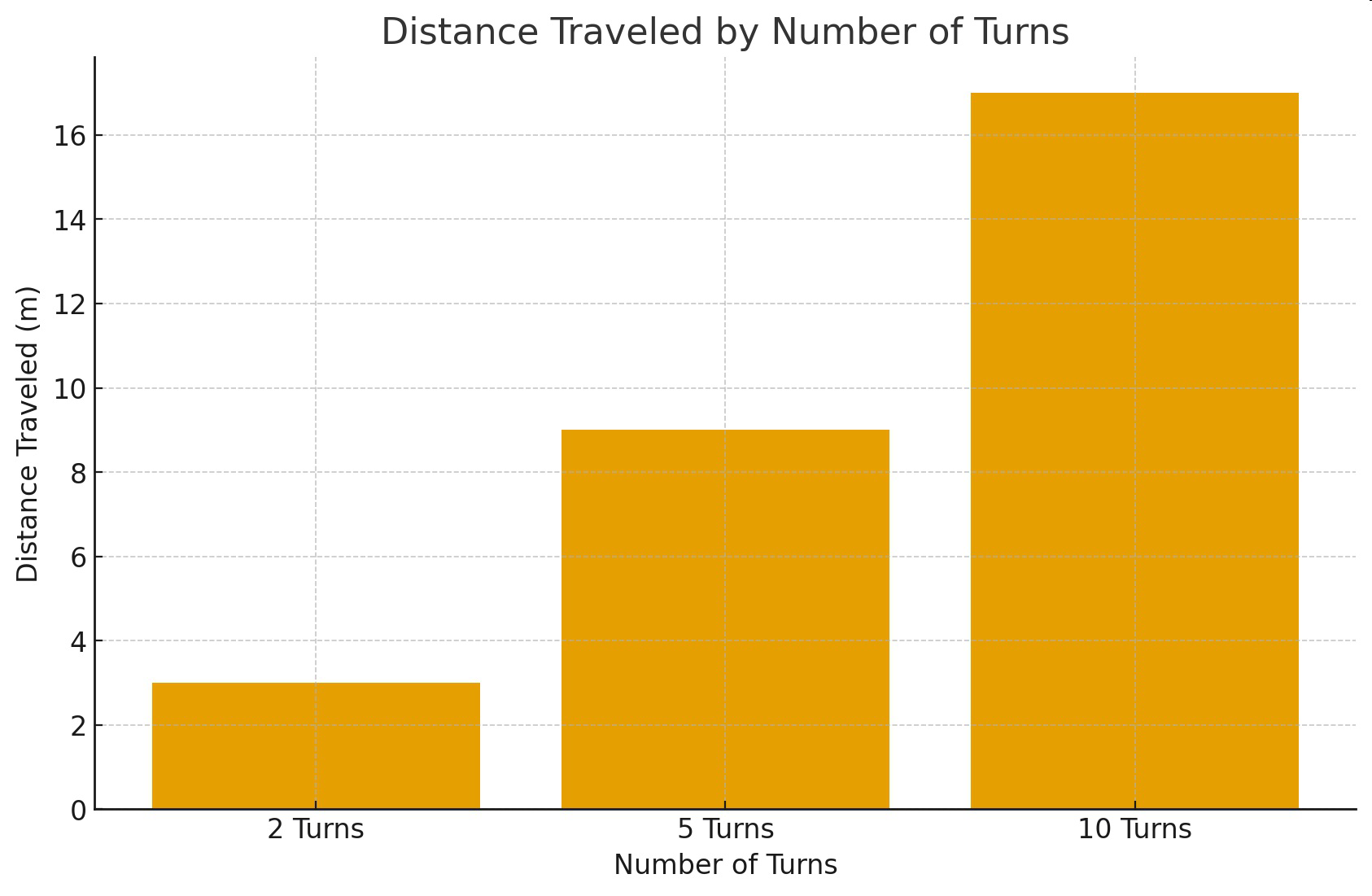
Graph of Information - Figure 2.