A Swing Moving Back and Forth
Real-Life Phenomenon
A playground swing moves forward and backward in a repeating pattern. The swing slows slightly each time, but its motion sequence remains predictable: forward – back – forward – back.
A swing is a great example of a motion pattern that repeats. When someone pushes a swing, it moves forward, slows down, and then comes back the other way. This forward-and-back motion repeats many times. Even though the swing gradually slows down because of friction and air resistance, the overall pattern stays the same for several cycles.
This repeating motion makes the swing’s position predictable. If you know where the swing is at one moment, you can predict where it will be next. For example, if the swing is at its highest point in the forward direction, the next motion will always be backward. If the swing is at the lowest point in the middle, the next moment will always send it upward.
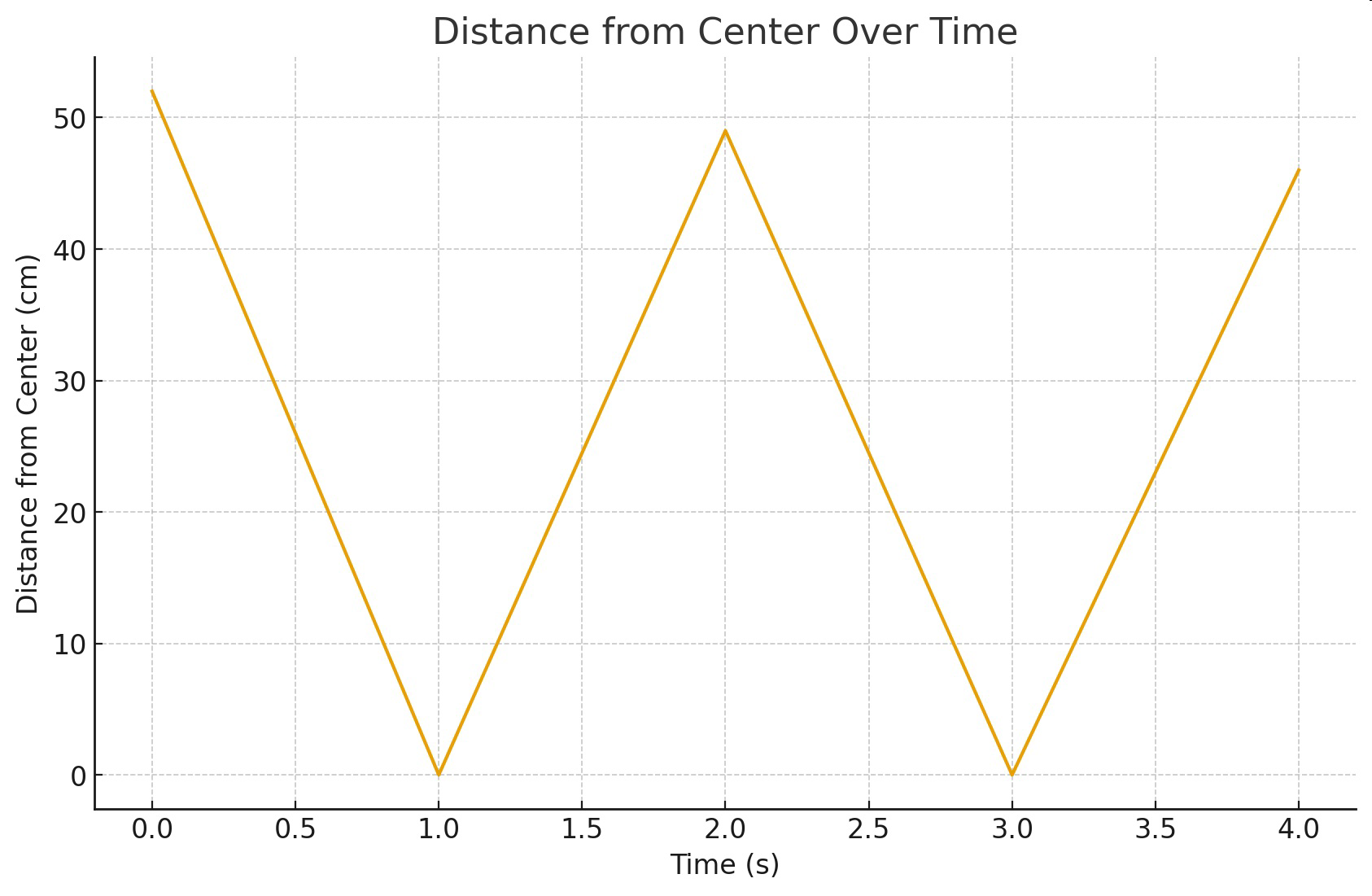
Scientists study patterns like these because repeating motion helps us predict how objects will move in the future. By measuring the swing’s position every second, we can observe how far it travels and how the pattern continues over time. Even as the swing slows down, the order of the pattern stays the same. Recognizing these patterns helps us understand and predict motion in many situations.
Diagram 1.
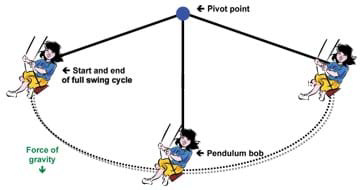
Source: https://www.teachengineering.org/activities/view/cub_pend_lesson01_activity1
Table 1.
Time (s) | Swing Angle (°) | Distance from Center (cm) |
|---|---|---|
0 | 40 | 52 |
1 | 0 | 0 |
2 | -38 | 49 |
3 | 0 | 0 |
4 | 35 | 46 |
Graph of Information - Figure 1.
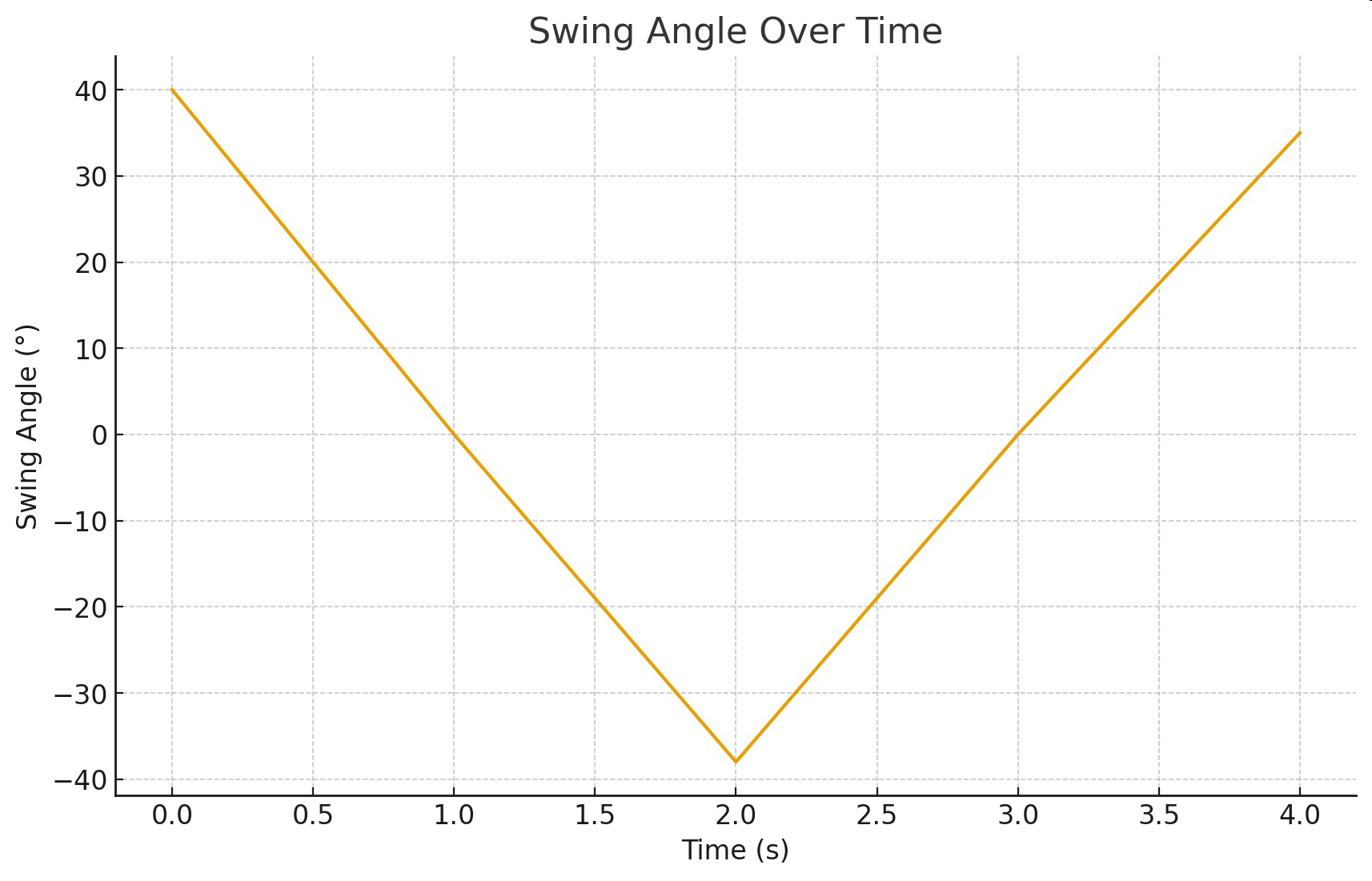
Graph of Information - Figure 2.