Designing a Magnetic Locker Key Holder & Retrieval Tool
Diagram 1.

Real-Life Design Problem
A student frequently drops their metal locker key behind their desk, between bookshelves, or into narrow spaces where fingers cannot reach. The student also often loses track of where the key is placed.
Design Problem for Students
Design a magnetic key holder and retrieval tool that helps the student:
Keep the key stored in the same place every day, and
Retrieve it from tight spaces using a magnet instead of their hands.
Constraints & Criteria
The design must:
Use magnetic forces to hold or retrieve the metal key,
Be safe and easy for a 3rd grader to use,
Retrieve the key from at least
$20\text{ cm}$ away,Prevent the key from falling off during lifting,
Store the key visibly so it’s less likely to be lost.
Students will compare different designs to decide which one works best.
Magnets are useful tools that help us move and hold metal objects without needing to touch them directly. Many keychains, tool racks, and storage systems use magnets to prevent items from getting lost. When a magnet is close to a piece of metal, like a locker key, the key becomes attracted to it. The strength of the attraction depends on how strong the magnet is and how far away the key is from the magnet.
To design a magnetic key system, we need to think about two jobs: storage and retrieval. For storage, the magnet should be strong enough to hold the key so it won’t fall off when someone bumps into the desk or opens a locker. For retrieval, the magnet must be at the end of a handle or stick long enough to reach into tight spaces where a hand cannot fit. The magnet also needs to be strong enough to pull the key toward it even when the key is slightly hidden or not directly touching the magnet.
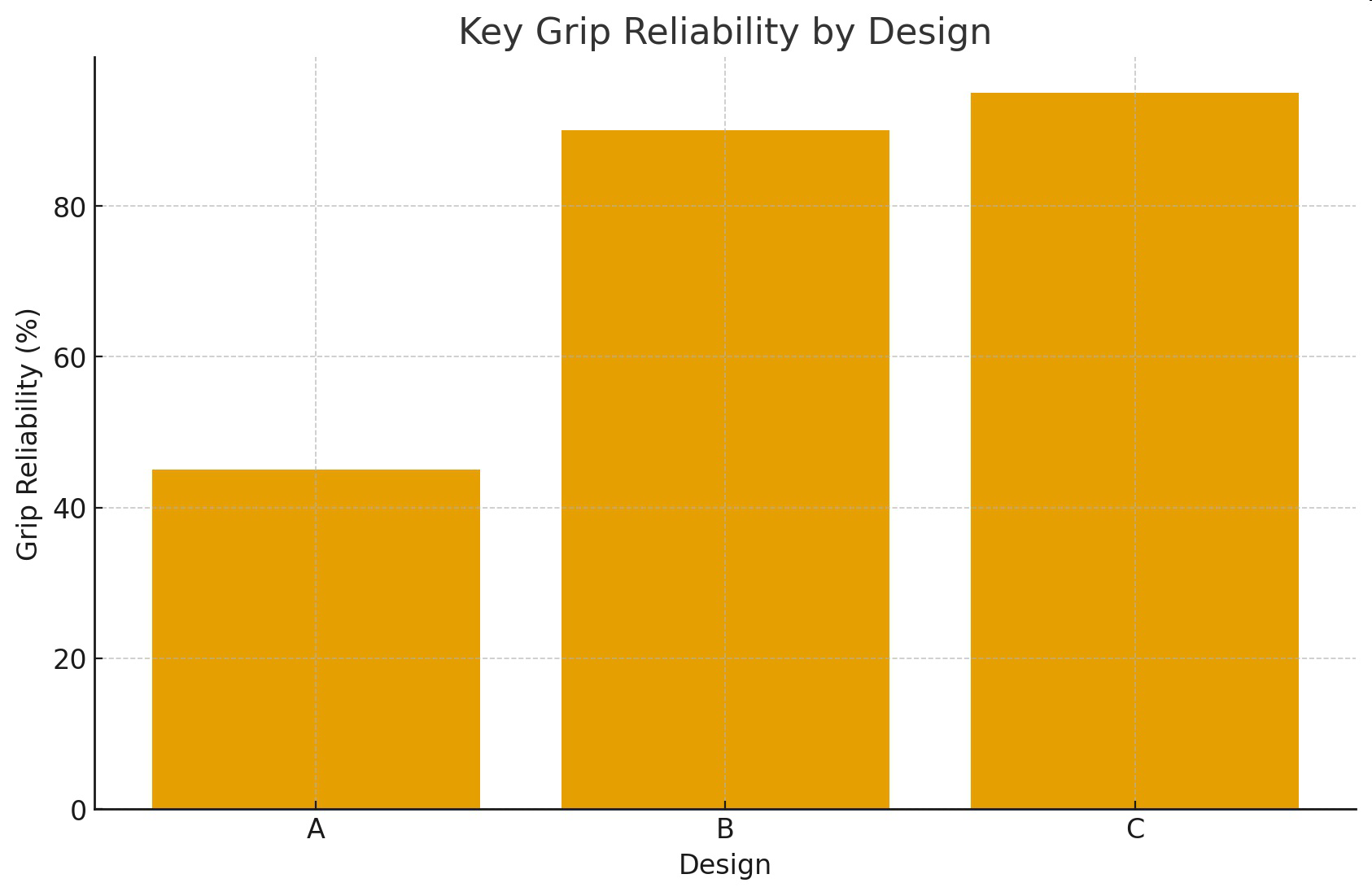
Engineers test their designs by measuring how far the magnet can reach and still pull the key, how many attempts it takes to retrieve the key, and whether the key stays attached during lifting. Good designs balance strength, length, and ease of use.
Table 1.
Design | Magnet Strength (Relative) | Retrieval Distance (cm) | Grip Reliability (%) |
|---|---|---|---|
A | Weak | 8 | 45 |
B | Medium | 21 | 90 |
C | Strong | 28 | 95 |
Graph of Information - Figure 1.
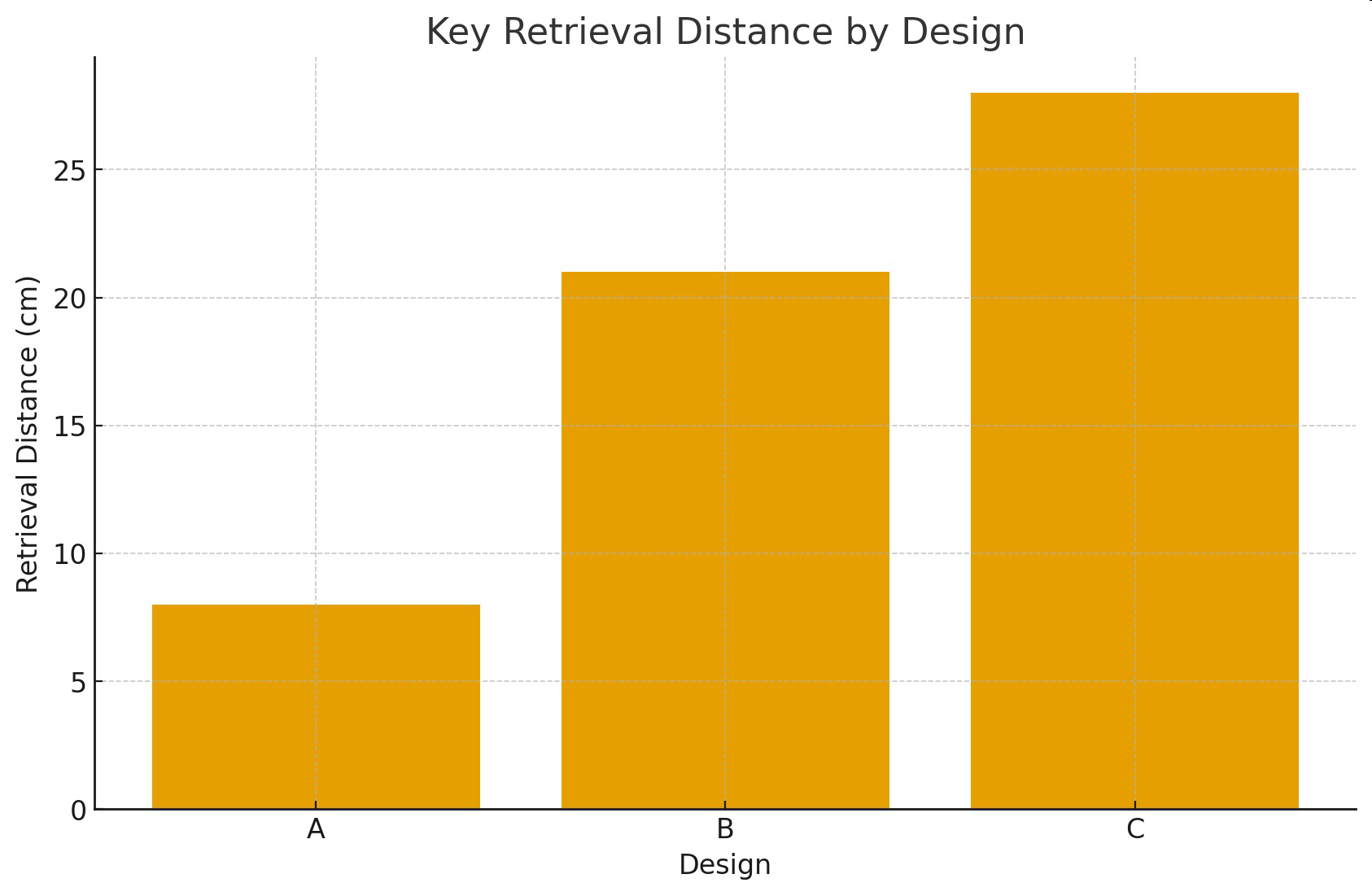
Graph of Information - Figure 2.