Spinning Top Slowing Down
Real-Life Phenomenon
When you spin a top, it starts spinning very fast. Over time, it spins more slowly, begins to wobble, and then finally falls over. This slowing happens in a predictable pattern, which can be measured and used to estimate when the top will stop spinning.
A spinning top is a great example of how motion changes in a pattern over time. When you first spin the top, you give it a strong twist. This twist is a force that makes the top spin quickly. Right after you spin it, the top is moving very fast. As time passes, the top starts to slow down. It does not slow down all at once. Instead, its speed decreases step by step in a pattern.
Why does it slow down? Two main forces are at work: friction and air resistance. Friction between the tip of the top and the surface, and air pushing against the spinning top, both oppose its motion. These forces remove energy from the top, so it spins more slowly. If you measure how many rotations the top makes every few seconds, you can see that the number gets smaller in a regular way.
Because the top slows down in a pattern, we can use earlier measurements to predict what will happen later. If we know how fast it is spinning at 2 seconds and 4 seconds, we can make a good guess about how fast it will spin at 6 seconds, and when it might stop.
Diagram 1.
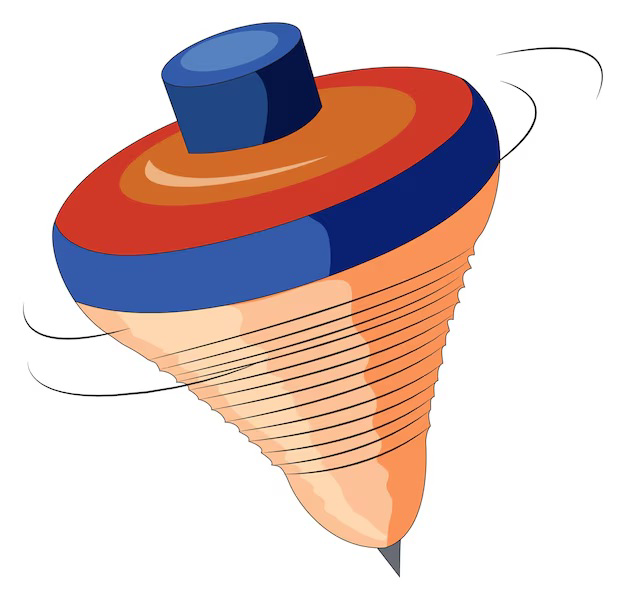 Source:
https://www.freepik.com/premium-vector/spinning-top_32959544.htm
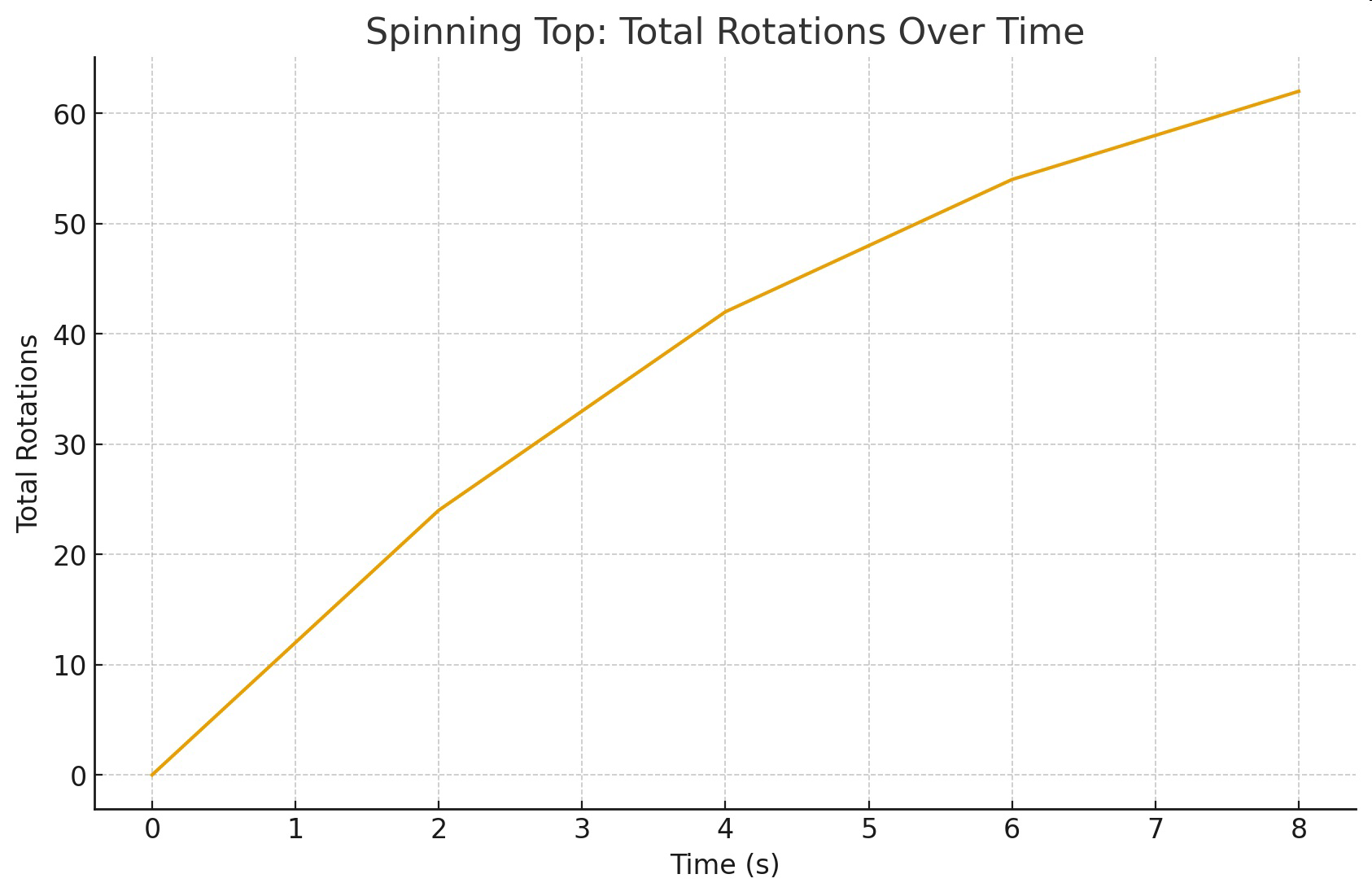
Table 1.
Time (s) | Spin Rate (rotations/s) | Total Rotations |
|---|---|---|
0 | 12 | 0 |
2 | 9 | 24 |
4 | 6 | 42 |
6 | 3 | 54 |
8 | 1 | 62 |
Graph of Information - Figure 1.
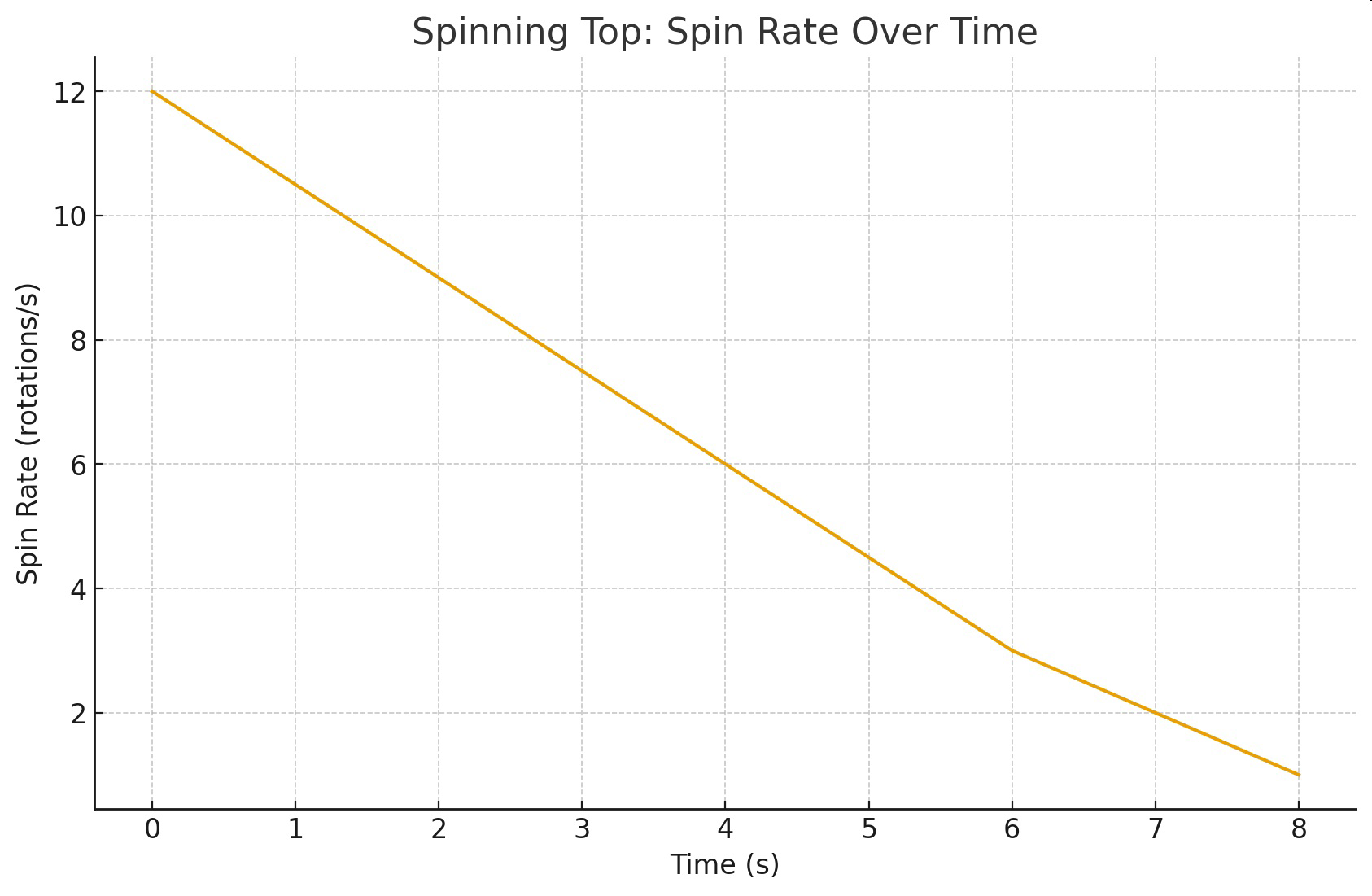
Graph of Information - Figure 2.