Charged Plastic Rod Attracting Small Pieces of Paper
Real-Life Phenomenon
When a plastic rod is rubbed with wool or fabric, it becomes electrically charged. When held near tiny paper pieces, the paper bits jump upward and stick to the rod - even though the rod never touches them. The closer the rod gets, the more strongly the paper moves.
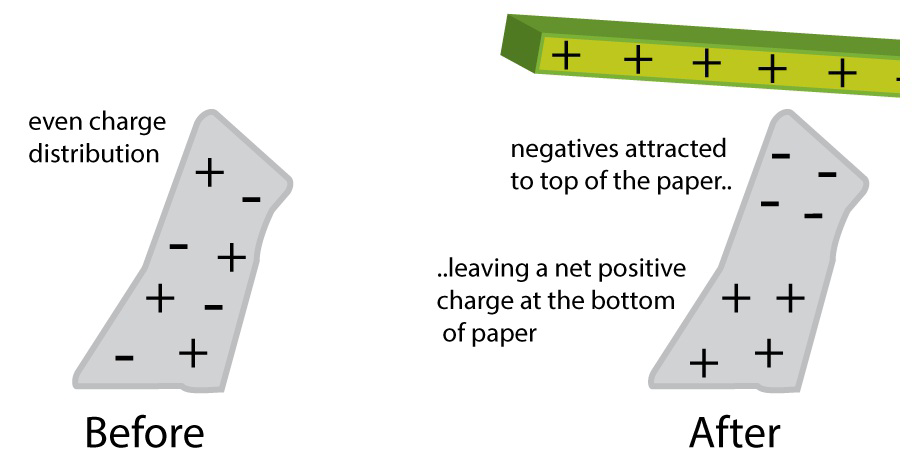
Electric forces can act between objects that are not touching. When you rub a plastic rod with wool or cloth, electrons move from one material to the other. This causes the rod to become negatively charged. Small paper pieces are neutral at first, but when the charged rod comes close, the electric force rearranges charges inside the paper, making the paper attracted to the rod.
This attraction gets stronger as the rod gets closer. If you hold the rod far away, the paper doesn’t move because the electric force is too weak. But if you bring the rod closer, the force becomes strong enough for the paper to lift off the table. Sometimes the paper jumps suddenly toward the rod, showing that the force can act quickly and without contact.
This phenomenon leads to important cause-and-effect questions: What happens when the rod is rubbed more times? How does distance affect how much the paper moves? Do all materials respond the same way? By observing how far the paper moves at different distances, we can learn how electric forces change depending on conditions - even when objects never touch.
Diagram 1.
Source:
https://ggebooks.com/BOOKA/2-electricity/2-8-static.php
Table 1.
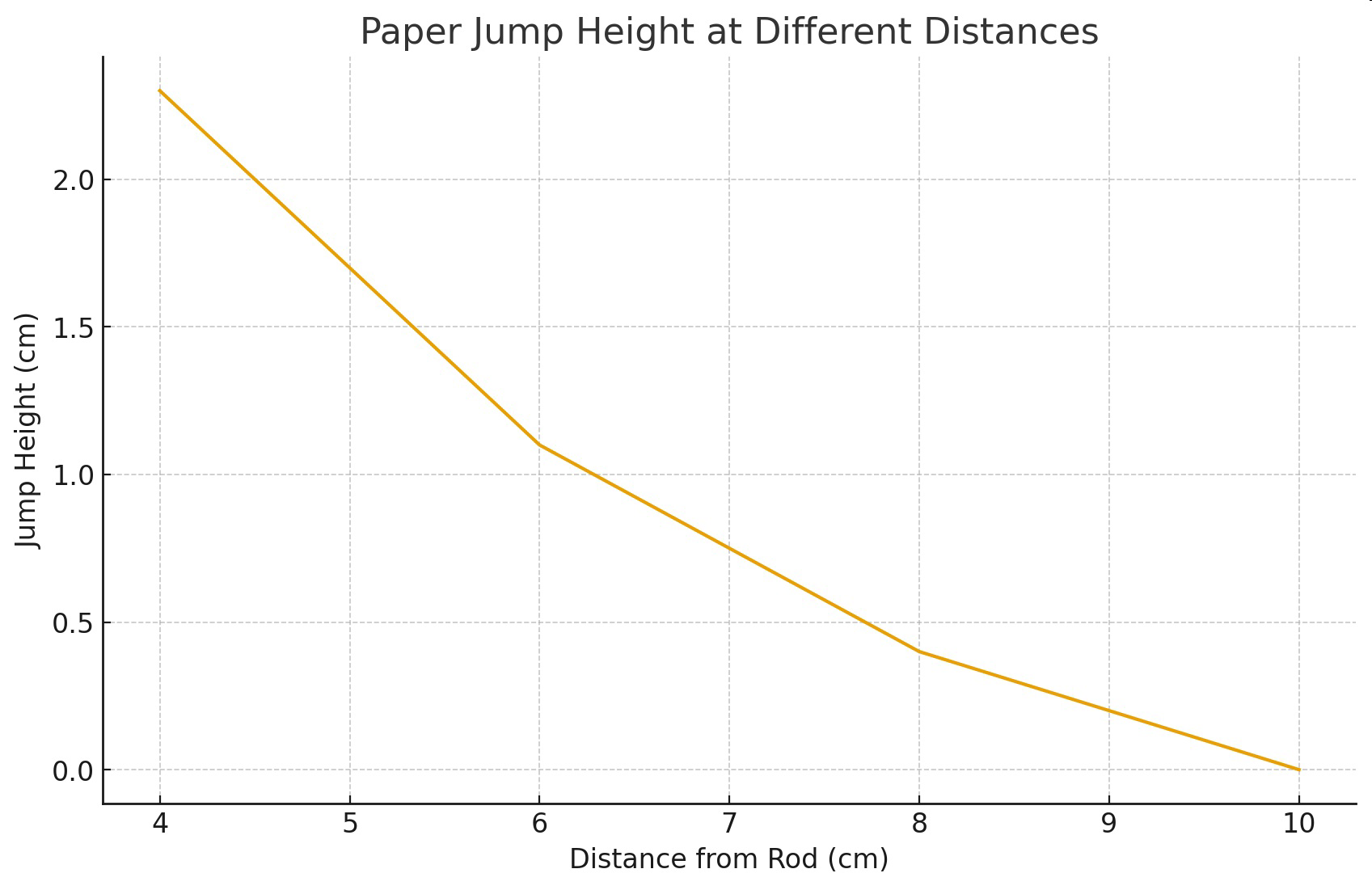
Distance from Rod (cm) | Paper Pieces Moving (#) | Jump Height (cm) |
|---|
10 | 0 | 0 |
8 | 2 | 0.4 |
6 | 5 | 1.1 |
4 | 9 | 2.3 |
Graph of Information - Figure 1.
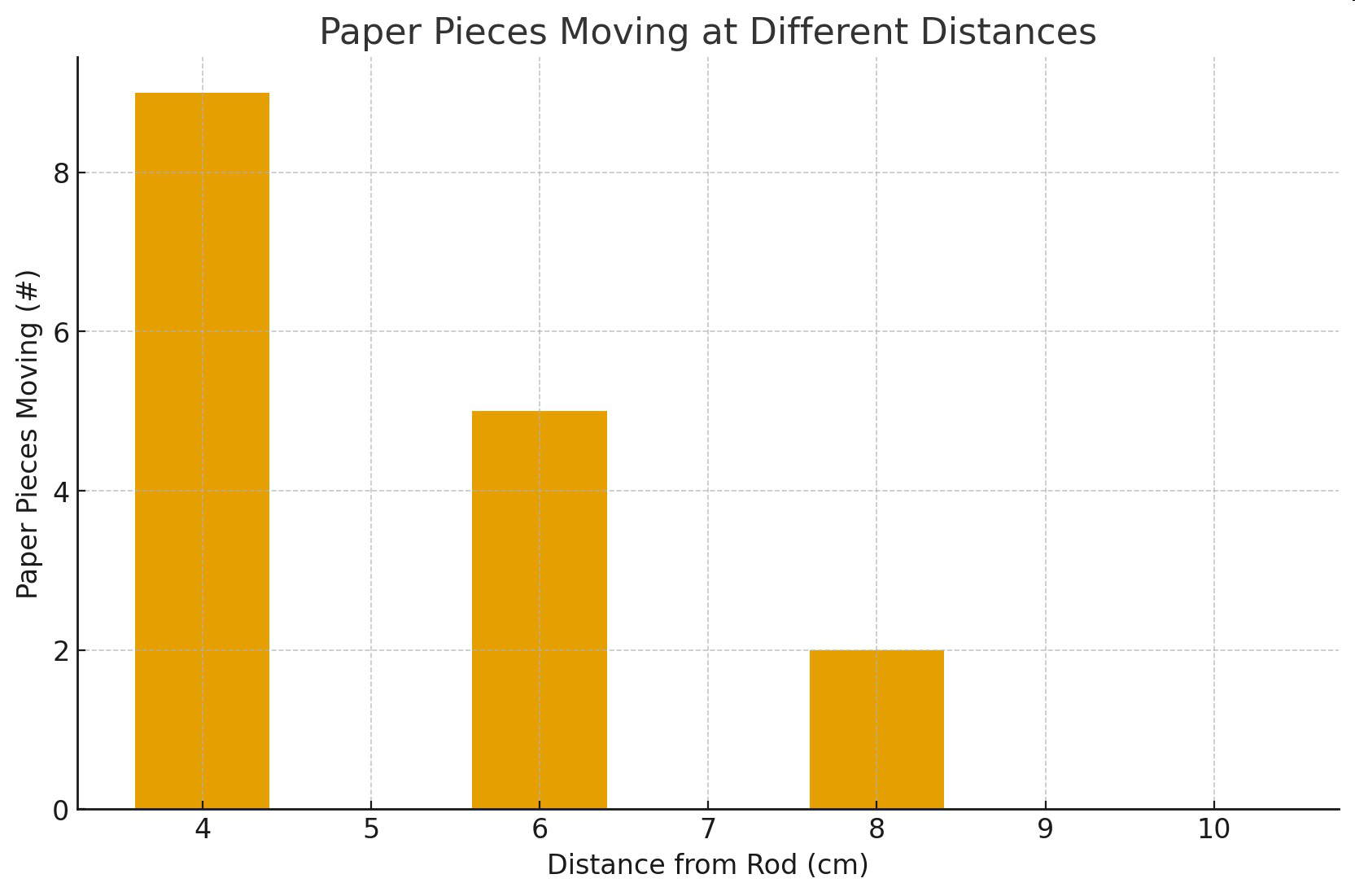
Graph of Information - Figure 2.