Designing a Magnetic Door Latch for a Classroom Cabinet
Diagram 1.
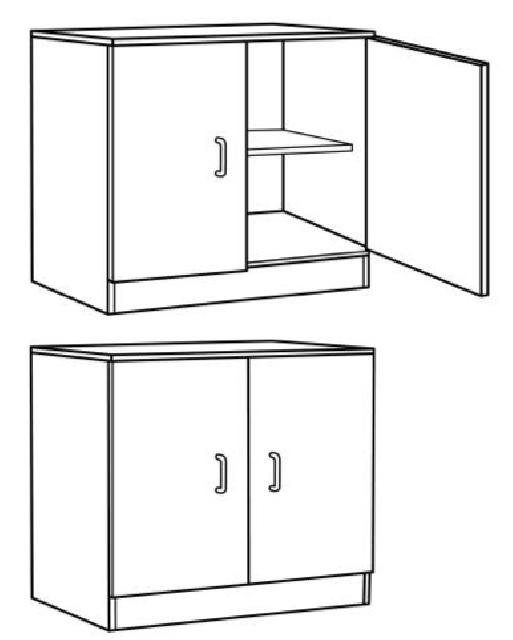
Source: https://www.istockphoto.com/illustrations/clip-art-of-a-cabinet-door
Real-Life Design Problem
The classroom supply cabinet often swings open on its own. When it opens, markers fall out, papers blow away, and students bump into the door. The teacher wants a solution that keeps the cabinet door securely closed without using a lock, so students can still open it easily.
Design Problem for Students:
Design a simple magnetic latch that uses magnetic attraction to keep the cabinet door closed.
The latch must:
Hold the cabinet door shut against small everyday bumps,
Allow students to open the door without difficulty,
Use safe materials found in a classroom,
Work even if the door is slightly misaligned.
Students will build and test different latch designs to evaluate which one works best.
Magnets are used in many everyday tools to help things stay closed or stay in place. Refrigerator doors, phone cases, tablet covers, and some cabinet doors use magnetic latches to stay shut. A magnetic latch works because the magnet attracts a piece of metal on the opposite side, creating a gentle pull that holds the door closed. The magnet does not need to touch the metal directly; its magnetic field can reach across a small gap.
To design a good magnetic latch, we need to think about strength, distance, and contact area. A stronger magnet will hold the door closed more tightly, but if it is too strong, students may have trouble opening the door. If the magnet is too weak, normal classroom movement - like students walking by - might cause the latch to fail.
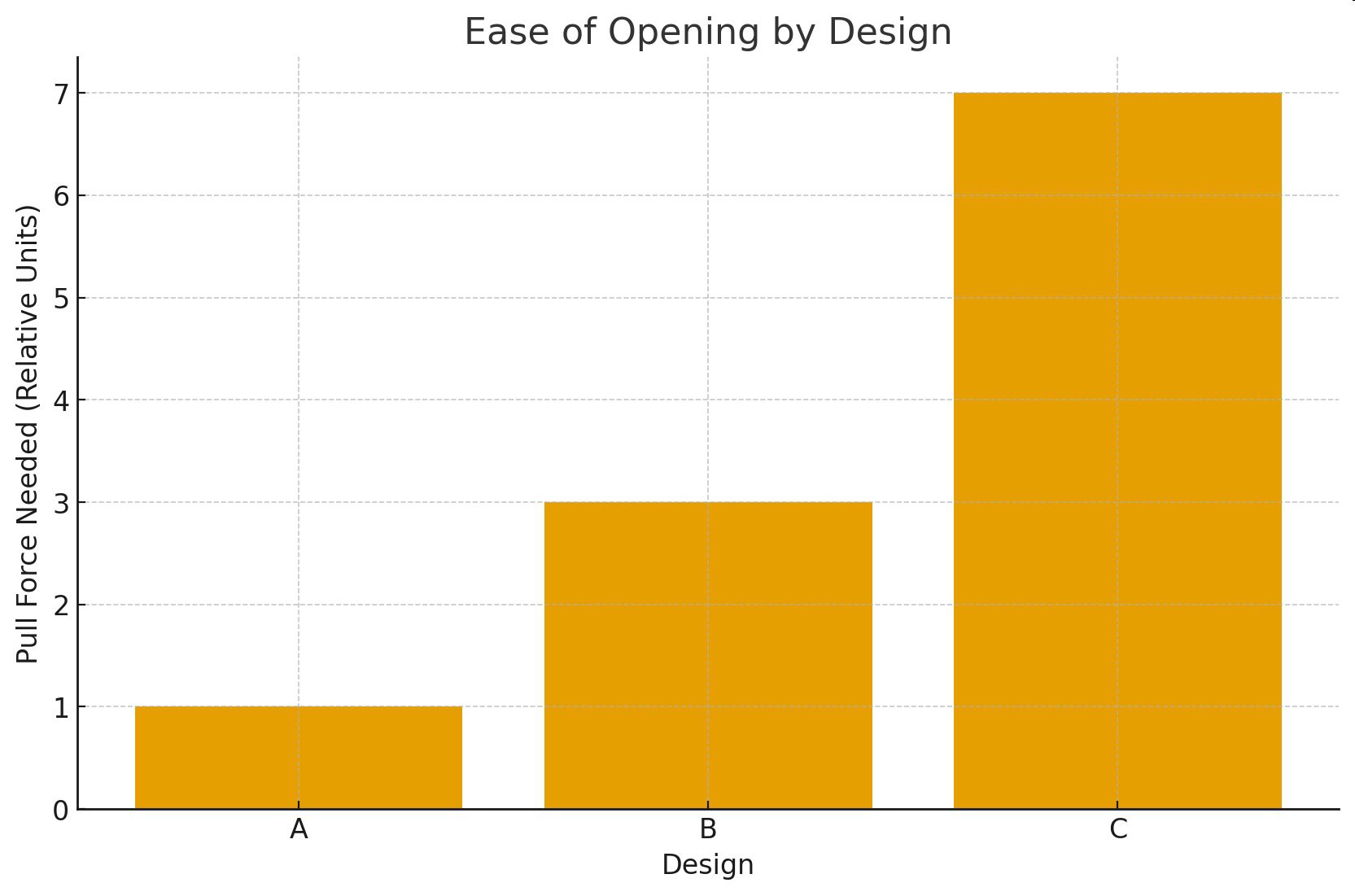
Engineers test different magnet strengths and mounting positions to find the right balance. By measuring how far the door opens during a bump or how easily students can pull it open, we can evaluate whether a design meets the problem’s needs. Good engineering involves testing, comparing data, and deciding which design solves the problem most effectively.
Table 1.
Design | Magnet Strength (Relative) | Door Opening During Bump (cm) | Pull Force Needed (Relative Units) |
|---|---|---|---|
A | Weak | 6.5 | 1 |
B | Medium | 2 | 3 |
C | Strong | 0.5 | 7 |
Graph of Information - Figure 1.
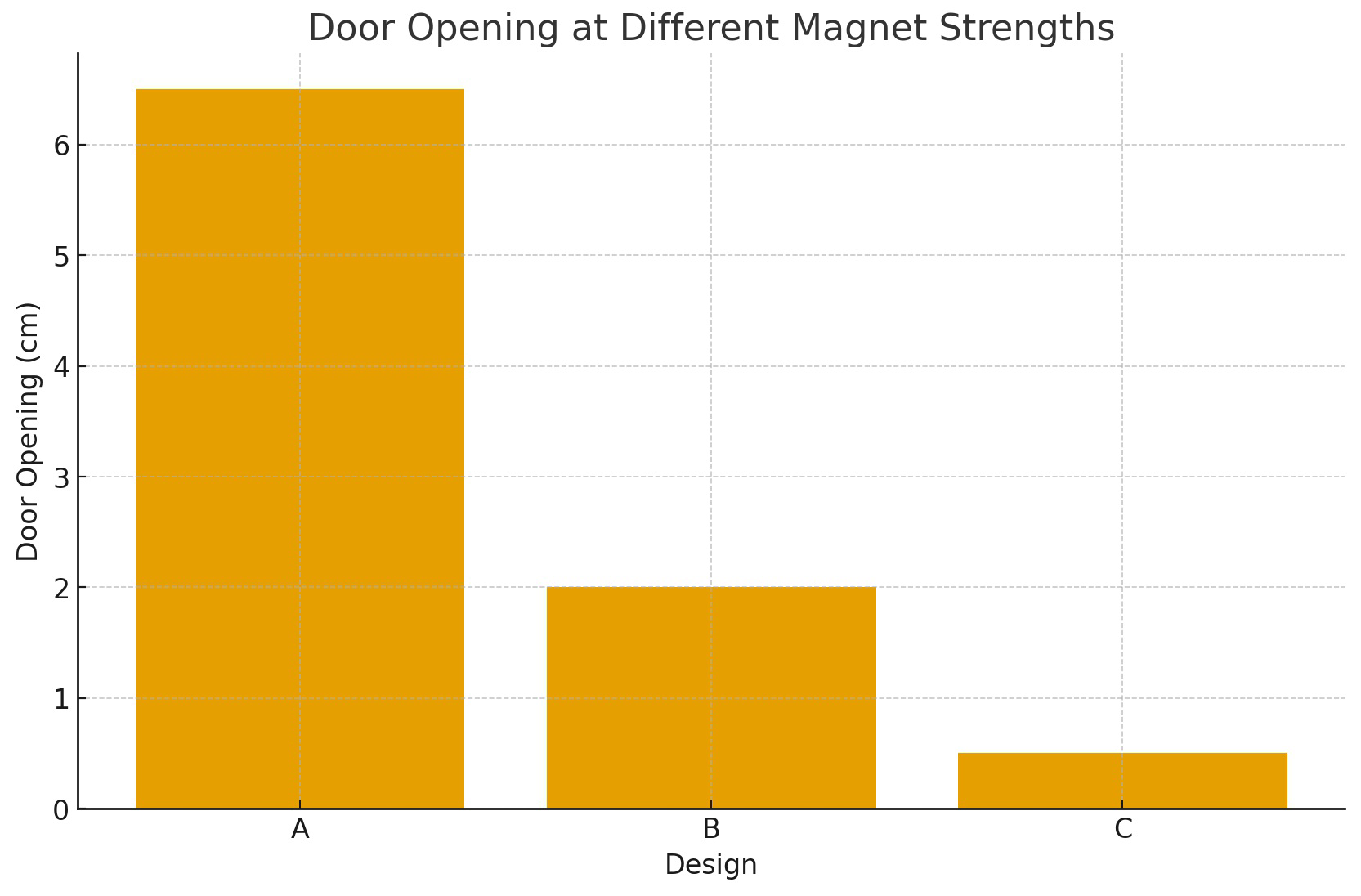
Graph of Information - Figure 2.