Designing a Magnetic Maze Game to Move a Metal Ball Without Touching It
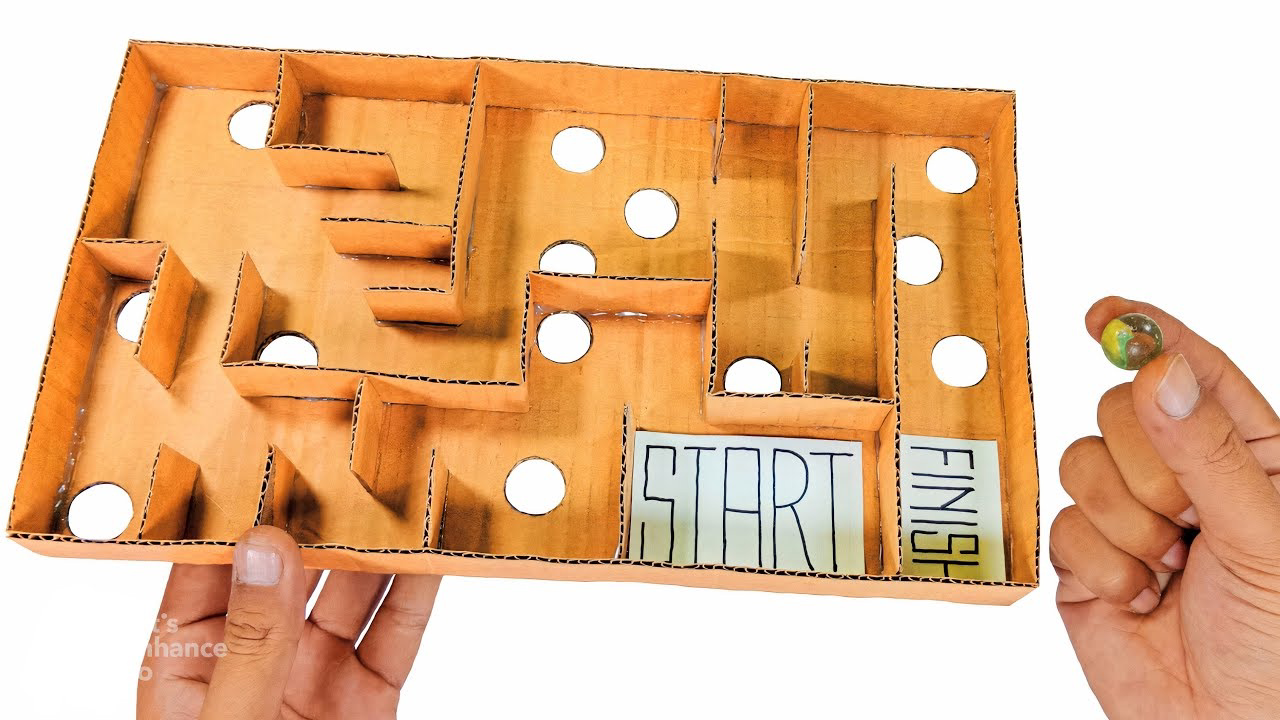
Diagram 1.
Source:
https://www.youtube.com/watch?v=SwhJZFCuWD0
Real-Life Design Problem
Game designers sometimes create puzzles where a magnet under a board moves a metal ball on top. The player never touches the ball, but the magnet pulls it through a maze.
Design Problem for Students:
Design a magnetic maze game that lets a player move a small steel ball from a start to a finish without ever touching the ball. The game must:
Use a magnet underneath the maze board,
Let the ball reach the finish in 30 seconds or less,
Prevent the ball from easily falling into “trap” holes,
Be easy for a third grader to control.
Students will compare different maze layouts and magnet setups to see which design works best.
A magnetic maze game uses magnets to move a metal ball without touching it. A steel ball is placed on top of the maze board. Under the board, a magnet is attached to a handle. When the magnet moves, the steel ball follows because it is attracted to the magnet through the board. This happens even though the ball and magnet never touch.
To design a good maze, we must think about magnet strength, distance, and the path shape. If the board is too thick or the magnet is too weak, the ball may not follow the magnet well. If the magnet is strong and the board is thin enough, the ball will move smoothly. The maze path should be challenging but not impossible. Sharp turns or very narrow paths may cause the ball to get stuck or fall into traps.
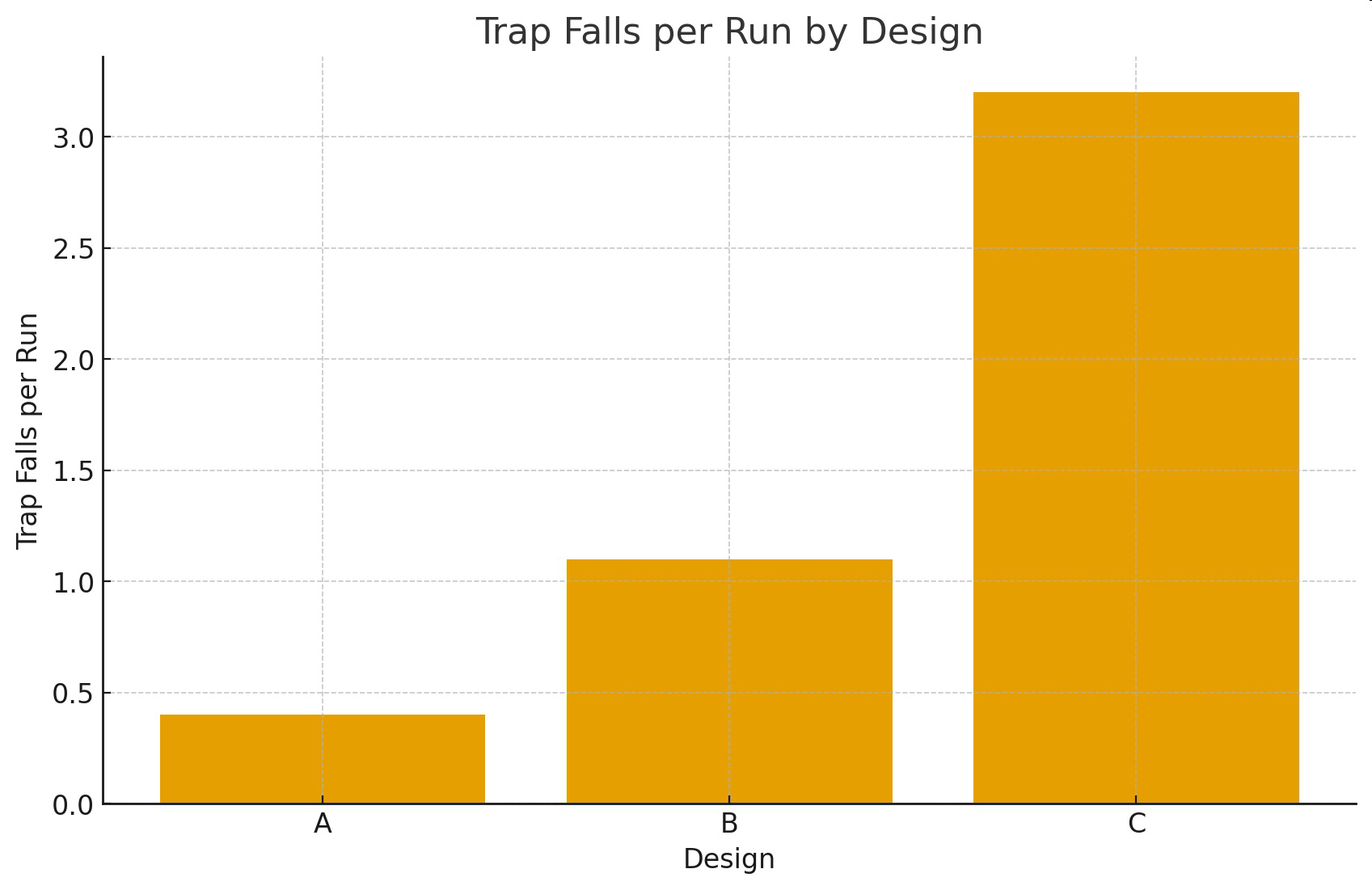
Engineers who design games test different layouts and materials. They time how long it takes to reach the end and count how many times the ball falls into a trap. By studying this data, they can decide which maze designs work best and which changes improve the game.
Table 1.
Design | Magnet Positioning | Average Time to Finish (s) | Trap Falls per Run |
|---|---|---|---|
A | Centered Under Board | 18 | 0.4 |
B | Guided Along Path | 24 | 1.1 |
C | Guided Along Path | 41 | 3.2 |
Graph of Information - Figure 1.
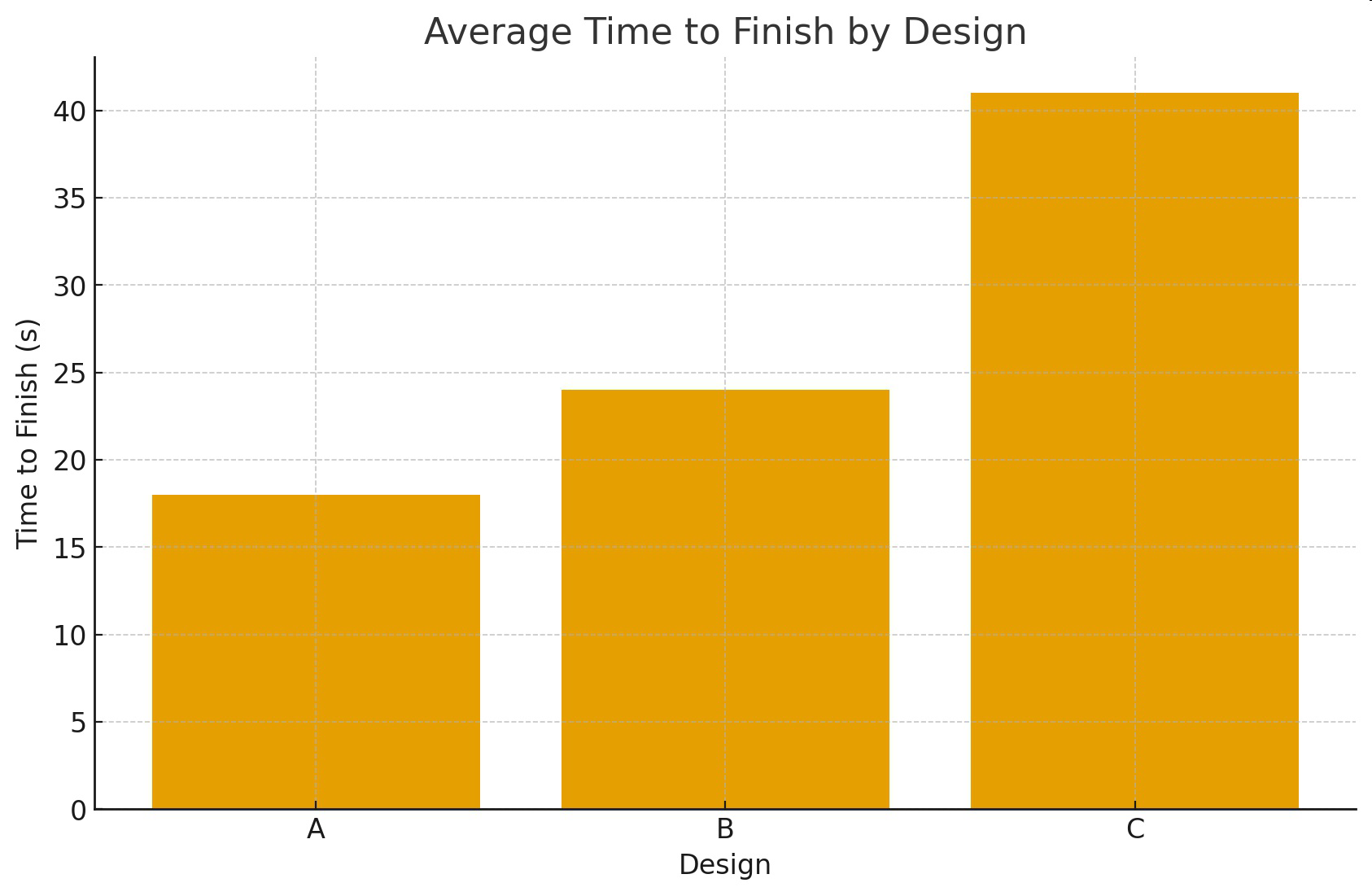
Graph of Information - Figure 2.