Designing a Magnetic Trash Picker for Metal Paper Clips
Diagram 1.
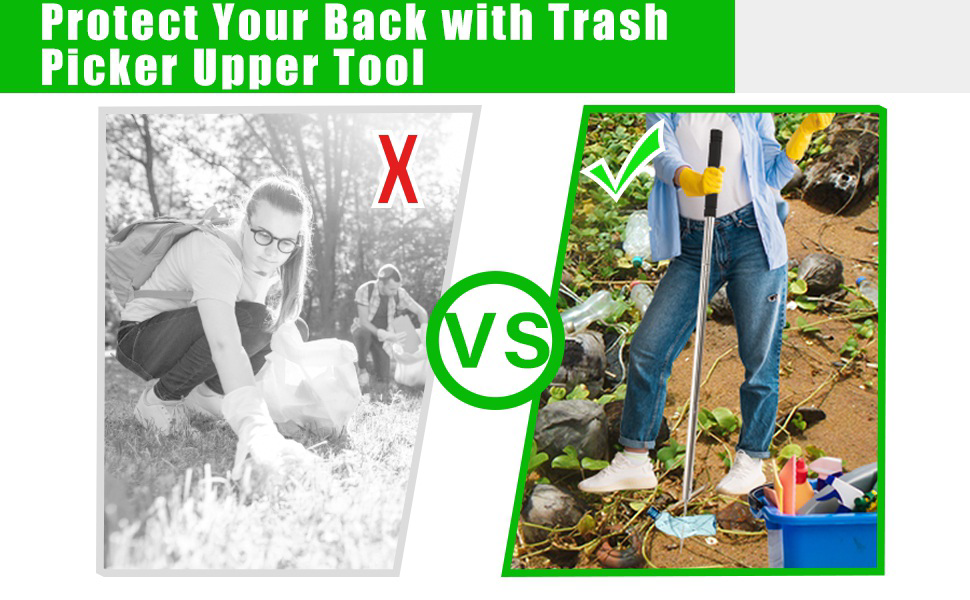
Source:
https://www.amazon.com/Frebuta-High-Duty-Lightweight-Reinforcement-Durability/dp/B0C7BWHRMQ?th=1
Real-Life Design Problem
Sometimes metal paper clips or staples fall behind bookshelves or between desks where hands cannot safely reach. Reaching in could scratch skin, knock over heavy objects, or simply be impossible because the space is too small.
Design Problem for Students:
Design a simple tool that uses a magnet to safely pick up metal paper clips from a narrow space behind a bookshelf without putting your hand into the space. The tool must:
Reach at least
$30\text{ cm}$ ,Pick up at least 5 paper clips in one try, and
Be easy for a third grader to use.
Students will compare different designs to figure out which works best and why.
Magnets can attract certain metals, like iron and steel, without touching them.
Magnet creates an invisible area around it called a magnetic field. When a metal object, like a paper clip, enters this field, it feels a force pulling it toward the magnet. The force is stronger when the metal is closer and when the magnet itself is stronger.
Engineers use magnets in many tools to solve problems. Magnetic grabbers can pick up dropped screws, nails, or other small metal pieces in tight or dangerous places. To design a good magnetic trash picker, we need to think about magnet strength, distance, and handle length. A stronger magnet can pick up more paper clips, even when they are not touching it. However, the magnet still needs to be close enough for the magnetic field to reach the clips.
The handle of the tool must be long enough to reach the trash safely, but not too heavy or hard to control. We also have to make sure the paper clips do not fall off while the tool is being lifted. By testing different designs and counting how many clips they can pick up, we can decide which design solves the problem best.
Table 1.
Design | Reach Length (cm) | Magnet Strength (Relative) | Clips Picked Up (per Try) | Success Rate (%) |
|---|---|---|---|---|
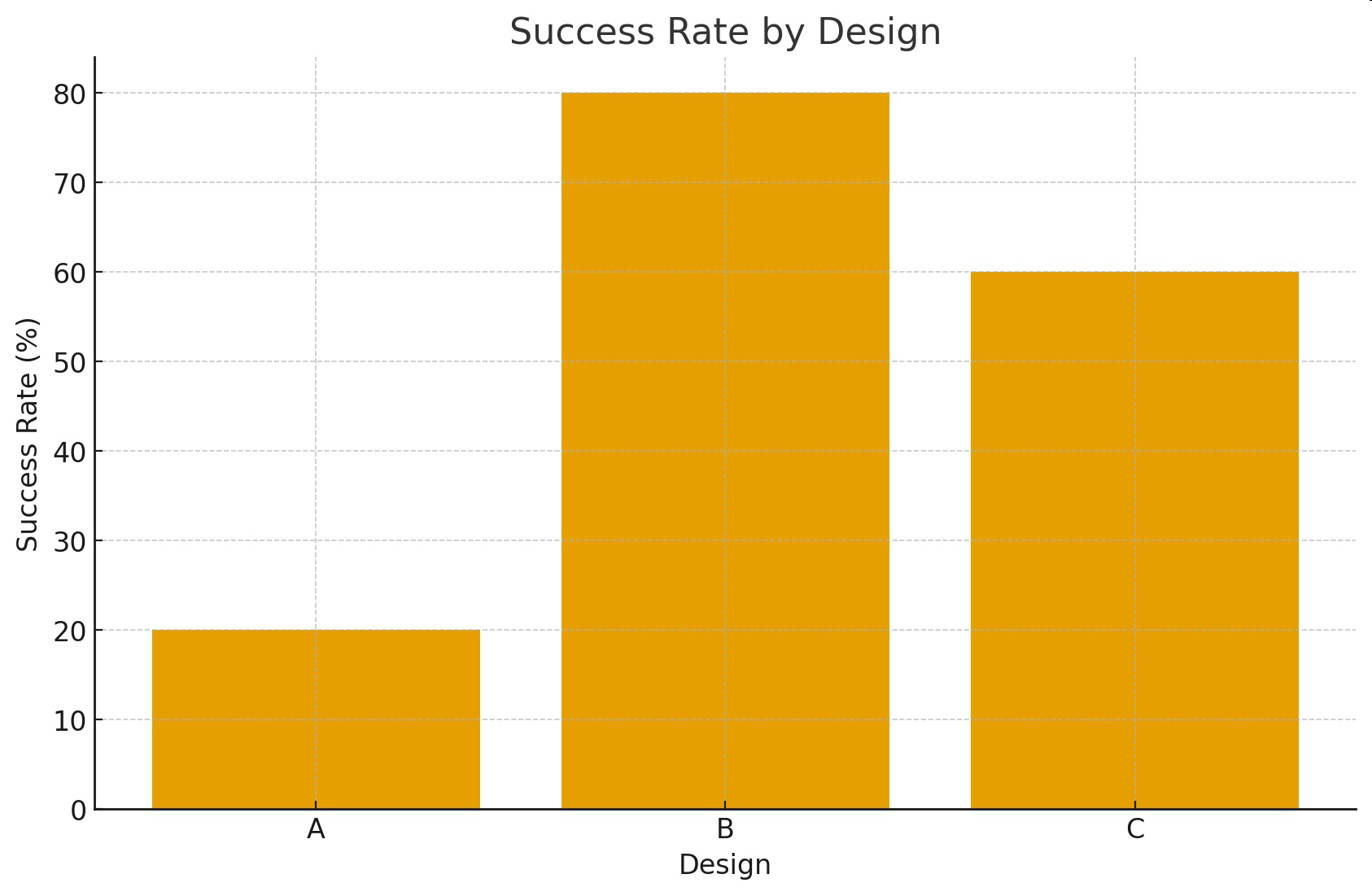
A | 20 | Medium | 3 | 20 |
B | 30 | Strong | 6 | 80 |
C | 40 | Strong | 5 | 60 |
Graph of Information - Figure 1.
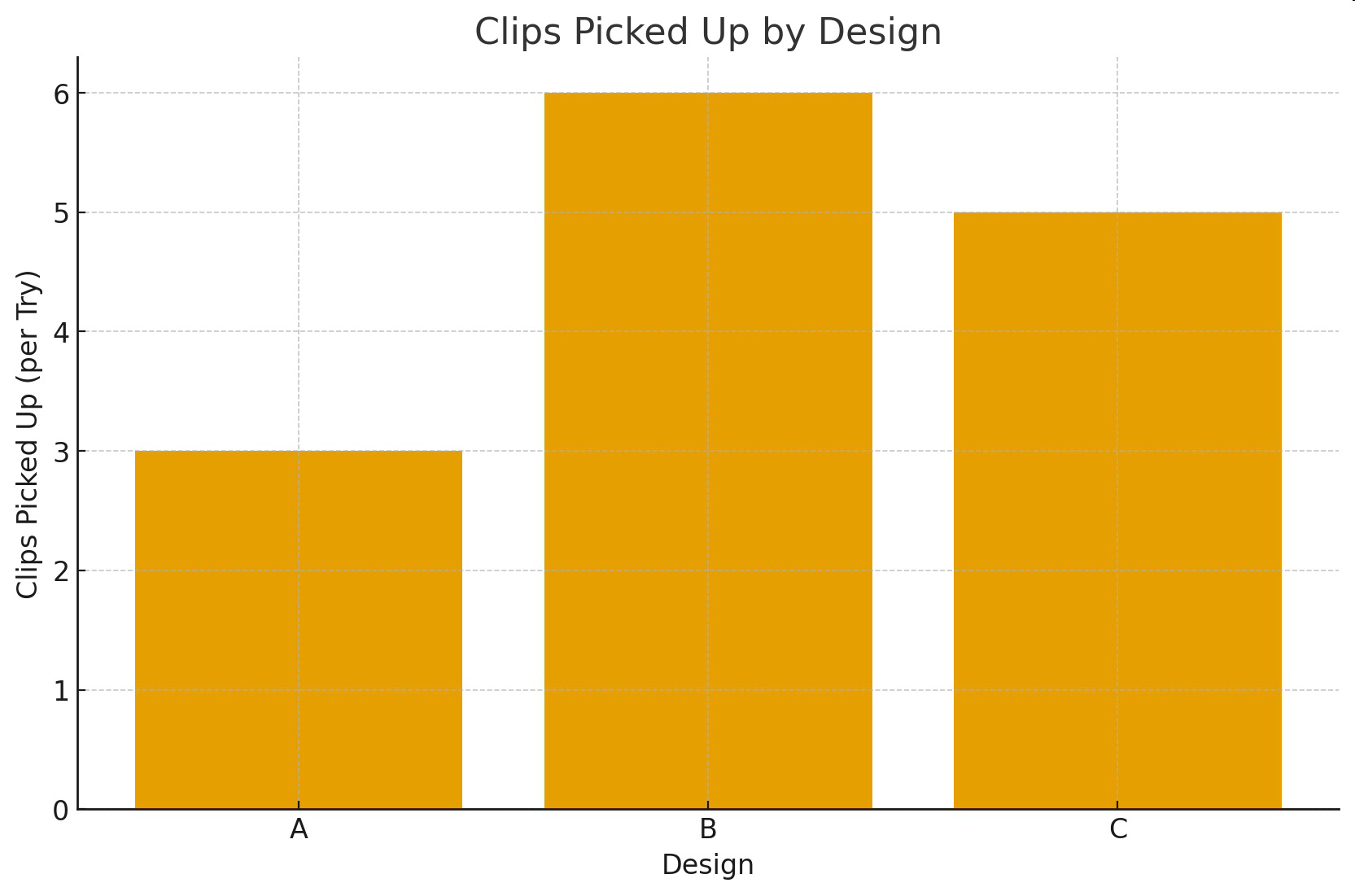
Graph of Information - Figure 2.