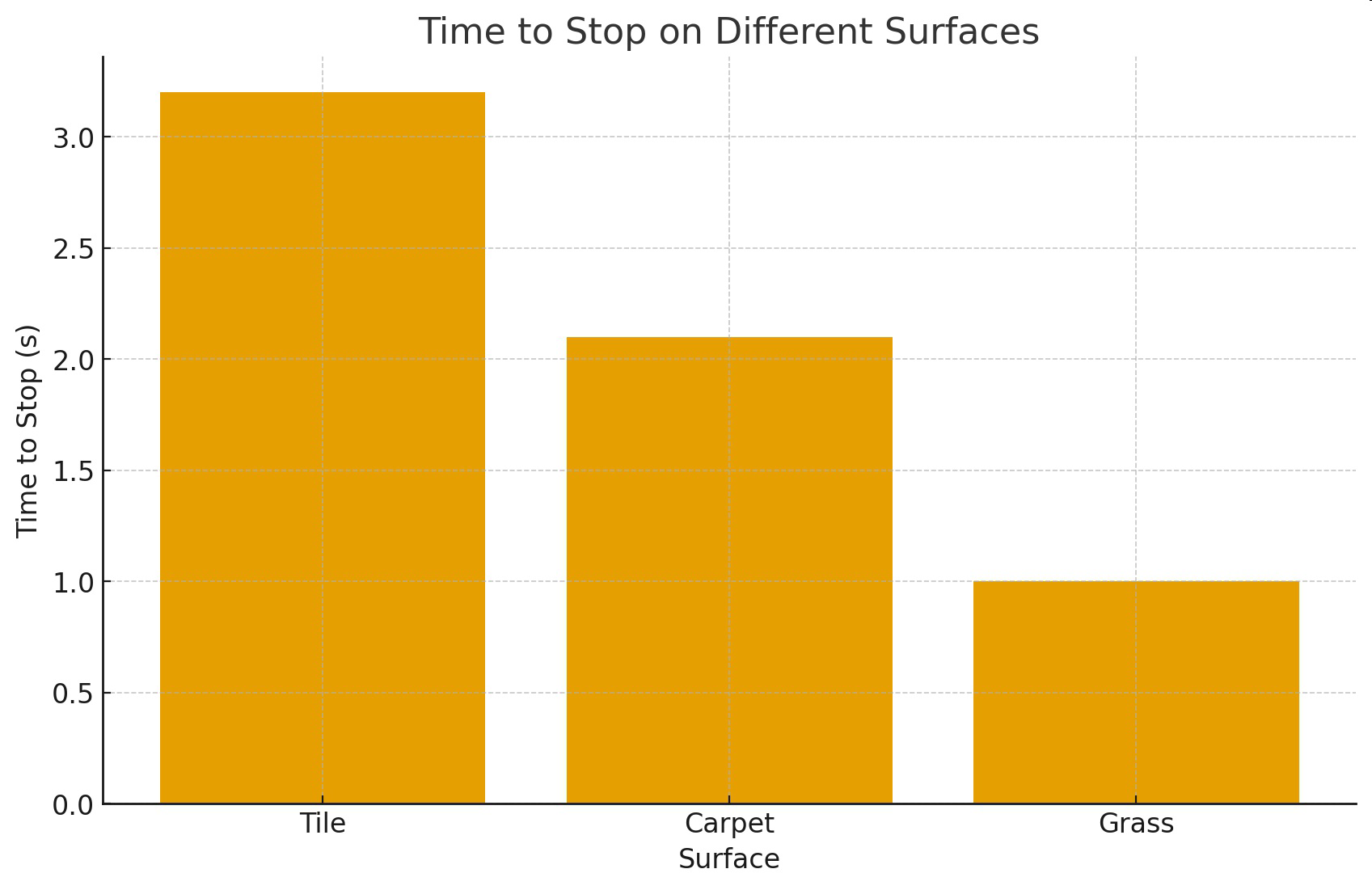
Sliding Objects on Different Surfaces
Real-Life Phenomenon
A toy car rolled across smooth tile moves farther than it does on carpet or grass. The same push gives different results because each surface creates a different amount of friction, which changes the motion of the car.
When you push a toy car, it moves because you apply a force. If you push the car the same way each time, you might expect it to move the same distance every time. But that is not what happens when the car moves across different surfaces. The car rolls farther on tile, less far on carpet, and even less on grass. This happens because of a force called friction.
Friction is a force that slows down moving objects. The amount of friction depends on the surface. Smooth surfaces, like tile or hardwood floors, have low friction, so the car keeps rolling for a longer distance. Rough surfaces, like carpet or grass, have higher friction, which slows the car down more quickly. Even though your push stays the same, the car behaves differently because the friction force changes.
When friction is low, the push (unbalanced force) is stronger than the force slowing the car down. When friction is high, the slowing force is closer to or stronger than your push, so the car moves less. By comparing the distances traveled on different surfaces, we can see how forces affect motion.
Diagram 1.
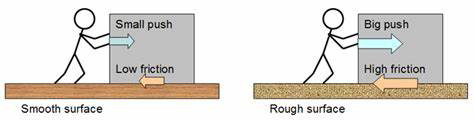
Table 1.
Surface | Distance (m) | Time to Stop (s) |
|---|
Tile | 3.8 | 3.2 |
Carpet | 1.9 | 2.1 |
Grass | 0.8 | 1 |
Graph of Information - Figure 1.
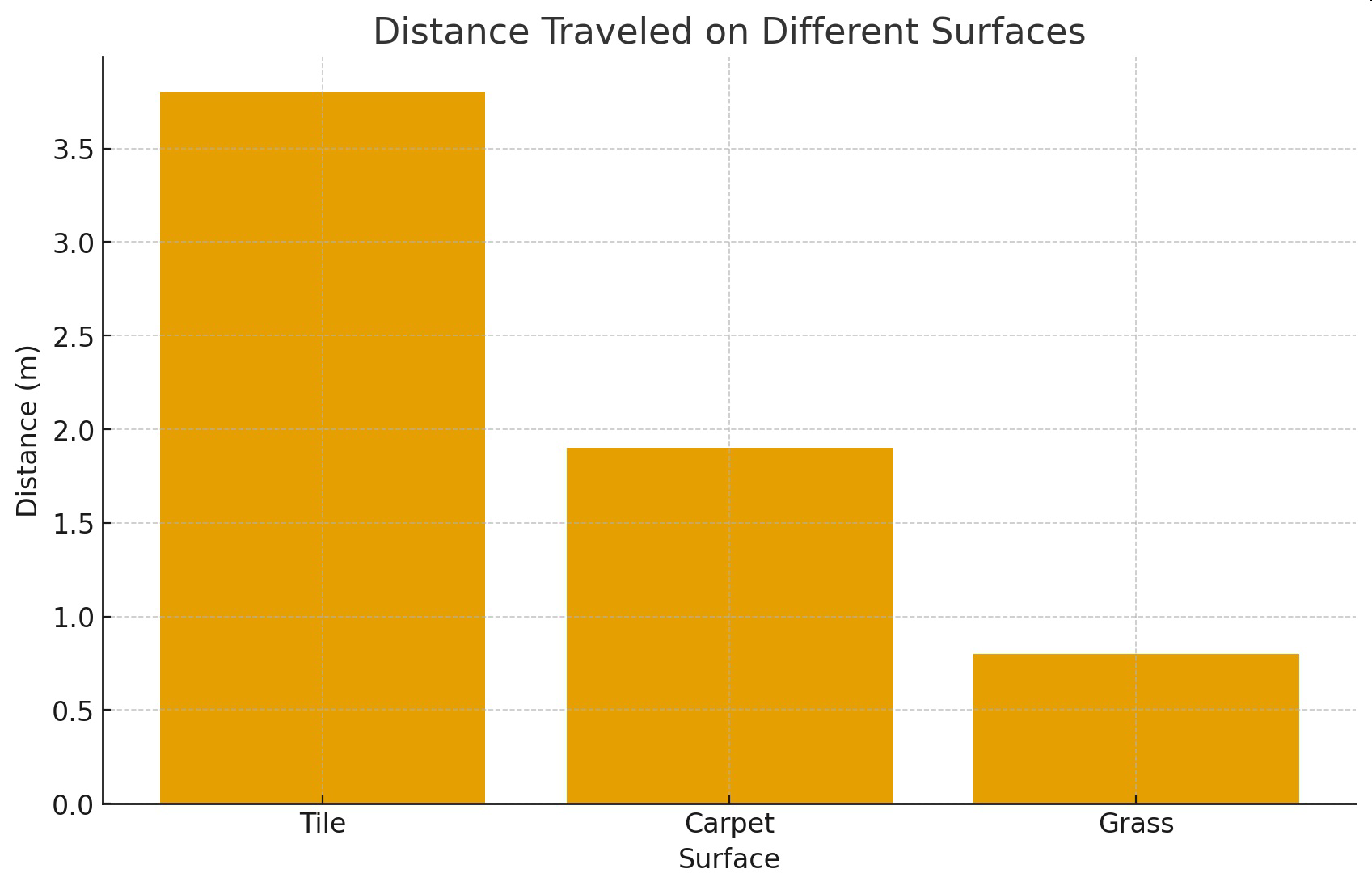
Graph of Information - Figure 2.