Soccer Ball Kicked with Different Strengths
Real-Life Phenomenon
When a soccer ball is kicked gently, it rolls slowly. When it is kicked harder, it rolls much faster and farther. If the ball is not kicked at all, it does not move. This everyday observation shows how unbalanced forces change the motion of an object.
When you play soccer, the ball moves only when something pushes or pulls it. A force is a push or a pull. If the ball is just sitting on the ground, the forces on it are balanced. Gravity pulls the ball down, and the ground pushes up with the same amount of force. Because the forces are balanced, the ball does not move.
When you kick the ball, you apply an unbalanced force. This means the force from your foot is stronger than the forces keeping the ball still. The greater the force of the kick, the greater the change in motion. A gentle kick gives a small unbalanced force, so the ball rolls slowly and stops sooner. A hard kick gives a large unbalanced force, so the ball speeds up quickly and rolls much farther.
As the ball moves, friction from the ground is a force that tries to slow it down. Over time, friction becomes strong enough to stop the ball completely. By observing how the ball moves with gentle, medium, and strong kicks, we can see how different forces affect motion.
Diagram 1.
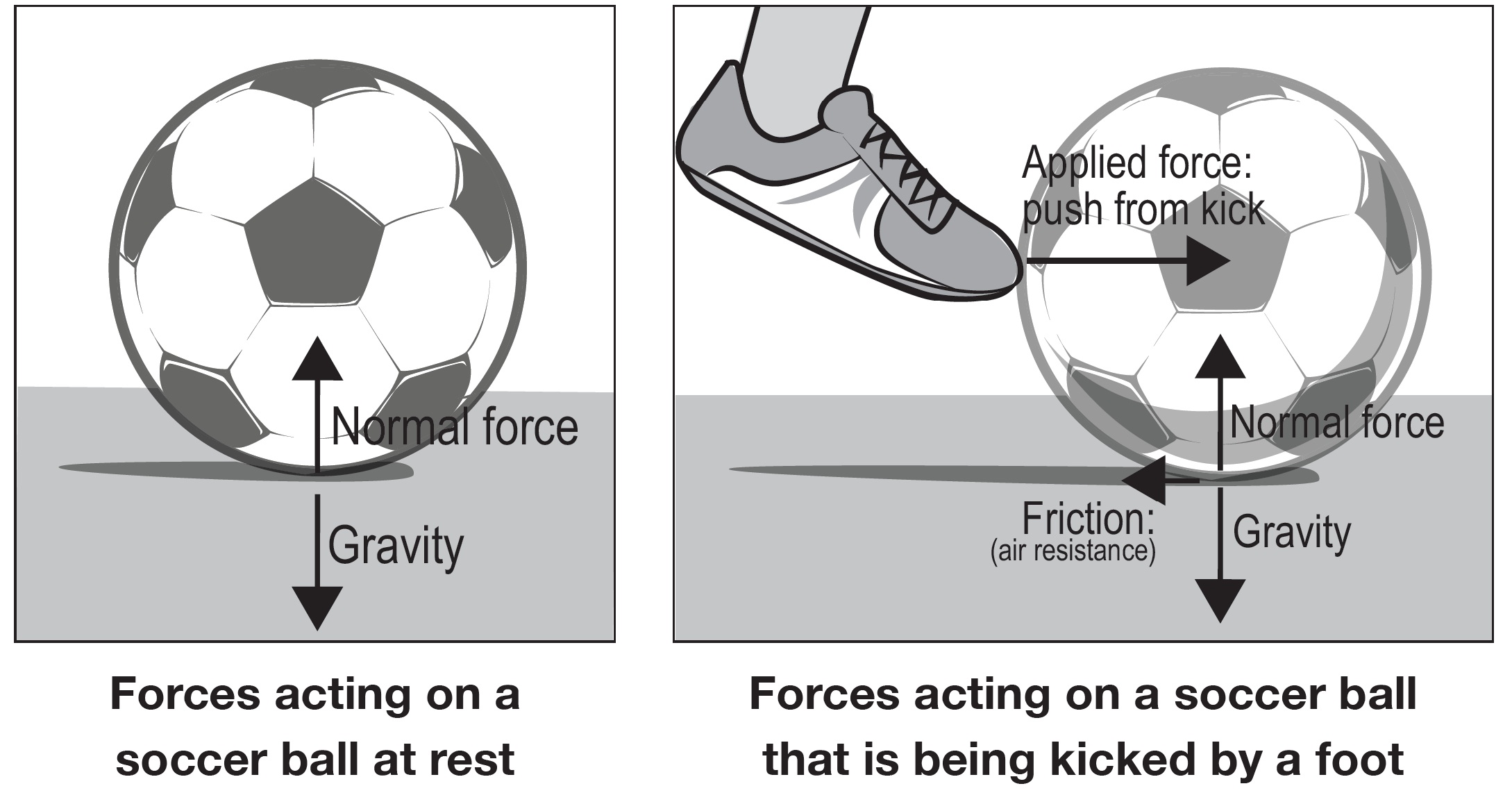
Table 1.
Kick Strength | Speed (m/s) |
|---|
Gentle | 1.2 |
Medium | 2.8 |
Hard | 4.5 |
Graph of Information - Figure 1.
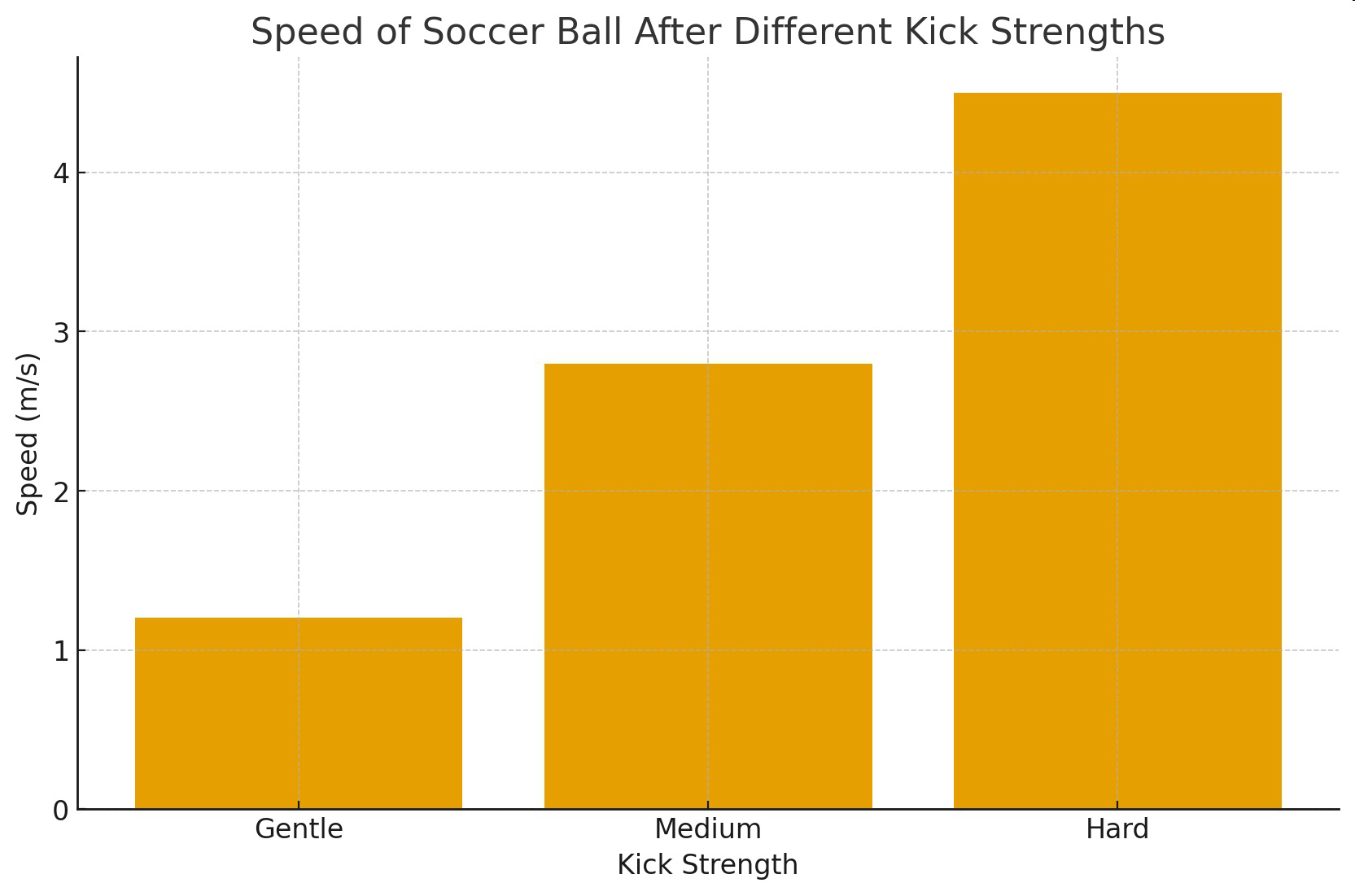
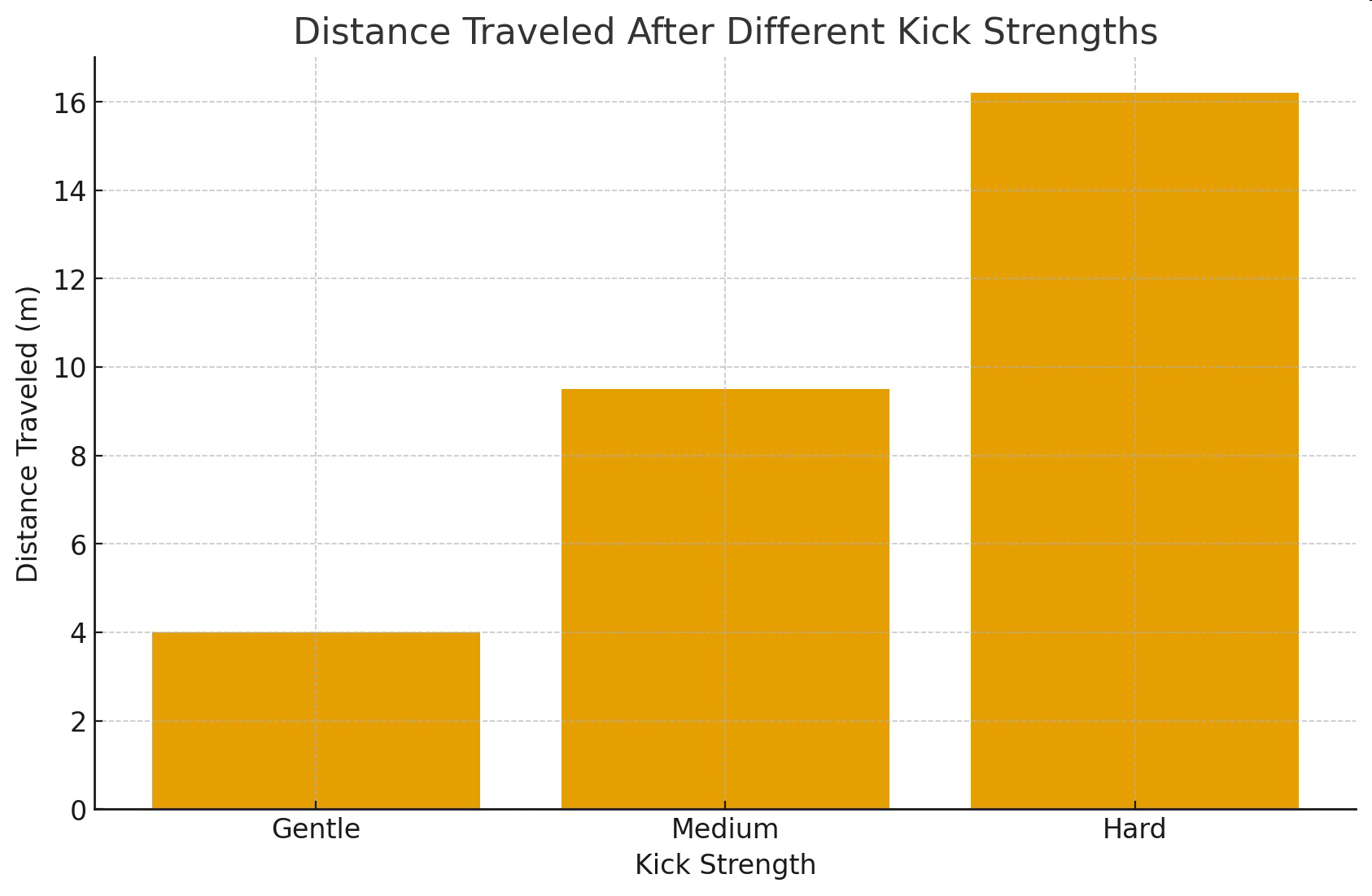
Table 2.
Kick Strength | Distance Traveled (m) |
|---|
Gentle | 4 |
Medium | 9.5 |
Hard | 16.2 |
Graph of Information - Figure 2.