Toy Car on a Straight Track With a Consistent Push
Real-Life Phenomenon
When a toy car is pushed with the same strength each time, it moves forward in a straight line and shows a predictable pattern in how far it travels every second. This allows students to measure, observe, and predict future motion.
A toy car moving along a straight track can show a clear and predictable motion pattern. When you push the car with the same force every time, the car speeds up at first and then moves at a more steady pace. Because the push is consistent, the changes in the car’s motion follow a pattern you can measure and use to make predictions.
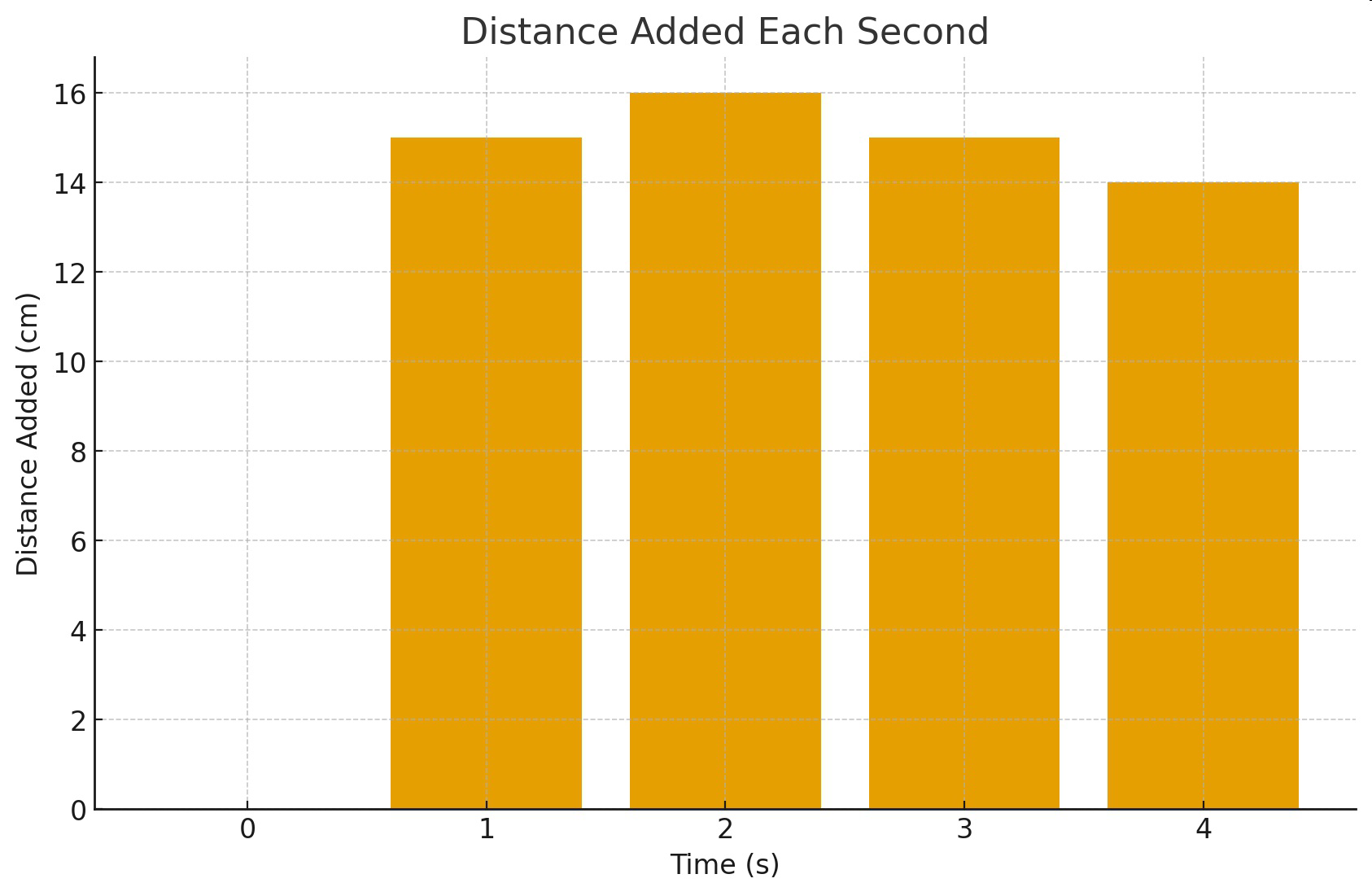
When scientists study motion, they often record the car’s position at regular time intervals - such as every second. If the distances follow a steady pattern, we can use that pattern to guess where the car will be later. For example, if the car moves 15 cm in the first second, 30 cm by the next second, and 45 cm by the third second, we can notice that the car is adding about the same amount of distance each second.
Even if friction eventually slows the car down, the pattern during the first few seconds is usually very regular. Because of this, observing and measuring the car’s motion helps us understand how objects move and how patterns can help predict future motion. This is why motion patterns are important in science—they help us make accurate, evidence-based predictions.
Diagram 1.
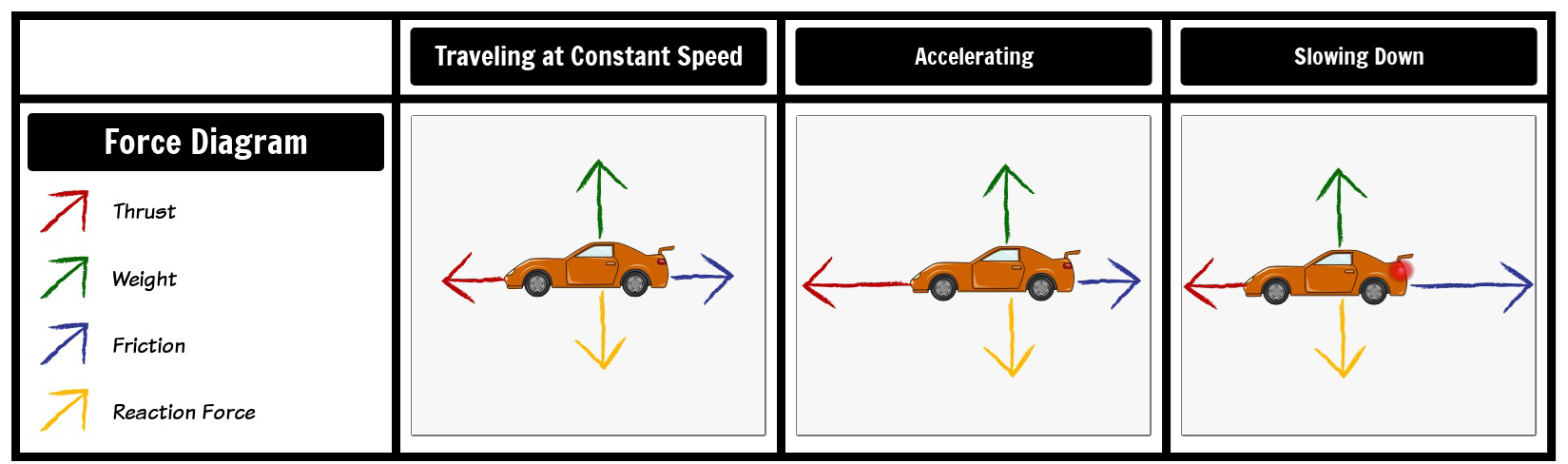
Table 1.
Time (s) | Position (cm) | Distance Added (cm) |
|---|
0 | 0 | 0 |
1 | 15 | 15 |
2 | 31 | 16 |
3 | 46 | 15 |
4 | 60 | 14 |
Graph of Information - Figure 1.
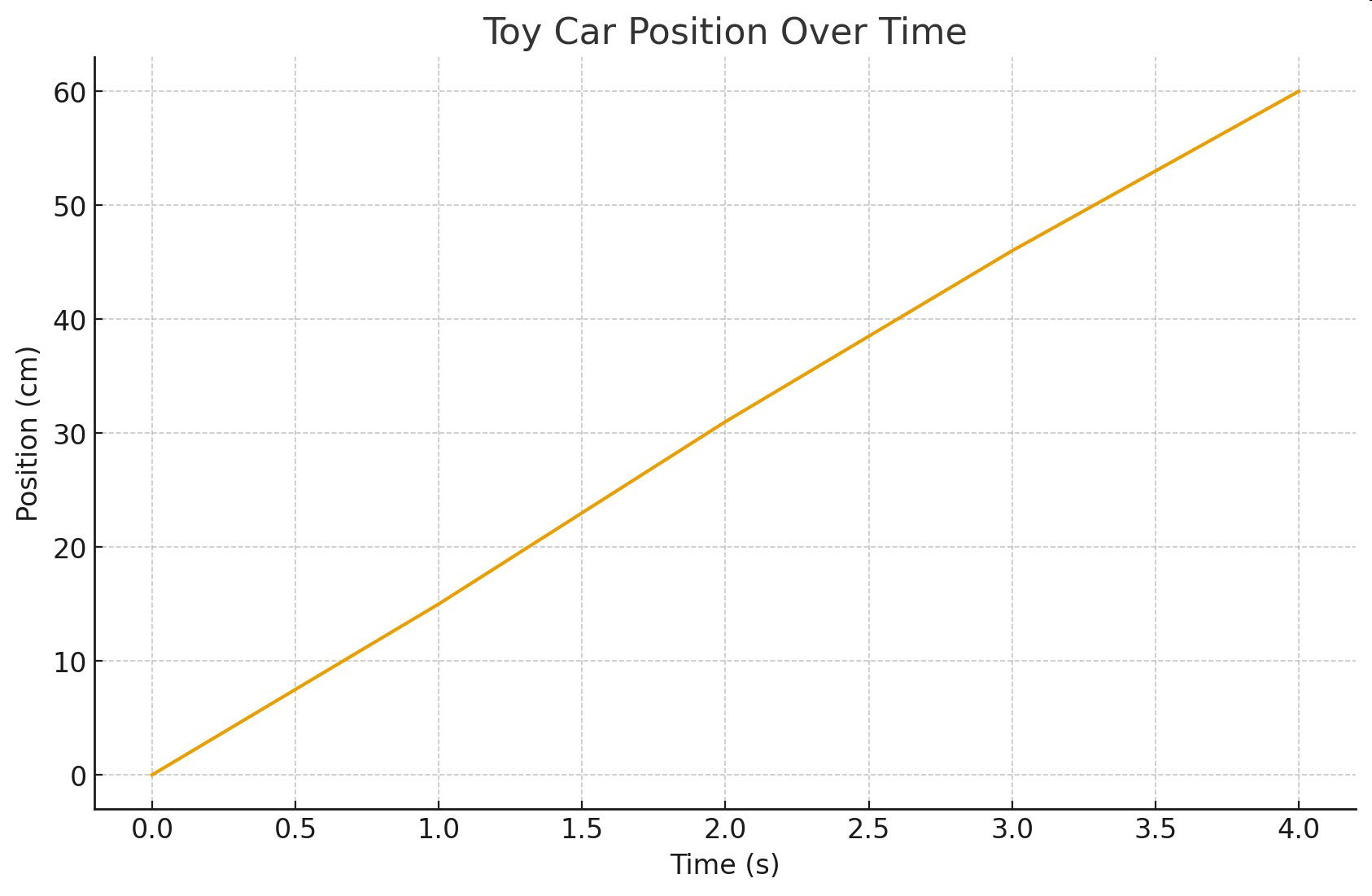
Graph of Information - Figure 2.