Tug-of-War: Balanced and Unbalanced Forces
Real-Life Phenomenon
In a tug-of-war game, sometimes the rope stays in the center without moving. At other times, one team pulls the other team forward. This shows how balanced forces keep objects still, while unbalanced forces cause objects to move.
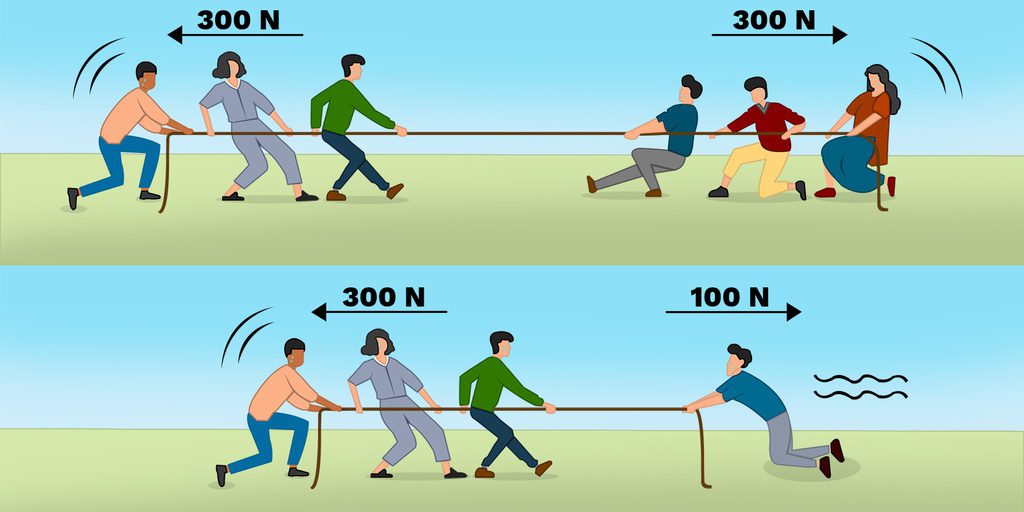
Tug-of-war is a fun and simple way to explore how forces affect motion. A force is a push or a pull. In tug-of-war, both teams pull on the same rope. If the two teams pull with the same amount of force, the rope does not move. These are called balanced forces. Even though both teams might be pulling as hard as they can, the forces cancel each other out. Because the forces are balanced, the rope stays in place.
If one team pulls harder than the other, the forces become unbalanced. This causes the rope to move toward the stronger team. The greater the difference between the two pulling forces, the faster the rope will move. This is why a very strong team can move the rope quickly, while teams of similar strength may hardly move it at all.
Friction also plays a role. The players’ shoes push against the ground, and friction helps them stay in place. If a team slips or loses footing, the friction force weakens, and the rope may suddenly jerk forward. By observing how the rope behaves, we can learn when forces are balanced and when they are not.
Diagram 1.
Source: https://theory.labster.com/balanced-and-unbalanced-forces/
Table 1.
Team | Force (N) | Condition | Rope Position (cm) |
|---|---|---|---|
Team A | 120 | Balanced | 0 |
Team B | 120 | Balanced | 0 |
Team A | 135 | Unbalanced | 12 |
Team B | 110 | Unbalanced | 28 |
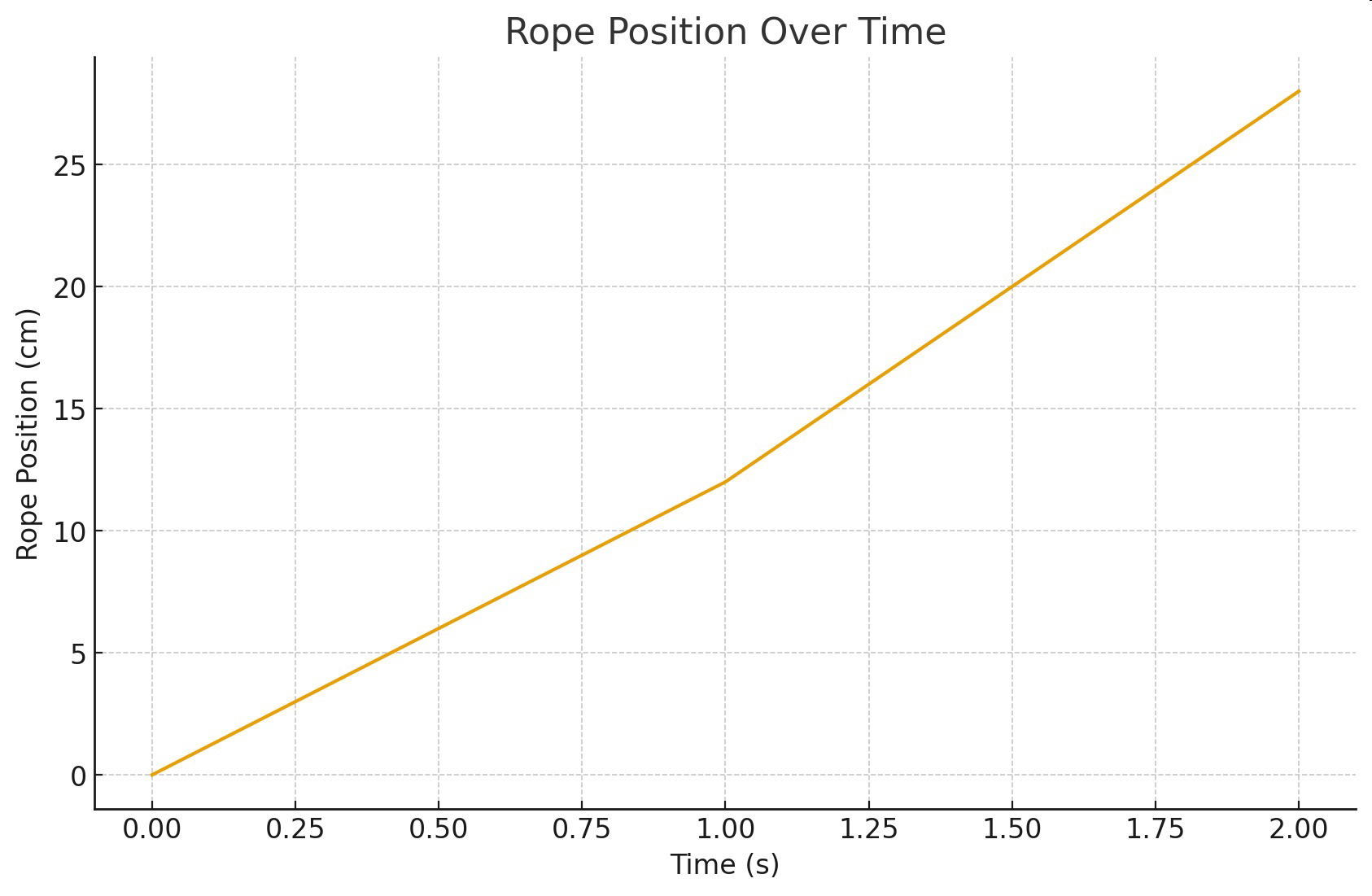
Graph of Information - Figure 1.
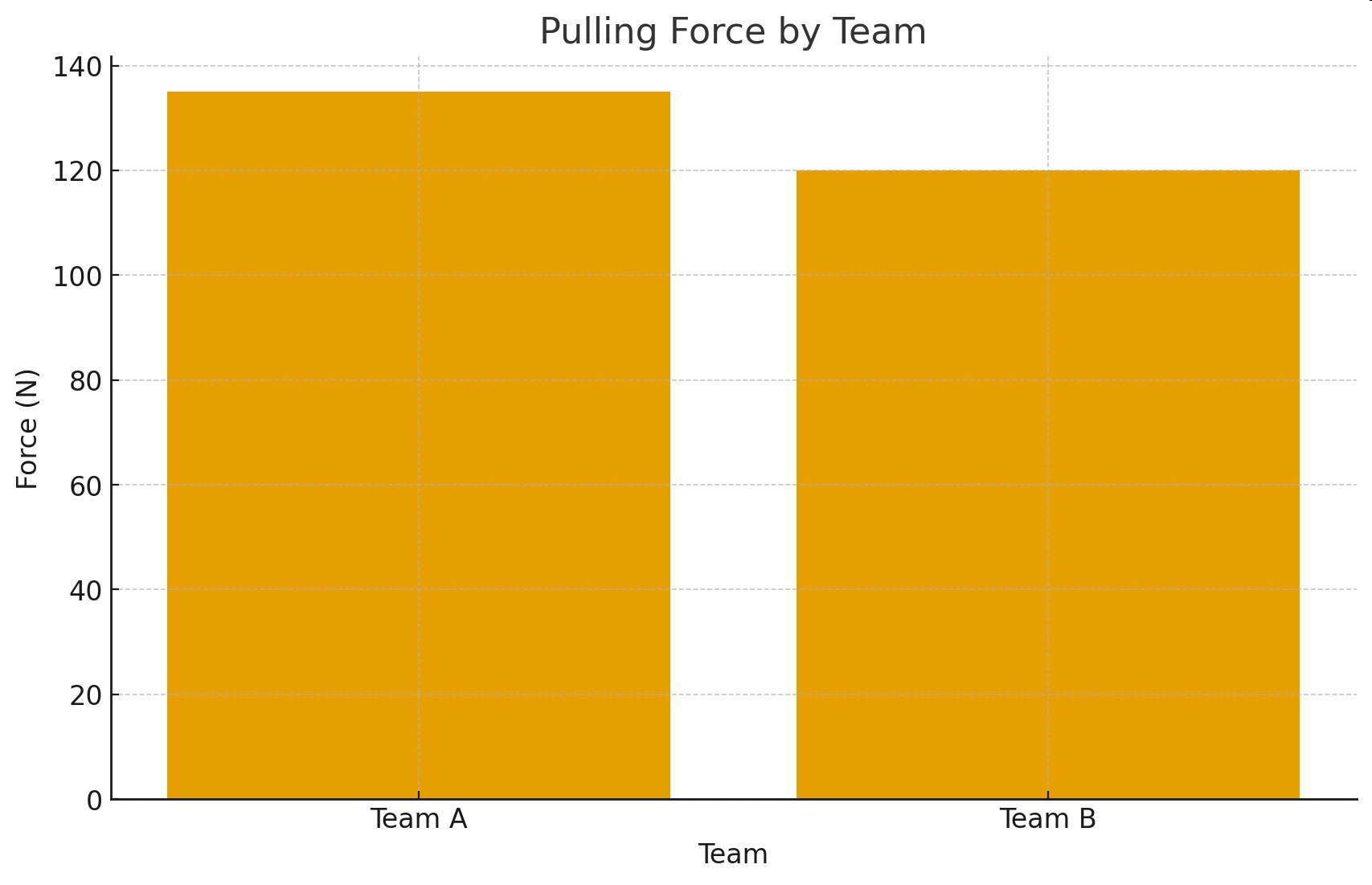
Graph of Information - Figure 2.