Two Magnets Repelling Each Other
Real-Life Phenomenon
When the north pole of one magnet is brought near the north pole of another magnet, the magnets push away from each other without ever touching. The closer the magnets get, the stronger the repelling force becomes.
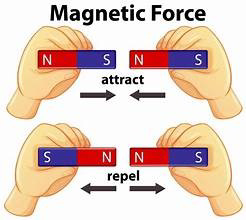
Magnets can attract or repel objects without touching them. This happens because magnets create an invisible area around them called a magnetic field. When another magnet enters this field, it feels a push or pull depending on how the two magnets are lined up. When you place like poles together (north–north or south–south), the magnets repel each other. This means they push away, even though there is no contact.
As you move the magnets closer, the repelling force becomes stronger. You can observe this by slowly pushing one magnet toward another and watching how the second magnet slides away or turns to avoid the matching poles. If you measure the distance each magnet moves, you can see a clear pattern: less distance between magnets → stronger magnetic force → greater movement.
This cause-and-effect relationship helps students ask questions such as: Why do magnets repel when poles match? How does distance change the strength of the repelling force? What would happen if one magnet was stronger than the other? Observing magnet interactions allows us to learn how magnetic forces act between objects that are not touching.
Diagram 1.
Source:
https://www.science-sparks.com/the-science-behind-10-everyday-phenomena/
Table 1.
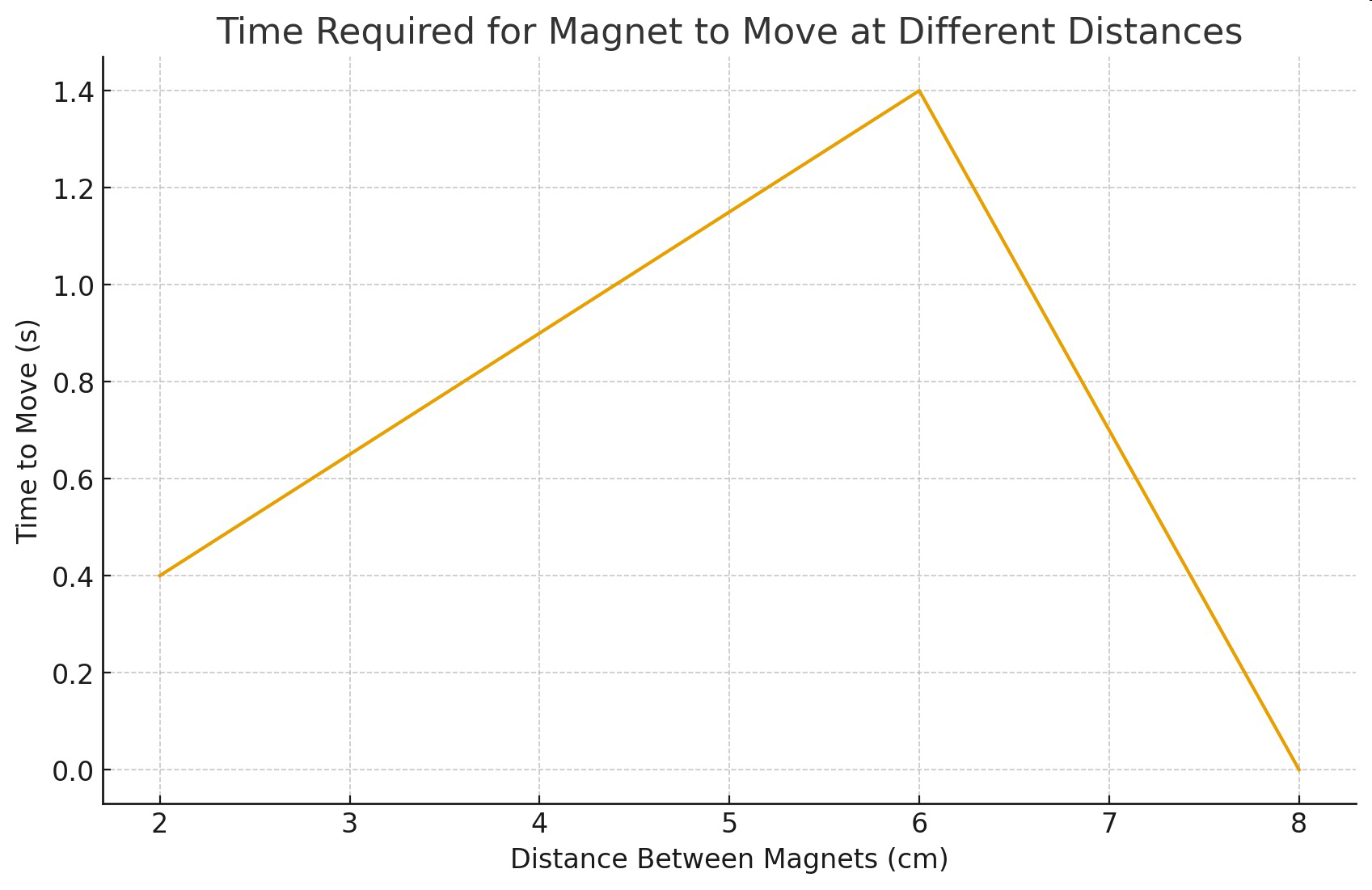
Distance Between Magnets (cm) | Magnet Movement (cm) | Time to Move (s) |
|---|---|---|
8 | 0 | 0 |
6 | 0.3 | 1.4 |
4 | 1.1 | 0.9 |
2 | 2.7 | 0.4 |
Graph of Information - Figure 1.
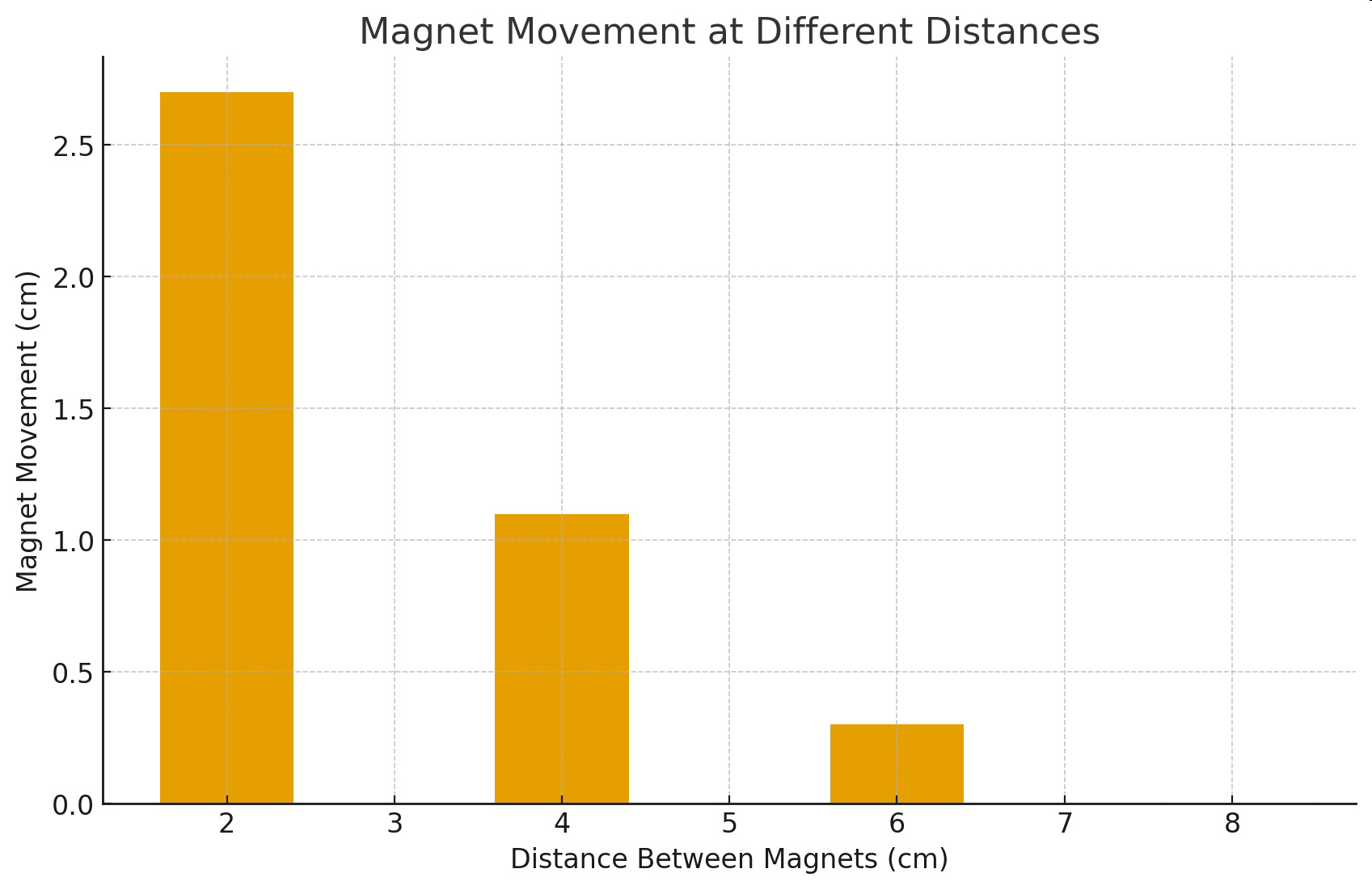
Graph of Information - Figure 2.