Wind Pushing Objects of Different Weights and Shapes
Real-Life Phenomenon
When the wind blows, light objects such as paper or leaves move easily, while heavier objects like plastic cups or small toys barely move at all. This shows how unbalanced forces affect motion differently depending on an object's mass and surface area.
Wind is moving air, and moving air can push objects. A force is a push or a pull, so wind is a force that can change the motion of things around us. When the wind pushes an object, it may slide, roll, or tip over. But not all objects move the same way. Some move easily, and some barely move at all.
Light objects, such as paper or leaves, have less mass, so they need only a small unbalanced force to start moving. Wind can push these objects quickly. Objects with large surface area, like flat pieces of paper, also catch more wind, which increases the force pushing them.
Heavier objects, such as a plastic cup filled with a few pennies or a wooden block, have more mass. These objects require a much stronger unbalanced force before they begin moving. Because the wind often isn’t strong enough, these heavier objects may barely move or not move at all.
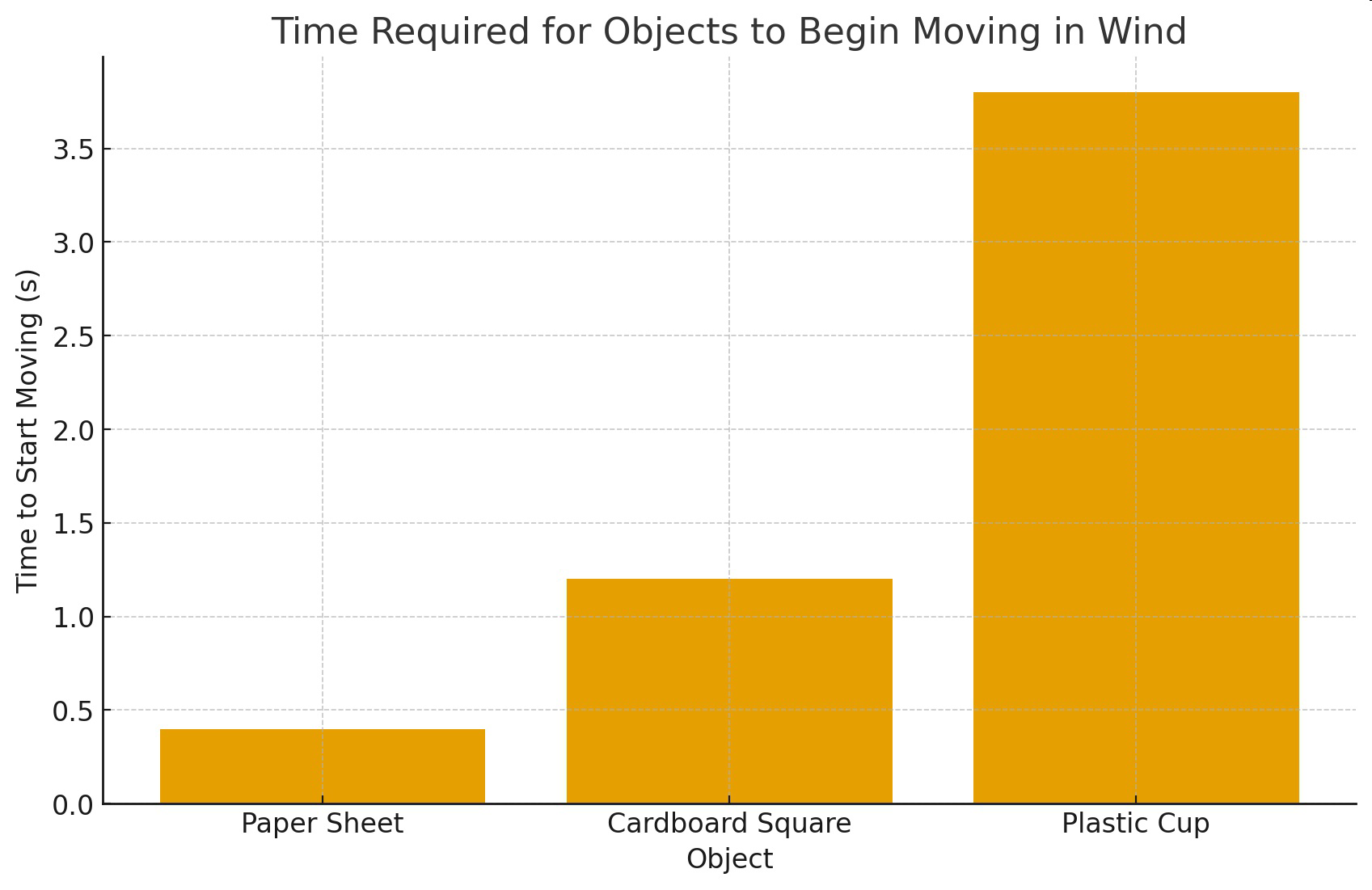
By comparing how far different objects move in the same wind, we can see how the strength of the force and the properties of the object both affect motion. This helps us understand how unbalanced forces cause changes in motion.
Diagram 1.
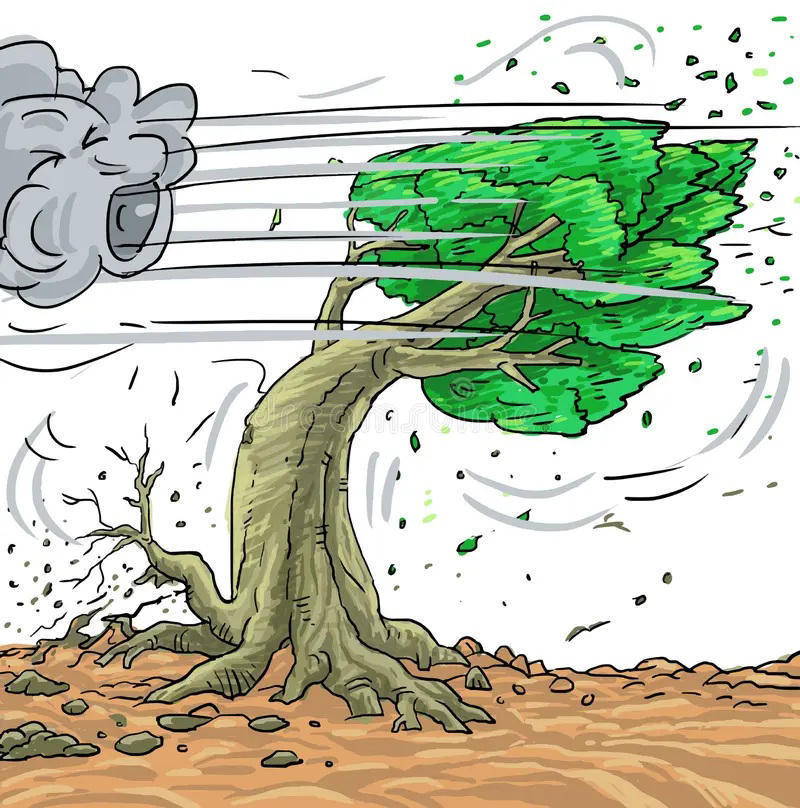 Source: https://www.dreamstime.com/illustration/strong-wind-tree.html
Table 1.
Object | Distance Moved (cm) | Time to Start Moving (s) |
|---|
Paper Sheet | 85 | 0.4 |
Cardboard Square | 42 | 1.2 |
Plastic Cup | 6 | 3.8 |
Graph of Information - Figure 1.
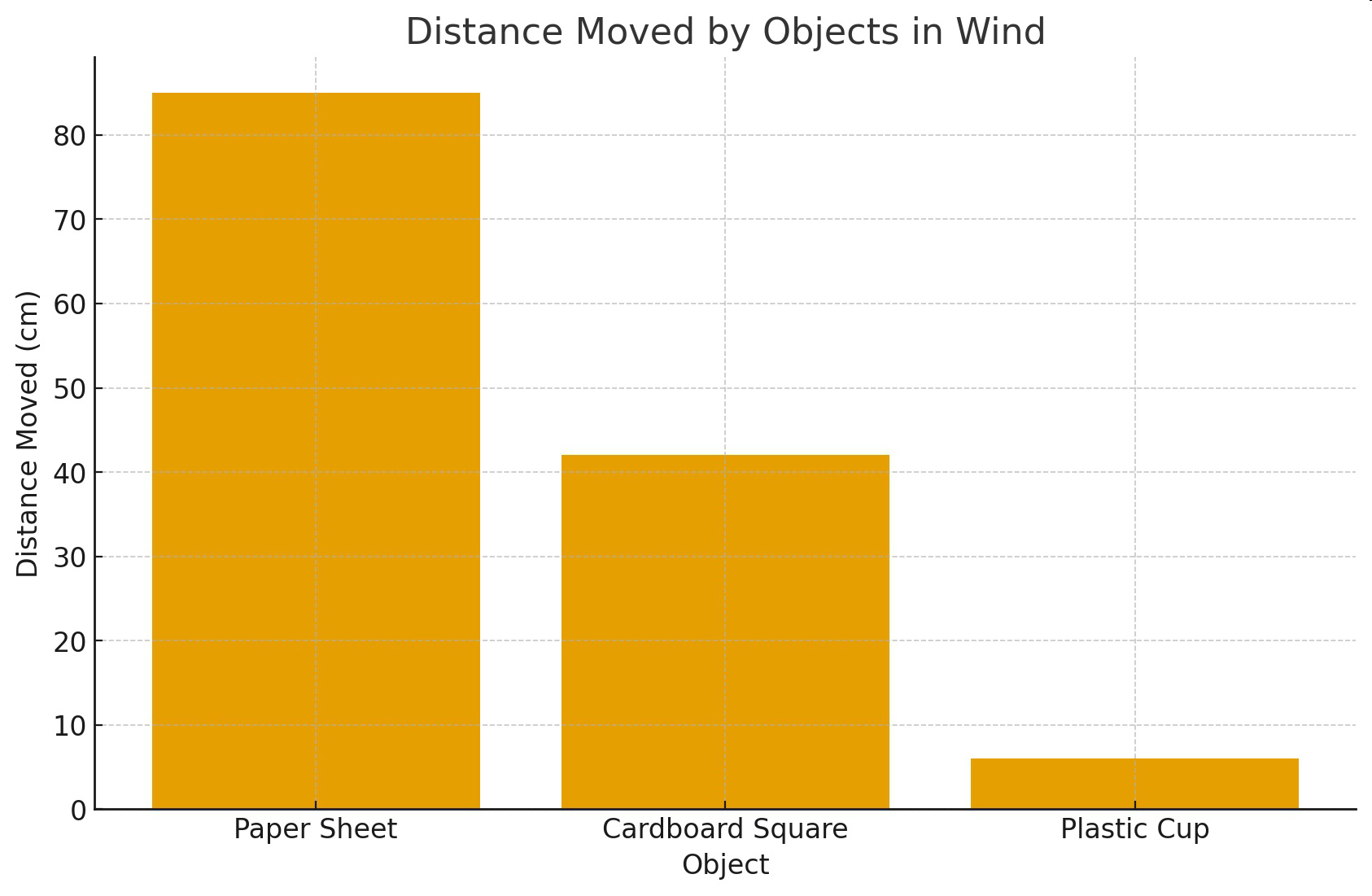
Graph of Information - Figure 2.