Bears Eating Salmon That Fed on Sun-Powered Algae
Diagram 1.
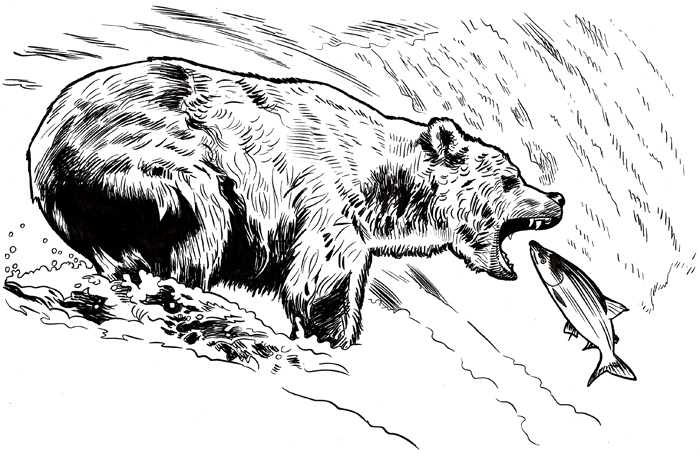 Source: https://www.pinterest.com/pin/341781059214867656/
Phenomenon
Each fall, bears gather near rivers to catch salmon. The salmon, earlier in their lives, fed on tiny aquatic organisms that depend on algae. The algae, like all plants, get their energy from the Sun.
Students ask: How is a bear’s energy connected to the Sun, even though it never ate a plant?
This investigation helps students model how solar energy moves through multiple organisms in a food chain.
Animals need energy to move, grow, repair their bodies, and stay warm. Bears especially need a lot of energy before winter, when they store fat and rest for many weeks. But where does all this energy come from?
The salmon that bears eat do not make their own energy. Instead, salmon get energy by eating small aquatic organisms called zooplankton. Zooplankton feed on even smaller organisms, including algae. Algae capture sunlight and use it to make chemical energy through photosynthesis. That energy is stored in the algae’s tissues.
When zooplankton eat algae, they take in that stored solar energy. When salmon eat zooplankton, the energy moves again. Finally, when the bear eats the salmon, it receives energy that originally came from the Sun.
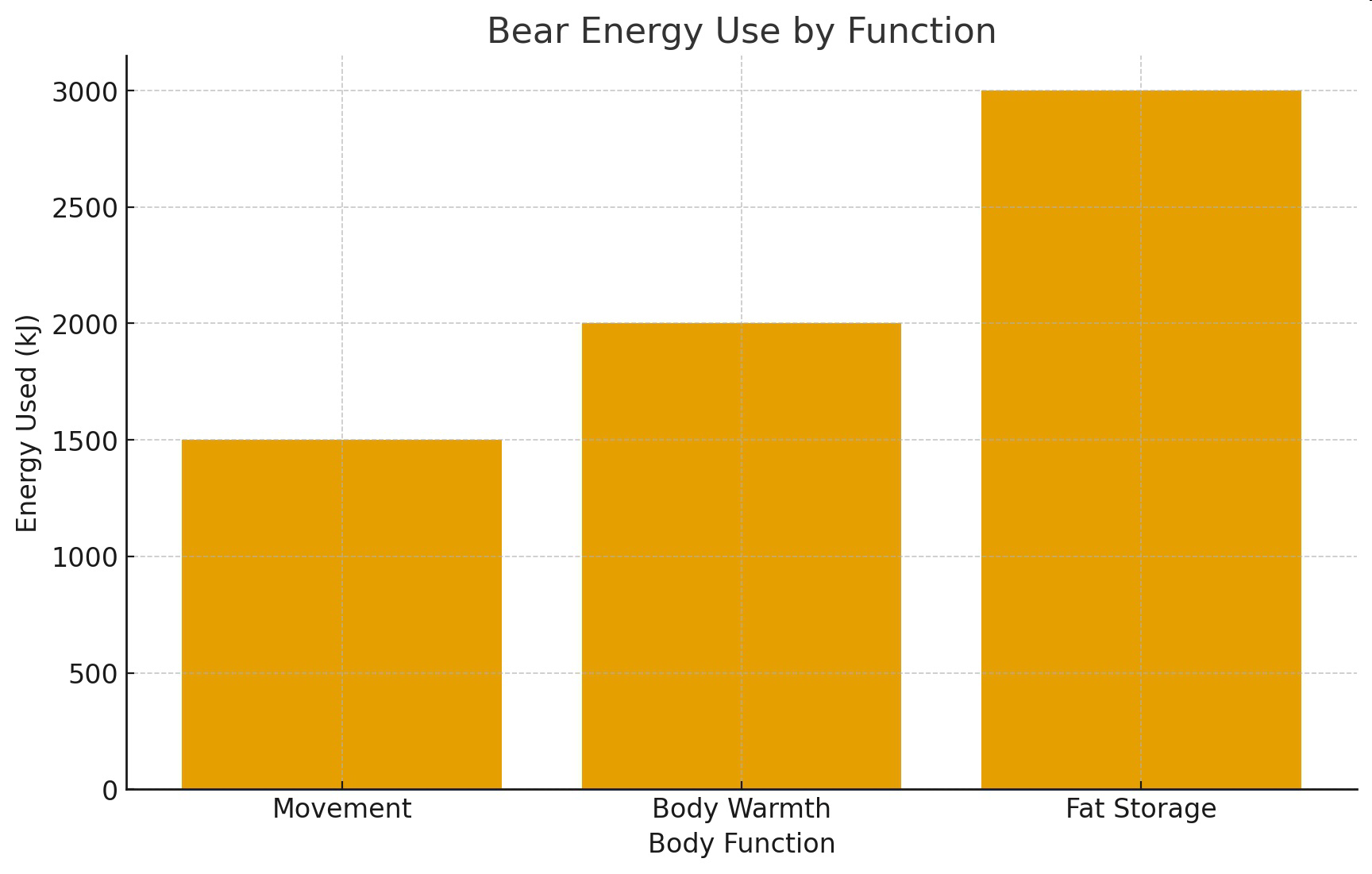
Scientists measure this by examining how much energy is stored in salmon and how much the bear uses for body warmth, movement, and fat storage. Even though the bear never eats algae directly, the energy moving through the food chain can be traced back to sunlight.
Table 1.
Salmon Mass Eaten (kg) | Energy in Salmon (kJ) |
1 | 4000 |
1.5 | 6000 |
2 | 8000 |
Graph of Information - Figure 1.
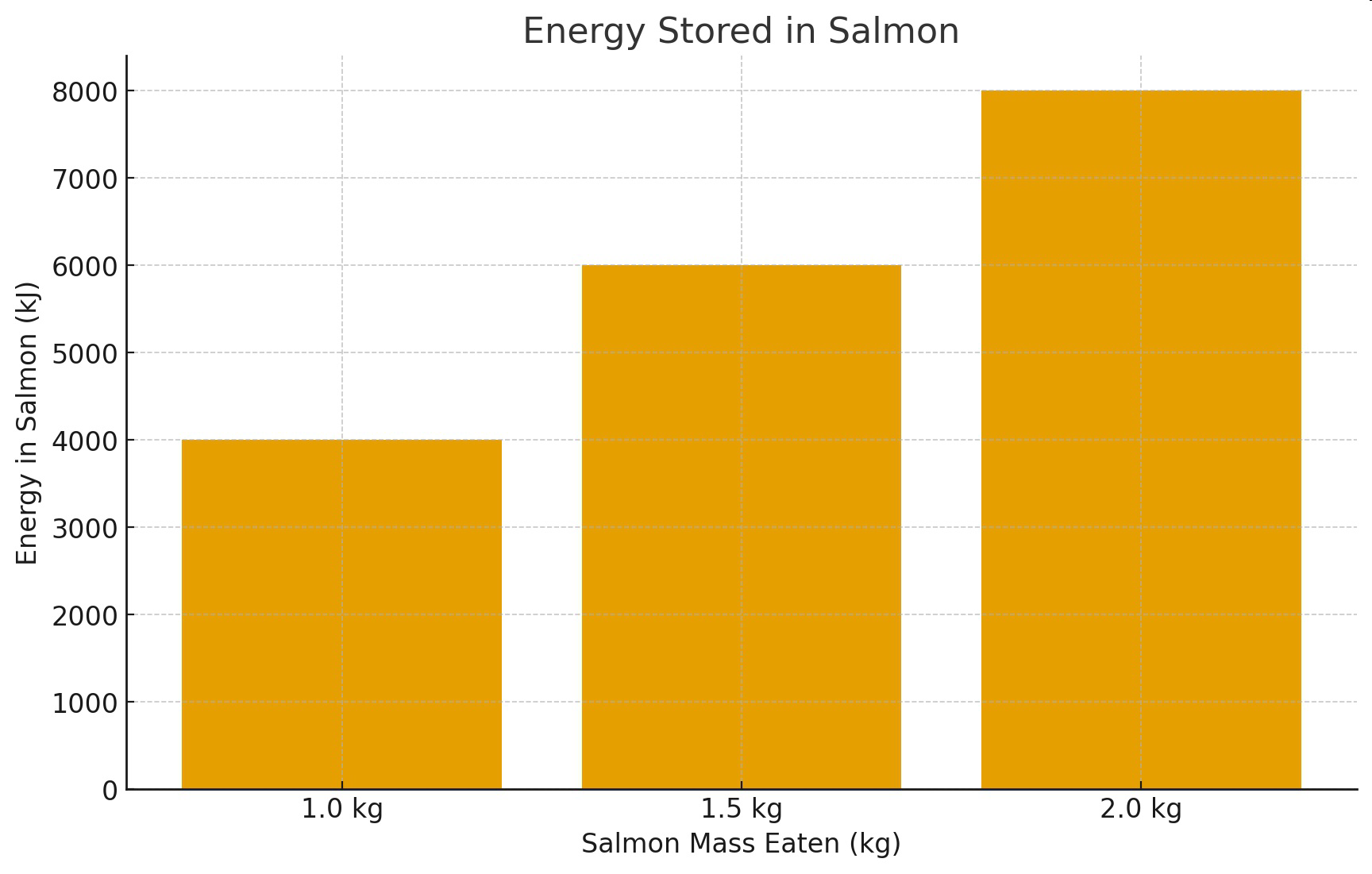
Table 2.
Body Function | Energy Used (kJ) |
Movement | 1500 |
Body Warmth | 2000 |
Fat Storage | 3000 |
Graph of Information - Figure 2.