Tossing Objects Upward and Watching Them Return
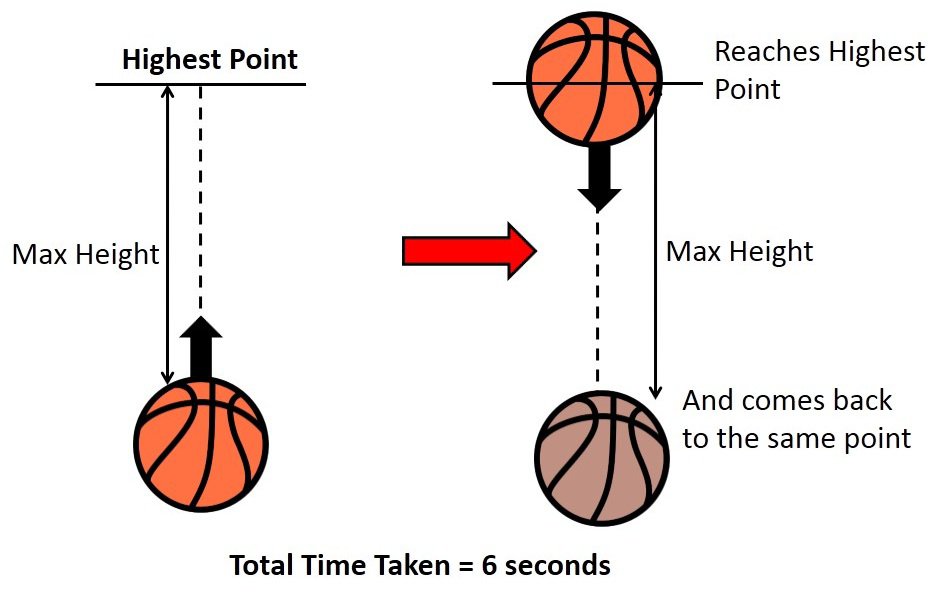
Diagram 1.
 Source: https://www.teachoo.com/10230/3057/NCERT-Question-18/category/NCERT-Questions/
Phenomenon
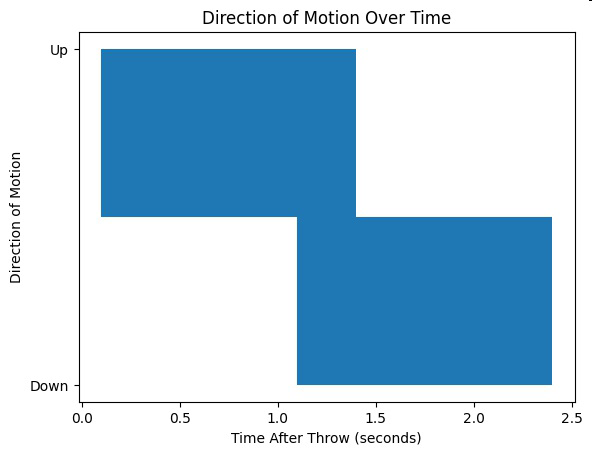
Students toss a soft ball straight upward into the air and watch what happens. The ball moves upward at first, slows down, stops for a moment, and then changes direction and falls back down to the ground.
Students notice:
The ball moves upward only briefly
The ball always turns around and moves downward
The ball never keeps moving upward on its own
Students ask:
Why does an object thrown upward always come back down?
Earth pulls on all objects with a force called gravity. Gravity always pulls objects toward Earth, which means the force of gravity is directed downward toward the ground.
When an object is thrown upward, the push from the hand causes the object to move upward for a short time. However, even while the object is moving up, gravity is still pulling on it. As the object moves higher, gravity slows it down. Eventually, the object stops moving upward and changes direction.
Once the object starts moving downward, gravity continues pulling it toward Earth, causing it to fall faster until it reaches the ground. The direction of the gravitational force does not change. It always points downward.
In this investigation, students observe the motion of a ball thrown straight up. The ball’s motion changes from up to down, but the force of gravity stays the same. These repeated observations support the argument that Earth’s gravitational force on objects is directed down, even when objects are moving upward for a short time.
Table 1.
Time After Throw (s) | Ball Height (m) | Direction of Motion |
|---|---|---|
0 | 0 | |
0.5 | 1.2 | Up |
1 | 2 | Up |
1.5 | 1.2 | Down |
2 | 0 | Down |
Graph of Information - Figure 1.
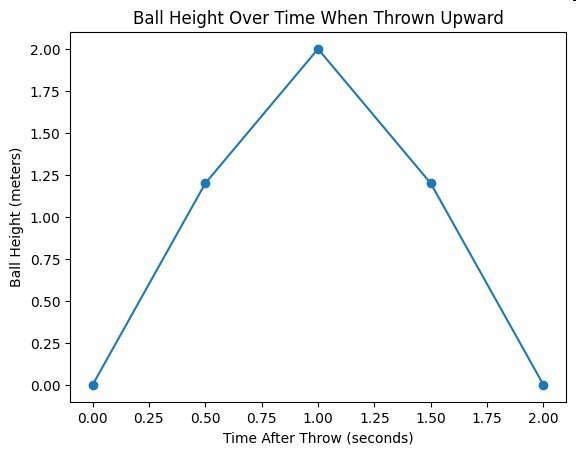
Graph of Information - Figure 2.