Smell Spreading Across the Room
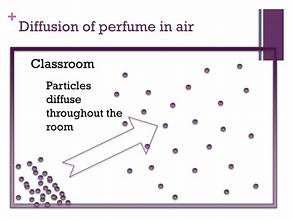
Diagram 1.
Source: https://www.slideserve.com/caitir/agenda-catalyst-permeability-cell-membrane-objectives
Phenomenon
A student opens a jar of cinnamon or peels an orange on one side of the classroom. Within a short time, students across the room smell it - even though they do not see anything moving through the air.
Students ask:
How can a smell travel across the room if we can’t see anything in the air?
This helps students model that matter is made of particles too small to be seen.
Smells spreading across a room are strong evidence that matter is made of tiny particles that cannot be seen. When something has a smell - like cinnamon, oranges, or vinegar - it releases small amounts of matter into the air. These bits of matter are particles much too small to see. Even though the air looks empty, it is actually full of air particles that are always moving.
When odor particles leave the object, they mix with the moving air particles. As the air particles bump, slide, and push past one another, they carry the odor particles around the room. This is why a smell can eventually reach people far away from the source, even if no one sees anything happening.
The farther the particles spread, the more they mix with the air. The smell becomes weaker, but it is still there. This spreading - called diffusion - only works if matter is made of tiny moving particles.
Table 1.
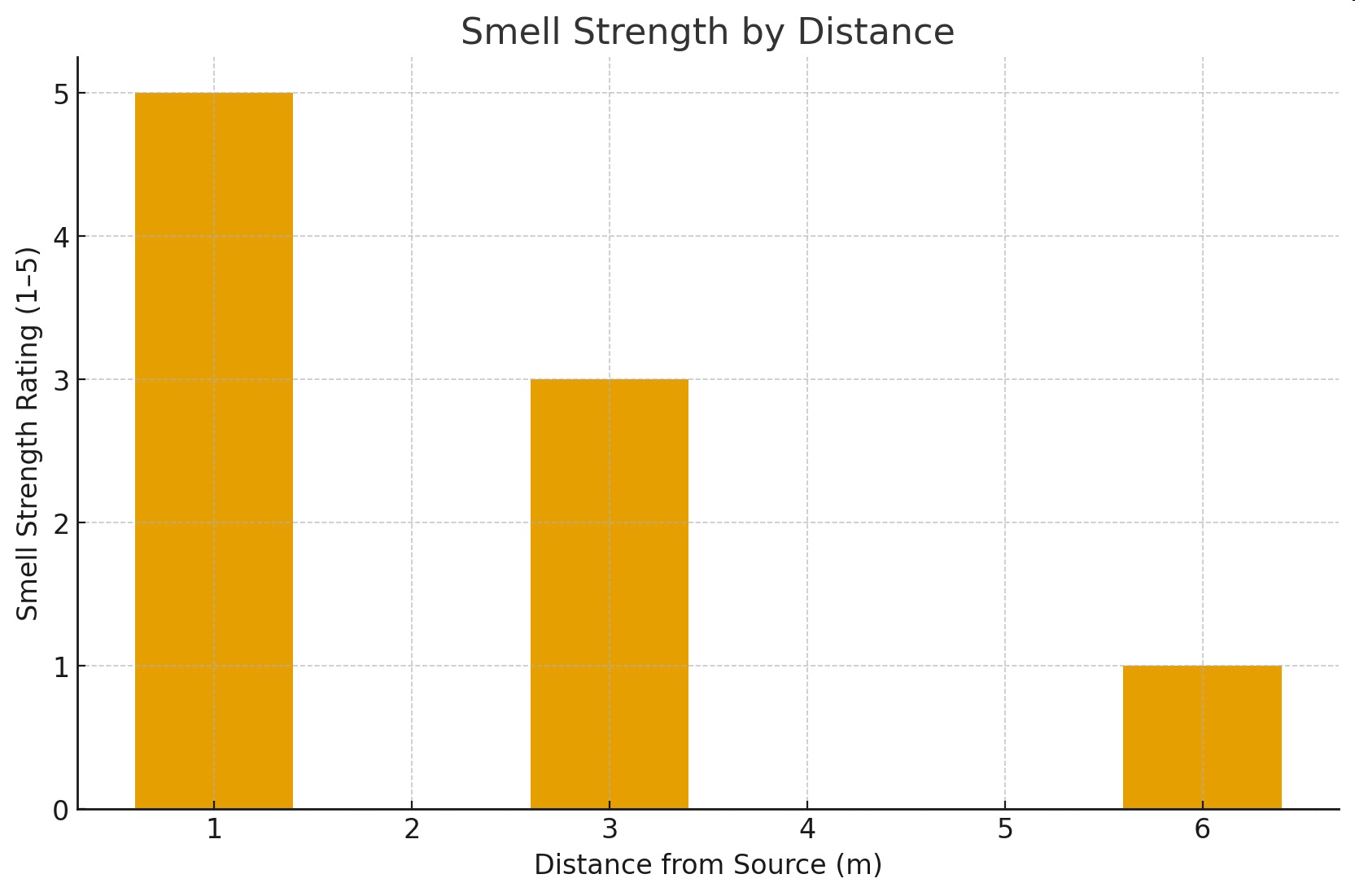
Distance (m) | Time to Detect Smell (s) | Smell Strength (1 to 5) |
|---|
1 | 8 | 5 |
3 | 18 | 3 |
6 | 35 | 1 |
Graph of Information - Figure 1.
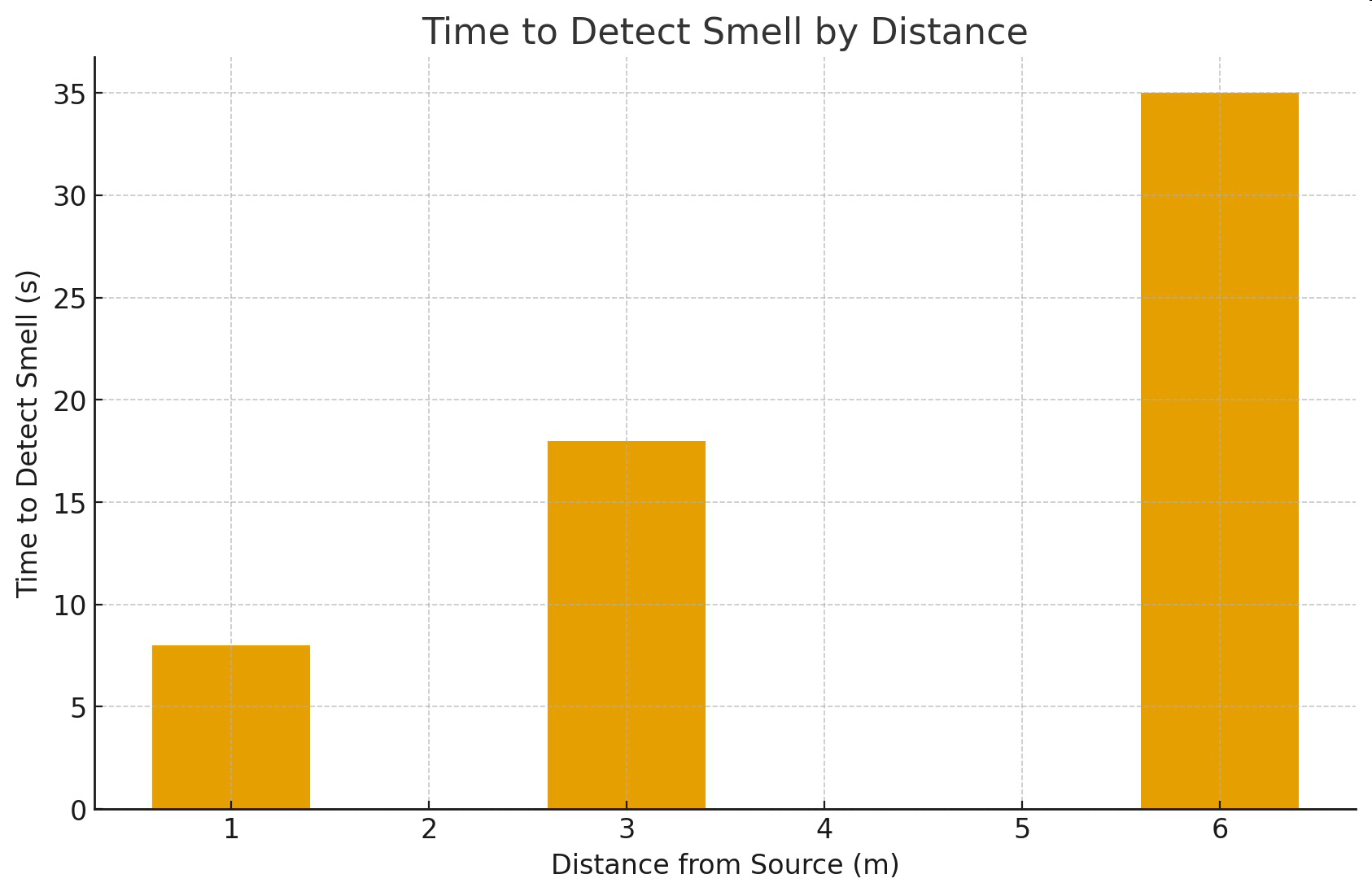
Graph of Information - Figure 2.