“Same Size, Different Mass” Cubes
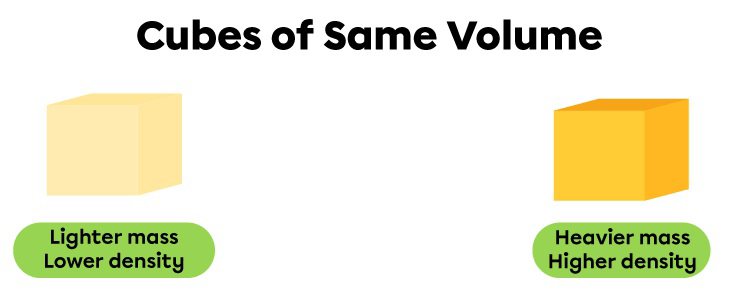
Diagram 1.
Source: https://www.alloprof.qc.ca/en/students/vl/sciences/density-elementary-s1802
Phenomenon
Students receive three cubes that are exactly the same size but made of different materials: wood, plastic, and metal. Even though they look similar in shape and volume, they have very different masses and other measurable properties.
Students wonder: If the cubes look the same, how can we tell what they are made of?
This investigation shows that materials can be identified by their properties, such as density, texture, and whether they float.
Objects made from different materials can sometimes look alike, especially when they are made into the same shape and size. Scientists identify materials by observing and measuring properties. One important property is density, which compares how much mass is packed into a certain volume. Two objects with the same volume can have very different masses if their materials have different densities.
Wood, for example, usually has a low density. A wooden cube feels light and may even float in water. Plastic has a medium density and usually feels heavier than wood but lighter than metal. Metal has a high density, so a metal cube feels much heavier than it looks.
By measuring the mass and volume of each cube, students can calculate density using mass ÷ volume. They can also compare texture, temperature feel, and whether the cube floats or sinks. These properties help students decide what material each cube is most likely made of.
Table 1.
Cube | Mass (g) | Volume (cm ) | Density (g/cm ) | Floats? | Texture |
|---|
A | 80 | 125 | 0.64 | Yes | Smooth |
B | 130 | 125 | 1.04 | No | Smooth |
C | 480 | 125 | 3.84 | No | Cool/metallic |
Graph of Information - Figure 1.
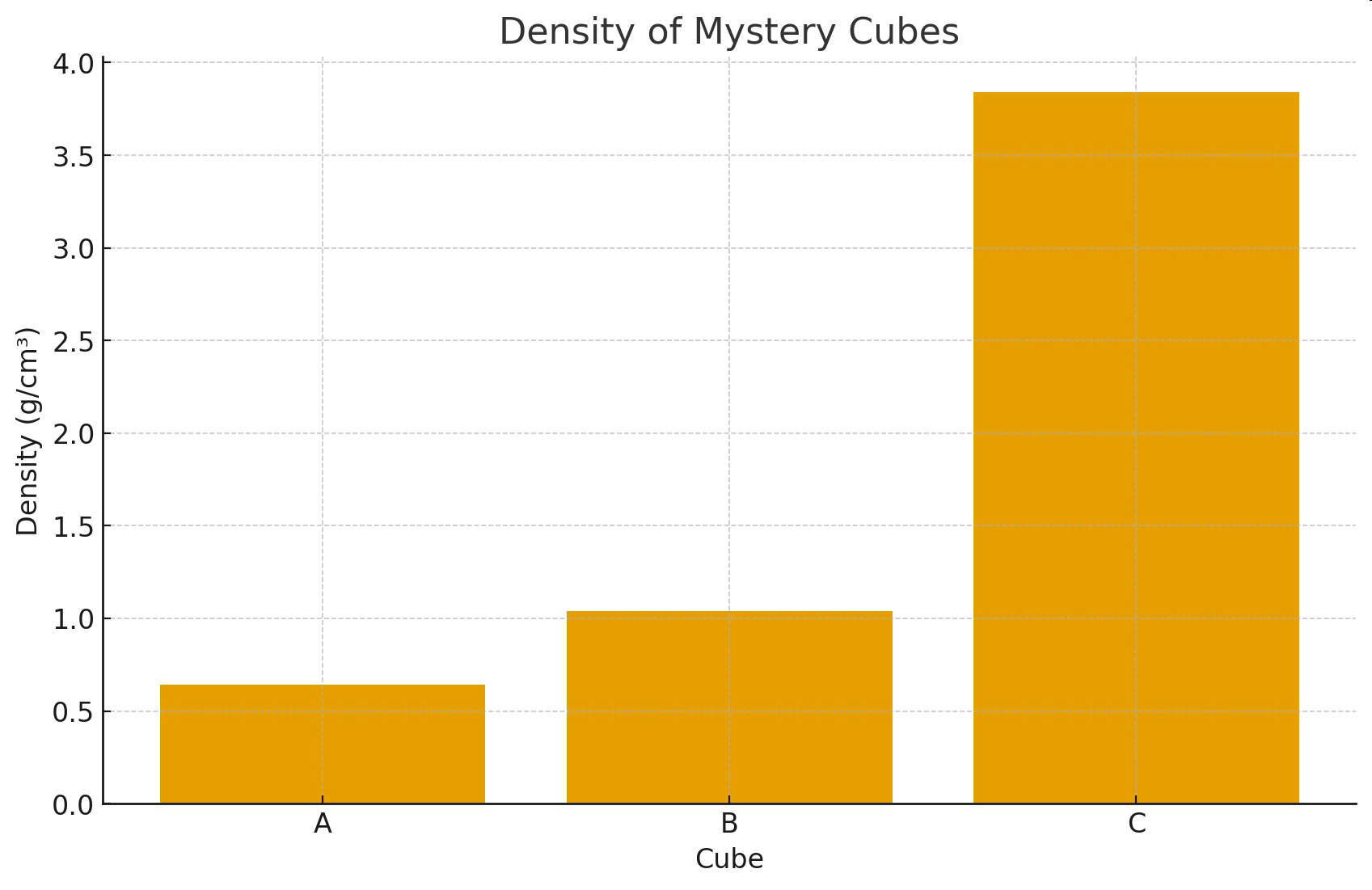
Table 2.
Material | Typical Density (g/cm³) | Floats? | Notes |
|---|
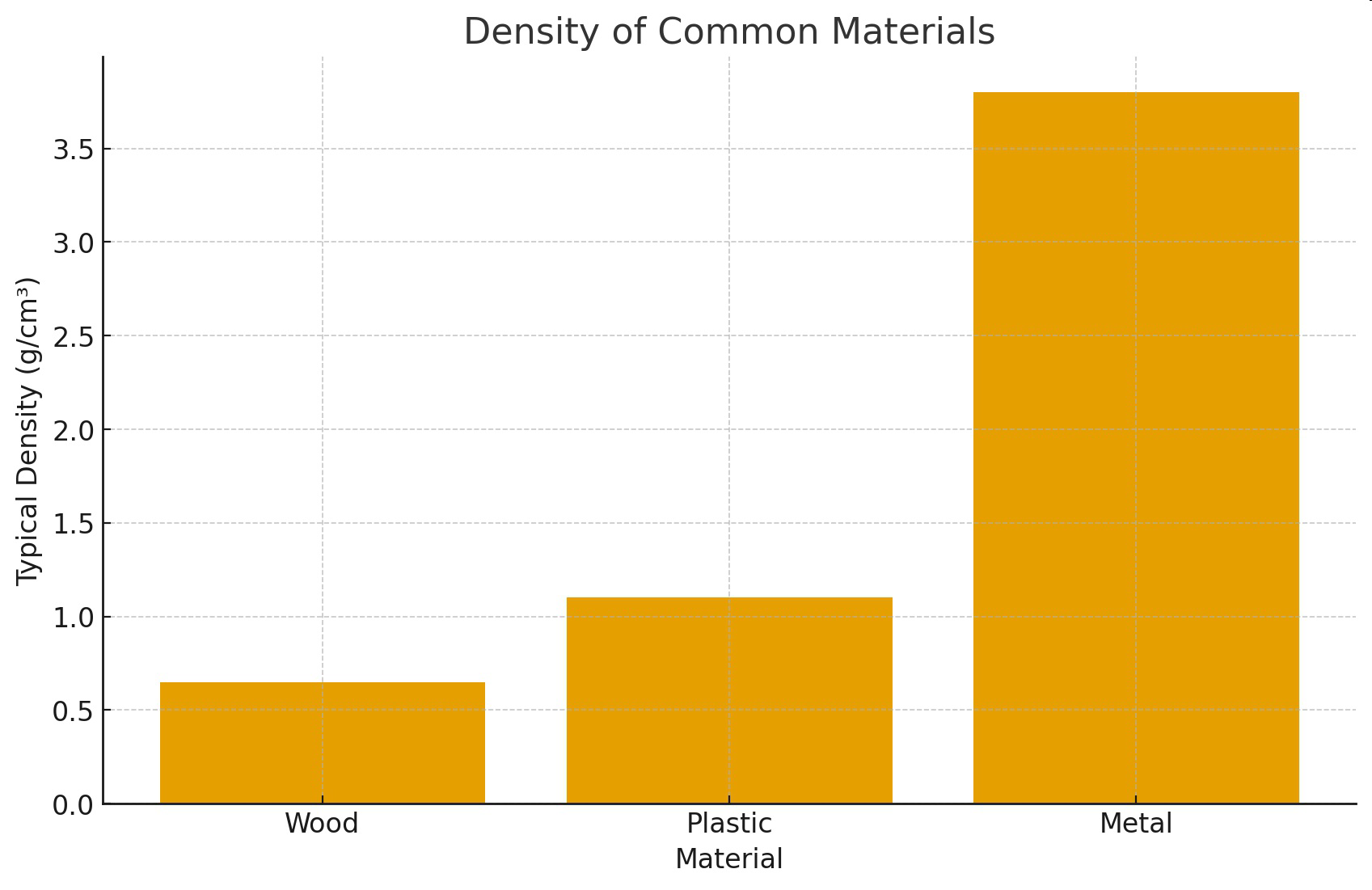
Wood | 0.65 | Yes | Light, warm feel |
Plastic | 1.1 | Sometimes | Smooth feel |
Metal | 3.8 | No | Heavy, cool to touch |
Graph of Information - Figure 2.