Clear Liquid Investigation
Diagram 1.
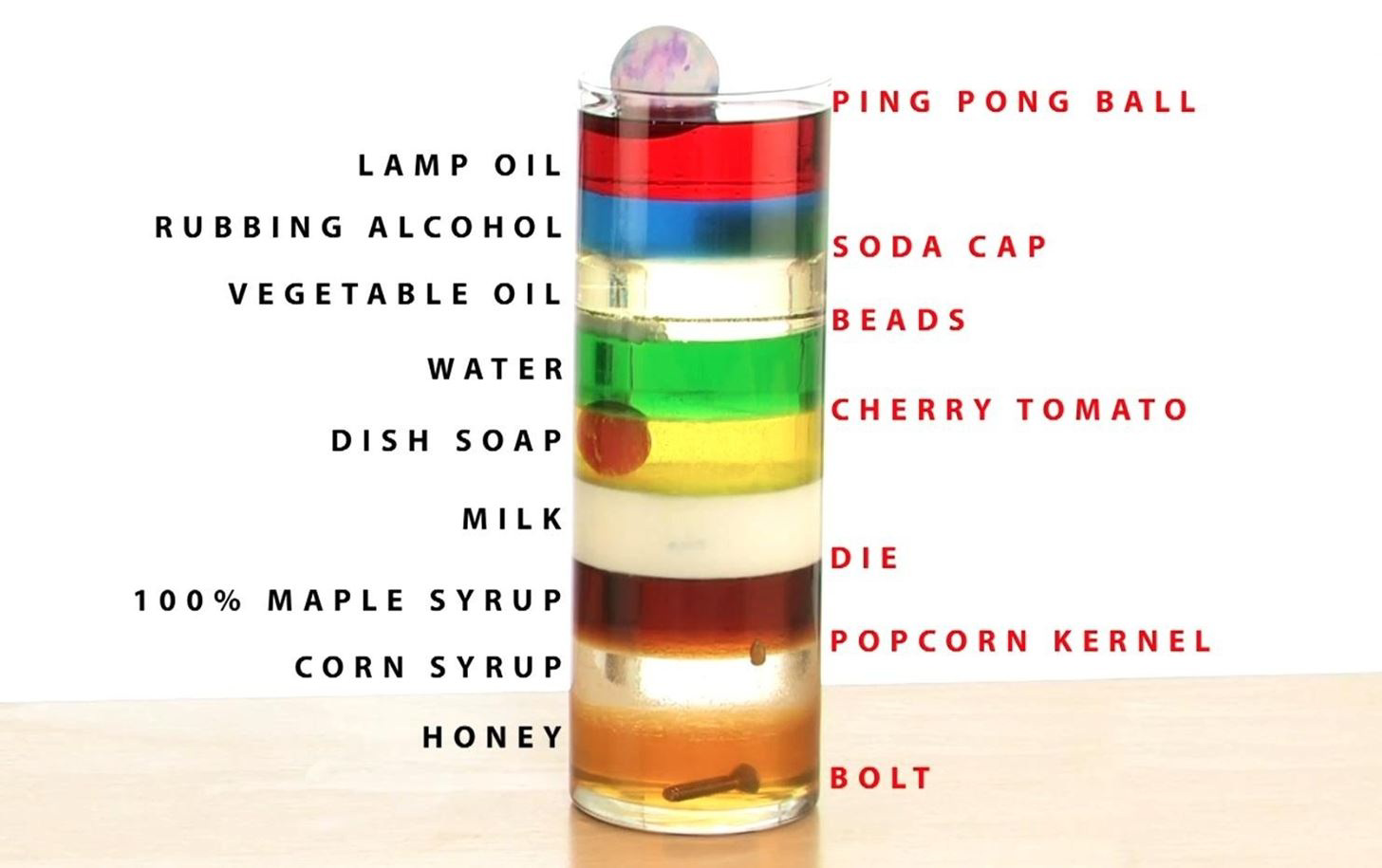 Source: https://studyrocket.co.uk/revision/gcse-physics-combined-science-aqa/combined-trilogy-changes-of-state/density-investigation
Phenomenon
Students are given three clear liquids in cups labeled A, B, and C.
All three look like plain water, but they are actually pure water, salt water, and vinegar.
Students use observations and measurements to figure out which is which by testing properties like smell, reaction with baking soda, and density.
They ask:
If the liquids all look the same, how can we identify them?
This supports the idea that materials can be identified by their properties, not just appearance.
Some materials look the same but are actually very different substances. Clear liquids like water, salt water, and vinegar can be hard to tell apart just by looking. Scientists use properties to identify materials. Properties are characteristics that can be observed or measured, such as smell, how a material reacts, or its density.
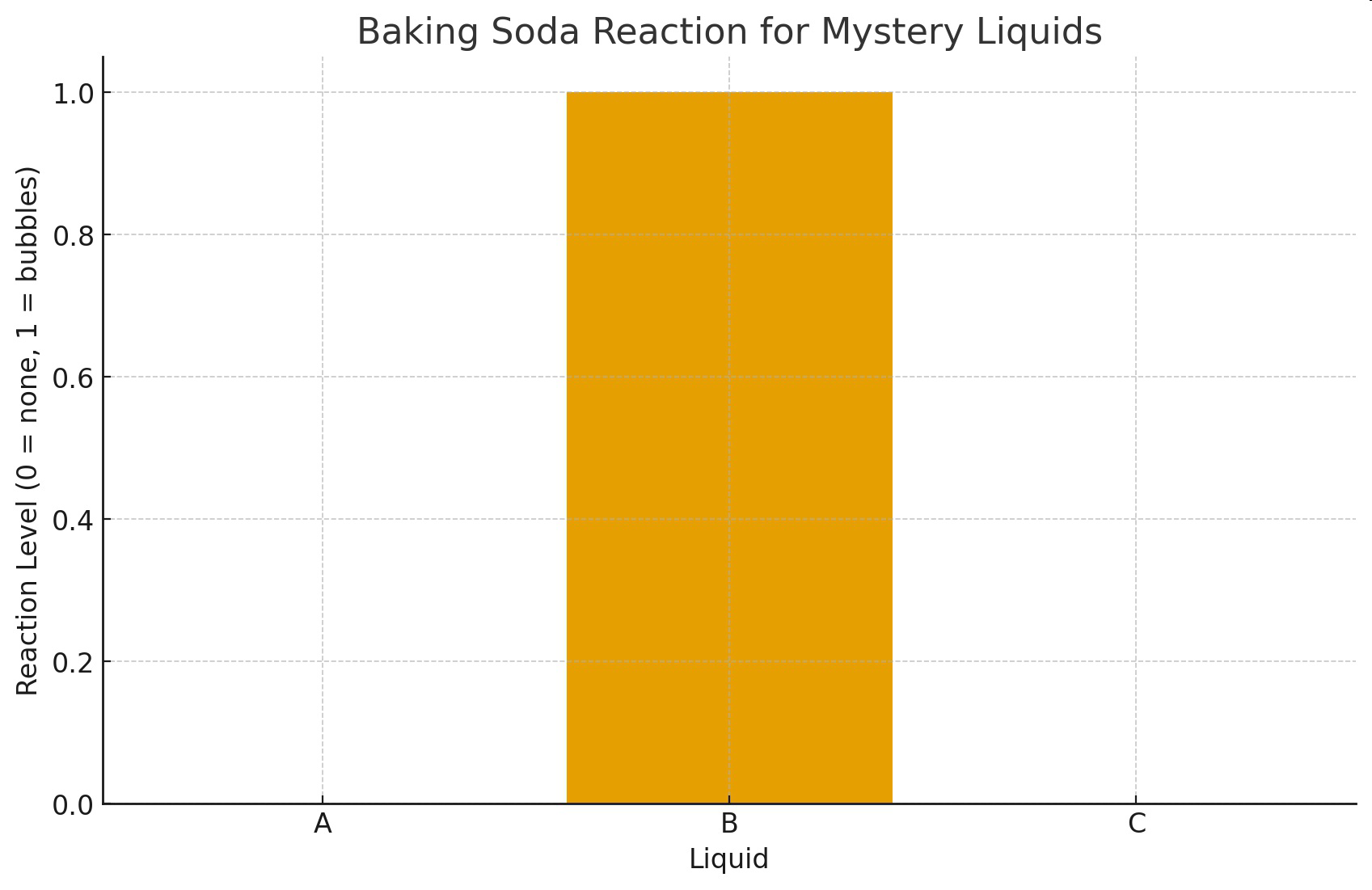
Pure water has almost no smell and does not react with baking soda. Vinegar has a strong sour smell and reacts with baking soda to make bubbles of gas. Salt water may taste salty, but in class we focus on safe tests, such as measuring mass and volume to calculate density. Salt water is slightly denser than pure water, while vinegar’s density can be a bit different too.
By using the same tests on each mystery liquid, students can gather evidence. For example, the liquid that bubbles with baking soda and has a strong smell is probably vinegar. The liquid with the lowest density and no bubbling is most likely pure water. The one with slightly higher density but no bubbling is likely salt water.
These observations show that even when materials look alike, their properties can help identify them.
Table 1.
Liquid | Smell Description | Bubbles with Baking Soda? |
A | No noticeable smell | No |
B | Strong sour smell | Yes |
C | Very slight smell | No |
Graph of Information - Figure 1.
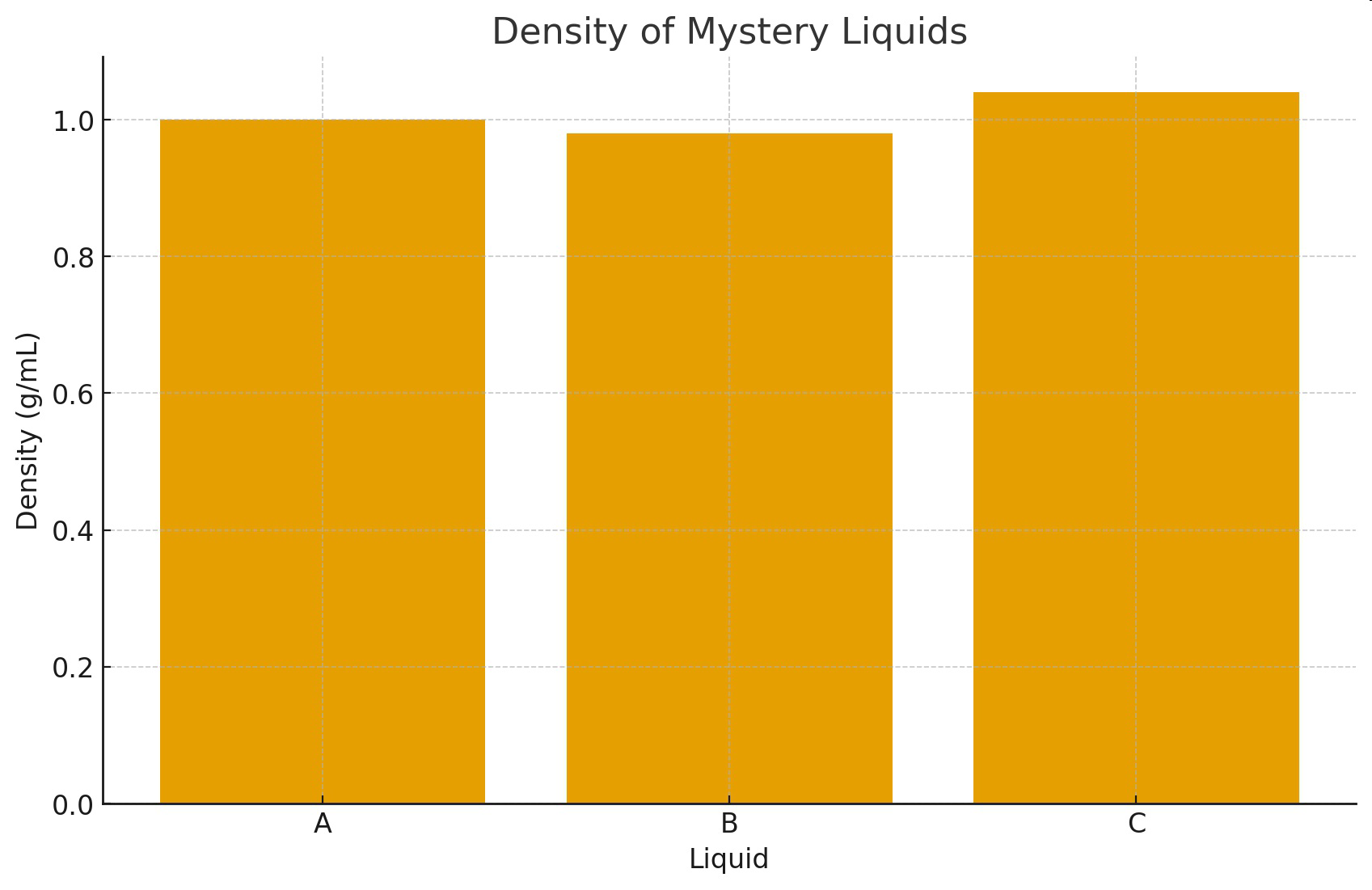
Table 2.
Liquid | Mass of Liquid (g) | Volume (mL) | Density (g/mL) |
|---|
A | 50 | 50 | 1 |
B | 49 | 50 | 0.98 |
C | 52 | 50 | 1.04 |
Graph of Information - Figure 2.