Dissolving Salt in Water
Diagram 1.
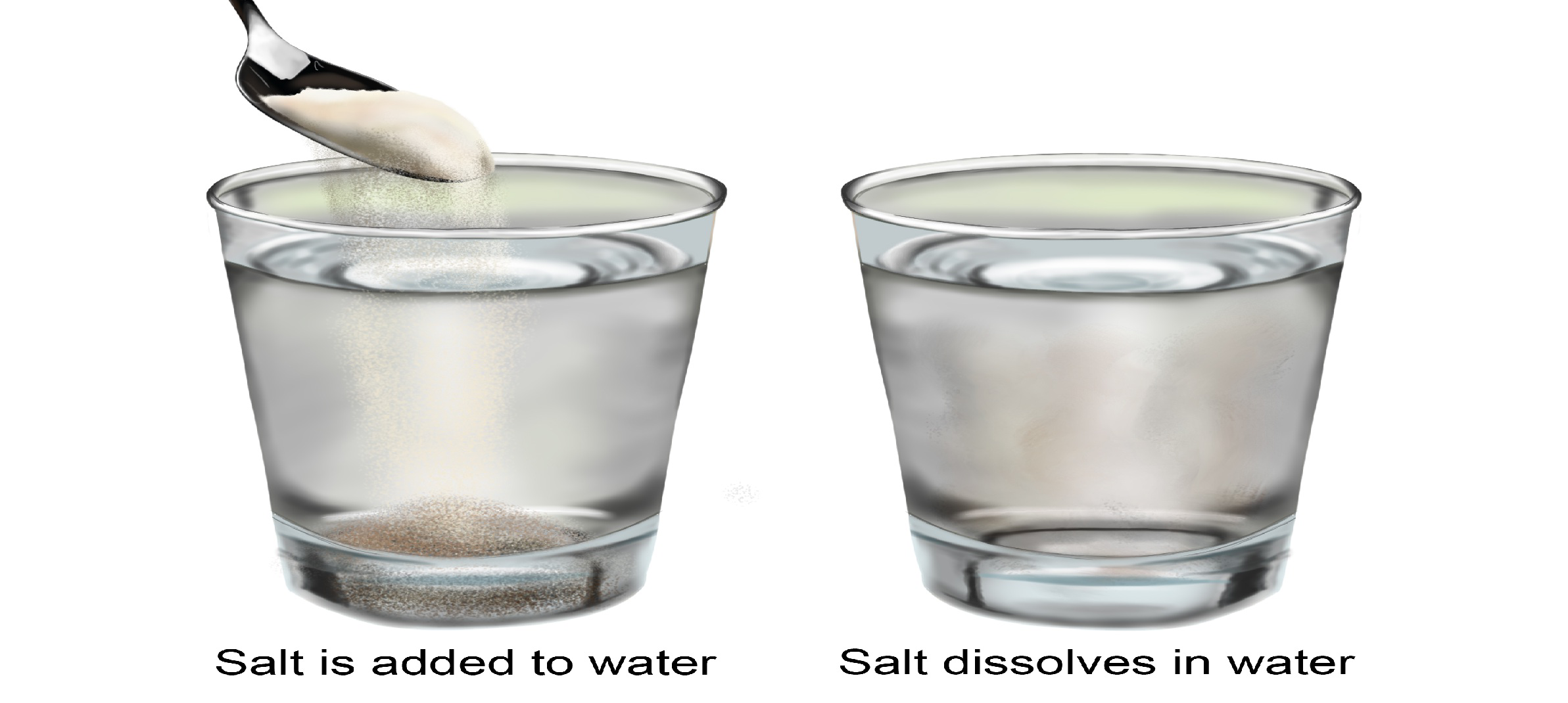 Source: https://ar.inspiredpencil.com/pictures-2023/water-dissolving-salt
Phenomenon
Students measure the mass of a cup of water and a small amount of salt. After stirring the salt into the water, the salt “disappears,” but the total mass of the cup increases by exactly the mass of the salt. Although the appearance changes, the total amount of matter remains constant.
Students ask:
If the salt cannot be seen, is it still there - and has the amount of matter changed?
This helps students gather evidence that mixing substances conserves matter.
When salt dissolves in water, it looks like the salt disappears, but it does not. Salt is made of tiny particles that separate and spread out between water particles. The salt can no longer be seen, but its particles are still present in the mixture.
To find evidence of this, students measure mass. Before dissolving, the mass of the water and the mass of the salt can be recorded separately. After mixing, the cup is measured again. If the system stays closed - meaning no water spills or evaporates - the total mass before and after dissolving will be the same.
Even though the mixture looks different, the salt particles still exist, and their mass contributes to the final measurement. This shows that mixing does not create or destroy matter. It only changes how the particles are arranged.
Dissolving is a physical change: the salt breaks apart into particles too small to see, but the number of particles stays the same. Measuring mass before and after the change provides strong evidence that matter is conserved during mixing.
Table 1.
Trial | Mass of Water (g) | Mass of Salt (g) | Total Mass Before (g) | Total Mass After (g) |
|---|
1 | 200 | 5 | 205 | 205 |
2 | 200 | 10 | 210 | 210 |
3 | 200 | 15 | 215 | 215 |
Graph of Information - Figure 1.
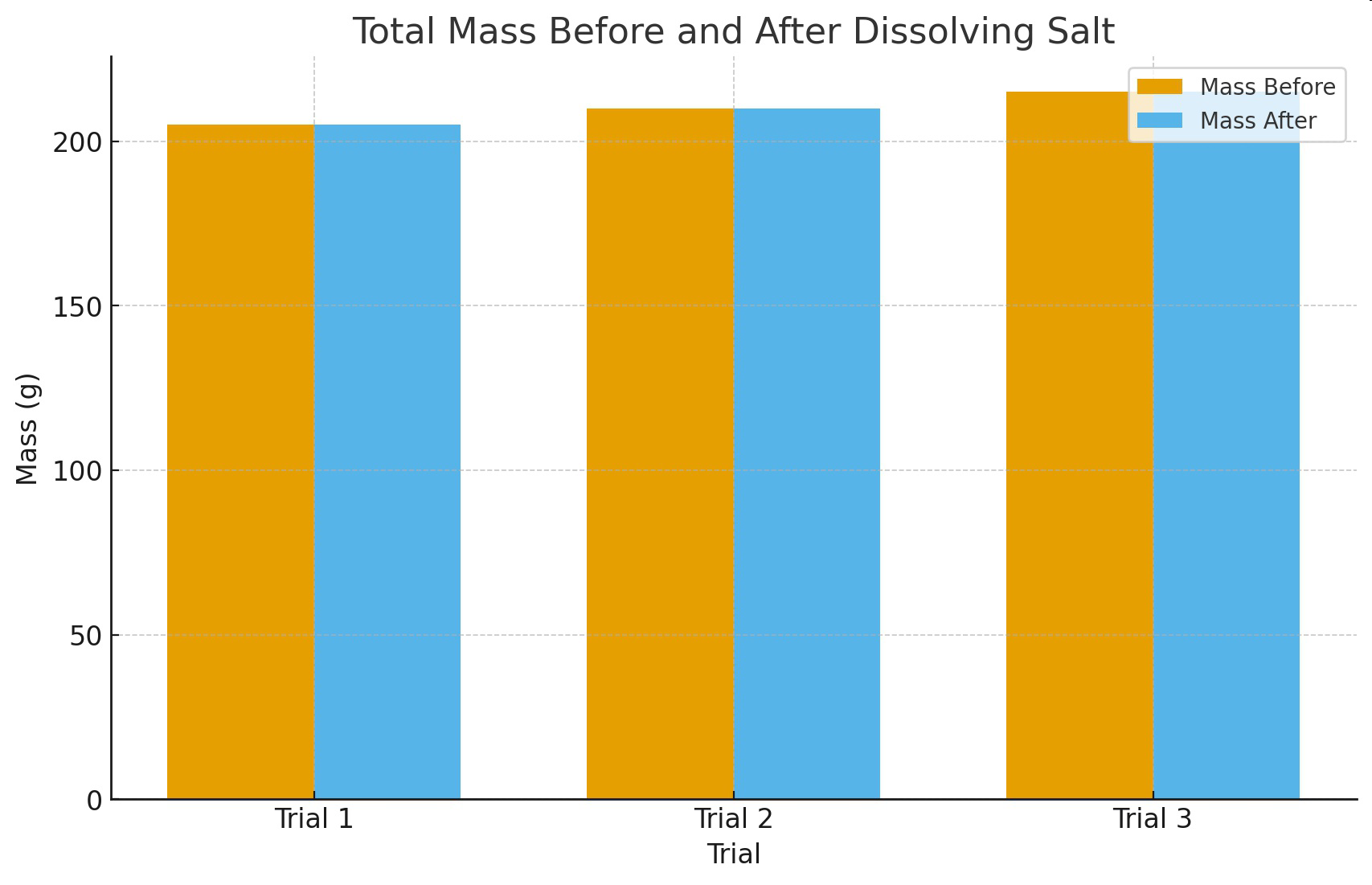
Table 2.
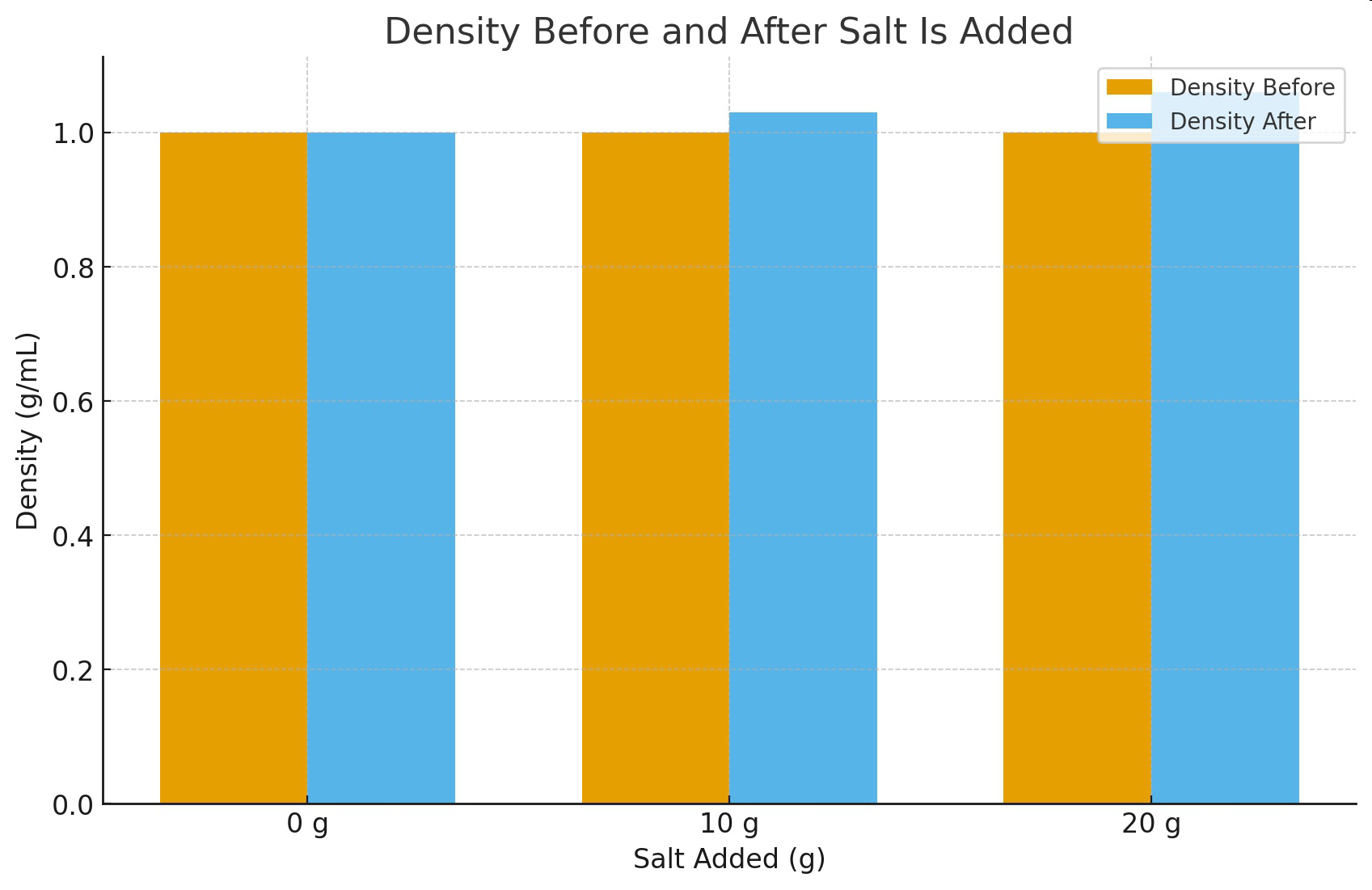
Salt Added (g) | Density Before (g/mL) | Density After (g/mL) |
|---|
0 | 1 | 1 |
10 | 1 | 1.03 |
20 | 1 | 1.06 |
Graph of Information - Figure 2.