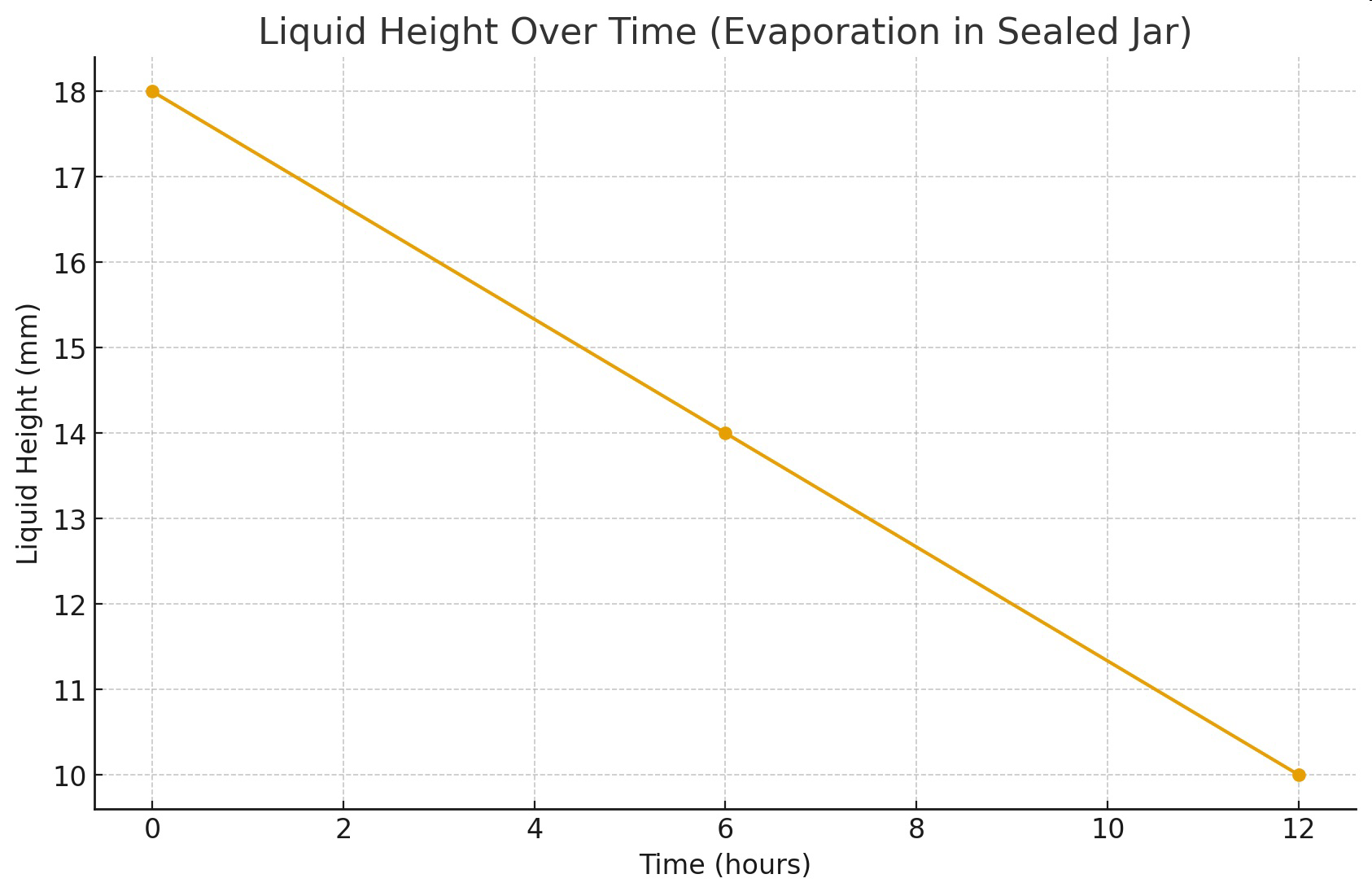
Evaporation in a Sealed Jar
Diagram 1.
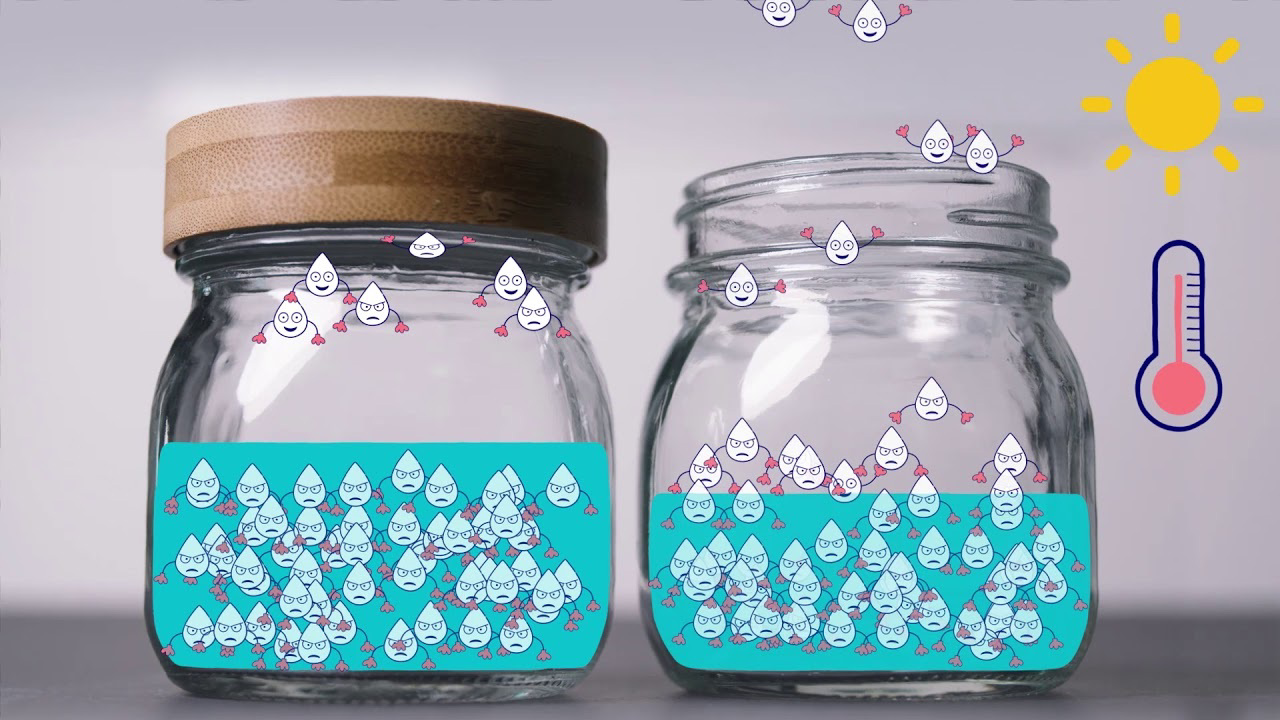 Source: https://ar.inspiredpencil.com/pictures-2023/can-evaporated-water
Diagram 2.
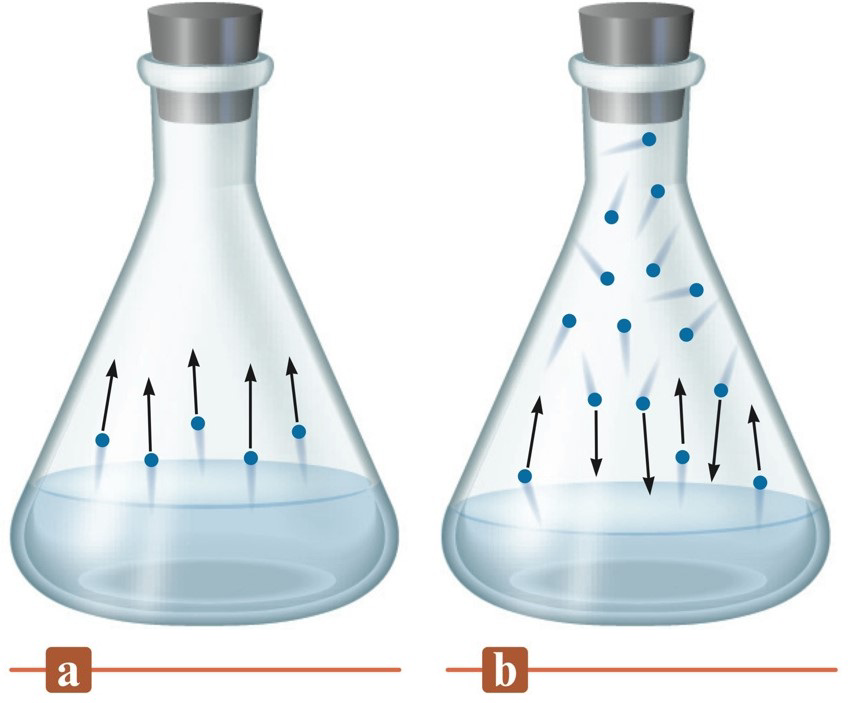 Source:
https://pp.one/
Phenomenon
Students pour a small amount of rubbing alcohol into a sealed glass jar and measure its mass. After several hours, some of the liquid has evaporated and the liquid level decreases. However, the total mass of the sealed jar stays exactly the same.
Students wonder:
If some of the liquid “disappeared,” why didn’t the mass change?
This helps them understand that matter is conserved even when substances change state.
When a liquid evaporates, it does not disappear. Instead, its particles spread out into the air as a gas. In an open container, these particles drift away, so it looks like the liquid level goes down because matter has left the container. But in a sealed system, the particles cannot escape. They simply move from the liquid into the air space above it.
Even though the amount of liquid decreases, the total number of particles in the jar stays the same. Some particles are in the liquid state, and some are in the gas state, but none have disappeared. Because matter is made of particles, and because those particles remain inside the sealed jar, the total mass remains constant.
Students collect evidence by measuring mass before and after evaporation takes place. Even as the liquid level drops, the balance shows that the mass has not changed. This demonstrates that heating, cooling, and phase changes – such as evaporation – do not create or destroy matter when the system is closed. The particles simply rearrange and move into new spaces.
Table 1.
Trial | Mass Before (g) | Mass After (g) |
|---|
1 | 310 | 310 |
2 | 308 | 308 |
3 | 315 | 315 |
Graph of Information - Figure 1.
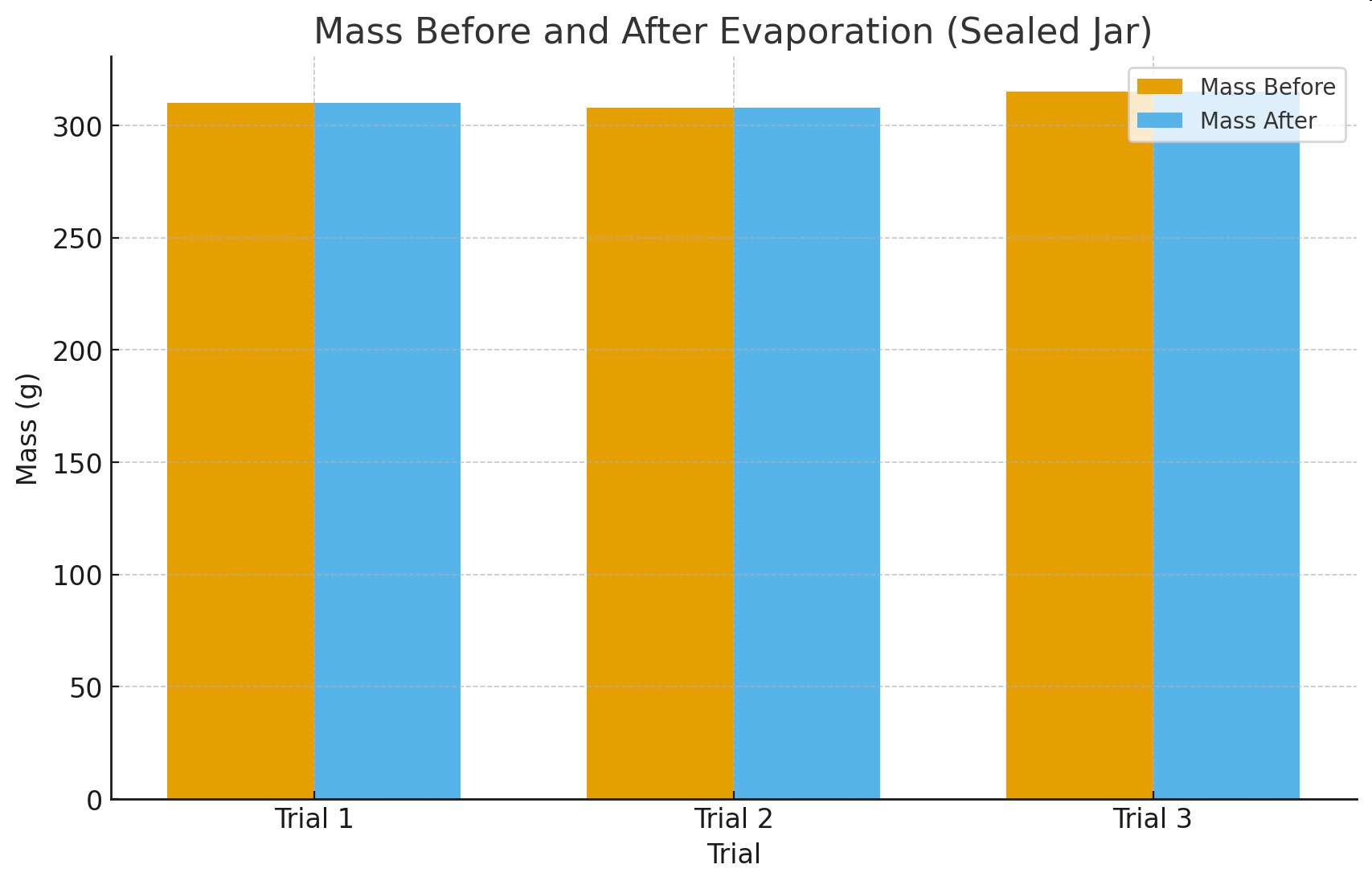
Table 2.
Time (hours) | Liquid Height (mm) |
|---|
0 | 18 |
6 | 14 |
12 | 10 |
Graph of Information - Figure 2.