Ice Melting in a Closed Container
Diagram 1.
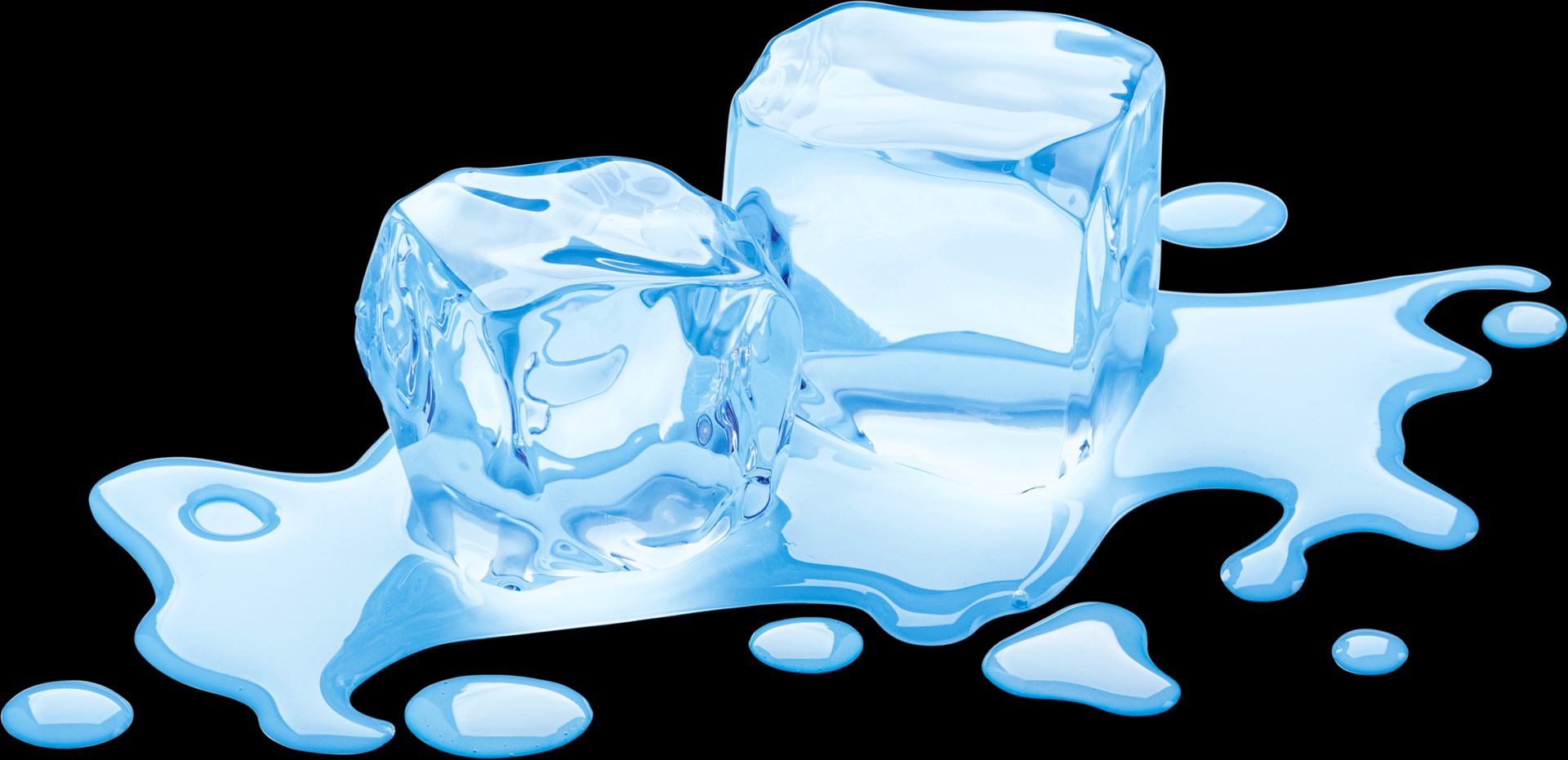 Source: https://ar.inspiredpencil.com/pictures-2023/ice-cube-melting-png
Phenomenon
Students place several ice cubes into a sealed plastic container and measure its mass. After the ice melts completely into liquid water, they measure the mass again. Although the ice looks very different as a liquid, the total mass stays the same.
Students wonder:
If the appearance changes so much, how can the total amount of matter stay the same?
This helps students gather evidence that matter is conserved during heating and cooling.
When ice changes into liquid water, the particles are the same - they are just arranged differently. In a solid, water particles are packed closely together and vibrate in place. When ice absorbs heat, its particles gain energy and begin to move around each other. This creates liquid water. Even though liquid water looks different from ice, the type and number of particles have not changed.
A sealed container is important because it keeps all the matter inside. If the container is closed, none of the water can escape as droplets or water vapor. Because the particles stay in the system, the total amount of matter stays the same. This can be measured directly with a balance.
Before melting, students record the mass of the sealed container with ice inside. After the ice melts, they record the mass again. The shape, temperature, and state of the water have changed, but the mass remains constant. This provides evidence that heating or cooling a substance does not create or destroy matter.
Table 1.
Trial | Mass Before (g) | Mass After (g) |
|---|
1 | 220 | 220 |
2 | 225 | 225 |
3 | 218 | 218 |
Graph of Information - Figure 1.
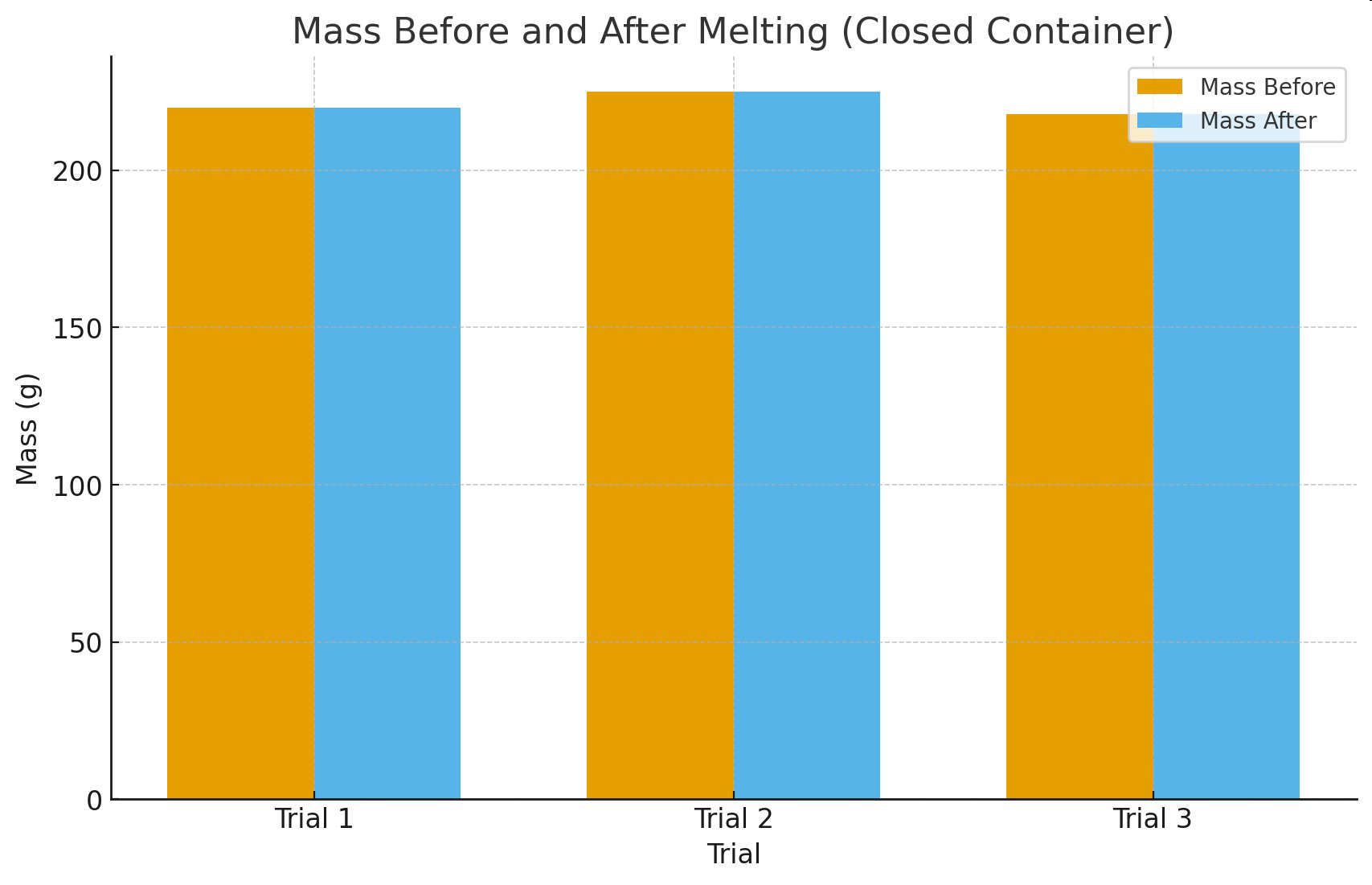
Table 2.
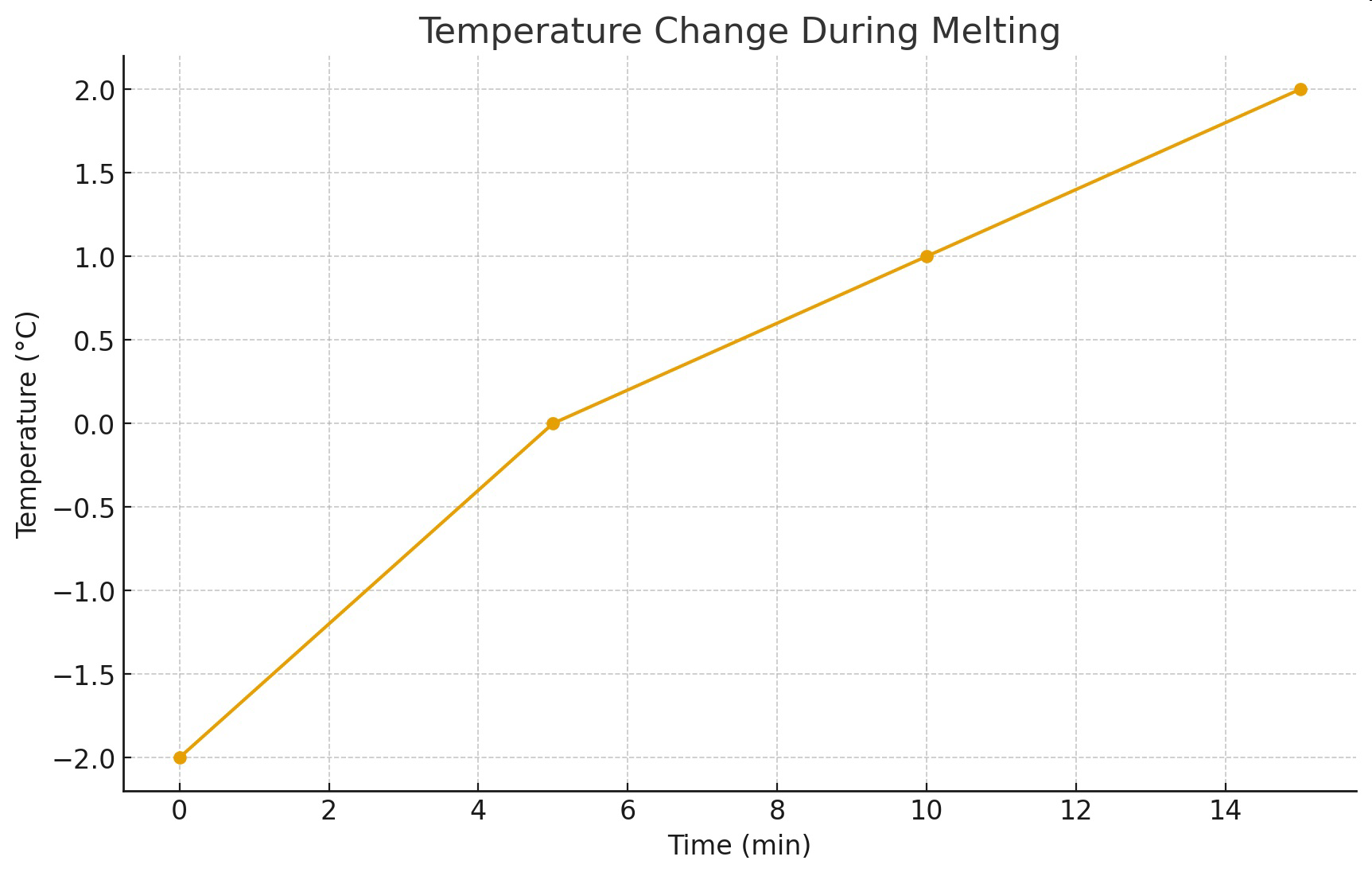
Time (min) | Temperature (°C) |
|---|
0 | -2 |
5 | 0 |
10 | 1 |
15 | 2 |
Graph of Information - Figure 2.