Inflating & Deflating a Balloon
Diagram 1.

Source: https://www.britannica.com/money/inflation-vs-deflation
Phenomenon
A flat balloon looks empty and lightweight. But when students blow it up, the balloon becomes round, stretched, and heavier if placed on a balance. Nothing visible appears to fill the balloon, yet something inside is pushing outward and has measurable mass.
Students ask:
What is inside the balloon if we can’t see anything?
This helps them model that air is made of particles too small to be seen.
A balloon helps us understand that air is matter made of tiny particles. Before a balloon is blown up, it looks empty, but it is actually filled with air particles from the room. When you blow into the balloon, you add many more air particles. These particles spread out and bump into the inside walls of the balloon, pushing them outward. This is why the balloon becomes larger and firm.
Even though air particles are too small to see, they still have mass. When students place a flat balloon on a balance, it has one mass. After inflating it, the mass increases slightly. The added mass comes from the air particles blown into the balloon. These particles take up space and add weight even though they cannot be seen.
The balloon stretching outward is a clue that the air inside is doing something physical. The tiny air particles are moving, pushing, and colliding with the balloon. Scientists use these observations as evidence that matter is made of invisible particles. Without particles, a balloon could not inflate or feel firm.
Table 1.
Balloon Condition | Mass (g) |
|---|
Flat Balloon | 6.8 |
Inflated Balloon | 8.4 |
Graph of Information - Figure 1.
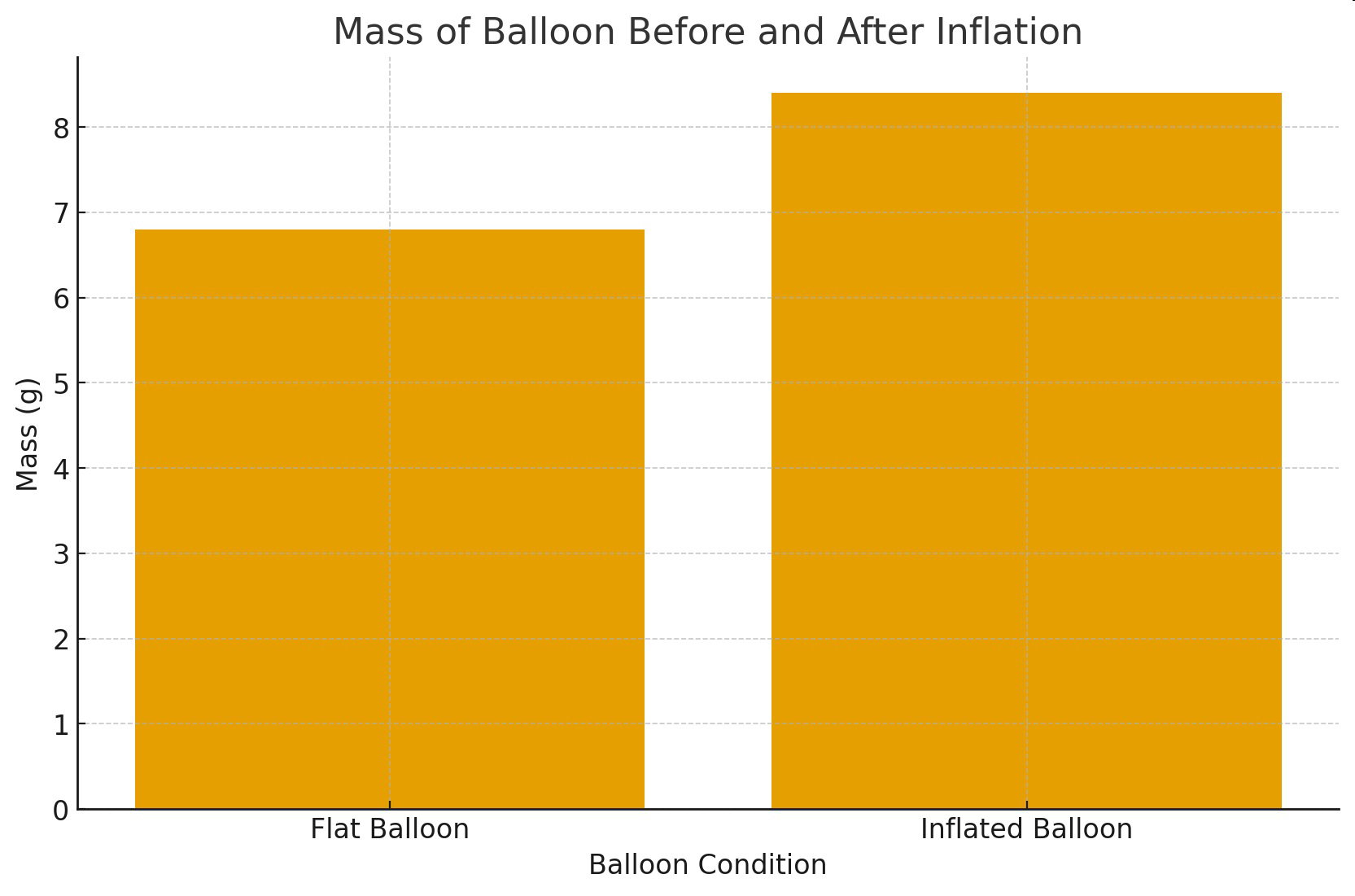
Table 2.
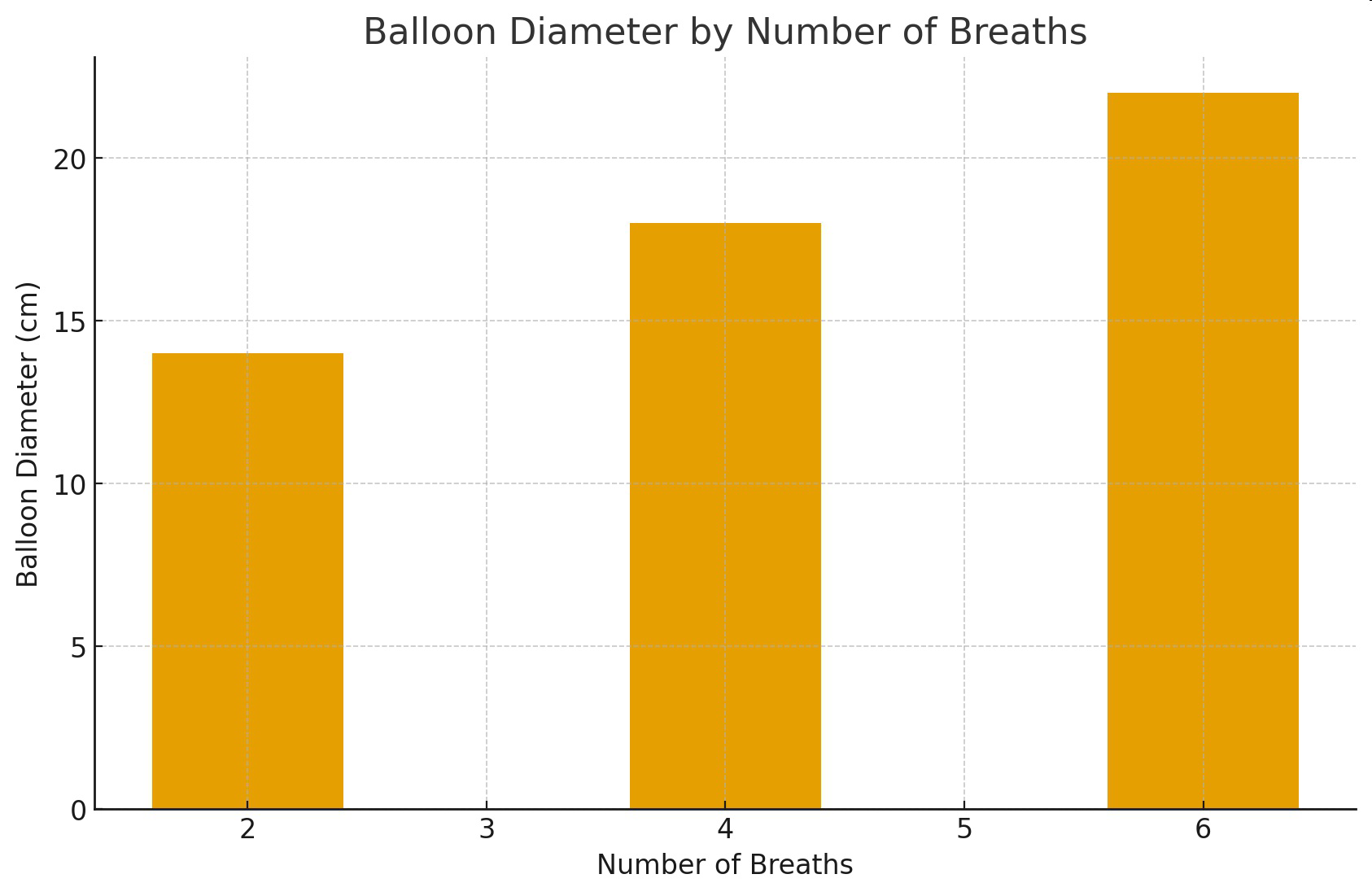
Number of Breaths | Balloon Diameter (cm) | Relative Pressure (1 to 10) |
|---|
2 | 14 | 3 |
4 | 18 | 6 |
6 | 22 | 9 |
Graph of Information - Figure 2.