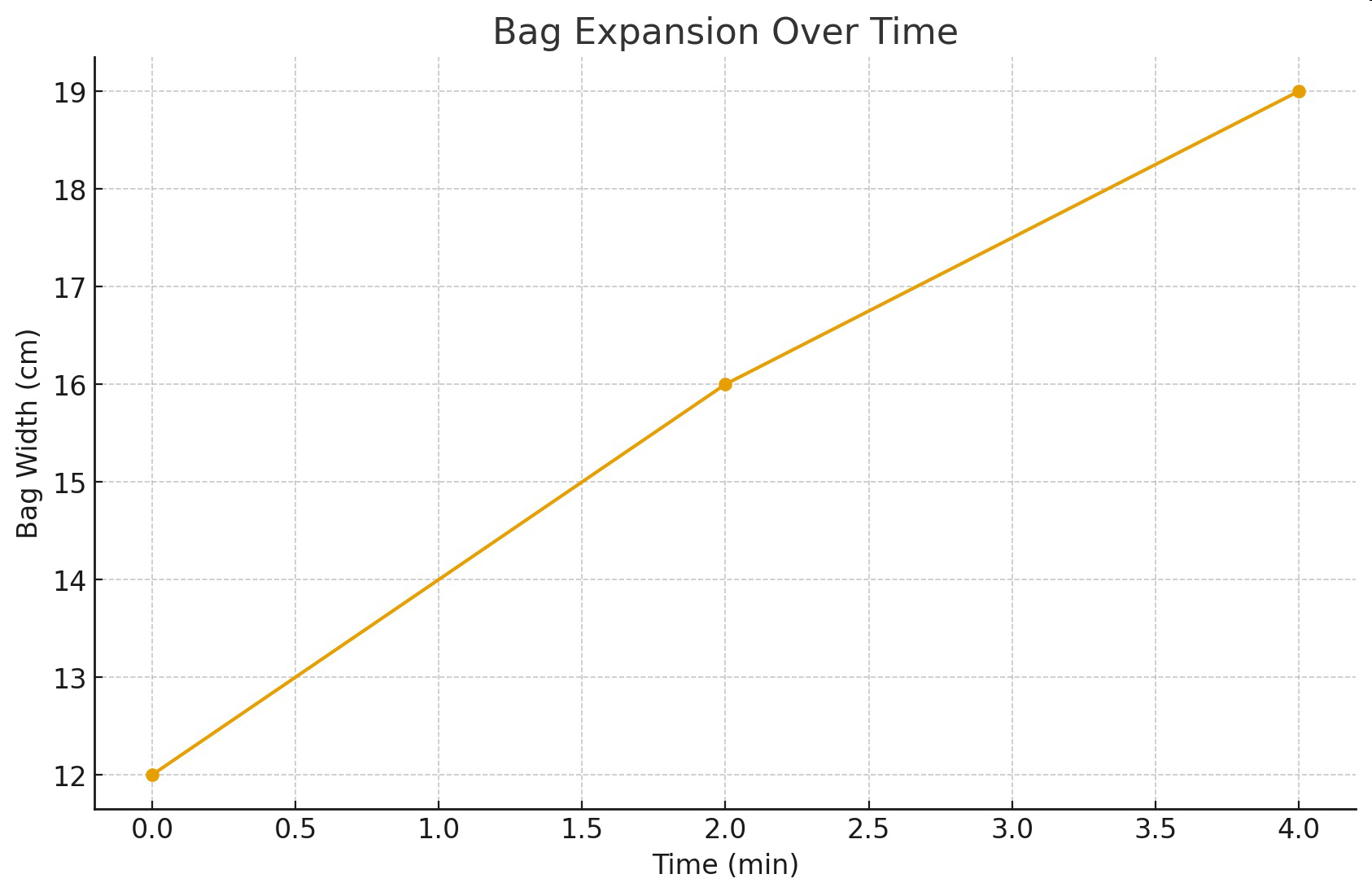
Mixing Baking Soda & Vinegar in a Sealed Bag
Diagram 1.
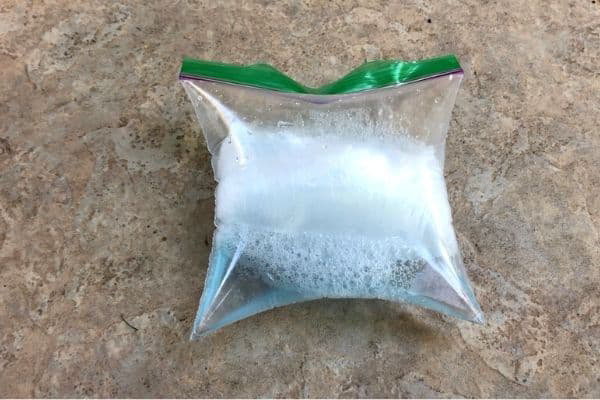
Source: https://ar.inspiredpencil.com/pictures-2023/baking-soda-and-vinegar-in-a-bag
Phenomenon
Students place baking soda and vinegar into a zip-top bag, seal it, and then gently mix the substances. The bag swells as bubbles form and gas fills the space inside. When students measure the mass of the sealed bag before and after the reaction, the mass stays the same.
Students ask: If new gas formed, shouldn’t the mass change?
This helps students understand that matter is conserved during chemical reactions when the system is closed. When baking soda and vinegar mix, they undergo a chemical reaction that produces carbon dioxide gas. In an open container, this gas escapes into the air, so the total mass of the container seems to decrease even though no matter is destroyed. But in a sealed bag, none of the particles can leave the system.
Before mixing, the bag contains particles of baking soda, vinegar, and air. After the reaction, the particles are rearranged into new substances, including carbon dioxide gas. Even though the appearance changes and the bag inflates, the total number of particles stays the same because everything is still inside the sealed system.
Students collect evidence by measuring the mass before and after mixing. Even though the bag puffs up and the substances look different, the total mass remains unchanged. This shows that during chemical reactions, matter is not created or destroyed - it simply rearranges.
Table 1.
Trial | Mass Before (g) | Mass After (g) |
|---|
1 | 152 | 152 |
2 | 150 | 150 |
3 | 155 | 155 |
Graph of Information - Figure 1.
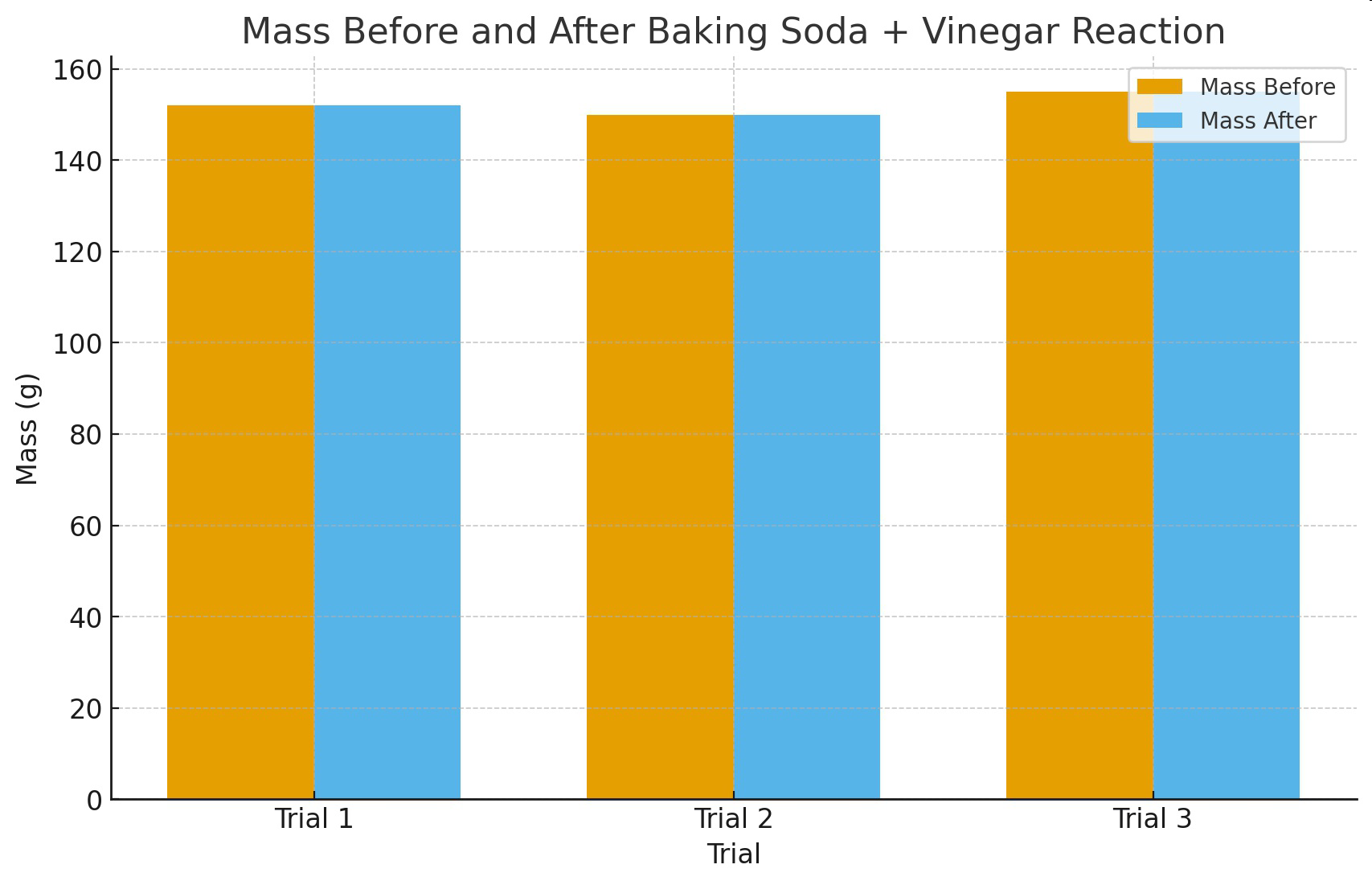
Table 2.
Time (min) | Bag Width (cm) |
|---|
0 | 12 |
2 | 16 |
4 | 19 |
Graph of Information - Figure 2.