Mixing Lemon Juice and Milk
Diagram 1.
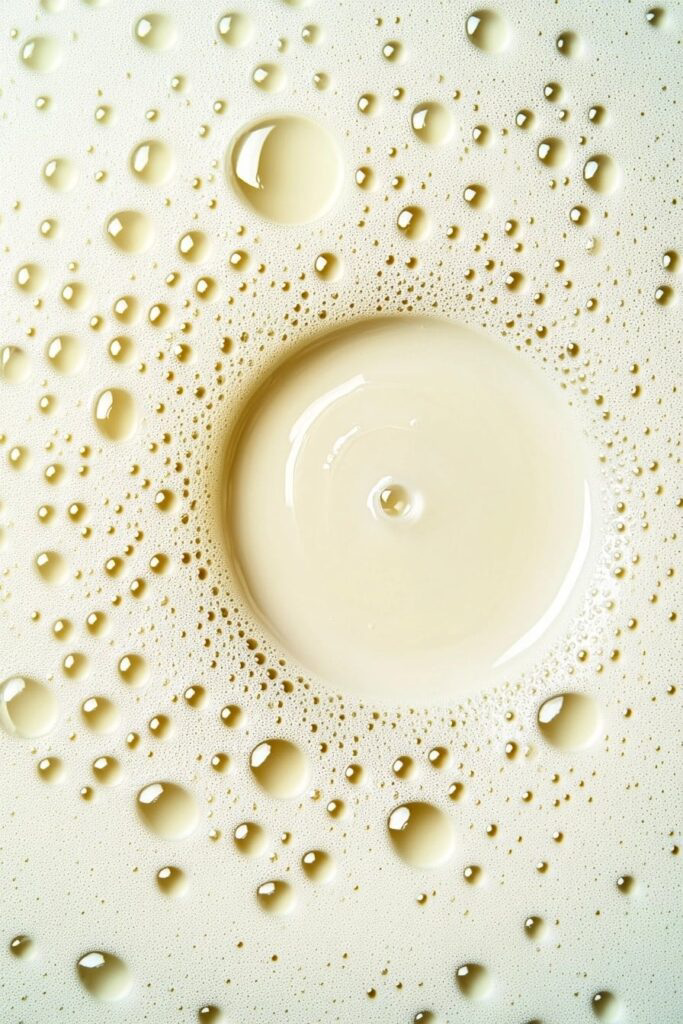 Source:
https://saraichinwag.com/what-happens-when-you-mix-lemon-juice-and-milk
Phenomenon
Students add a spoonful of lemon juice to warm milk. Within moments, the milk begins to curdle, forming soft clumps called curds while leaving a watery liquid called whey. The texture, smell, and appearance all change.
Students ask:
Did we just make a mixture, or did we form a new substance?
This investigation helps them collect evidence that mixing can sometimes create new substances with different properties.
Some mixtures simply blend ingredients together without changing them, like sand mixed with salt. But other mixtures cause substances to change into new materials. When warm milk is mixed with lemon juice, the acid in the lemon juice interacts with the proteins in the milk. These proteins change shape and form new solid clumps called curds. This process is called coagulation.
Before the lemon juice is added, the milk is a smooth, white liquid. It has a mild smell and pours easily. After lemon juice is mixed in, the milk separates into lumpy curds and a watery liquid. The smell becomes slightly sour, and the texture becomes thick and chunky. These new properties show that the original milk is no longer present in the same form.
Because the substances after mixing have different properties than the substances before, this is a sign that new substances have formed. Students can observe these changes and collect evidence that this is more than just a mixture - it is a chemical change.
Table 1.
Property Observed | Before Mixing | After Mixing |
|---|---|---|
Appearance | Smooth white liquid | Curds + watery whey |
Smell | Mild | Slightly sour |
Texture | Thin, pourable | Thick, lumpy |
New Solid Formed? | No | Yes |
Graph of Information - Figure 1.
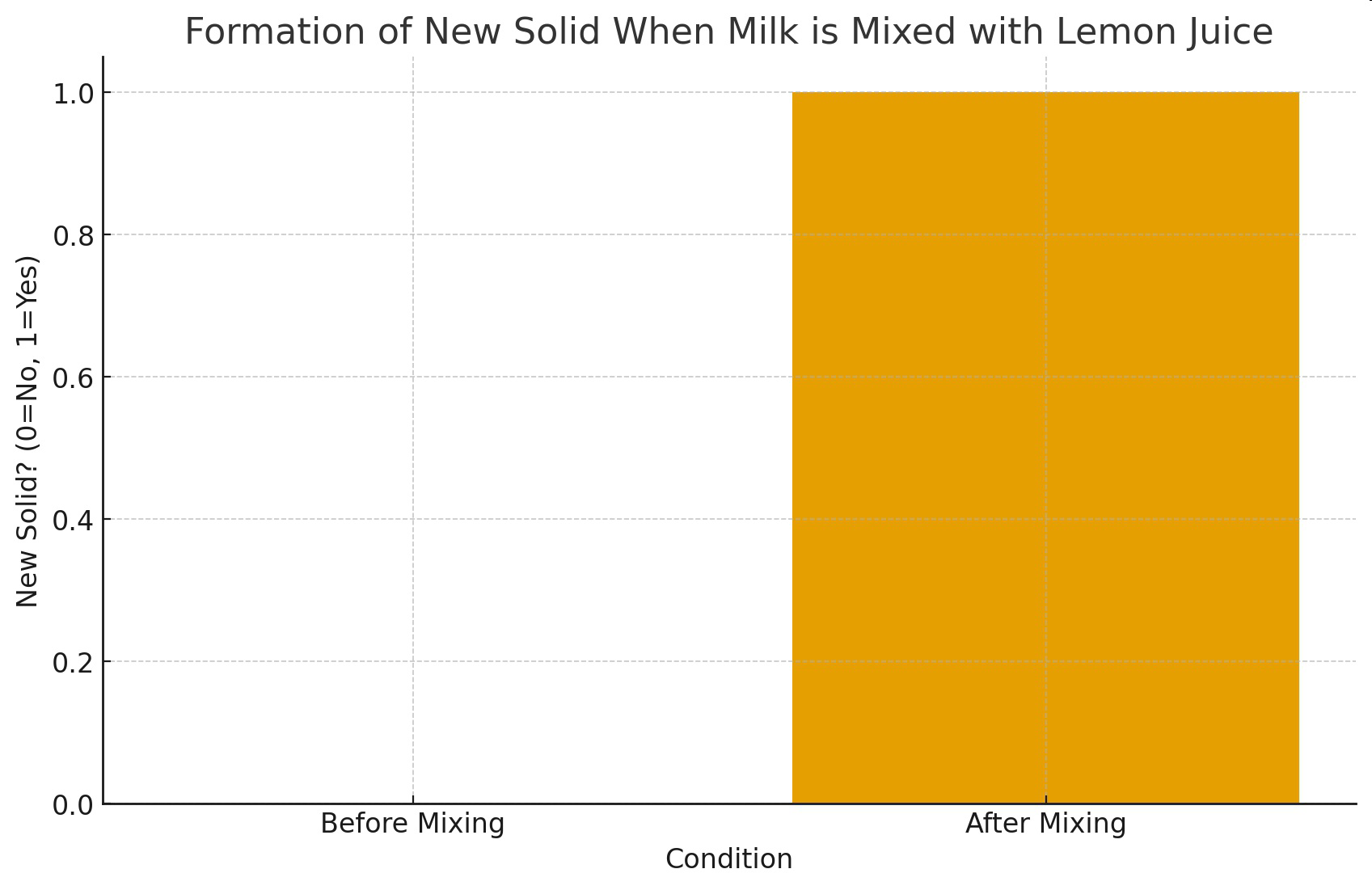
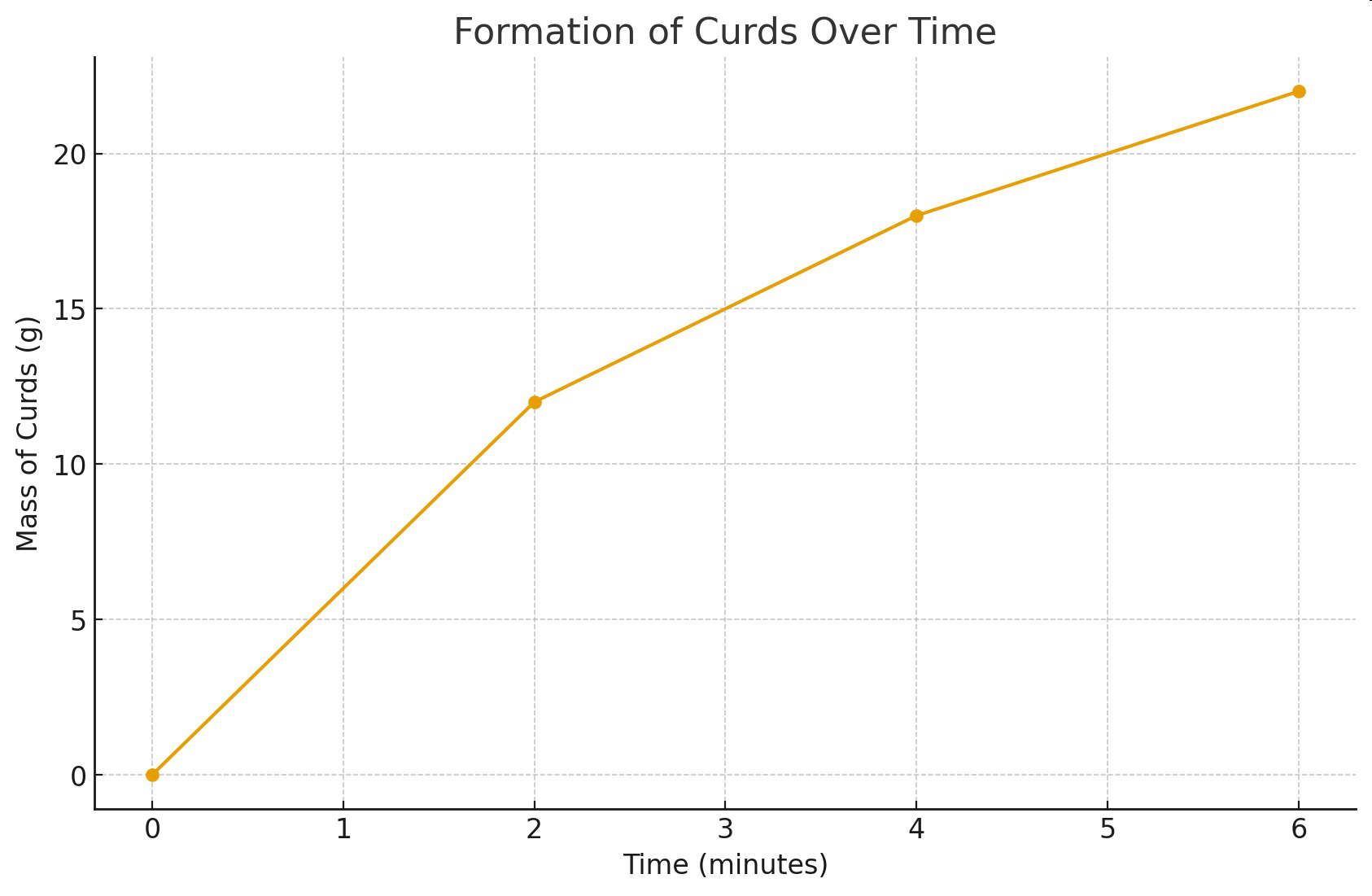
Table 2.
Time (minutes) | Mass of Curds (g) |
|---|---|
0 | 0 |
2 | 12 |
4 | 18 |
6 | 22 |
Graph of Information - Figure 2.