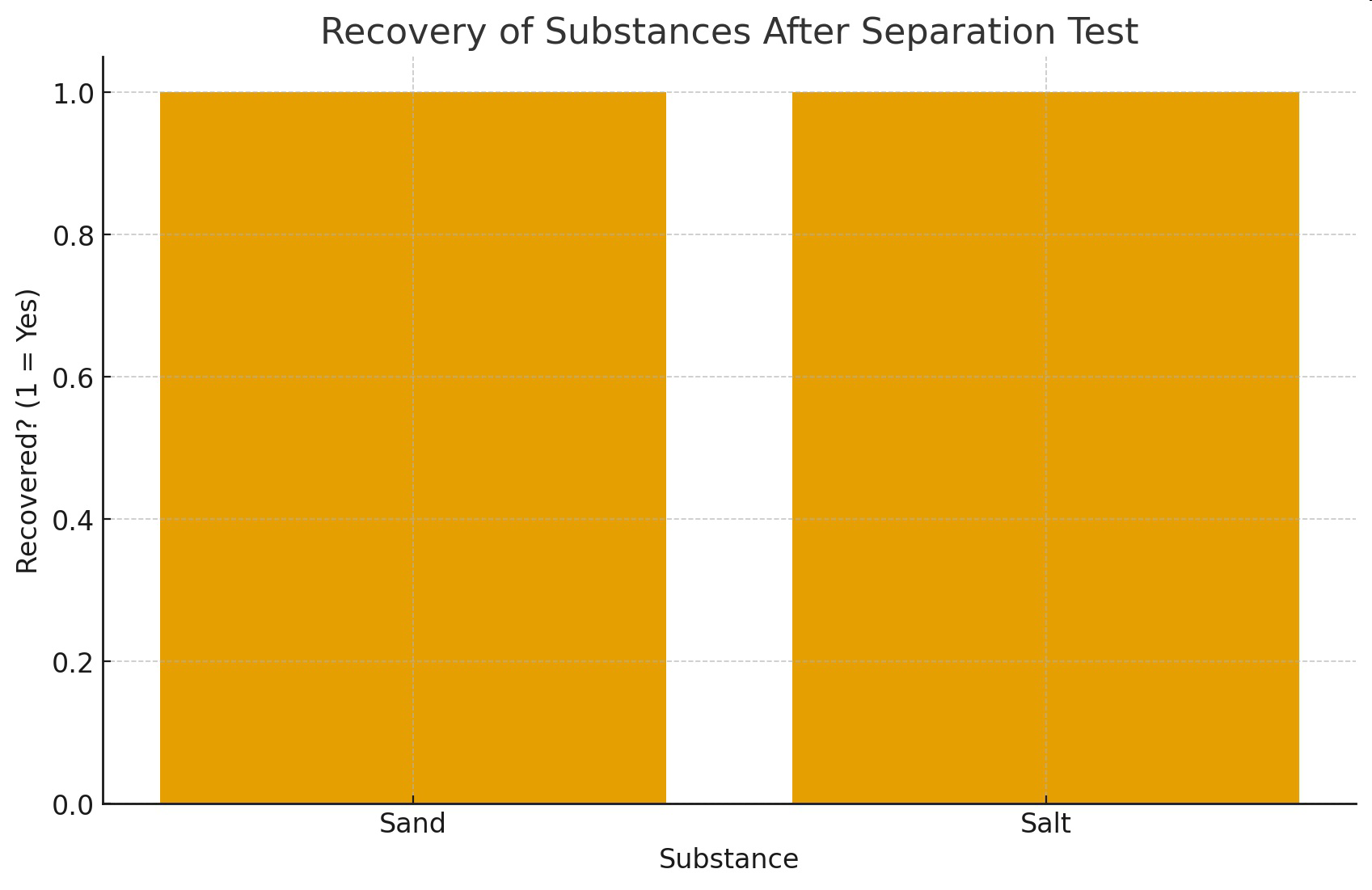
Mixing Sand and Salt
Diagram 1.
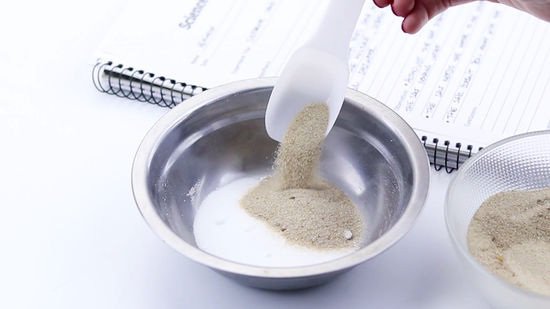
Source: https://ja.wukihow.com/wiki/Separate-Sand-and-Salt
Phenomenon
Students mix sand and salt together in a clear cup. The two substances blend, but nothing else happens. The sand grains remain gritty, the salt crystals remain tiny and white, and no bubbling, color change, or temperature change occurs. Even after stirring, the two substances can still be seen separately.
Students ask: Did mixing sand and salt make a new substance?
This investigation helps students understand that some mixtures are simply physical combinations that do not produce new materials.
When two substances are mixed, they do not always change into something new. Sometimes, they simply combine without changing their properties. A mixture like sand and salt is an example of a physical change, not a chemical one. In a physical change, the materials keep their original properties and can often be separated again.
Sand is made of small grains of rock. Salt is made of tiny crystals that dissolve in water but remain solid when dry. When students mix sand and salt, the grains and crystals stay the same. There is no gas released, no color change, and no temperature change. These observations show that the substances did not react.
To test this further, students can try separating the mixture. Salt dissolves in water, but sand does not. By adding water and filtering the mixture, the sand and salt can be separated again. This provides more evidence that no new substance formed.
Table 1.
Property Observed | Before Mixing | After Mixing |
|---|
Appearance | Sand grains + salt crystals | Grains and crystals still visible |
Temperature (oC) | 22 | 22 |
Gas Produced? | No | No |
Can Separate? | Yes | Yes |
Graph of Information - Figure 1.
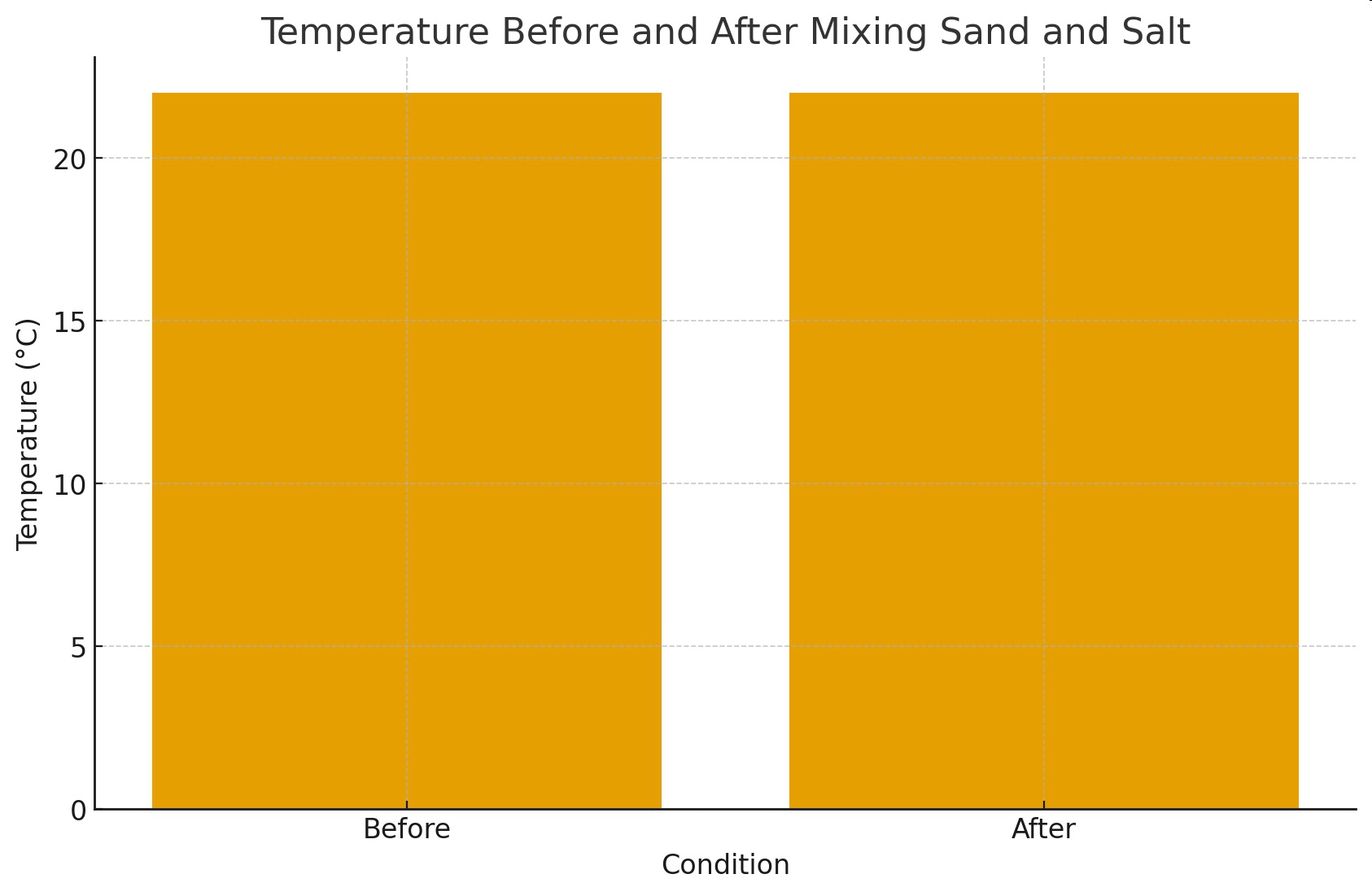
Table 2.
Step | Observation |
|---|
Added water | Salt dissolves, sand settles |
Poured through filter | Sand collected on filter |
Evaporated water solution | Salt crystals reappear |
Graph of Information - Figure 2.