Mixing Vinegar and Baking Soda
Diagram 1.
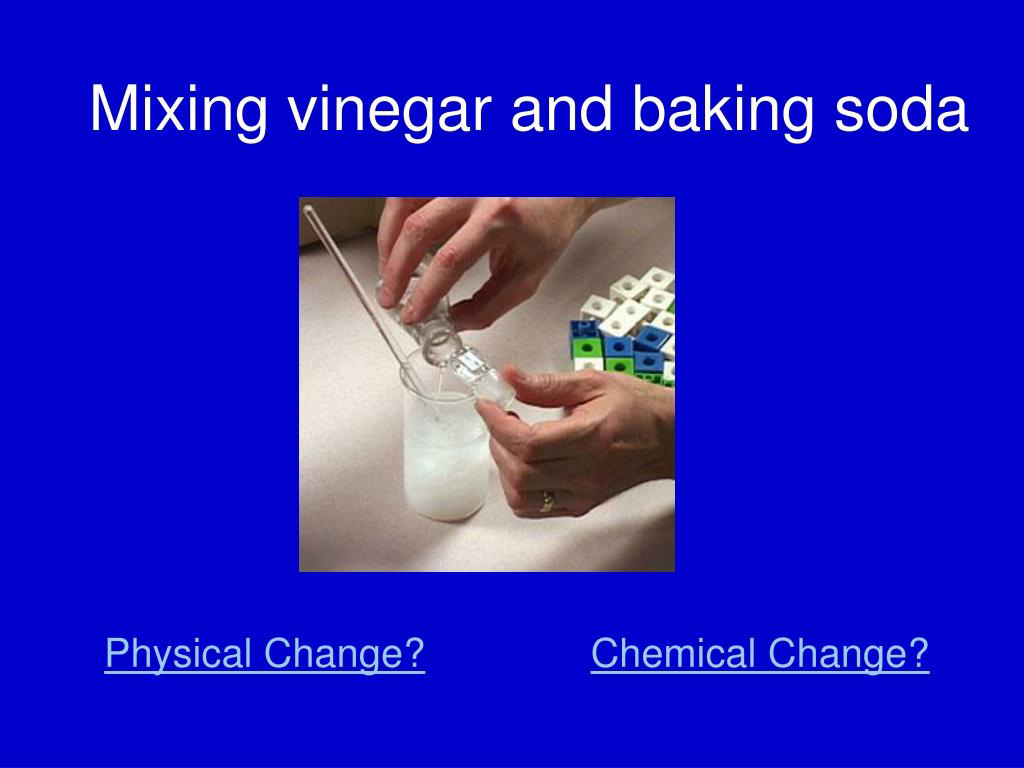 Source: https://www.slideserve.com/karif/physical-or-chemical-change
Phenomenon
Students mix vinegar and baking soda in a clear container. Immediately, bubbles form, the mixture fizzes, and the liquid level rises. The solid baking soda disappears into the foaming mixture, and the container often becomes cooler to the touch.
Students ask:
Did we make a new substance, or did the ingredients just mix?
This investigation helps students collect evidence that some mixtures create new substances, while others do not.
When two substances are mixed, sometimes they simply blend together, like sand and salt. Other times, they react and make new substances that have different properties. Vinegar and baking soda are a good example of a reaction that creates new materials.
Vinegar contains acetic acid, and baking soda is a compound called sodium bicarbonate. When these two substances mix, their particles interact and rearrange. This rearrangement creates carbon dioxide gas, which escapes as bubbles and foam. The baking soda also changes into dissolved substances that were not present before. Because new materials are formed, this is a chemical change, not just a mixture.
Students can observe signs of a new substance forming: bubbling, fizzing, temperature changes, and the disappearance of the solid baking soda. These clues show that the properties of the materials after mixing are different from the properties before mixing.
In this investigation, students gather evidence to determine whether mixing creates a new substance. The vinegar-baking soda reaction clearly produces gas and other products, showing that new substances formed.
Table 1.
Property Observed | Before Mixing | After Mixing |
|---|
Appearance | Clear liquid + white powder | Foamy liquid, bubbles rising |
Temperature (oC) | 22 | 18 |
Gas Produced? | No | Yes |
Graph of Information - Figure 1.
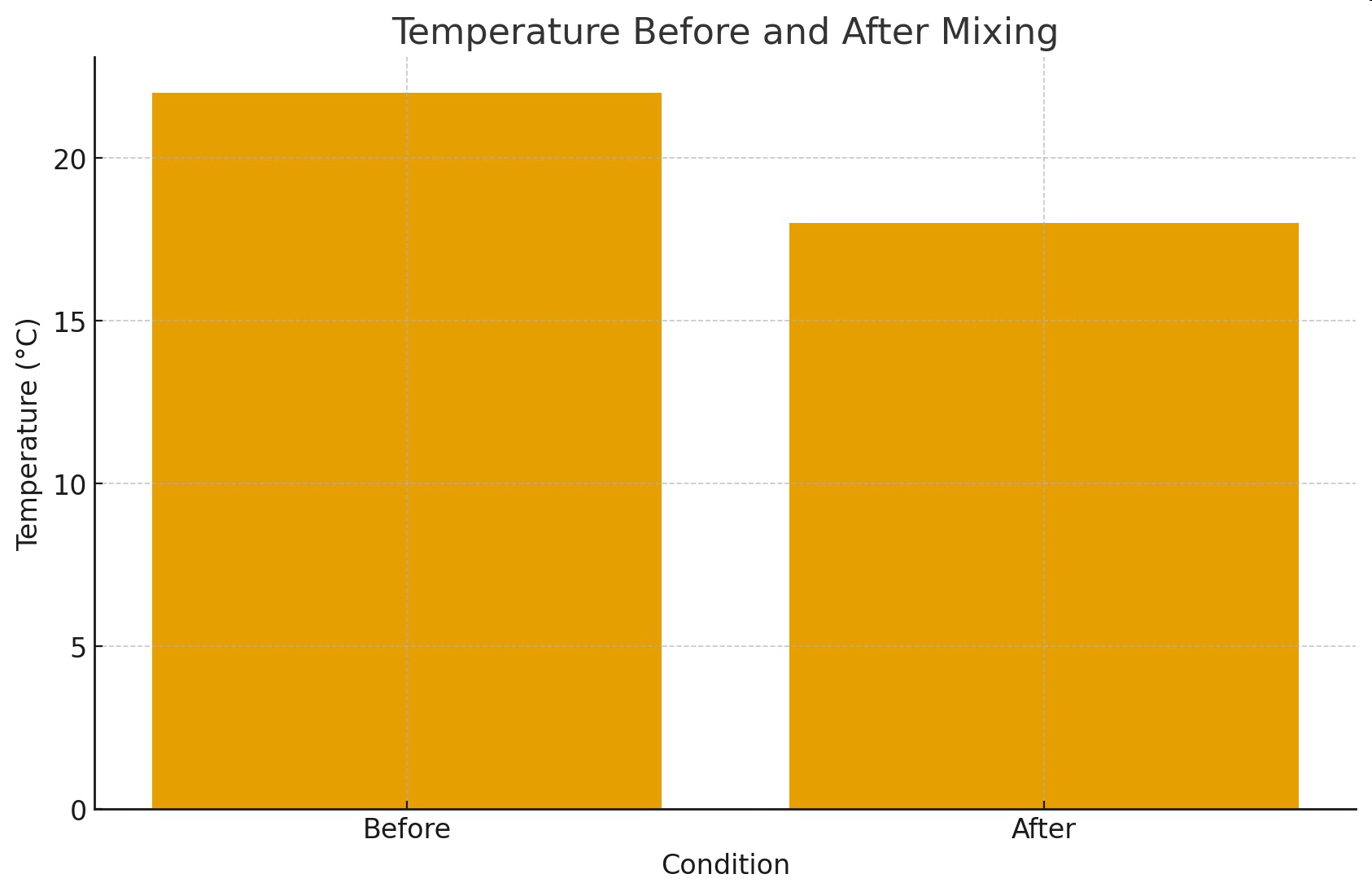
Table 2.
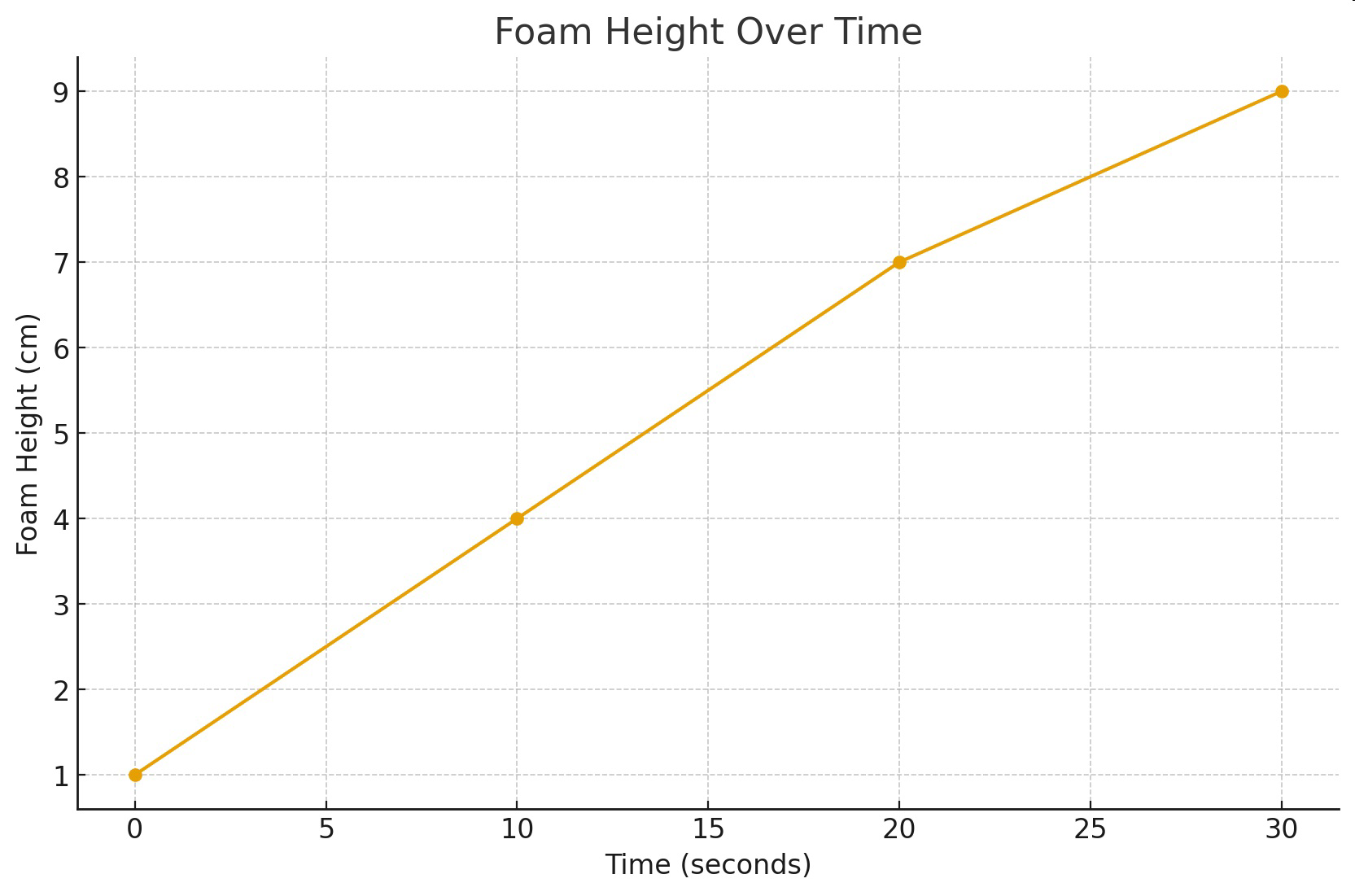
Time (seconds) | Foam Height (cm) |
|---|
0 | 1 |
10 | 4 |
20 | 7 |
30 | 9 |
Graph of Information - Figure 2.