Mixing Yeast, Warm Water, and Sugar
Diagram 1.
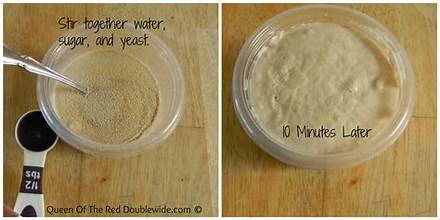 Source: http://queenofthereddoublewide.com/homemade-white-sandwich-bread/
Phenomenon
Students mix yeast, warm water, and sugar in a bottle. A balloon is stretched over the top. After a few minutes, the balloon begins to inflate, even though no air was added. Bubbles rise in the liquid and the smell begins to change.
Students ask: Did this mixture produce new substances?
This investigation reveals that yeast chemically changes sugar and forms new substances - including carbon dioxide gas - providing clear evidence of a chemical change.
Yeast is a living microorganism that can change sugar into new substances through a process called fermentation. When yeast is mixed with warm water and sugar, it becomes active. The yeast uses the sugar as food and changes it into carbon dioxide gas and other products. This is not a physical mixture. It is a chemical change, because the original materials are turned into substances that were not there before.
Students can observe signs of new substances forming. One sign is the inflation of the balloon as carbon dioxide gas is produced. Another sign is bubbling inside the bottle. There may also be a slight smell change as the reaction continues. None of these properties were present before the sugar and yeast were mixed.
If the ingredients had simply been mixed without any chemical change, the balloon would not inflate. Because gas is produced and the properties of the mixture change over time, students have strong evidence that mixing yeast, sugar, and warm water results in new substances.
Diagram 2.
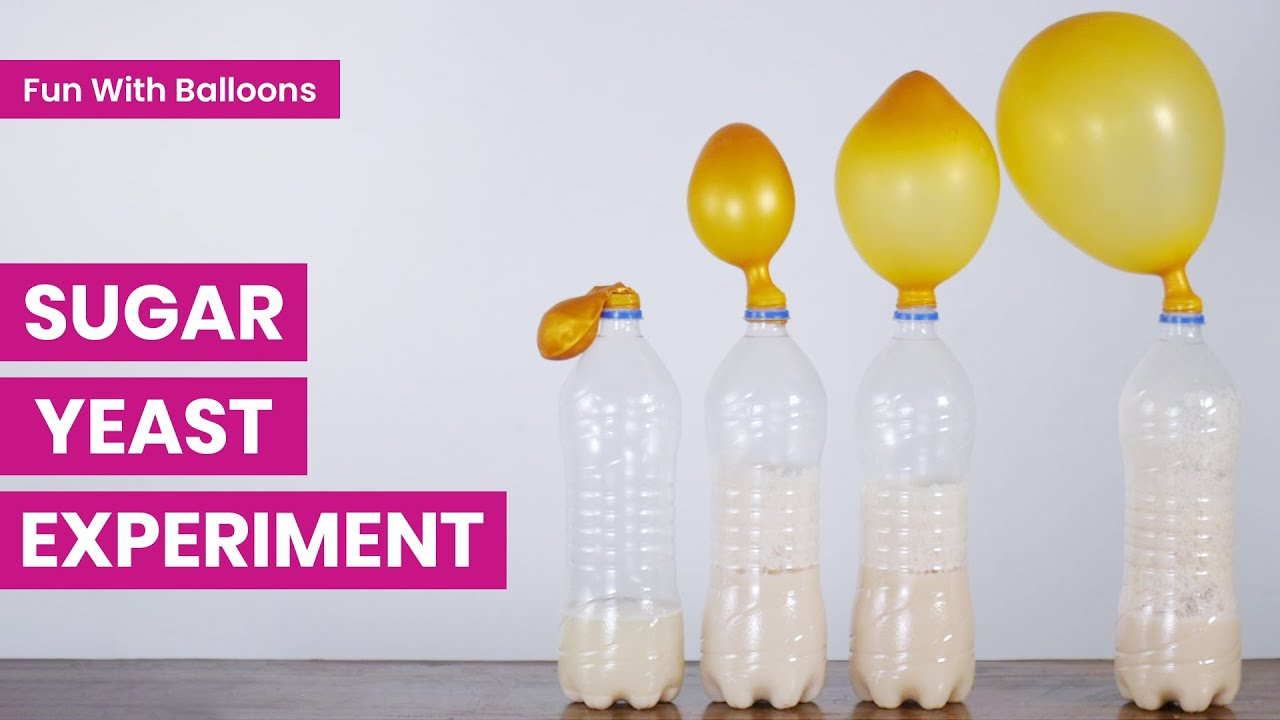
Source:
https://www.youtube.com/watch?v=JFin11aF8h0
Table 1.
Property Observed | Before Mixing | After Mixing |
|---|
Gas Production | None | Bubbles + balloon inflating |
Smell | Sweet, no odor change | Yeasty, slightly sour |
Appearance | Clear water + sugar grains | Cloudy mixture with bubbles |
Graph of Information - Figure 1.
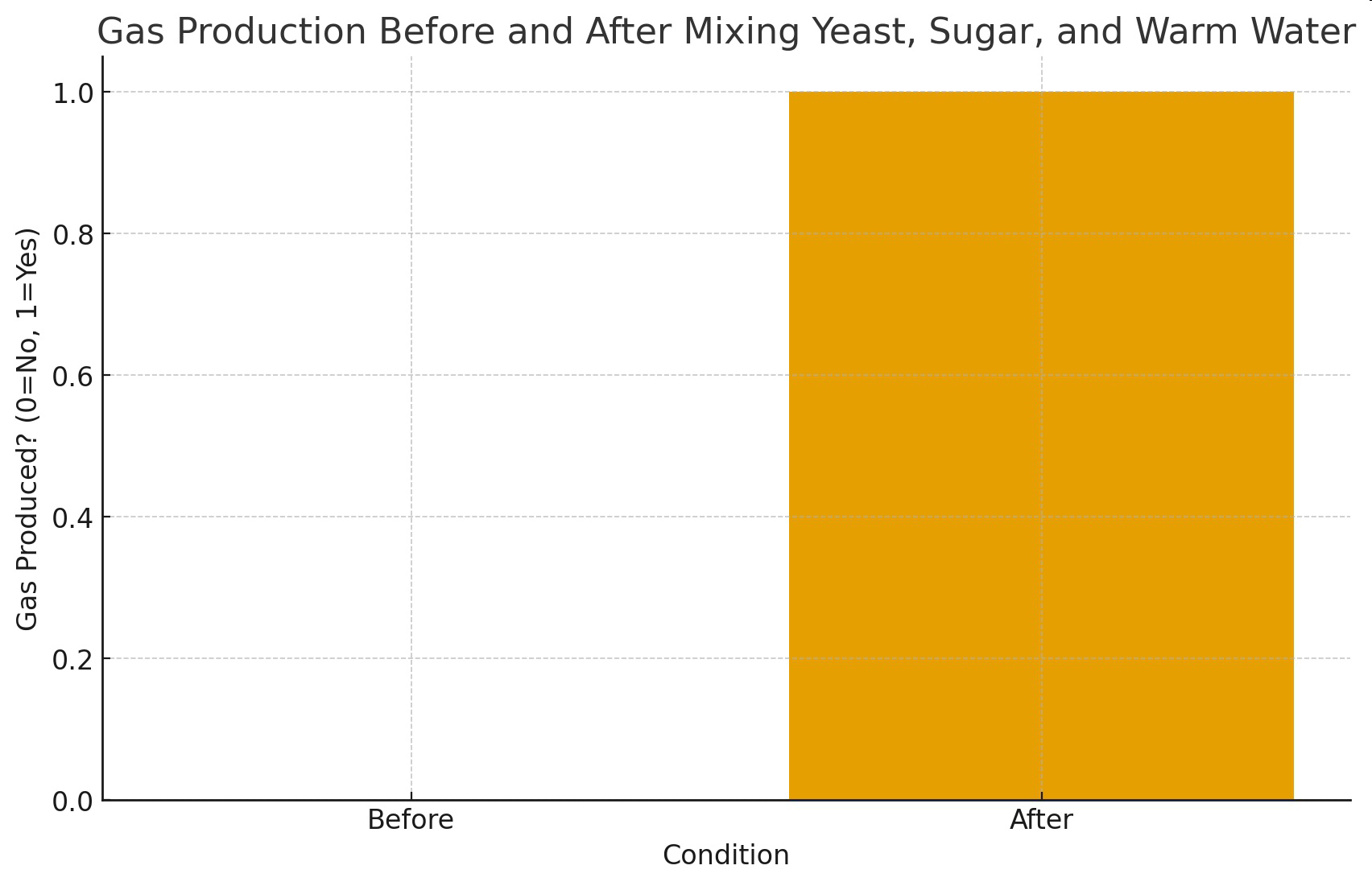
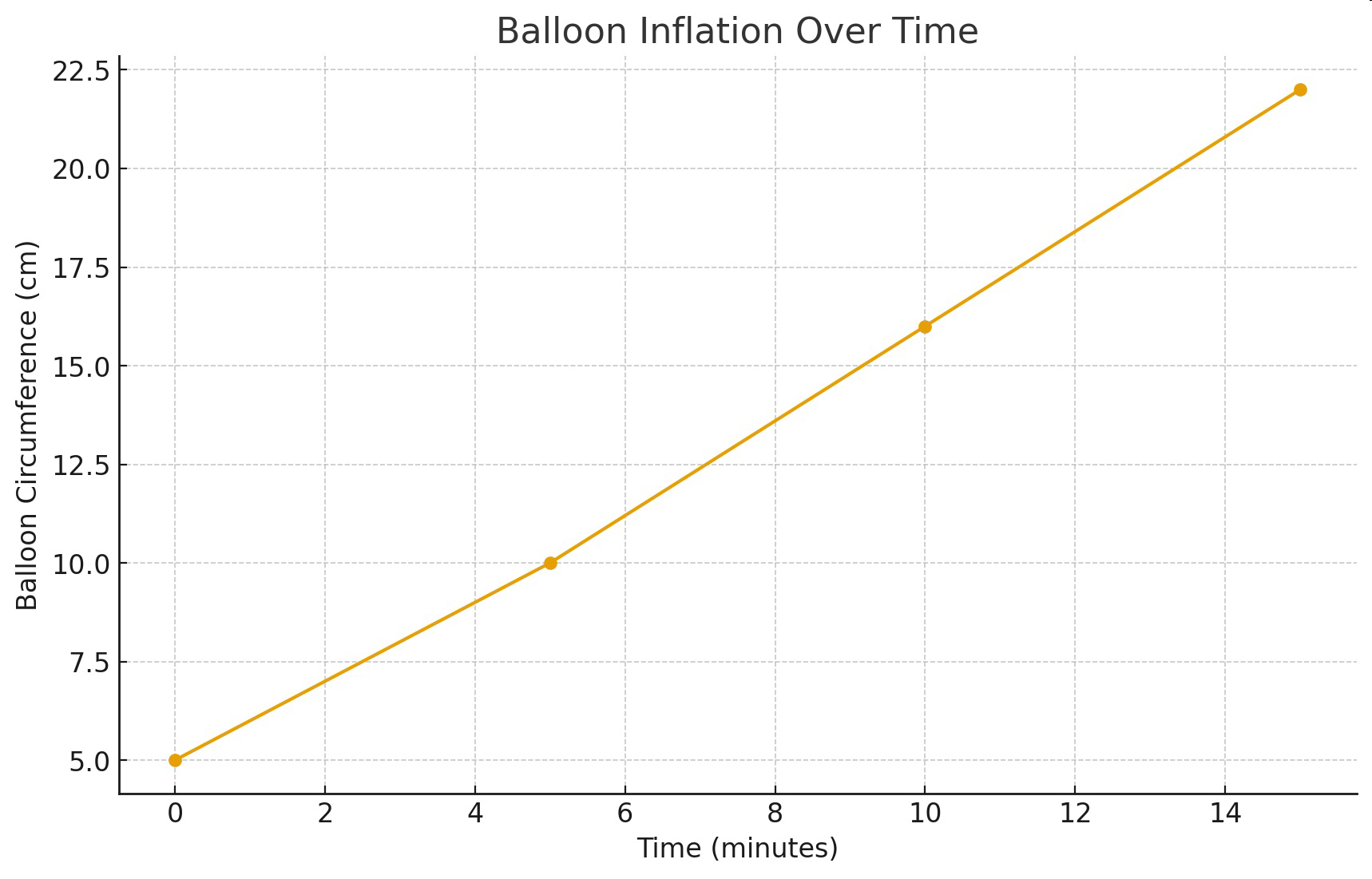
Table 2.
Time (minutes) | Balloon Circumference (cm) |
|---|
0 | 5 |
5 | 10 |
10 | 16 |
15 | 22 |
Graph of Information - Figure 2.