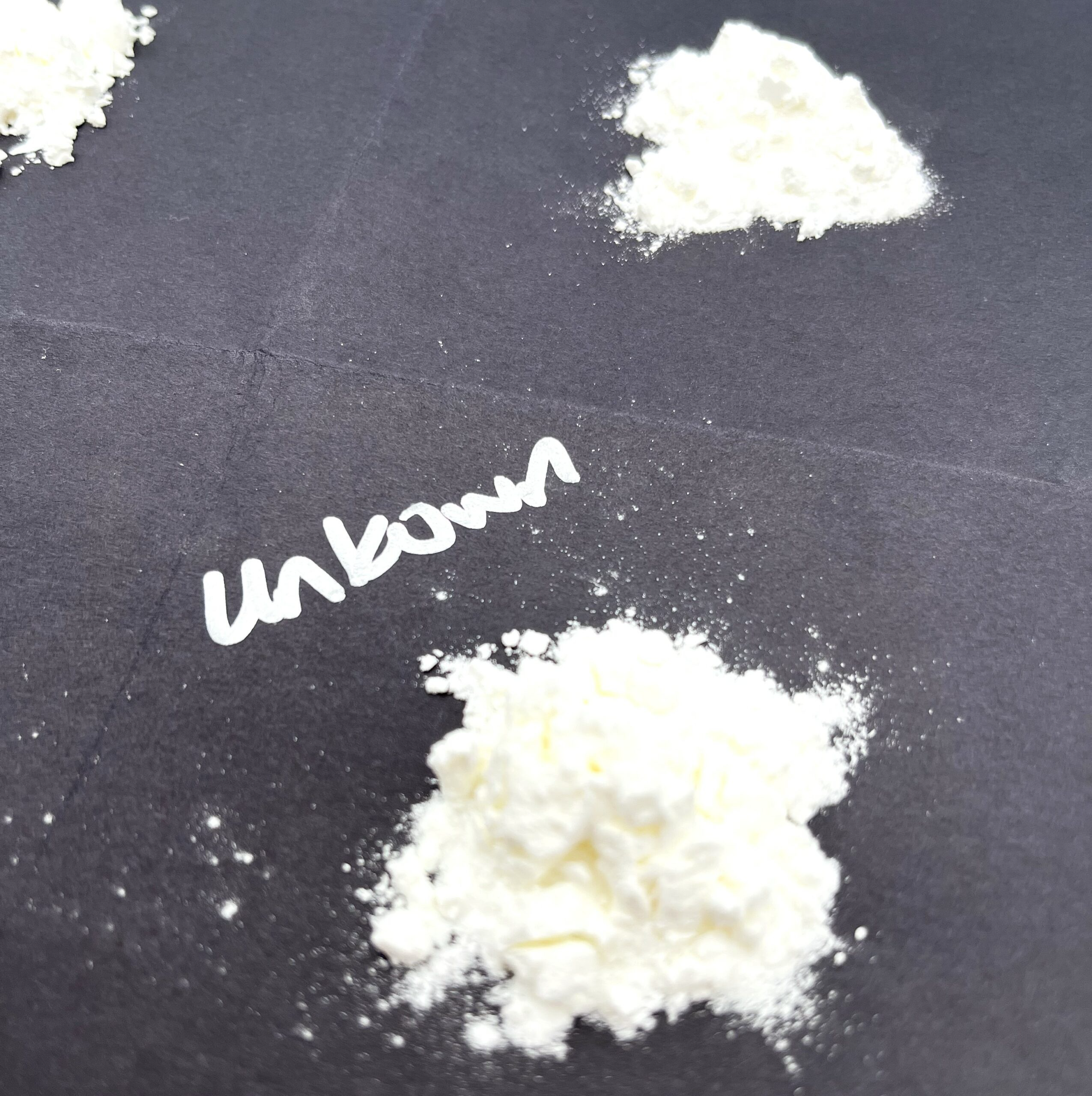
Powder Mystery Mix
Diagram 1.
 Source: https://www.madebyteachers.com/products/mystery-powders/
Phenomenon:
Students receive four white powders that look nearly identical: sugar, salt, baking soda, and cornstarch. By observing how each powder behaves - how it feels, dissolves, or reacts - they can identify which is which.
Students ask:
If the powders all look the same, how can we tell them apart?
This investigation demonstrates that materials can be identified by their properties, even when appearance is not helpful.
Some materials look so similar that appearance alone cannot be used to identify them. White powders such as sugar, salt, baking soda, and cornstarch can look almost identical. To identify them, scientists rely on properties - characteristics that can be observed or measured.
Each powder has unique properties. Sugar crystals are usually larger and dissolve quickly in water. Salt crystals are smaller, dissolve well, and taste salty, but taste tests are not used in class. Baking soda looks like fine powder and reacts with vinegar to make bubbles of carbon dioxide gas. Cornstarch feels very soft and smooth and forms a thick, cloudy mixture when stirred into water.
By testing how each powder behaves, students can gather evidence. Dissolving, texture, and reaction with safe materials like water or vinegar can show clear differences. Measuring how long a powder takes to dissolve or whether it forms clumps in water also gives useful information.
These observations help students understand that even when objects look similar, their properties reveal their identities.
Table 1.
Powder | Texture | Dissolves in Water? | Reacts with Vinegar? |
|---|---|---|---|
A | Gritty | Yes | No |
B | Fine, soft | No | No |
C | Fine powder | Yes | Yes |
D | Small crystals | Yes | No |
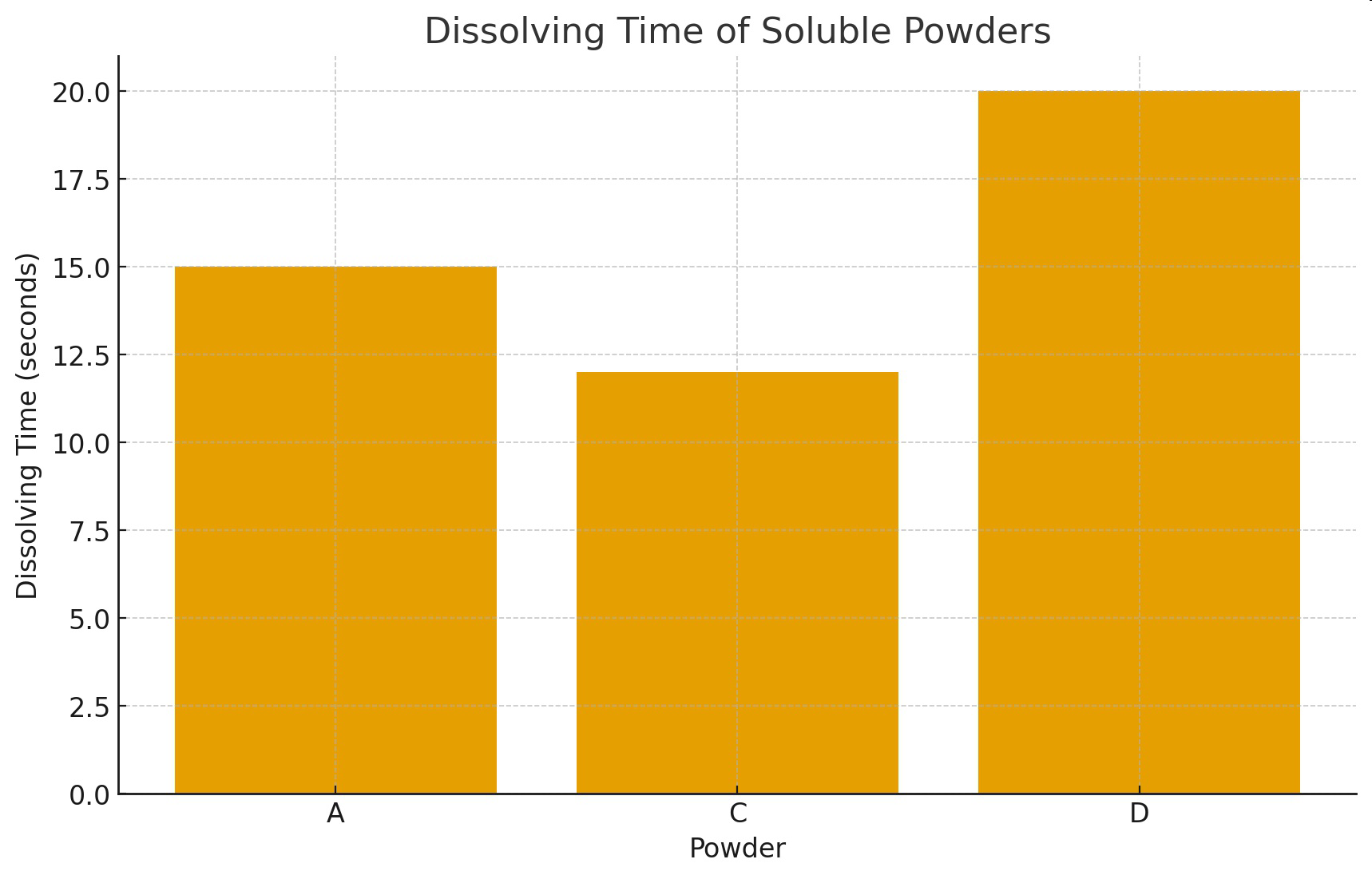
Graph of Information - Figure 1.
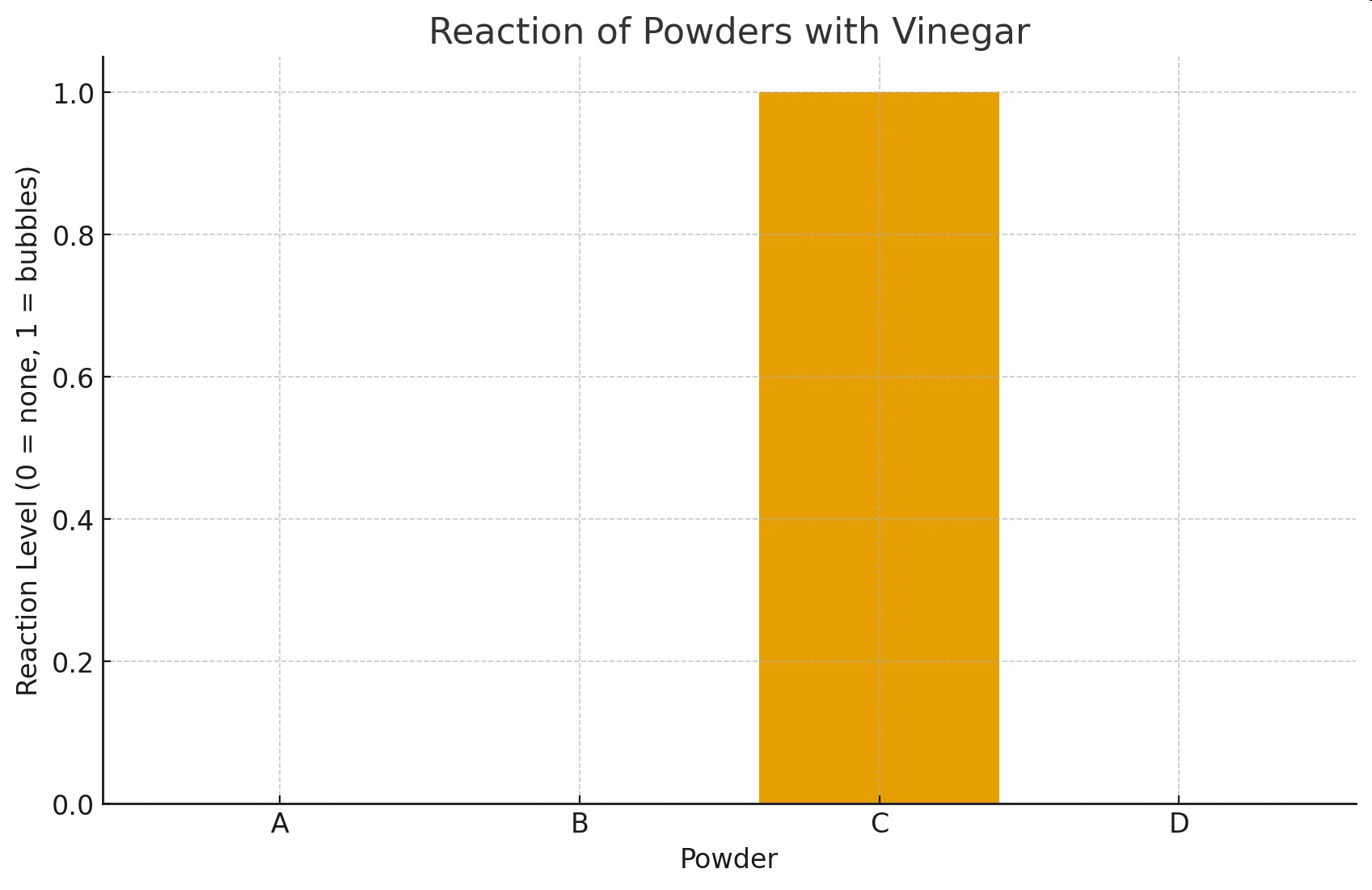
Table 2.
Powder | Time to Dissolve (seconds) |
|---|---|
A | 15 |
C | 12 |
D | 20 |
Graph of Information - Figure 2.