Sugar Disappearing in Water
Diagram 1.
 Source: https://ar.inspiredpencil.com/pictures-2023/dissolving-sugar-and-water
Phenomenon:
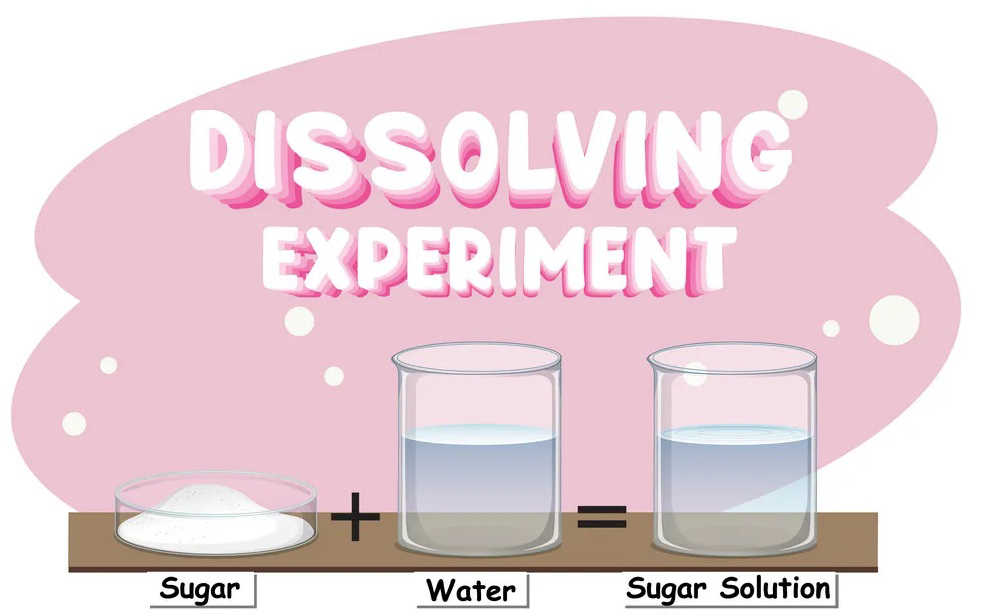
Students stir sugar into a cup of clear water. The sugar crystals can be seen at first, but after stirring, they “vanish.” The water still tastes sweet and has more mass than before. If the sugar cannot be seen, is it still there?
This helps students model that matter is made of particles too small to be seen.
When sugar dissolves in water, it looks like the sugar disappears, but it does not. Sugar is made of tiny particles that are much too small to see. Water is also made of particles. When sugar is stirred into water, water particles move around and bump into the sugar crystals. These bumps break off tiny sugar particles and pull them into the spaces between the water particles.
As stirring continues, the entire sugar crystal breaks apart into particles that are spread throughout the water. Even though you cannot see the particles, they are still there. You can taste the sweetness because your tongue detects sugar particles. You can also measure them. The mass of the cup increases when sugar is added, which means the sugar did not disappear. It changed from visible crystals to invisible particles.
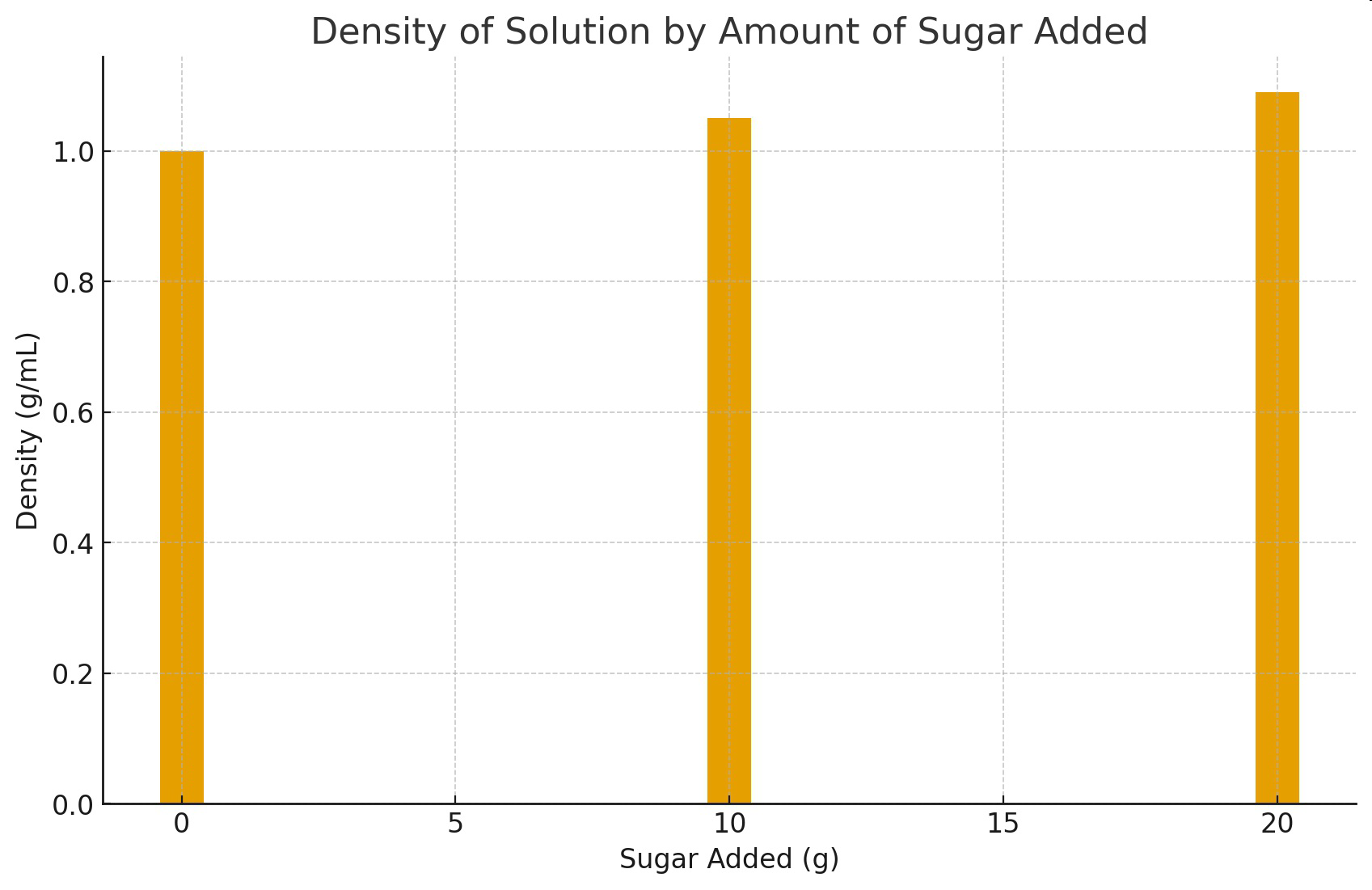
The water also becomes slightly denser, which is another clue that sugar particles are mixed into it. These observations help scientists describe matter as being made of particles too small to be seen. Dissolving sugar in water is strong evidence that matter stays present even when it becomes invisible to the eye.
Table 1.
Sugar Added (g) | Mass Before (g) | Mass After (g) |
|---|
5 | 150 | 155 |
10 | 150 | 160 |
15 | 150 | 165 |
Graph of Information - Figure 1.
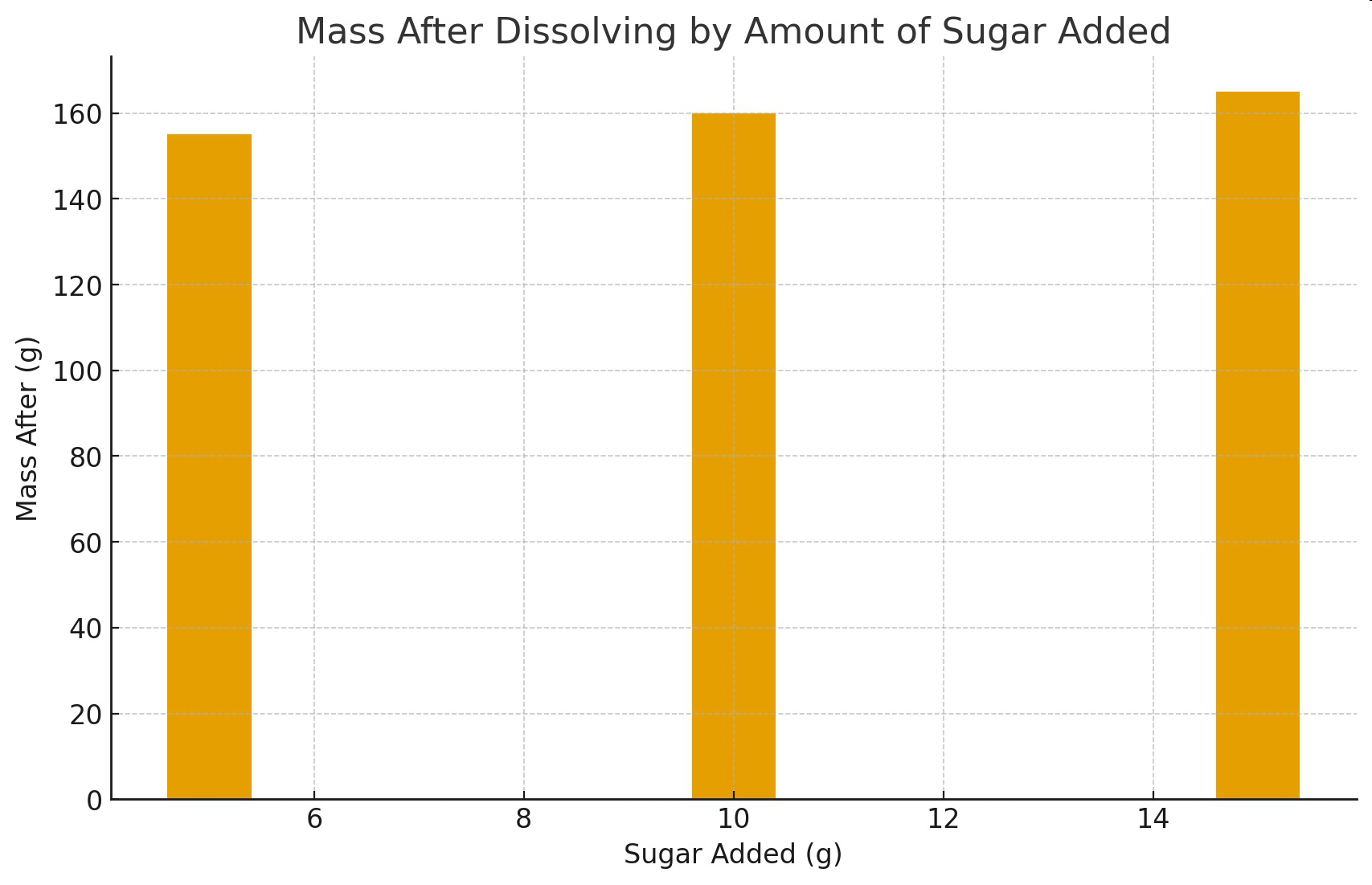
Table 2.
Sugar Added (g) | Volume of Water (mL) | Final Volume (mL) | Density (g/mL) |
|---|
0 | 150 | 150 | 1 |
10 | 150 | 152 | 1.05 |
20 | 150 | 154 | 1.09 |
Graph of Information - Figure 2.