Cup-and-String “Telephone” With Tap Patterns
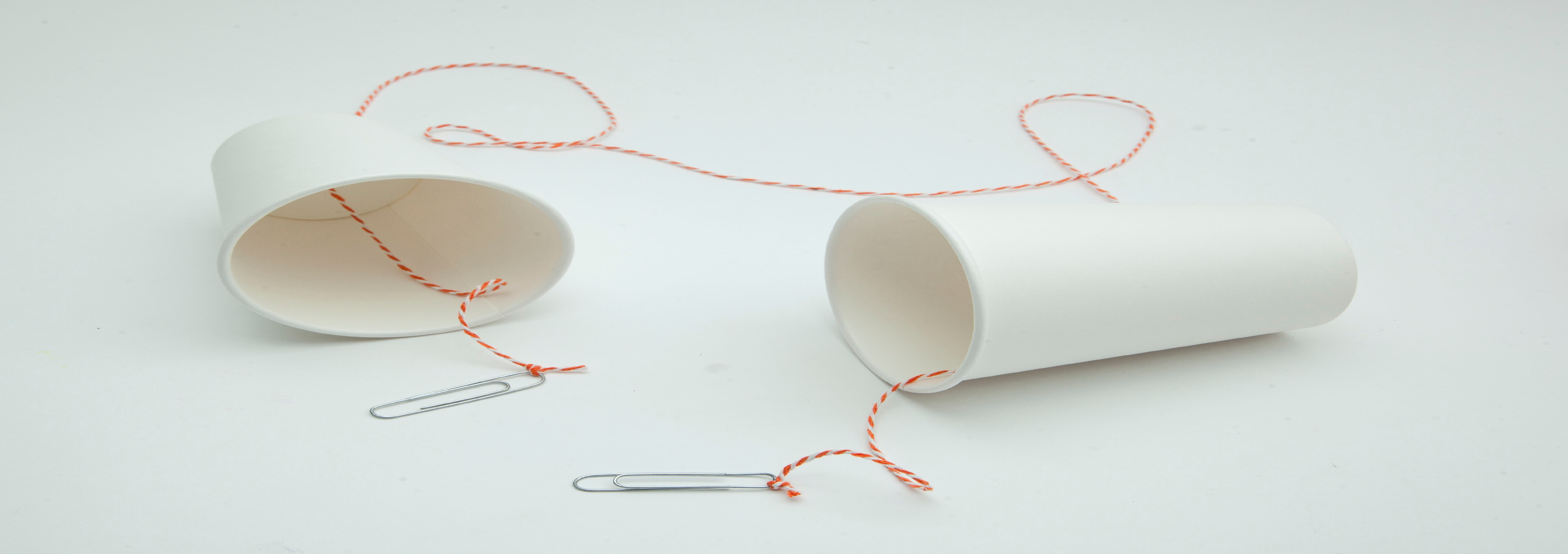
Diagram 1.
 Source:
https://www.kiwico.com/diy/play-learn/sound-music/paper-cup-telephone
Phenomenon
Students connect two cups with a long piece of string to make a cup-and-string telephone. One student sends messages by tapping patterns on the cup, and another student listens and decodes the pattern at the other end.
Students design and compare three different solutions for sending information through vibrations:
Solution A: Simple tap counts
1 tap = YES
2 taps = NO
3 taps = REPEAT
Solution B: Letter-count system
A = 1 tap
B = 2 taps
C = 3 taps
Solution C: Rhythm patterns
fast-fast-slow
slow-slow-fast
fast-slow-fast
Students test which vibration pattern system transfers information most accurately.
Information can be transferred in many ways, including through vibrations. When the string in a cup-and-string telephone is pulled tight, vibrations can travel from one cup to the other. These vibrations can form patterns that carry information.
In this investigation, students send messages using tapping patterns. Each tap creates a vibration that travels along the string. The listener must recognize the pattern to understand the message.
Different pattern systems can be used to send the same information. Some systems use counting taps, while others use rhythms. Each system is a possible solution for transferring information. Some patterns may be easier to hear or remember than others.
Engineers often test multiple solutions to find the most effective one. They collect data on how accurately the message is received and how long it takes to send the message. By comparing results, students can decide which vibration pattern works best.
This investigation shows that patterns of vibrations can transfer information, and that comparing different solutions helps identify the most effective design.
Table 1.
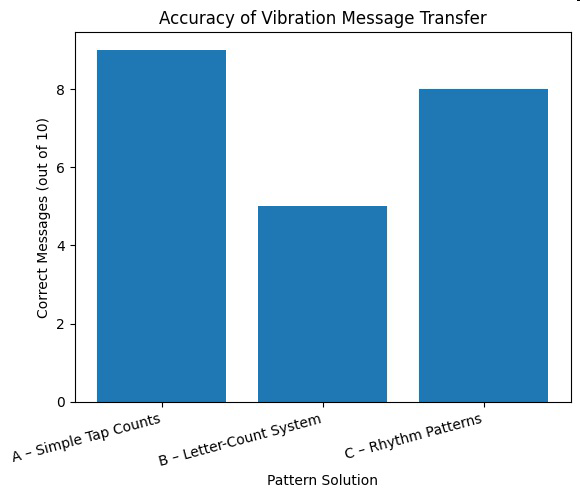
Solution | Correct Messages (out of 10) | Average Time to Send Message (s) |
|---|
A – Simple Tap Counts | 9 | 10 |
B – Letter-Count System | 5 | 18 |
C – Rhythm Patterns | 8 | 14 |
Graph of Information - Figure 1.
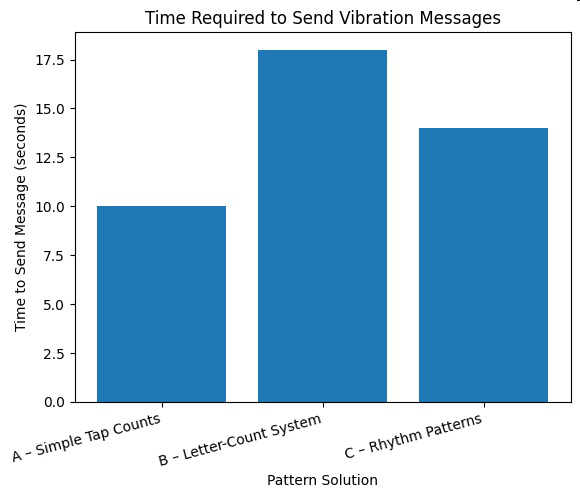
Graph of Information - Figure 2.