Slinky Waves and Pattern Spacing
Diagram 1.
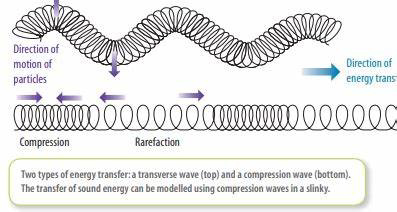 Source: https://graphicdesign.stackexchange.com/questions/134246/how-to-create-and-manipulate-a-slinky-style-spring
Phenomenon
Students stretch a slinky across the floor between two classmates. One student moves one end of the slinky up and down to send waves through it. By changing how big the motion is and how fast the slinky is moved, students observe different wave patterns.
They notice:
Students ask:
Waves are patterns of motion that travel through materials like ropes, water, and slinkies. When you send a wave through a slinky, the metal coils move up and down, but the slinky itself does not move across the floor. Instead, the wave pattern moves along the slinky.
Two important features of wave patterns are amplitude and wavelength. Amplitude describes how far the coils move from their resting position. Larger movements create waves with greater amplitude. Wavelength describes the distance between one wave peak and the next peak. It shows how spread out the wave pattern is.
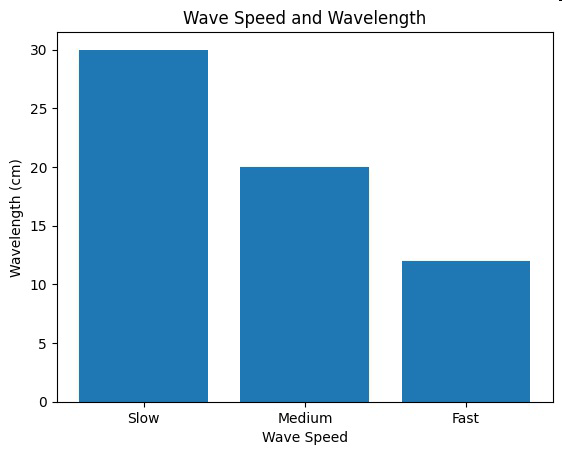
By changing how strongly or how quickly the slinky is moved, students can change the wave pattern. Bigger movements increase amplitude. Faster movements decrease wavelength by creating peaks closer together.
Diagram 2.
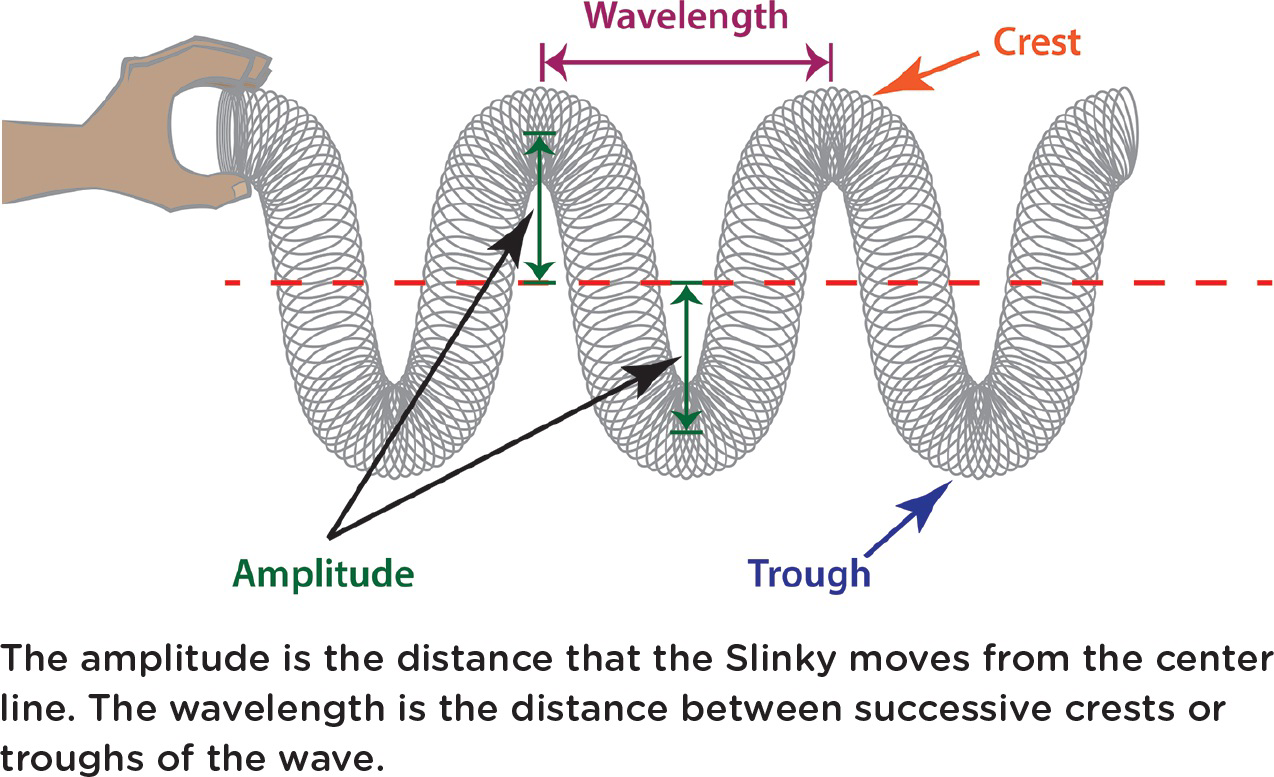 Source:
https://www.nsta.org/science-and-children/science-and-children-septemberoctober-2020/q-what-are-waves-and-what-are-some
Scientists use these patterns to build models of waves. By measuring amplitude and wavelength, students can describe wave behavior and compare different waves. This investigation helps students understand that waves can be described using patterns and measurements, not just pictures.
Table 1.
Trial | Hand Motion Size (cm) | Wave Amplitude (cm) |
|---|
1 | 2 | 2 |
2 | 4 | 4 |
3 | 6 | 6 |
4 | 8 | 8 |
Graph of Information - Figure 1.
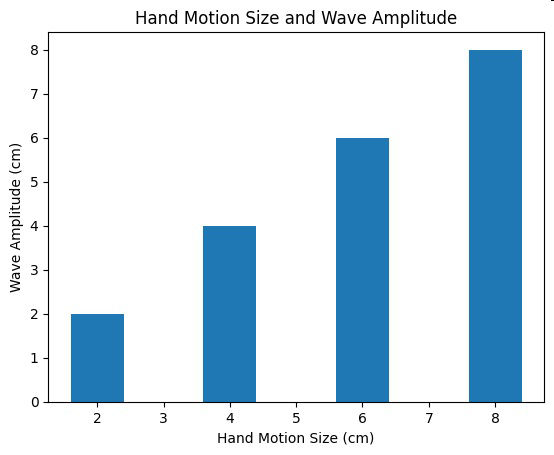
Table 2.
Trial | Wave Speed | Wavelength (cm) |
|---|
1 | Slow | 30 |
2 | Medium | 20 |
3 | Fast | 12 |
Graph of Information - Figure 2.