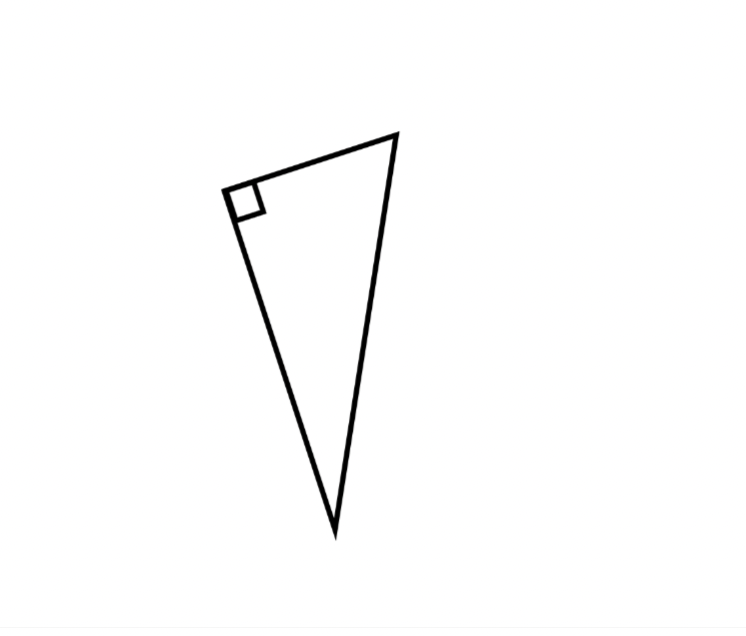
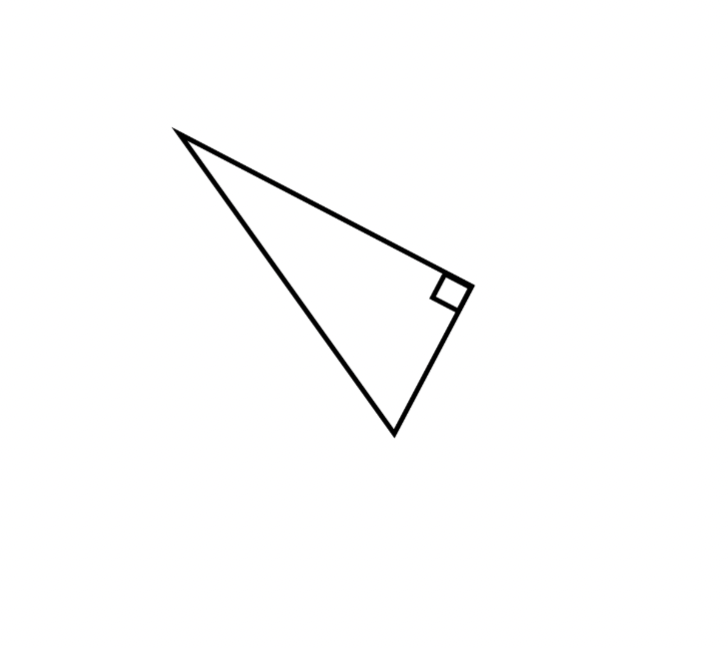
Write in simplest radical form.
Write in decimal form.
What do you notice about this image?
What do you wonder about this image?
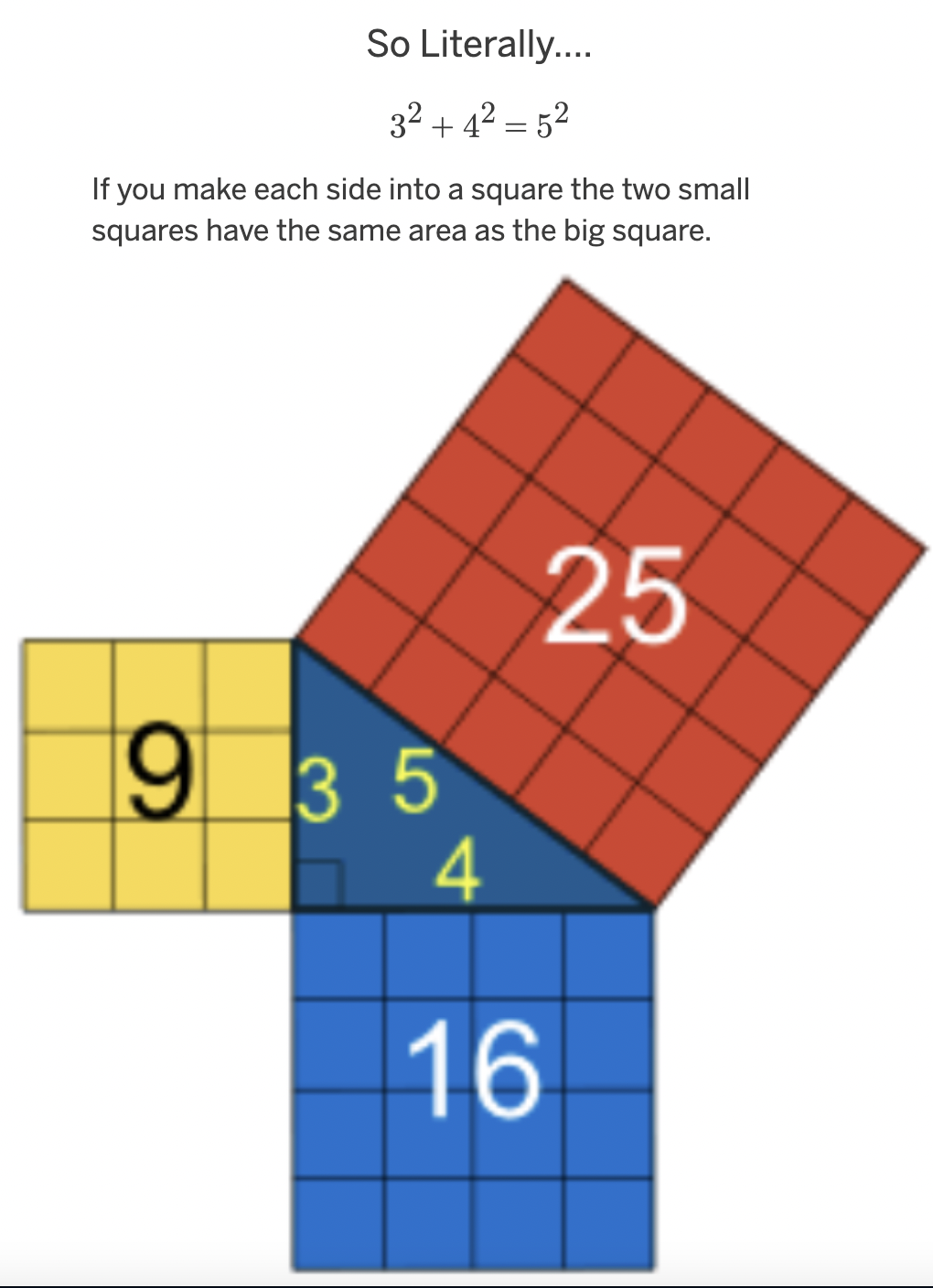
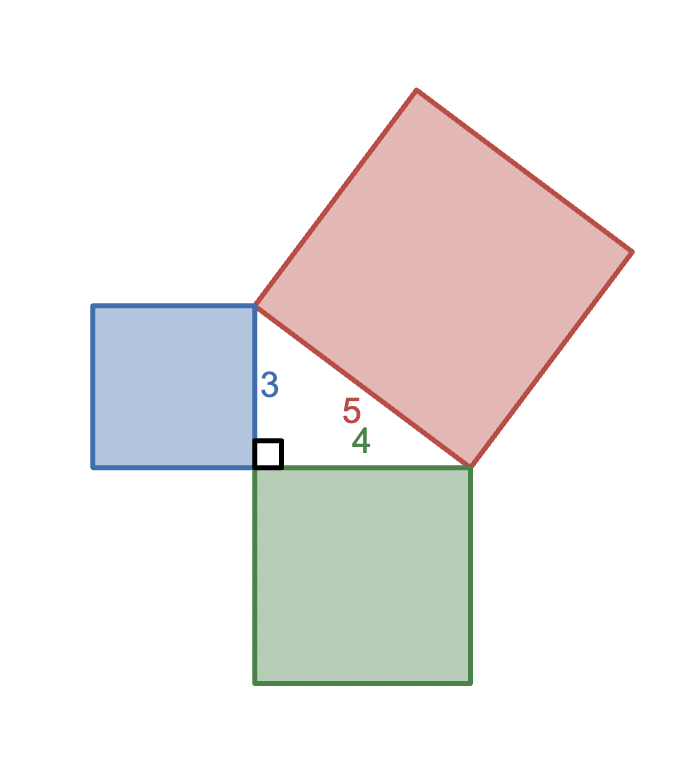
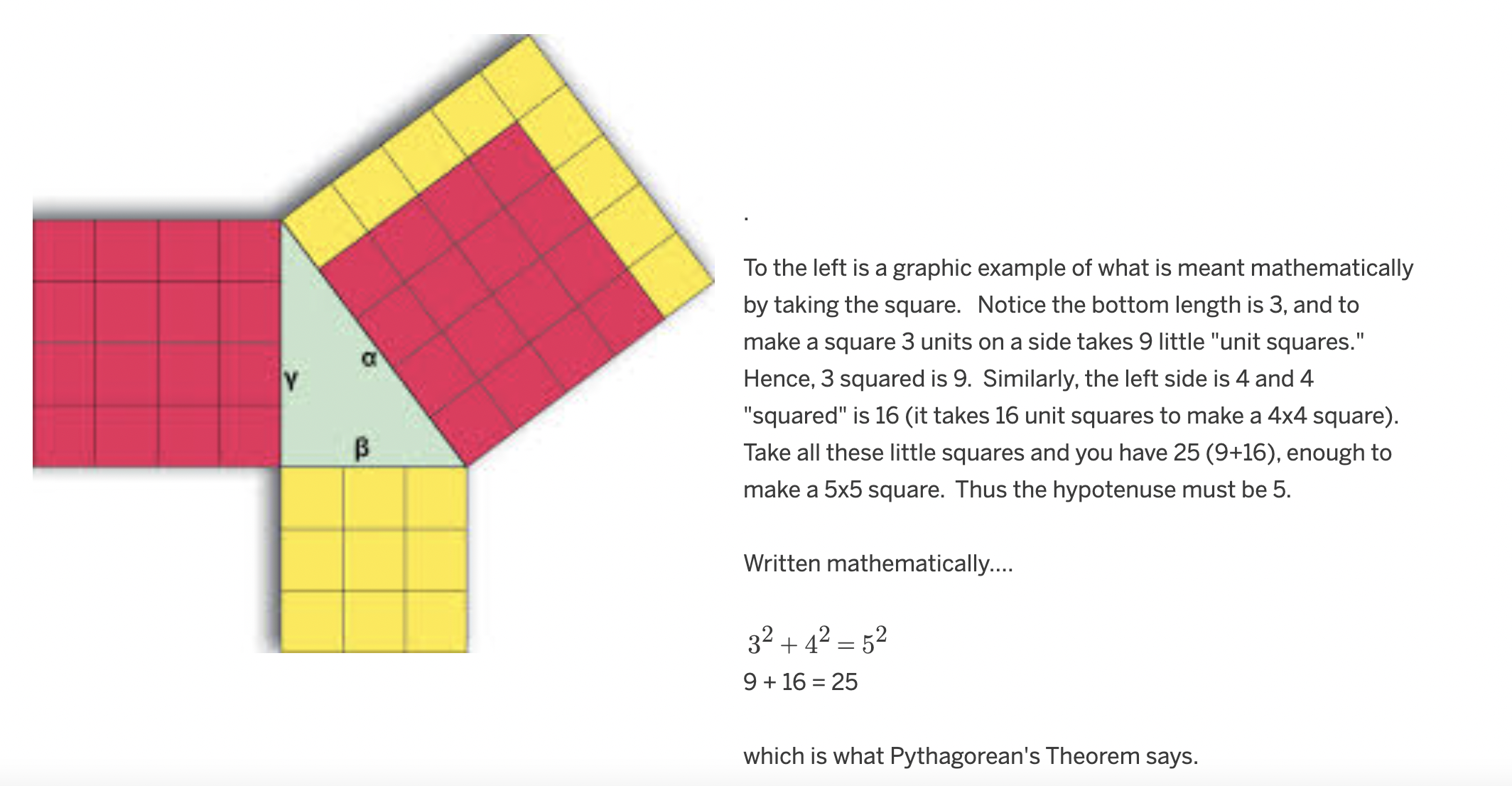
Determine the area of each square.
| Lengths | Blue Area | Green Area | Blue +Green Area | Red Area |
|---|---|---|---|---|
3-4-5 | ||||
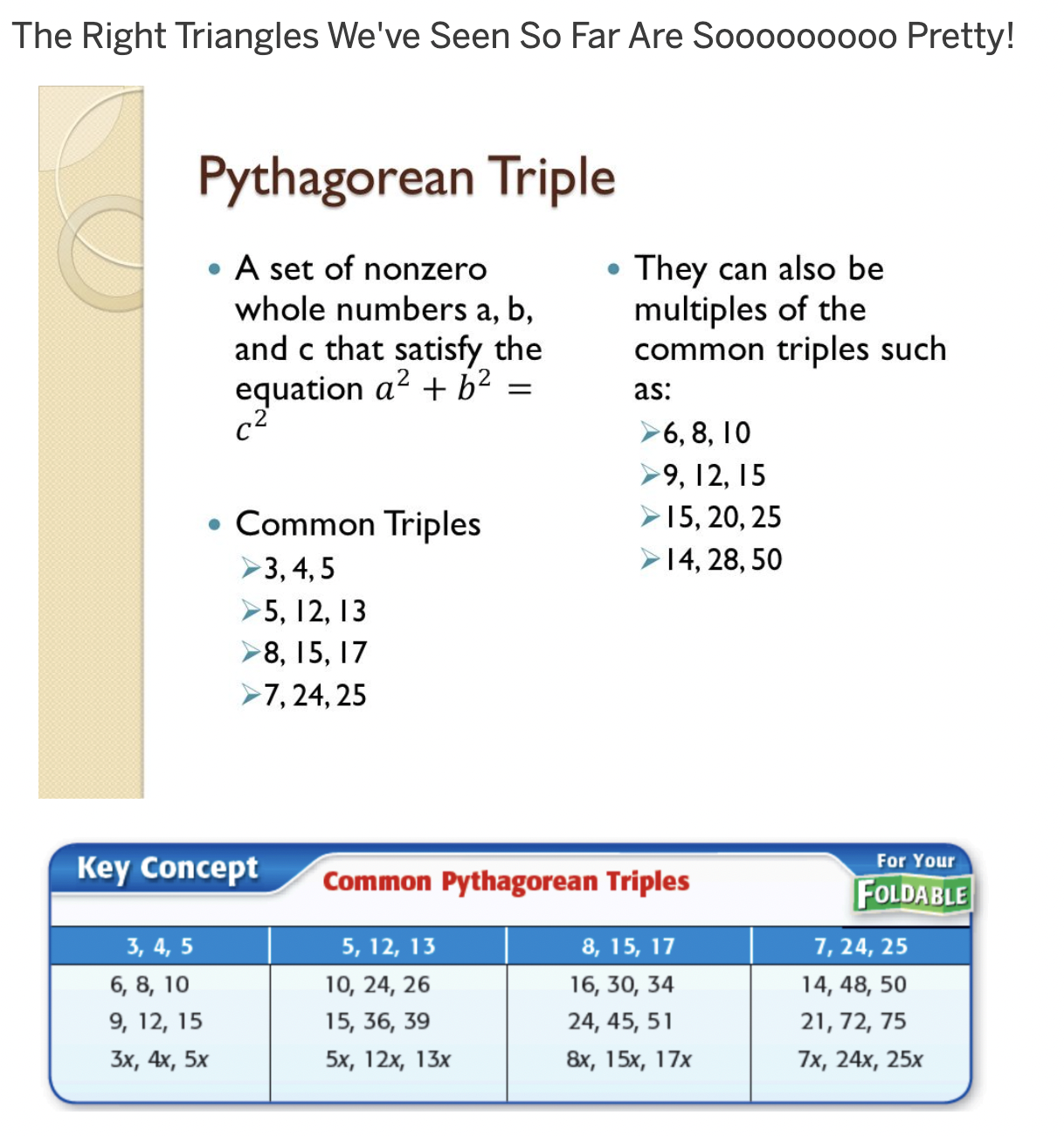
5-12-13 | ||||
6-8-10 |
Based off of the data in the table from the previous slide, what relationship seems to be true?
Using the dynamic applet on the following slide, does the relationship you noticed appear to be true for any right triangle? Is it true for any triangle? Use numbers from the diagram to justify your answer


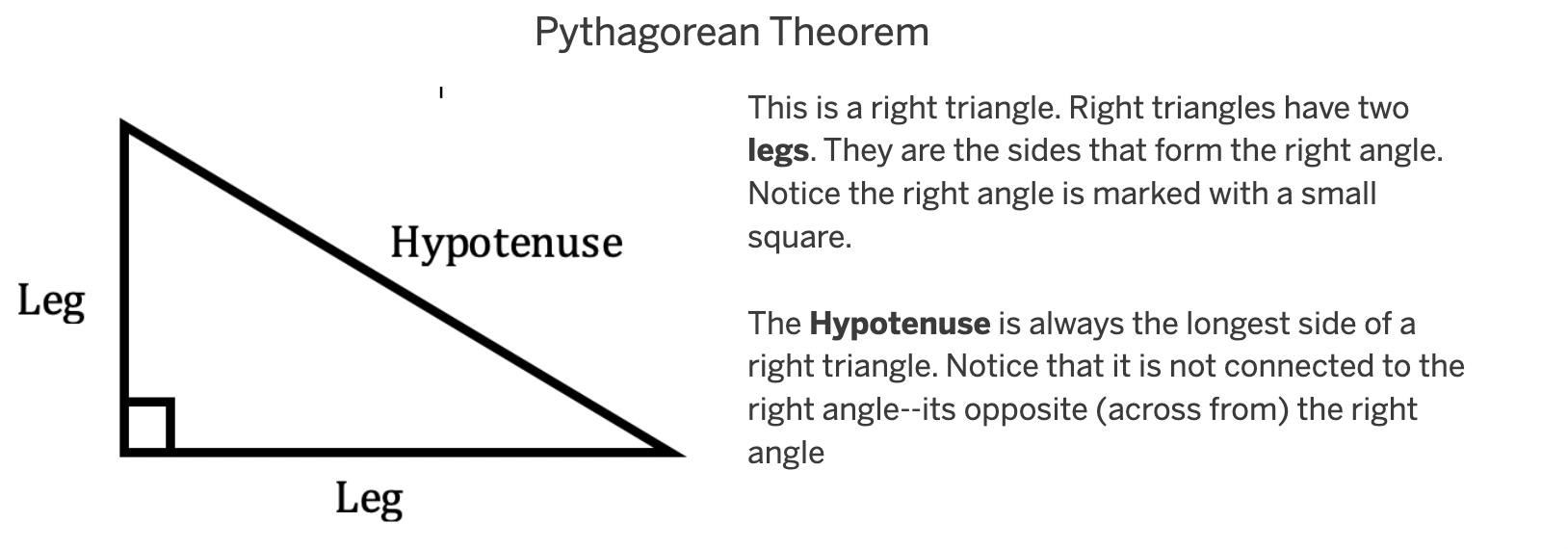
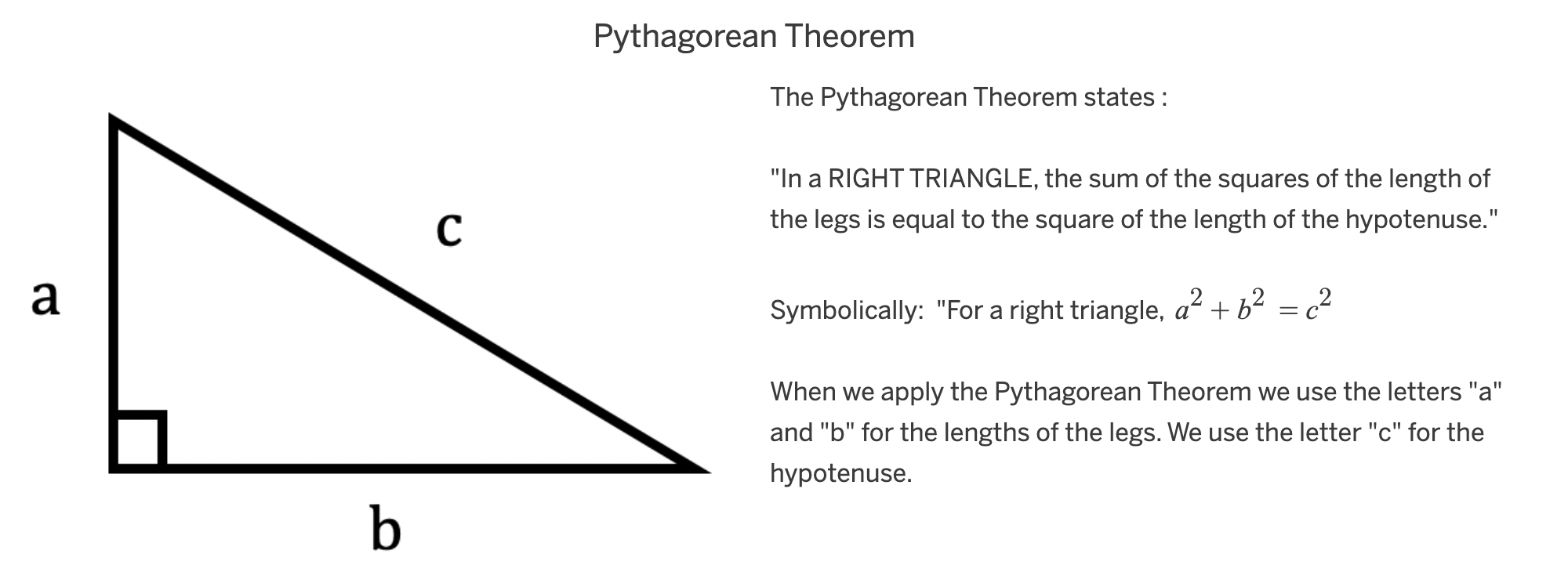
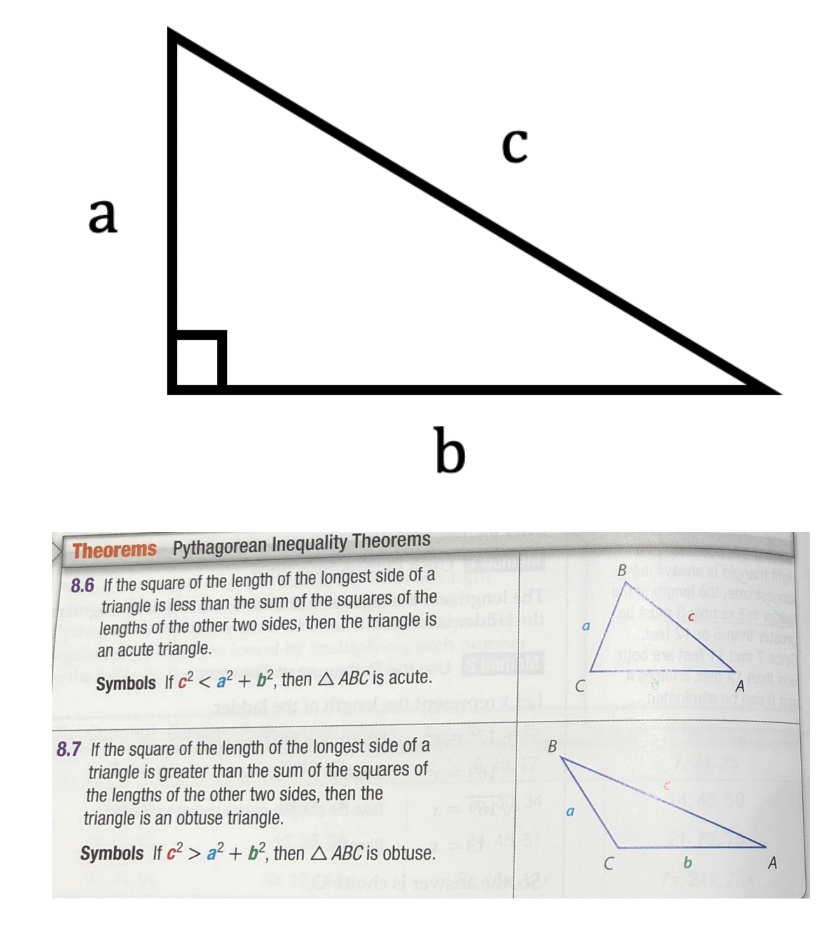
Label the sides of the right triangle.

Leg
Label the sides of the right triangle.

Leg
Looking back at your work using the Pythagorean Theorem, explain the steps to find the length of the hypotenuse of a right triangle when given the lengths of both legs.(Write your steps on your white board and take picture of your board and upload the picture below)
Looking back at your work using the Pythagorean Theorem, explain the steps to find a leg of a right triangle when given the lengths of the other leg and the hypotenuse. (Write your steps on your white board and take picture of your board and upload the picture below)
Find the missing side.
Find the exact and approximate length of hypotenuse (non-triple)
Exact length =
Approximate length =
Find the exact and approximate length of leg (non-triple)
Exact Length =
Approximate Length =
The lengths of the legs of a right triangle are 10 and 24. Find the length of the hypotenuse.
Hypotenuse =
A right triangle has a leg with the length of 9 and hypotenuse with a length of 13. Find the length of the other leg.
Length of the other leg =
Write in simplest radical form.
A right triangle has a leg with the length of 18 and hypotenuse with a length of 30. Find the length of the other leg.
Length of the other leg =
The lengths of the legs of a right triangle are 5 and 12. Find the length of the hypotenuse.
Hypotenuse =
A right triangle has a leg with the length of 6 and hypotenuse with a length of 10. Find the length of the other leg.
Length of the other leg =
A right triangle has a leg with the length of 11 and hypotenuse with a length of 14. Find the length of the other leg.
Length of the other leg =
Write in simplest radical form
The lengths of the legs of a right triangle are 4 and 5. Find the length of the hypotenuse.
Hypotenuse =
Write in simplest radical form
The lengths of the legs of a right triangle are 2 and 7. Find the length of the hypotenuse.
Hypotenuse =
Write in simplest radical form
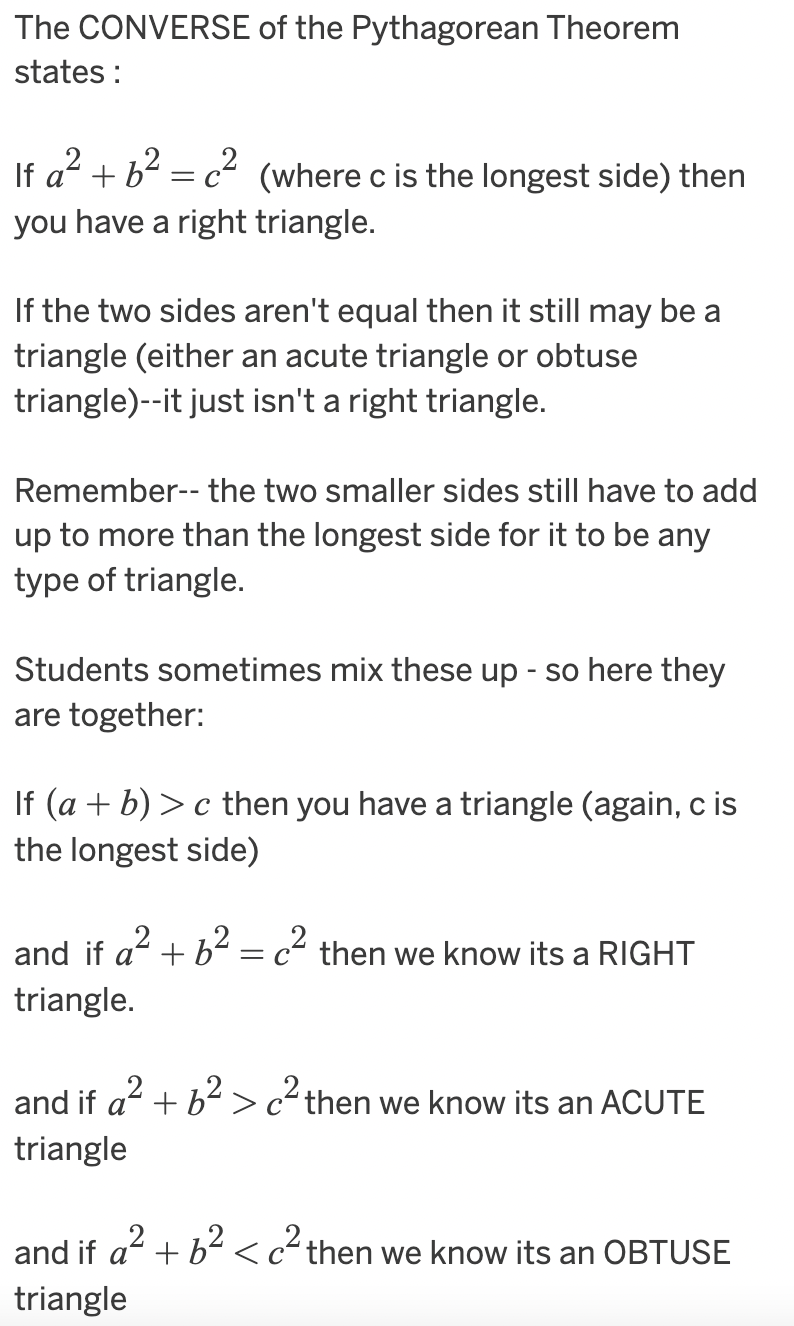
CONVERSE of the Pythagorean Theorem


Converse of Pythagorean Theorem Examples
Given the three side lengths of a triangle, determine whether the triangle is a right, acute, or obtuse triangle.
7-24-25
48-55-73
6-7-8
3-4-5
12-16-25
8-15-17
10-24-25
5-8-9
17-144-145
8-10-24
14-48-50
6-8-10
22-42-60
Right Triangle
Acute Triangle
Obtuse Triangle