Read the passage, look at the pictures, and answer the questions.
Lights Out!
Students are learning about eyes in science class. During their class discussion, a power outage occurs and the lights go out in the classroom. While the teacher looks for a flashlight, one student exclaims, “I can’t see anything!” The teacher turns on a flashlight and points it across the classroom to a plant on a table. The teacher says, “This makes me wonder how we are able to see the plant.”
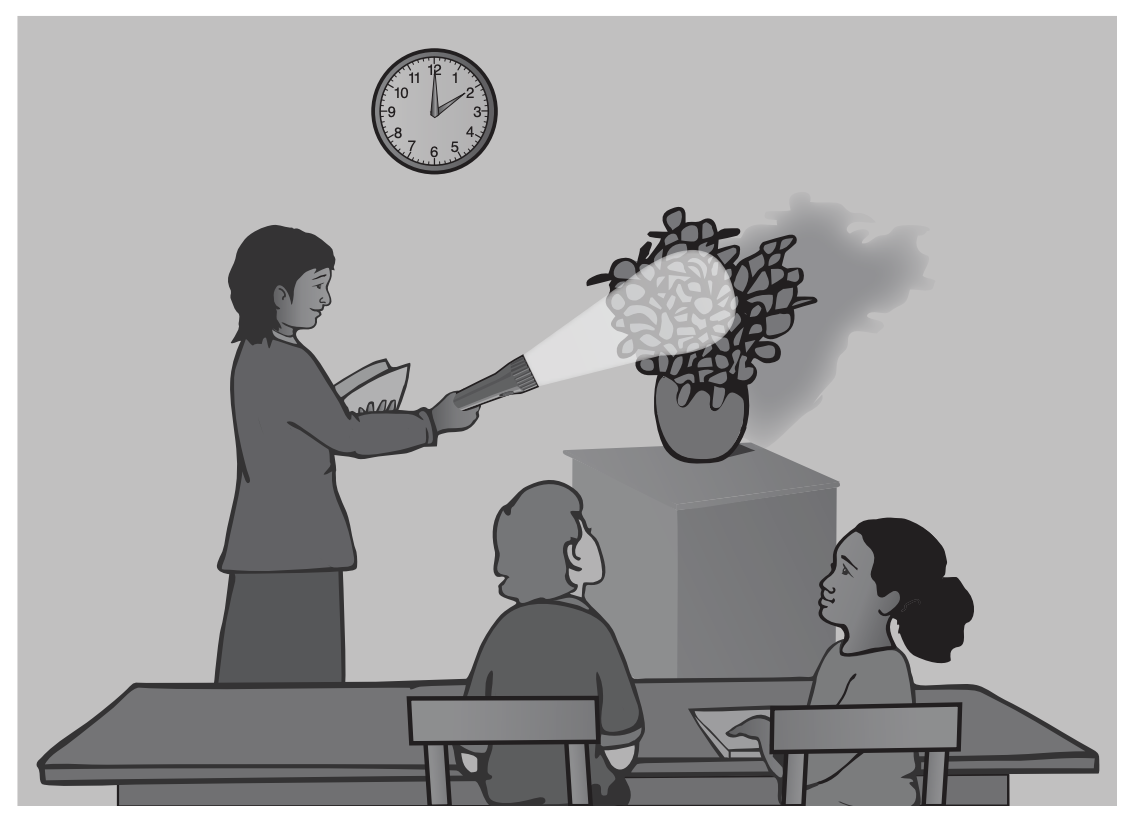
Which statement best describes how the students are able to see the plant?
Eyes collect information about the world in the form of light. Which statement best describes how this information is processed?
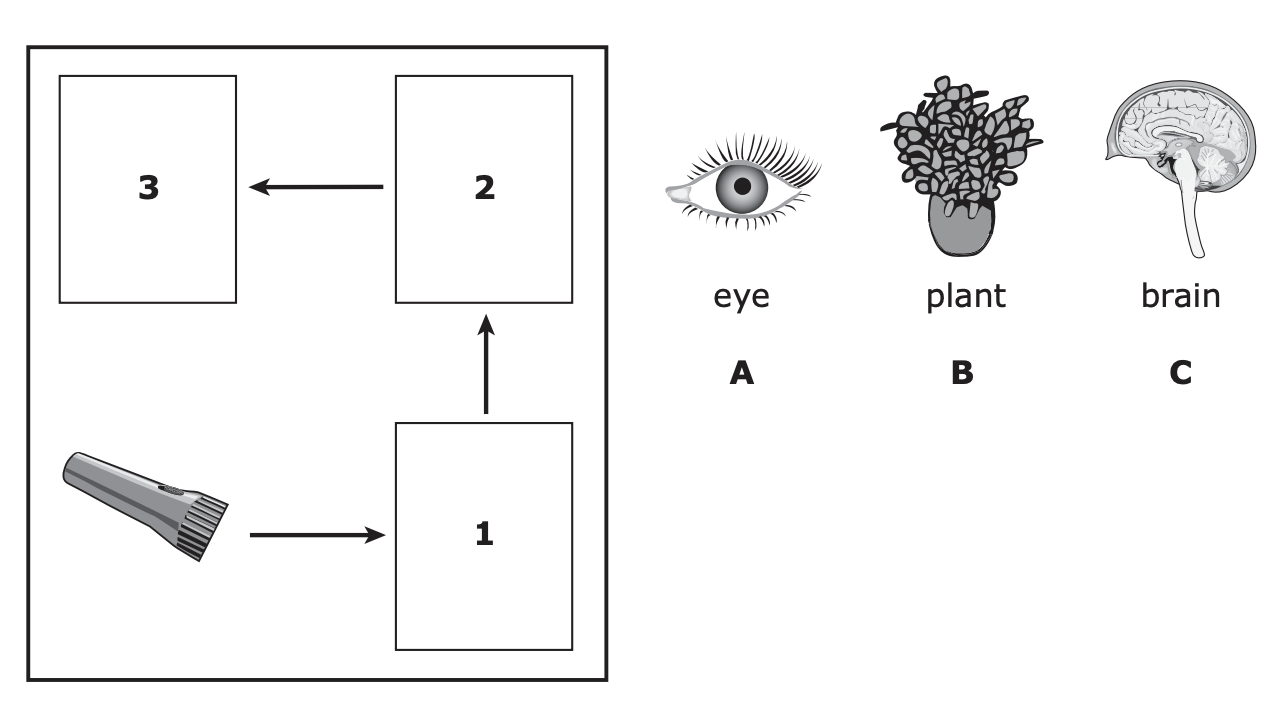
Complete the model by selecting the pictures to show the path that light and information follow to allow the plant to be seen.

You may use this model as a work space. Be sure to mark your answers in your answer document.
Note: Use the pictures of the plant, eye, and brain to fill in the boxes of the path of light and information.
Read the passage, look at the pictures, and answer the questions.
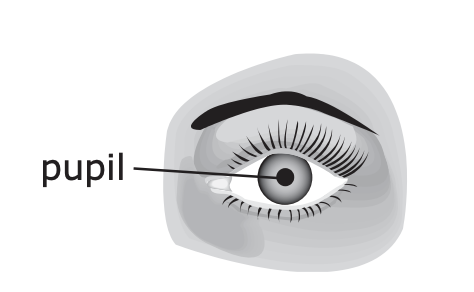
Human eyes have specialized structures to help people see. One of these structures is the pupil. The pupil is the dark center opening in the middle of the eye.
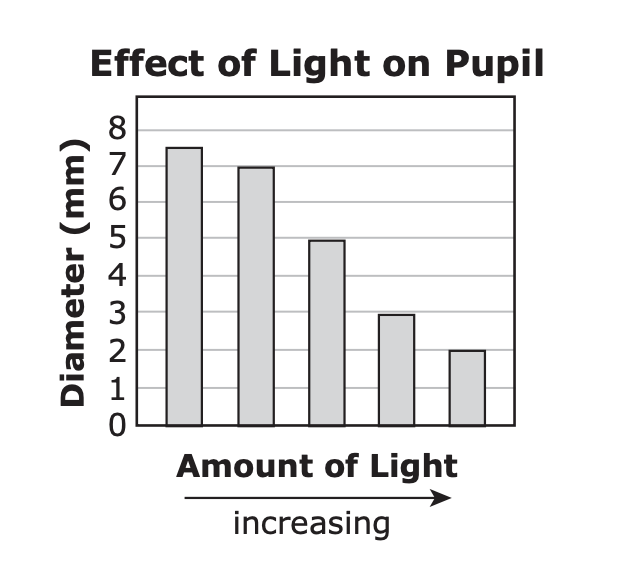
The size of a pupil can be measured by its diameter. A scientist shines different amounts of light on a pupil and measures the diameter of the pupil. The graph shows the data collected by the scientist.
This question has two parts.
Part A
After a while, the lights come back on in the classroom. How will the students’ pupils most likely change?
Read the passage, look at the pictures, and answer the questions.
Grasshoppers
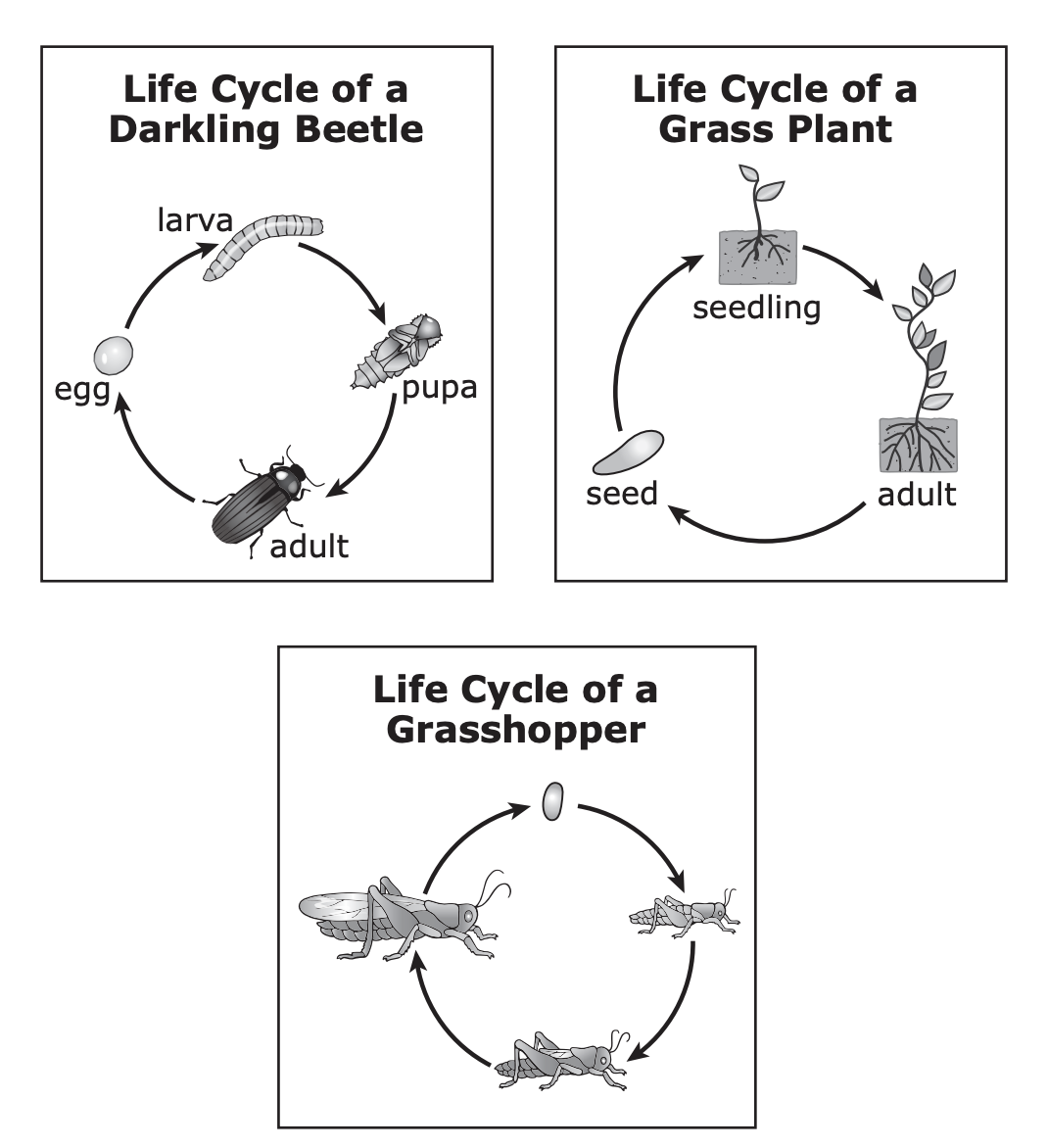
Students are studying the ecosystem of three organisms: a darkling beetle, a grasshopper, and a grass plant. Grasshoppers and darkling beetles eat grasses. The ecosystem gets different amounts of rain based on the seasons.

This question has two parts.
Based on the models, identify the similarities and differences among the life cycle stages of the organisms.
Part A
Select all the similarities among the life cycle stages of the organisms.
Read the passage, look at the pictures, and answer the questions.
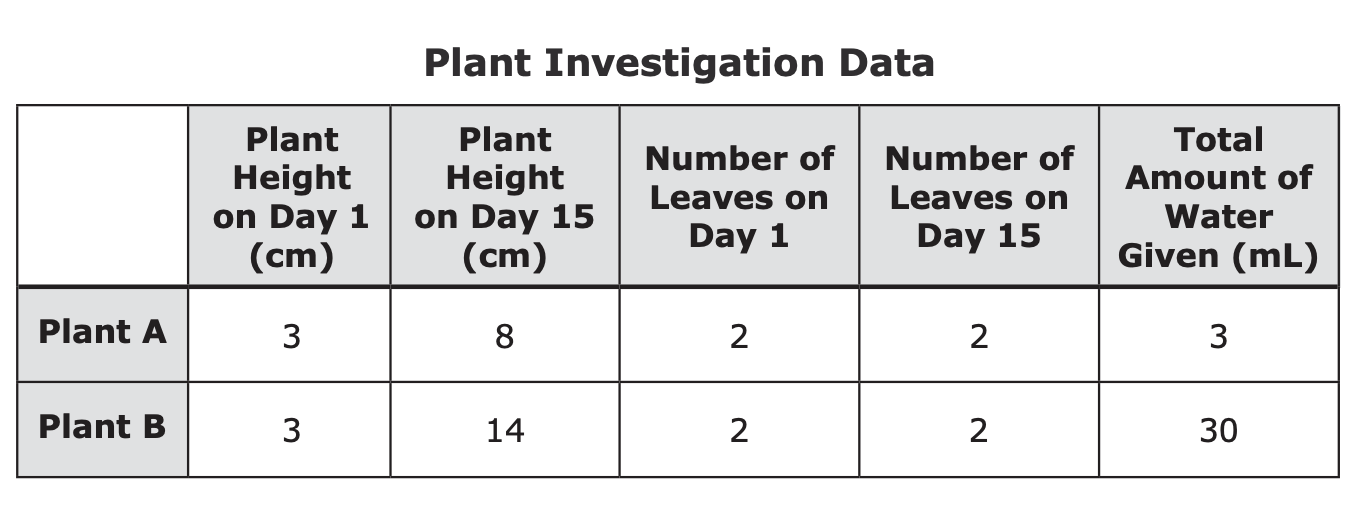
A student wants to know if the traits of the grass plants eaten by the grasshoppers are affected by the environment. The student sets up an investigation to collect data using the procedure shown.
Fill two containers with 300 grams of soil in each.
Place a grass plant into each container.
Set the containers near a window.
Measure the height of each grass plant on day 1
Count the number of leaves on each grass plant on day 1.
Water the grass plants every 5 days.
Measure the height of each grass plant on day 15.
Count the number of leaves on each grass plant on day 15.

This question has three parts.
After the investigation the student makes the following claim.
Claim: Plants are affected by the amount of water in their environment.
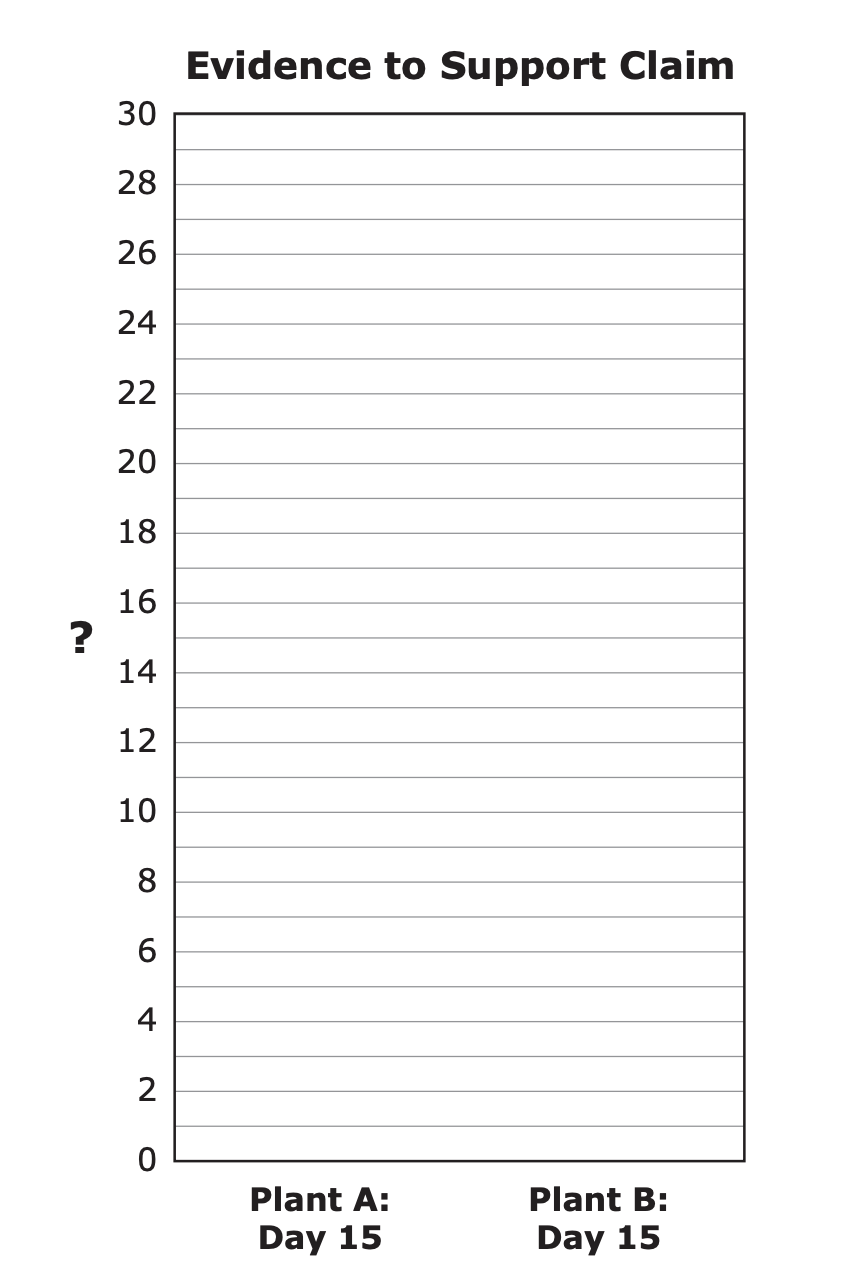
The student wants to graph the data to show the evidence that best supports the claim. An incomplete graph is shown.
Use this model as a workspace. Be sure to mark your answers in the answer document.
Part A
Select the correct label that would replace the question mark on the left side of the graph.
Part B
Which statement best explains the change in pupil diameter described in Part A?
This question has two parts.
Based on all of the information, complete the scientific explanation about the effect of light on pupil diameter.
Claim: The pupil diameter changes with different amounts of light.
Choose two evidence statements and one reasoning statement that support the claim for the effect of light on pupil diameter.
Part A: Evidence Statements
Part B: Reasoning Statements
Choose one reasoning statement that supports the claim for the effect of light on pupil diameter.
Part B
Select all the differences among the life cycle stages of the organisms.
This question has two parts.
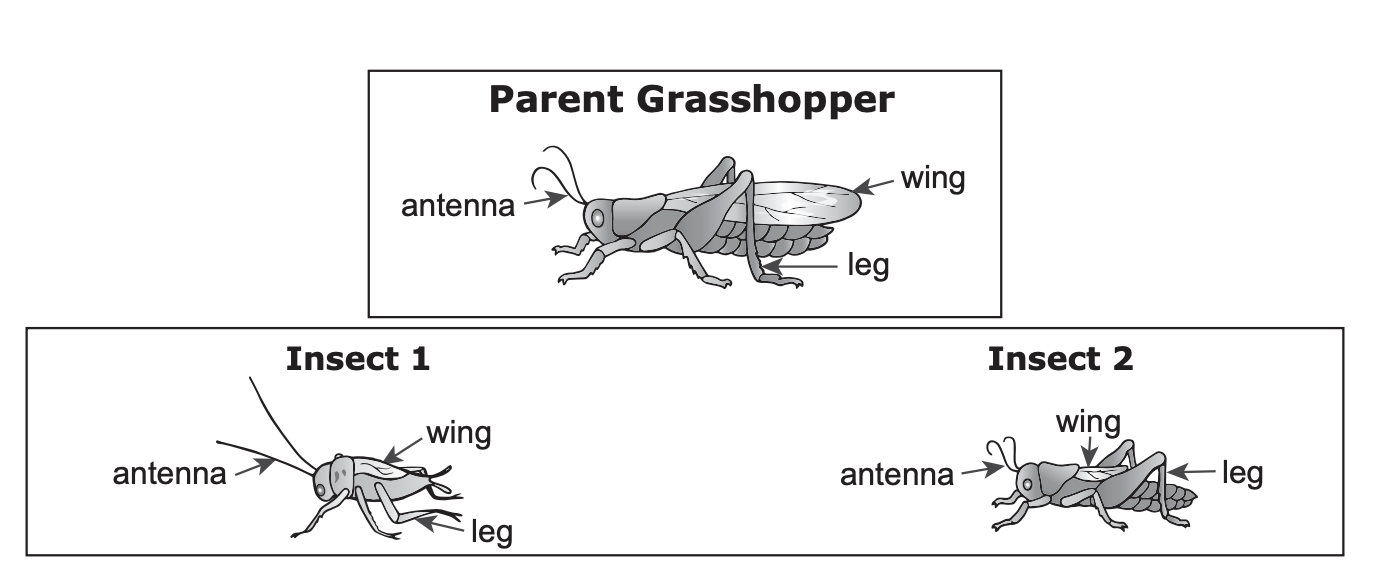
The students are given a container with an adult grasshopper and two insects in their young stages.
Part A
Which insect is most likely to be the offspring of the adult grasshopper?
Part B
Select one evidence statement that supports your answer in Part A.
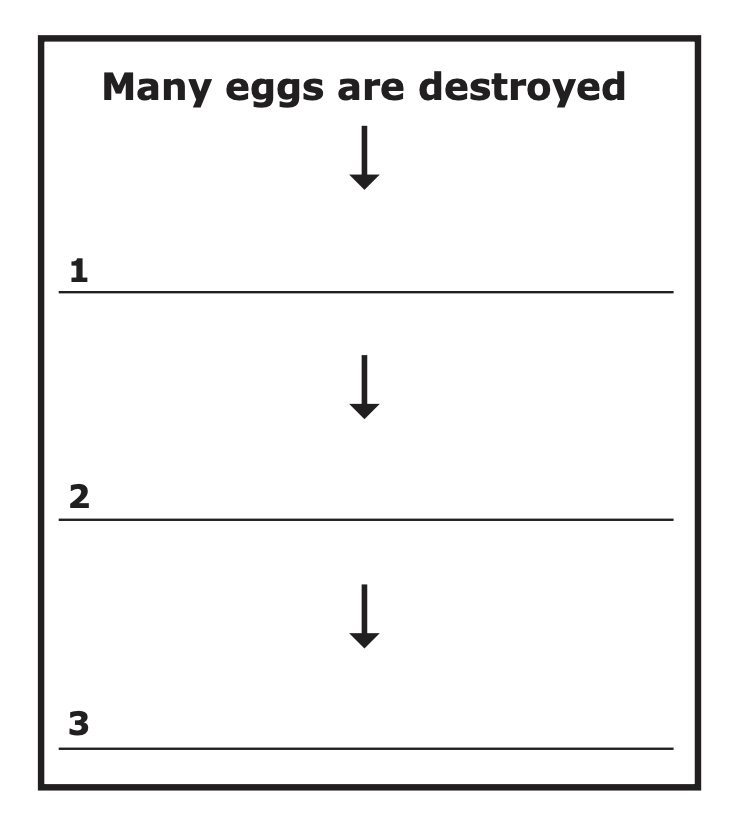
Grasshopper eggs must remain moist to survive. When very little rainfall occurs in the ecosystem, how might the population of grasshoppers be affected?
Select three events in the correct sequence from the list of Possible Events to complete the graphic organizer.
fewer grasshoppers become adults
more young grasshoppers survive
less reproduction
more grasshoppers become adults
fewer young grasshoppers survive
more reproduction
Part B
Choose the height of the bar for Plant A: Day 15 that best displays the student’s data in the graph.
Part C
Choose the height of the bar for Plant B: Day 15 that best displays the student’s data in the graph.