Michigan - MSTEP released items MSTEP: Grade 8 - Science (3/4/2026)
star
star
star
star
star
Last updated about 1 month ago
15 Nsɛmmisa
Read the passage, look at the pictures, and answer the questions.
Two students are outside in the cold, waiting for a bus. One of the students has a package of hand warmers and offers to share them with the other student. The student opens the package and they each put a hand warmer bag in one of their gloves.
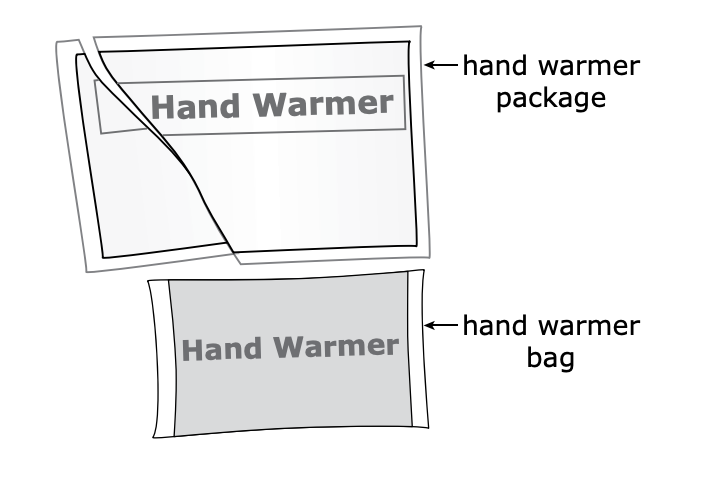 After a few minutes, the students notice that the hand warmer bags start to feel warm. The students want to know how hand warmer bags get warm. They decide to ask their science teacher if they can test the materials inside the hand warmer bags. After reading the ingredients on the hand warmer package, the students decide to focus on iron because it is the most common ingredient.
The students designed the following procedure.
Open a new hand warmer package.
Cut open the hand warmer bag.
Separate the materials by using a magnet to attract the iron.
Place the iron on a dish.
Make initial observations and calculations to record properties of the iron.
Leave the iron in the dish overnight.
Record final observations and calculations the next day.
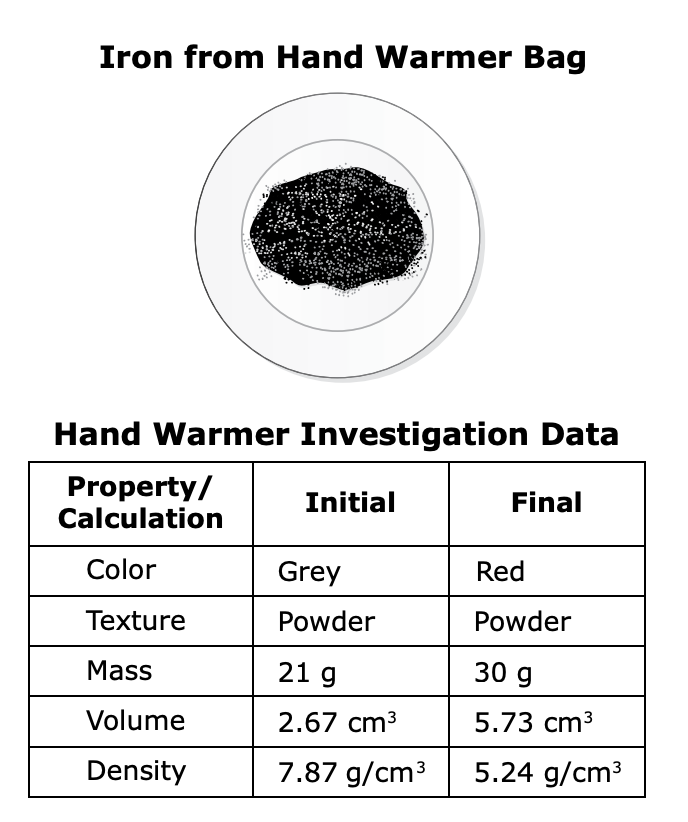
Use the data table to complete the following statements. Part A: The students can tell that a chemical reaction involving iron ________.
Read the passage, look at the pictures, and answer the questions.
After observing what happens with the iron in the hand warmers, the students decide to work on improving the hand warmers to make them get warm faster. The students observe that the hand warmer bag is made of fabric containing tiny holes.
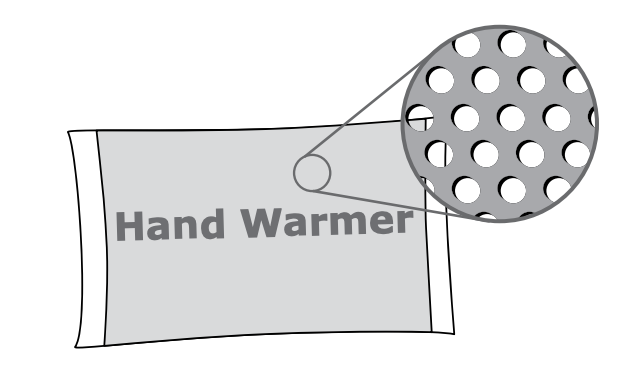
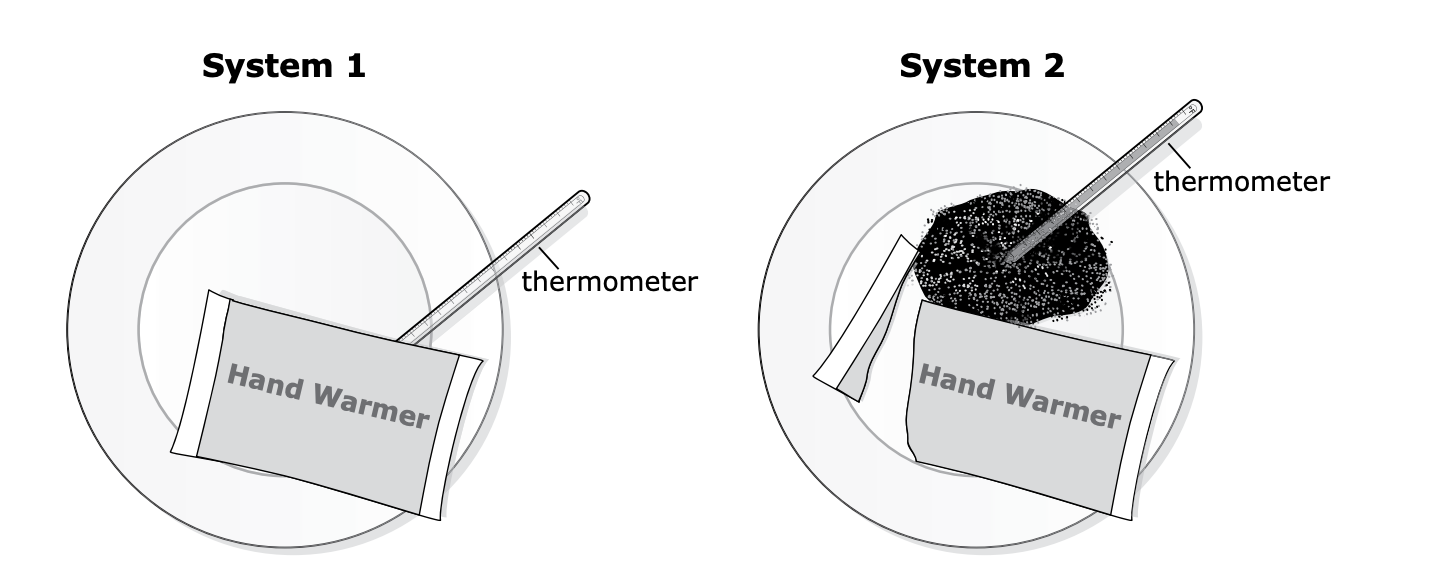
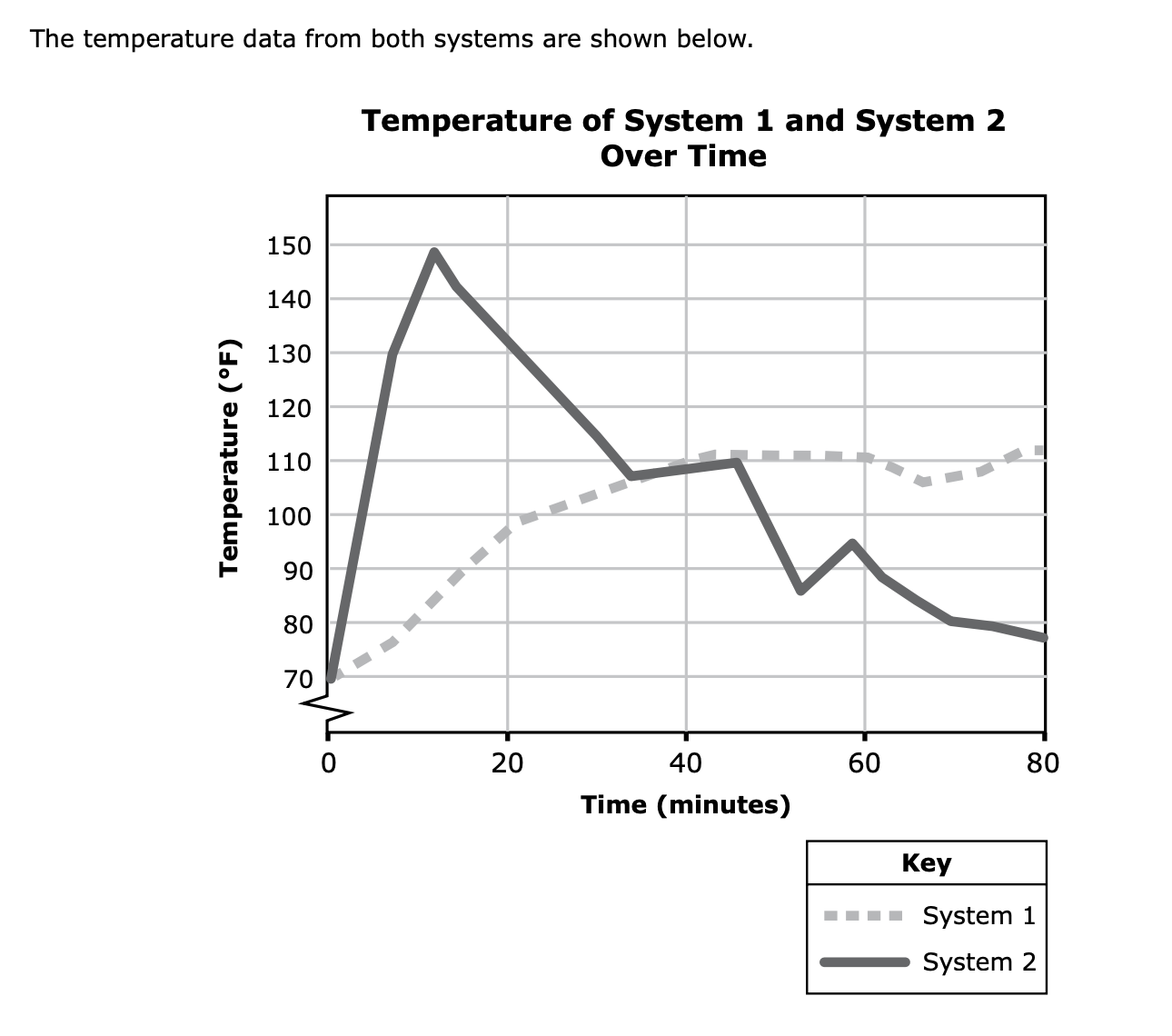
They think that if oxygen is needed to produce heat, maybe only a small amount of oxygen is getting through the fabric. To test this, the students design an investigation to record the change in temperature when the hand warmer ingredients are left in the hand warmer bag and when they are taken out of the hand warmer bag. The students set up two systems.
Open two hand warmer packages. Place one hand warmer bag on a dish labeled System 1.
Cut open the other hand warmer bag and pour the materials from inside the bag onto the dish labeled System 2.
Place a thermometer under the hand warmer bag in System 1 and a thermometer inside the materials in System 2.
Record the temperature of both systems every five minutes until one of the systems nears the starting temperature.
Part B: This is because a new substance ________ form overnight.
Part C: Choose one set of properties that supports the completed statement in Part A.
This question has two parts. Part A: The final mass of the material on the dish the next day is ________ the initial mass of the material.
Part A: Select the correct number of iron atoms that should go in Box 1 to complete the student model.
This question has two parts. Compare the two sets of data in the graph. Part A: Select two similarities between System 1 and System 2.
Part B: Select two differences between System 1 and System 2.
This question has three parts. Identify and explain the temperature pattern in the graph. Part A: Claim choices — select the best claim statement that can be used to explain the pattern.
The students want to redesign the hand warmer bag in such a way that the hand warmer would take less time to get warm but would also remain a safe product. The new design includes more small holes in the fabric of the hand warmer bag. Which statement best evaluates if the new design would or would not work?
Which statement best describes a trade-off if a new hand warmer bag is designed to get warm faster than the original design?
Part B: This could happen if iron atoms are ________ the environment.
Part B: Select the correct number of oxygen atoms that should go in Box 2 to complete the student model.
Part C: Select one limitation of the model shown in Part A.
Part B: Evidence choices — select the best evidence statement that can be used to explain the pattern.
Part C: Reasoning choices:
Select the best reasoning statement that can be used to explain the pattern.

