Twa kɔ nsɛm atitiriw so
Log in
Sign up for FREE
arrow_back
Laabri

3.02 Global Temperature Lab

star
star
star
star
star
Last updated about 1 month ago
22 Nsɛmmisa
Hyɛ no nsow a efi ɔkyerɛwfo no hɔ:
0
Ɛhia
1
Ɛhia
0.5
Ɛhia
1
Ɛhia
0.5
Ɛhia
0.5
Ɛhia
0.5
Ɛhia
0
Ɛhia
2
Ɛhia
1
Ɛhia
1
1
Ɛhia
1
Ɛhia
1
Ɛhia
1
Ɛhia
1
Ɛhia
1
Ɛhia
1
Ɛhia
0
Ɛhia
4

Learning Objectives

  • Identify greenhouse gases and describe how they trap infrared radiation to affect Earth's temperature

  • Explain how surface reflectivity affects solar energy absorption and contributes to global temperature changes.

  • Make evidence-based predictions about future global temperatures using greenhouse gas and albedo data, recognizing positive feedback loops.

Success Criteria

  • Distinguish which atmospheric gases absorb infrared radiation and describe how greenhouse gas concentration changes affect surface temperature.

  • Compare how different surfaces reflect or absorb sunlight and explain how decreasing Arctic sea ice creates a reinforcing cycle that amplifies warming.

If you need help, please watch the class recording.

Learning Objectives

  • Identify greenhouse gases and describe how they trap infrared radiation to affect Earth's temperature

  • Explain how surface reflectivity affects solar energy absorption and contributes to global temperature changes.

  • Make evidence-based predictions about future global temperatures using greenhouse gas and albedo data, recognizing positive feedback loops.

Success Criteria

  • Distinguish which atmospheric gases absorb infrared radiation and describe how greenhouse gas concentration changes affect surface temperature.

  • Compare how different surfaces reflect or absorb sunlight and explain how decreasing Arctic sea ice creates a reinforcing cycle that amplifies warming.

If you need help, please watch the class recording.

Asemmisa {{asɛmmisaAhyɛnsode}}
1.

In your own words, answer at least 1 question:

  • What are greenhouse gases?

  • What are some examples of greenhouse gases?

  • How do greenhouse gases work?

  • What questions do you have about greenhouse gases?

Ɛhia
0.5
Asemmisa {{asɛmmisaAhyɛnsode}}
2.

Background:

Earth’s atmosphere is made of up many gases, mostly nitrogen N₂ and oxygen O₂ gases, but also carbon dioxide CO₂, water vapor H₂O, and methane CH₄, among other compounds. 

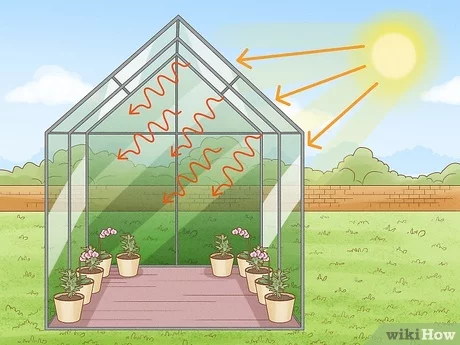
A greenhouse traps heat by allowing sunlight to enter through transparent walls but preventing the resulting infrared radiation from escaping back out.

Gases that absorb and reemit infrared light are greenhouse gases.  Gases that do not interact with infrared light are not greenhouse gases. 

The greenhouse effect makes temperatures favorable for life on Earth but makes other planets, like Venus, uninhabitable.

Which of the following student responses best summarizes these ideas?
Ɛhia
0.5
Asemmisa {{asɛmmisaAhyɛnsode}}
3.

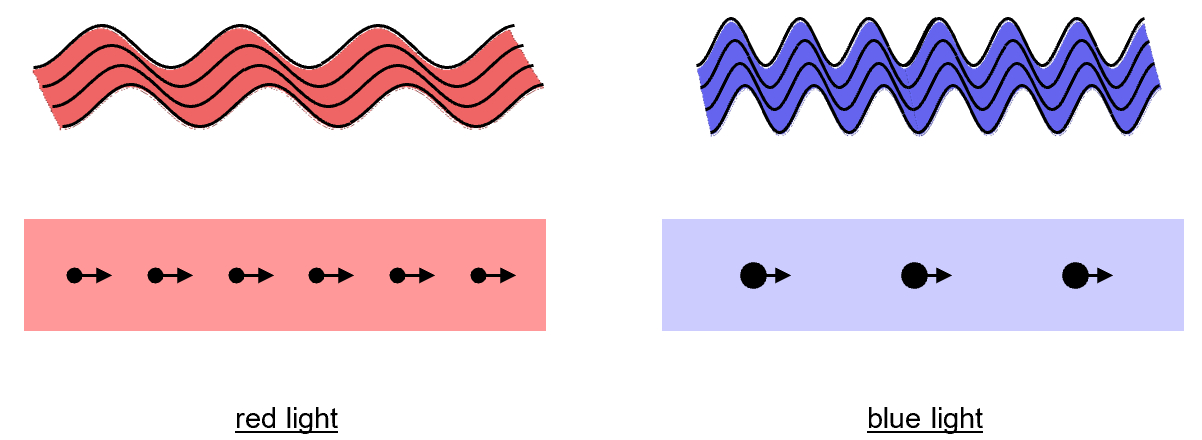
Electromagnetic energy such as visible light and infrared radiation can be represented two ways:

  • As waves (with properties like wavelength and frequency that explain how it travels and bends)

  • As photons (tiny packets of energy that explain how light interacts with matter and causes chemical reactions).

You will see both models being used.

Which of the following student responses best summarizes these ideas?
Asemmisa {{asɛmmisaAhyɛnsode}}
4.

Part 1: Greenhouse Gases

Open the Molecules and Light Simulation.


In this simulation, you will observe how different wavelengths of the electromagnetic spectrum interact with different molecules of gas. 

Greenhouse gases will absorb electromagnetic energy and re-emit the energy back towards Earth's surface.

Try passing photons of infrared and visible light through molecules of each of the gases listed in the table below by clicking on the flashlight's green button. Identify if the molecule reacts to the photons.

Gas

Infrared

Visible

Nitrogen N2

Oxygen O2

Carbon Dioxide CO2

Methane CH4

Water H2O

Asemmisa {{asɛmmisaAhyɛnsode}}
5.

What type of light caused the molecules to react?

Asemmisa {{asɛmmisaAhyɛnsode}}
6.

Based on your observations, which gases are greenhouse gases?

Asemmisa {{asɛmmisaAhyɛnsode}}
7.

Part 2: Greenhouse Effect

Open the Greenhouse Effect Simulation.

Click on the Photons module.

Set the greenhouse gas concentration to none.

Uncheck "Cloud."

Observation: With no greenhouse gases in the atmosphere or no clouds, what happened to the temperature of the Earth?

Asemmisa {{asɛmmisaAhyɛnsode}}
8.

Move the greenhouse gas concentration slider upward and stop at the middle.

Observation: How are the photons behaving due to the increase in greenhouse gases?

Asemmisa {{asɛmmisaAhyɛnsode}}
9.

Observe the surface temperature with the slider still at the middle.

Conclusion: Which of the following is correct?

Asemmisa {{asɛmmisaAhyɛnsode}}
10.

Reset the simulation.  Under Greenhouse Gas Concentration, click on the calendar.  Set the conditions to Ice Age.  Note the greenhouse gas concentrations in the table below. 

You do not need to include the units.

PPM = Parts Per Million

PPB = Parts Per Billion

Run the simulation until the temperature stabilizes.  Record the surface temperature in the table below.

Complete the table below by running the simulation for the remaining time periods (1750, 1950, 2020).

Time Period

CO2

CH4

N2O

Temperature

Ice Age

ppm

ppb

ppb

°C

1750

ppm

ppb

ppb

°C

1950

ppm

ppb

°C

2020

ppm

ppb

°C

Asemmisa {{asɛmmisaAhyɛnsode}}
11.

From Ice Age to 2020, the global average temperature of greenhouse gas concentrations.

Asemmisa {{asɛmmisaAhyɛnsode}}
12.

Part 3: Albedo

FYI: Pronounced al·bee·dow

Switch to the Layer Model module in the PhET simulation.

Move the Surface Albedo slider to 0 (low albedo).

How do the sunlight photons interact with the surface?

Asemmisa {{asɛmmisaAhyɛnsode}}
13.

Move the Surface Albedo slider all the way up to 0.9 (high albedo).

How do the sunlight photons interact with the surface?

Asemmisa {{asɛmmisaAhyɛnsode}}
14.

Based on what you have observed, which of the following student responses best explains albedo?

Asemmisa {{asɛmmisaAhyɛnsode}}
15.

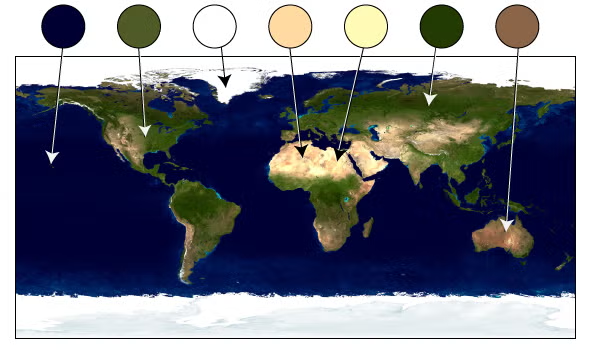
Which 2 surfaces would have the lowest albedo?

Asemmisa {{asɛmmisaAhyɛnsode}}
16.

The surfaces in the previous question would most of the Sun's energy.

Asemmisa {{asɛmmisaAhyɛnsode}}
19.

Modern Earth has an average albedo of 0.3.

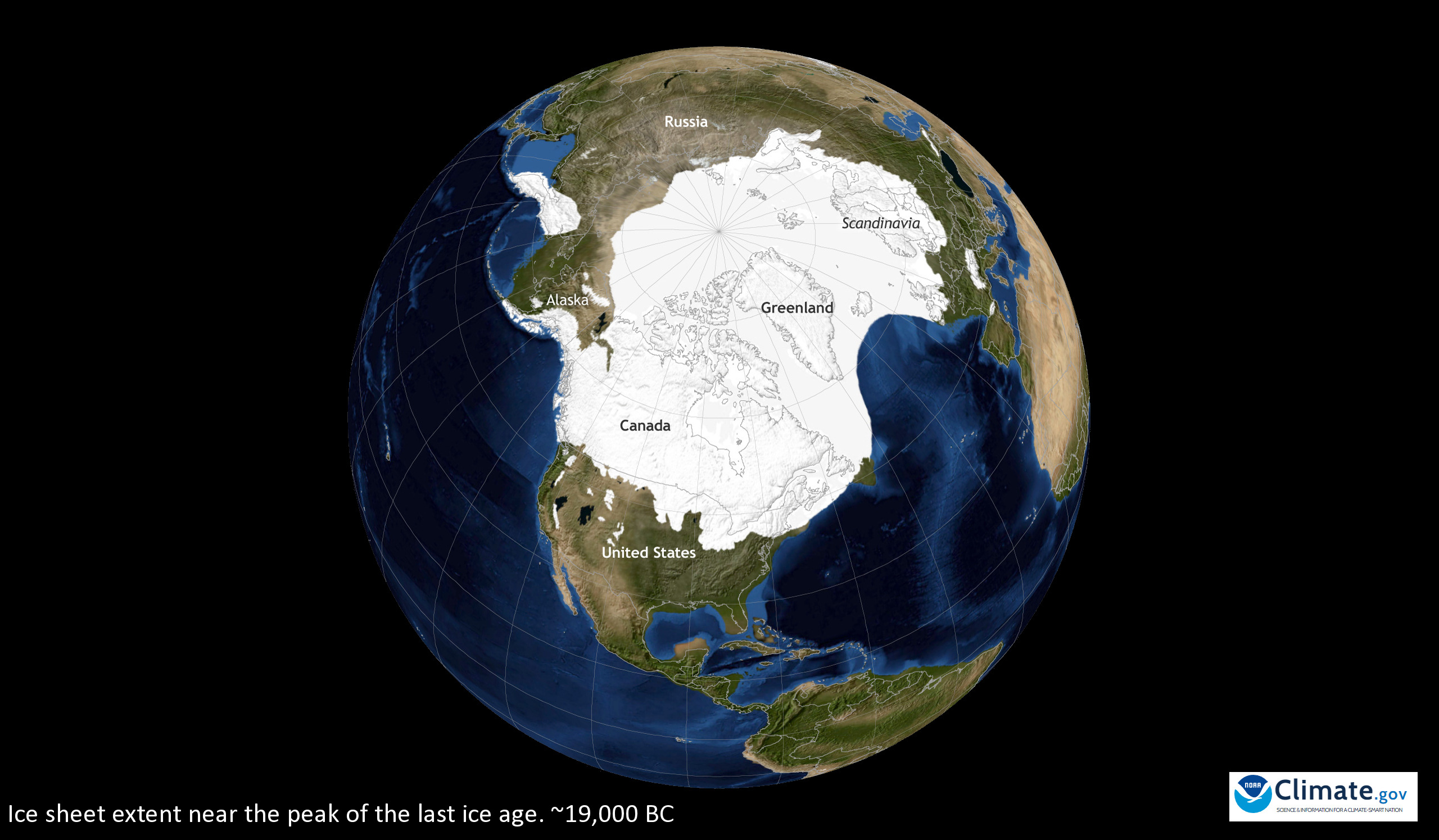
What was Earth's albedo different during the last Ice Age?

Asemmisa {{asɛmmisaAhyɛnsode}}
20.


Consider the effect of decreased Arctic sea ice:

This is an example of a the overall cycle.

Asemmisa {{asɛmmisaAhyɛnsode}}
21.

Part 4: Prediction & Reasoning

If greenhouse gases continue to increase AND Arctic albedo continues to decrease, predict what will happen to global temperatures over the next 50 years.

Asemmisa {{asɛmmisaAhyɛnsode}}
22.

Justify in your own words: How will greenhouse gases and albedo contribute to the prediction you selected?