Twa kɔ nsɛm atitiriw so
Log in
Sign up for FREE
arrow_back
Laabri

AP HUG -- Module 43 practice quiz [Women in Agriculture]

star
star
star
star
star
Last updated 3 months ago
10 Nsɛmmisa
Ɛhia
1
Ɛhia
1
Ɛhia
1
Ɛhia
1
Ɛhia
1
Ɛhia
1
Ɛhia
1
Ɛhia
1
Ɛhia
1
Ɛhia
1
Asemmisa {{asɛmmisaAhyɛnsode}}
1.

Practice FRQs

Which of the following describes the emerging role of women in pastoralist societies?

Asemmisa {{asɛmmisaAhyɛnsode}}
2.

Practice MCQs

Smallholder farmers compare best with which of the following agricultural types?

Asemmisa {{asɛmmisaAhyɛnsode}}
3.

Practice MCQs

Which of the following describes the role of women farmers in commercial agriculture?

Asemmisa {{asɛmmisaAhyɛnsode}}
4.

Practice MCQs

Which of the following explains how the Industrial Revolution affected women's roles in agriculture in the developed world?

Asemmisa {{asɛmmisaAhyɛnsode}}
5.

AP Classroom

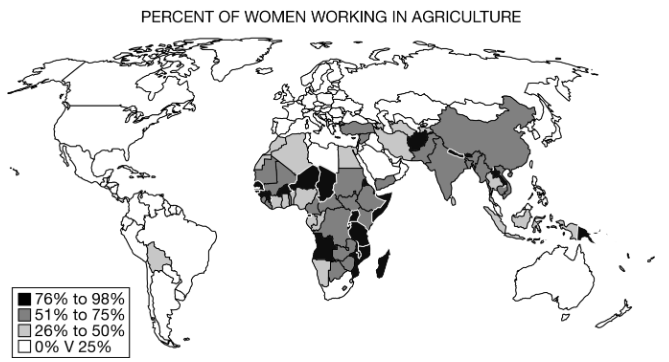
Based on the map, which of the following explains the similarities of the world regions where at least 51 percent of women work in agriculture?
Asemmisa {{asɛmmisaAhyɛnsode}}
6.

AP Classroom


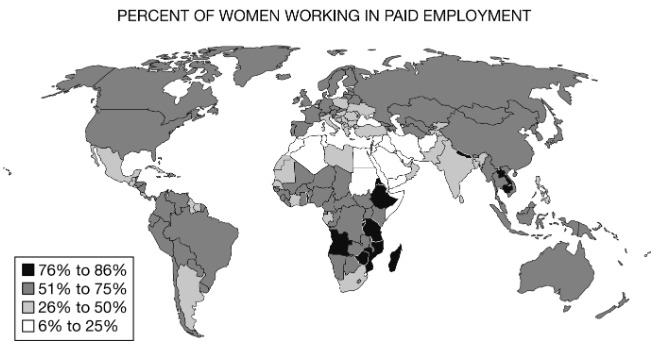
Compare the two maps and examine the data for Africa, the Middle East, and South Asia. Which of the following statements is supported by the comparison of the two maps?
Asemmisa {{asɛmmisaAhyɛnsode}}
7.

AP Classroom


Which of the following explains the significance of the similarities between Asia and Sub-Saharan Africa in terms of the percent of women working in agriculture?

Asemmisa {{asɛmmisaAhyɛnsode}}
8.

Practice FRQs

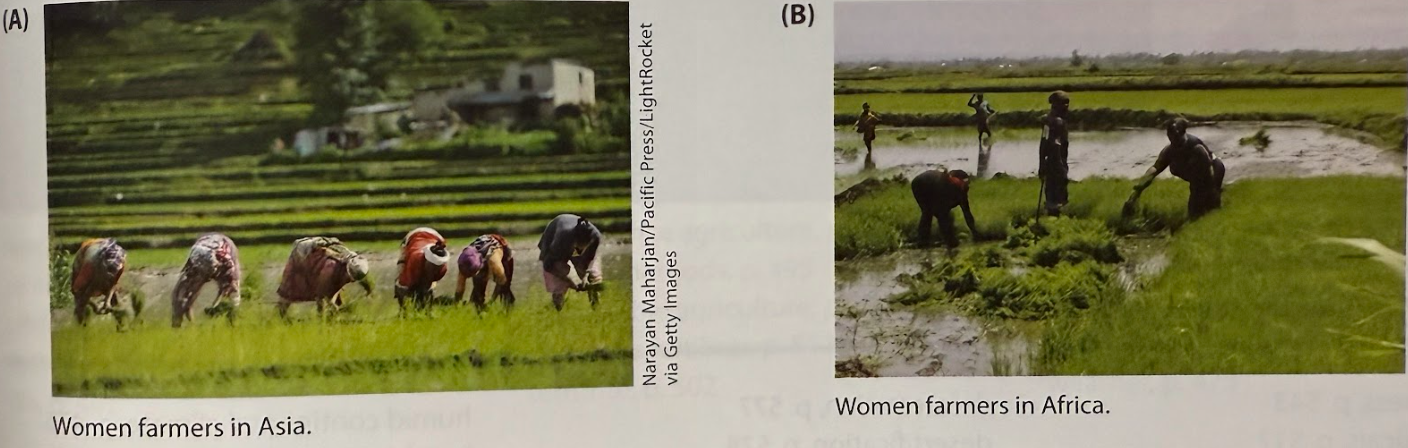
Describe the division of labor related to the women farmers in both Asia and Africa.

Asemmisa {{asɛmmisaAhyɛnsode}}
9.

Practice FRQs

Compare the patterns of land ownership and farm management between women farmers in subsistence economies and commercial economies.

Asemmisa {{asɛmmisaAhyɛnsode}}
10.

Practice FRQs

Identify the scale of analysis in each image.