Twa kɔ nsɛm atitiriw so
Log in
Sign up for FREE
arrow_back
Laabri

Genetics Test - Unit 4

star
star
star
star
star
Last updated 3 months ago
49 Nsɛmmisa
Ɛhia
1
Ɛhia
1
Ɛhia
1
Ɛhia
1
Ɛhia
1
Ɛhia
1
Ɛhia
1
Ɛhia
1
Ɛhia
1
Ɛhia
1
Ɛhia
1
Ɛhia
1
Ɛhia
1
Ɛhia
1
Ɛhia
1
Ɛhia
1
Ɛhia
1
Ɛhia
1
Ɛhia
1
Ɛhia
1
Ɛhia
1
Ɛhia
1
Ɛhia
1
Ɛhia
1
Ɛhia
5
Ɛhia
1
Ɛhia
1
Ɛhia
1
Ɛhia
1
Ɛhia
1
Ɛhia
1
Ɛhia
1
Ɛhia
1
Ɛhia
1
Ɛhia
1
Ɛhia
1
Ɛhia
1
Ɛhia
1
Ɛhia
1
Ɛhia
1
Ɛhia
1
Ɛhia
1
Ɛhia
1
Ɛhia
1
Ɛhia
1
Ɛhia
2
Ɛhia
2
Ɛhia
6
Ɛhia
1
Asemmisa {{asɛmmisaAhyɛnsode}}
1.

In humans, where does DNA replication take place?

Asemmisa {{asɛmmisaAhyɛnsode}}
2.

RNA from a bear is compared to RNA from a sunflower. Both will contain the

Asemmisa {{asɛmmisaAhyɛnsode}}
3.

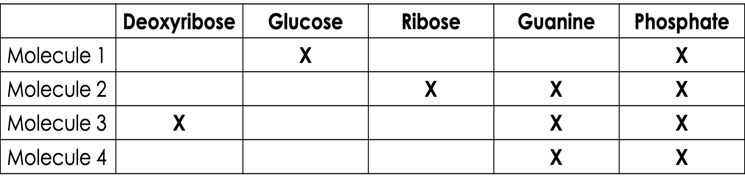
  1. A scientist is doing an experiment to identify different molecules. Some components of these molecules are listed in this table. Which of the four molecules is DNA, based on the table to the right?
Asemmisa {{asɛmmisaAhyɛnsode}}
4.

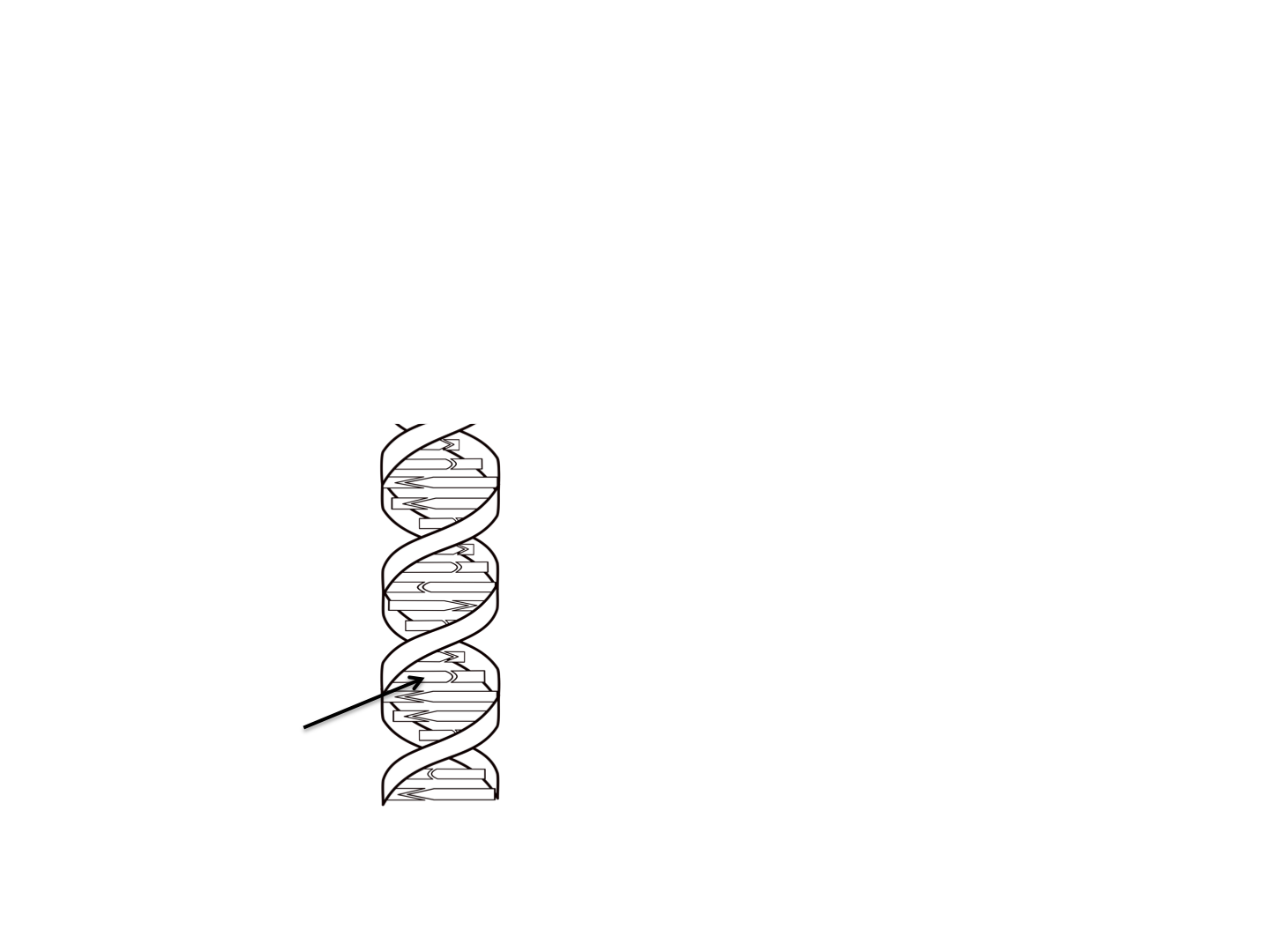
  1. The diagram shown here represents a portion of a DNA molecule.  The part indicated by the arrow could be

Asemmisa {{asɛmmisaAhyɛnsode}}
5.

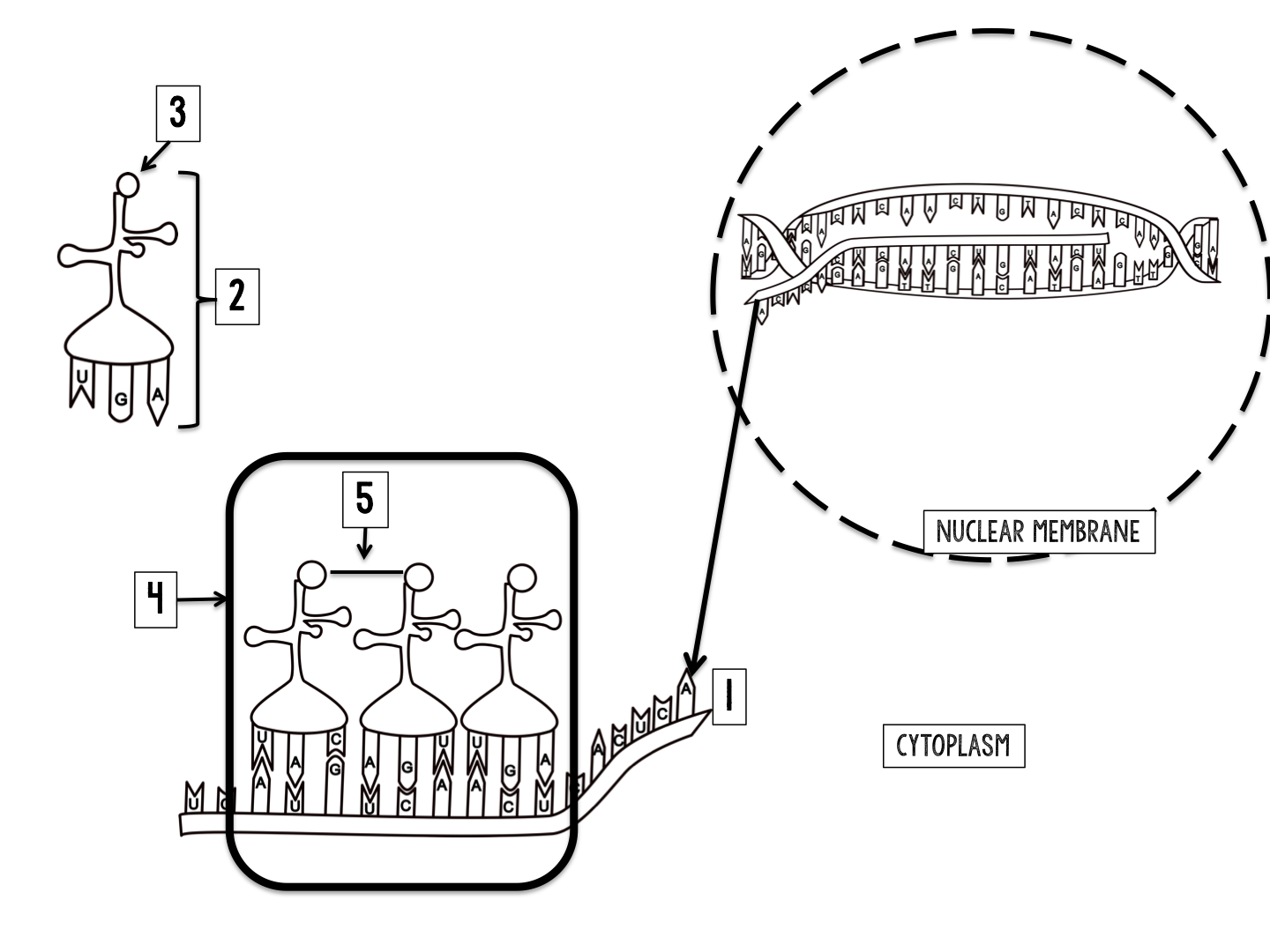
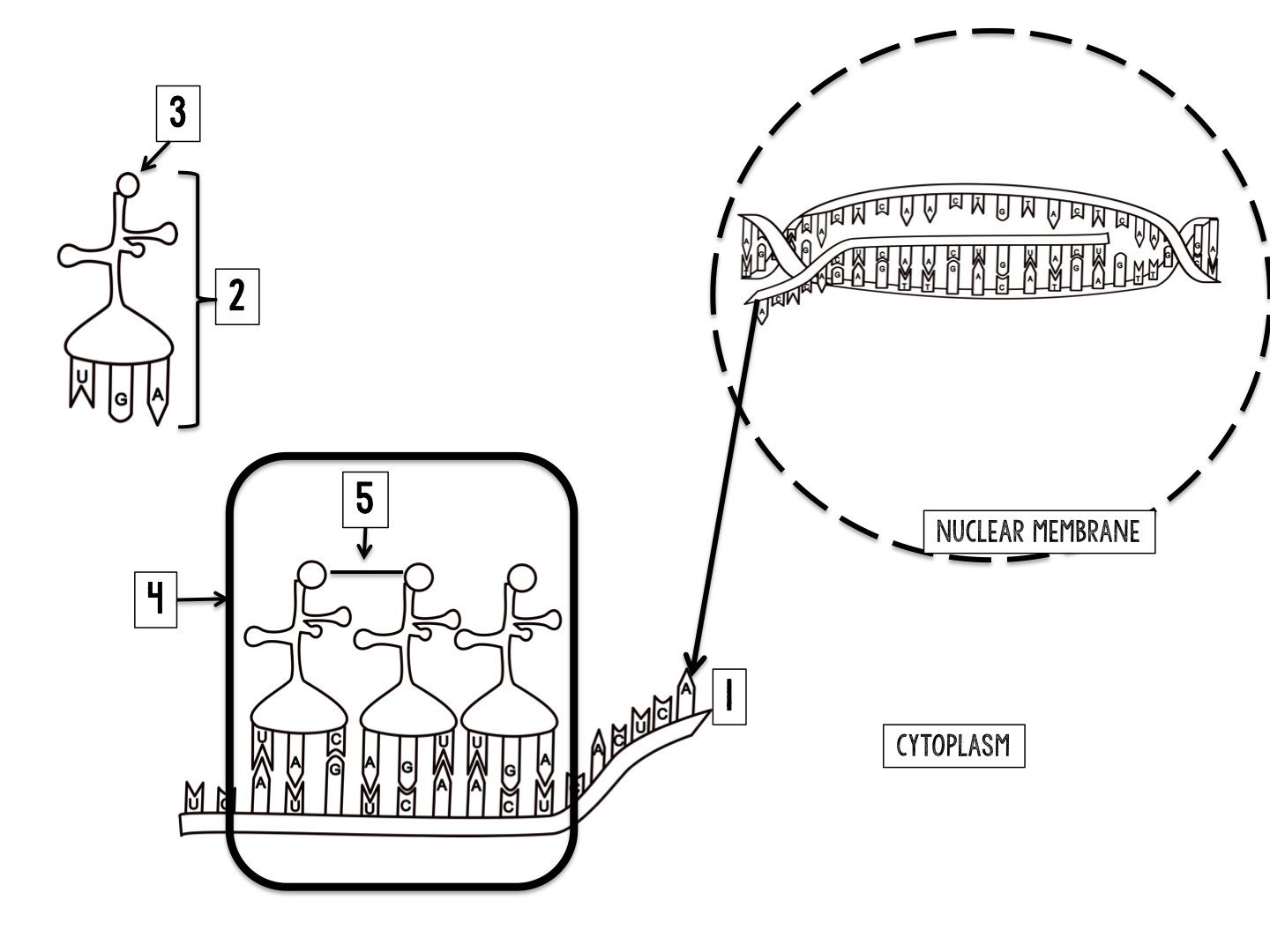
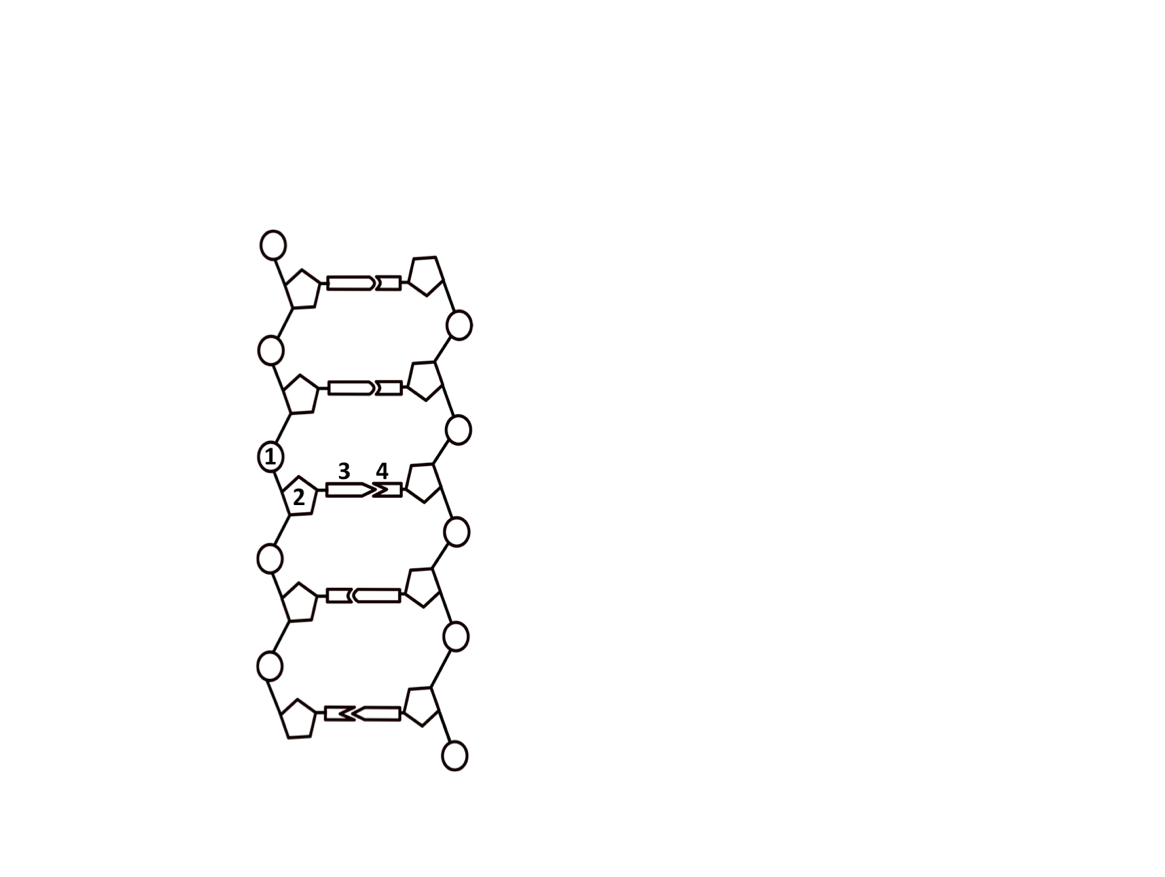
Use the diagram to the right AND your knowledge of biology to answer this question.  Structures 3 and 4 are held together by

Asemmisa {{asɛmmisaAhyɛnsode}}
6.

In nucleotides, the letters A, G, C, and T represent 

Asemmisa {{asɛmmisaAhyɛnsode}}
7.

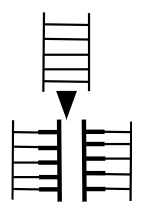
The cellular process of creating two new DNA molecules from one original copy is called replication. Which statement is the BEST description of this process?

Asemmisa {{asɛmmisaAhyɛnsode}}
8.

Which of the following best describes the image?

Asemmisa {{asɛmmisaAhyɛnsode}}
9.

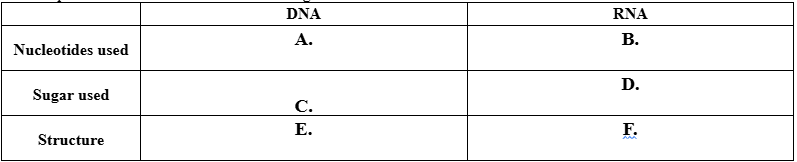
Fill in the box for Part A

Asemmisa {{asɛmmisaAhyɛnsode}}
10.

Fill in the box for Part B

Asemmisa {{asɛmmisaAhyɛnsode}}
11.

Fill in the box for Part C

Asemmisa {{asɛmmisaAhyɛnsode}}
12.

Fill in the box for Part D

Asemmisa {{asɛmmisaAhyɛnsode}}
13.

Fill in the box for Part E

Asemmisa {{asɛmmisaAhyɛnsode}}
14.

Fill in the box for Part E

Asemmisa {{asɛmmisaAhyɛnsode}}
15.

Replicate the following strand of DNA by listing its complementary strand.

A  T  C  T  T  G  C  A  A  A  G  G  C  T

Asemmisa {{asɛmmisaAhyɛnsode}}
16.

The molecule copied directly from DNA is represented by number __?

Asemmisa {{asɛmmisaAhyɛnsode}}
17.

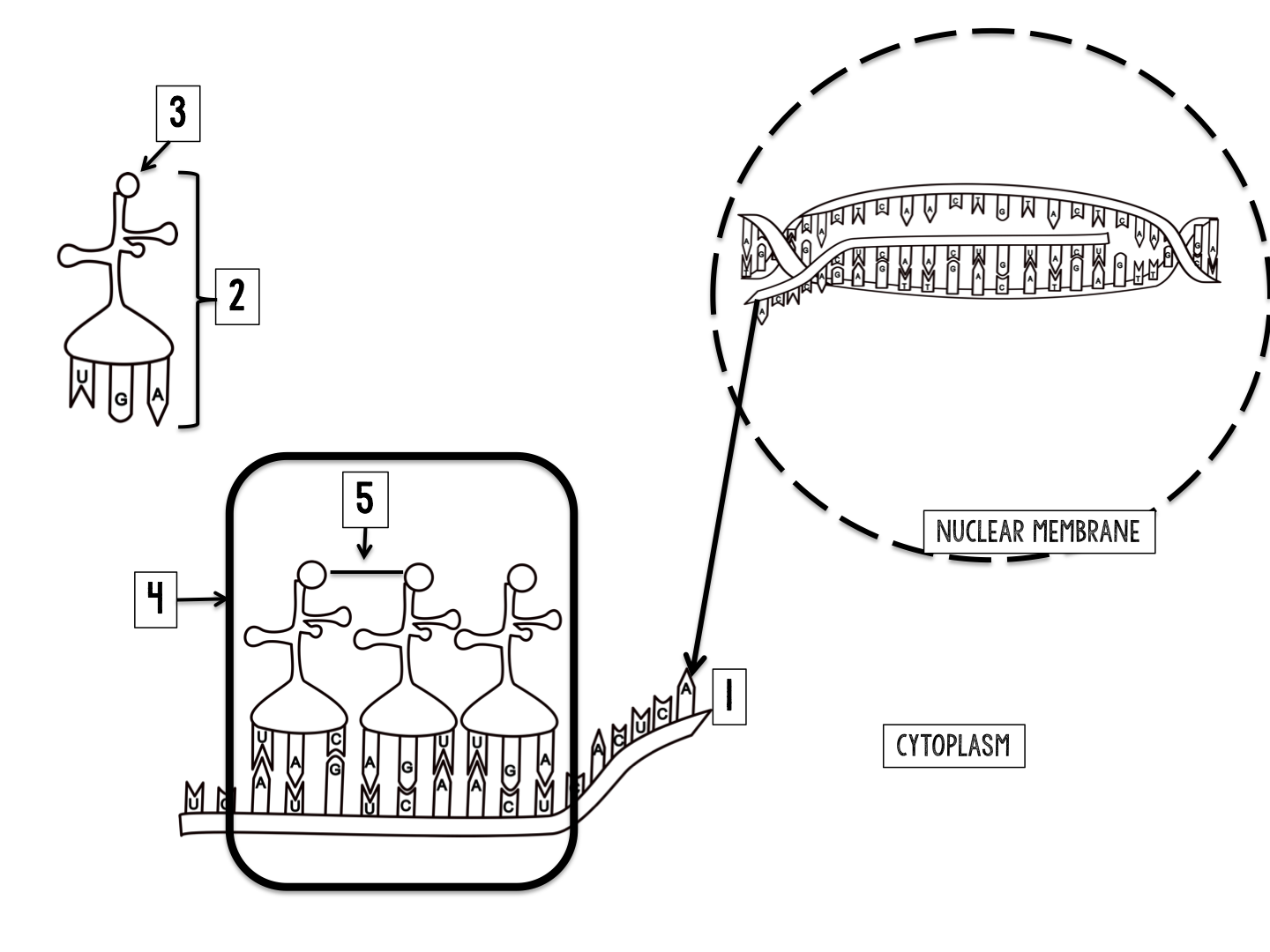
What is an example of a molecule produced by the process shown below?

Asemmisa {{asɛmmisaAhyɛnsode}}
18.

Structure number 2 represents a

Asemmisa {{asɛmmisaAhyɛnsode}}
19.

The bond represented by number 5 is a ____ bond.

Asemmisa {{asɛmmisaAhyɛnsode}}
20.

If a portion of a messenger RNA molecule contains the base sequence A-A-U, then the corresponding anti-codon on the tRNA base sequence is

Asemmisa {{asɛmmisaAhyɛnsode}}
21.

The sequence of ________________ in a DNA molecule determines the protein that will be produced

Asemmisa {{asɛmmisaAhyɛnsode}}
22.

During _____________, the cell uses information from messenger RNA to make polypeptides

Asemmisa {{asɛmmisaAhyɛnsode}}
23.

How many amino acids are coded for by the strand of mRNA shown here?  Assume the reading frame begins with the first nucleotide

A  U  G  U  A  C

Asemmisa {{asɛmmisaAhyɛnsode}}
24.

During protein synthesis, what does mRNA do?

Asemmisa {{asɛmmisaAhyɛnsode}}
25.

Draw a line to match the following terms with their definition

Asemmisa {{asɛmmisaAhyɛnsode}}
26.

Which type(s) of RNA are involved in Transcription

Asemmisa {{asɛmmisaAhyɛnsode}}
27.

Which type(s) of RNA are involved in Translation

Asemmisa {{asɛmmisaAhyɛnsode}}
28.

Where does Transcription occur?

Asemmisa {{asɛmmisaAhyɛnsode}}
29.

Where does Translation occur?

Asemmisa {{asɛmmisaAhyɛnsode}}
30.

What is created as a result of Transcription?

Asemmisa {{asɛmmisaAhyɛnsode}}
31.

What is created as a result of Translation?

Asemmisa {{asɛmmisaAhyɛnsode}}
32.

tRNA brings amino acids to the

Asemmisa {{asɛmmisaAhyɛnsode}}
33.

tRNA has

Asemmisa {{asɛmmisaAhyɛnsode}}
34.

tRNA transfers amino acids during

Asemmisa {{asɛmmisaAhyɛnsode}}
35.

The step of protein synthesis that occurs in the cytoplasm is

Asemmisa {{asɛmmisaAhyɛnsode}}
36.

Transcribe the DNA sequence to mRNA:

 A  T  A  T  A  C  T  T  T  G  C  G  A  T  G  G  C  T  A  T  T  C  A  G  A  C  T

Asemmisa {{asɛmmisaAhyɛnsode}}
37.

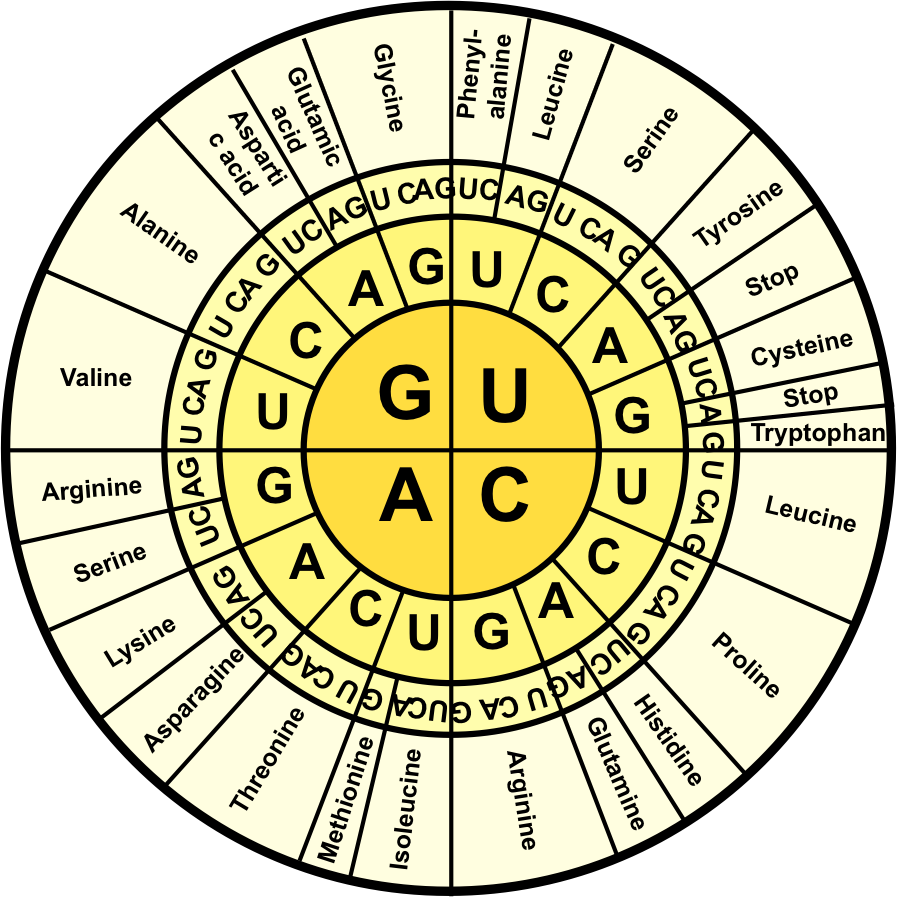
Translate the mRNA sequence to form a protein. Make sure to start translating at the start codon!  Use the genetic code below to help you. 

mRNA:  U A U A U G A A A C G C U A C C G A U A A G U C U G A

Asemmisa {{asɛmmisaAhyɛnsode}}
38.

  1. A sperm cell (n) of an octopus has 14 chromosomes.  What is the total number of chromosomes that should be present in a stomach cell (2n) of the same octopus?

Asemmisa {{asɛmmisaAhyɛnsode}}
39.

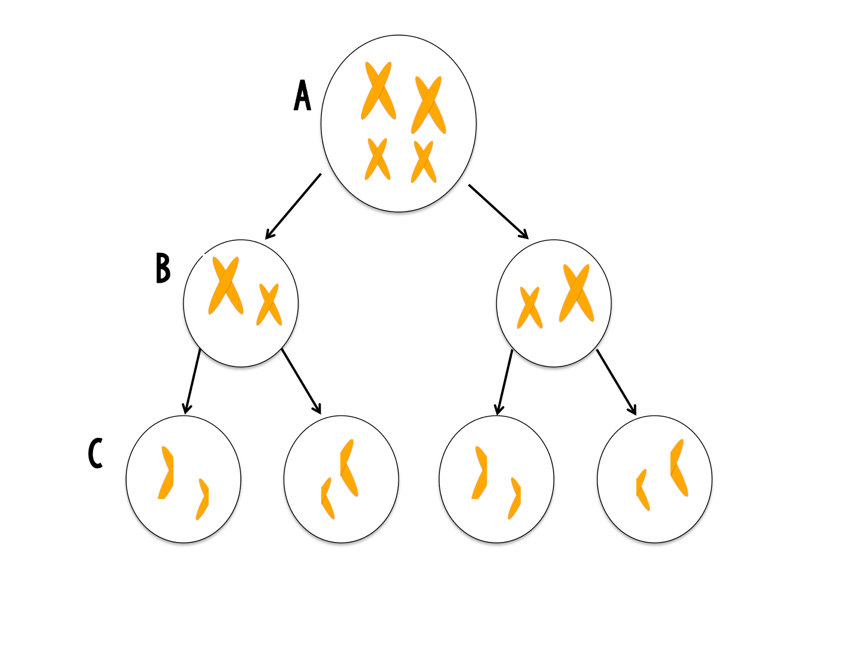
The distribution of chromosomes in one type of cell division is shown in the diagram below.  Which process is being represented in the diagram?

Asemmisa {{asɛmmisaAhyɛnsode}}
40.

  1. Which letter(s) in the diagram correspond to cells that are haploid?

Asemmisa {{asɛmmisaAhyɛnsode}}
41.

Compared to the number of chromosomes contained in a body cell, how many chromosomes would normally be contained in a gamete?

Asemmisa {{asɛmmisaAhyɛnsode}}
42.

  1. Which cells are NOT formed during meiosis?

Asemmisa {{asɛmmisaAhyɛnsode}}
43.

Somatic cells in humans contain ____ chromosomes and an example is ______

Asemmisa {{asɛmmisaAhyɛnsode}}
44.

Use the following chart to answer:

Organism

Diploid # of chromosomes

Mosquito

6

Frog

26

Pea Plant

14

Corn

20

What is the number of chromosomes for haploid corn cells?

Asemmisa {{asɛmmisaAhyɛnsode}}
45.

Use the following chart to answer:

Organism

Diploid # of chromosomes

Mosquito

6

Frog

26

Pea Plant

14

Corn

20

If a mosquito cell had 3 chromosomes, would that cell be diploid or haploid?

Asemmisa {{asɛmmisaAhyɛnsode}}
46.

  1. Why is it important that gamete cells have only one set of chromosomes? 

Asemmisa {{asɛmmisaAhyɛnsode}}
47.

Explain the difference between the purpose of mitosis and the purpose of meiosis.

Asemmisa {{asɛmmisaAhyɛnsode}}
48.

Draw an "x" or circle in the appropriate column, deciding if each statement describes mitosis, meiosis, or both.

Asemmisa {{asɛmmisaAhyɛnsode}}
49.

Karyotypes are very important diagrams for geneticists.  List 1 thing you can learn from a karyotype.