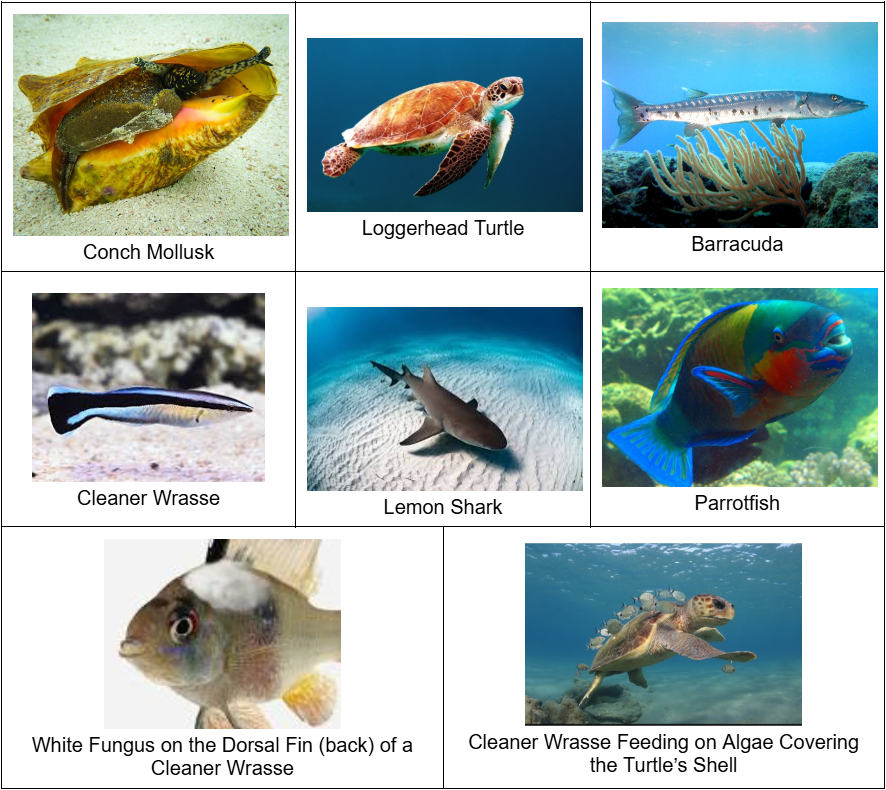
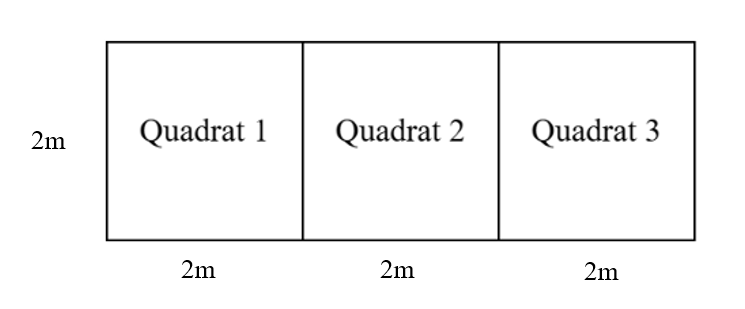
Calculate the total surface area (m²) of the entire sampling plot (all three quadrats).
Show your work!
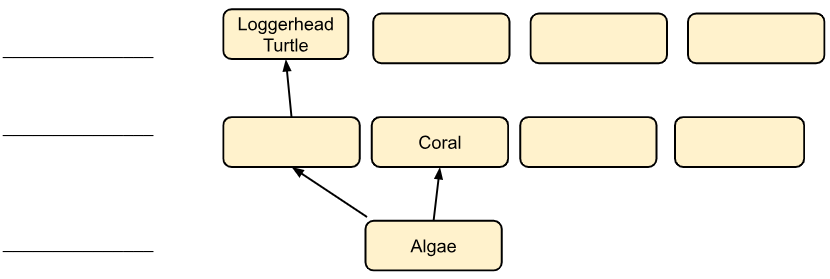
Based on the marine biologist's research entries, sketch a food web for the portion of the Great Barrier Reef that was being observed by drawing on the image below.
Three species have been done for you (algae, coral, loggerhead turtle).
You must include the following additional organisms in your food web: nurse sharks, parrotfish, conch mollusk, cleaner wrasse fish, barracuda, lemon shark. Be sure to connect them with arrows where appropriate.
The research team conducted a population study on brain coral during their dives.
They used three quadrats in a line (transect). Each quadrat measured 2 m × 2 m.
After each dive, they recorded the total number of brain coral for all three quadrats:
Dive | Total Number of Brain Coral |
1 | 4 |
2 | 3 |
If researchers use only the number of coral found in Dive 1, calculate the predicted population of brain coral in a reef that covers 120 m².
Show your work!
Recall the food web you created earlier to answer the following questions. You may refer back to the text and/or food web you created if needed.


Match each of the 9 species to the appropriate sampling method that would work best on them by dragging them to their respective category, mark-recapture OR quadrat sampling.
cleaner wrasse fish
coral
nurse shark
conch mollusk
algae
barracuda
loggerhead turtle
lemon shark
parrotfish
Mark & Recapture Method
Quadrat Sampling Method
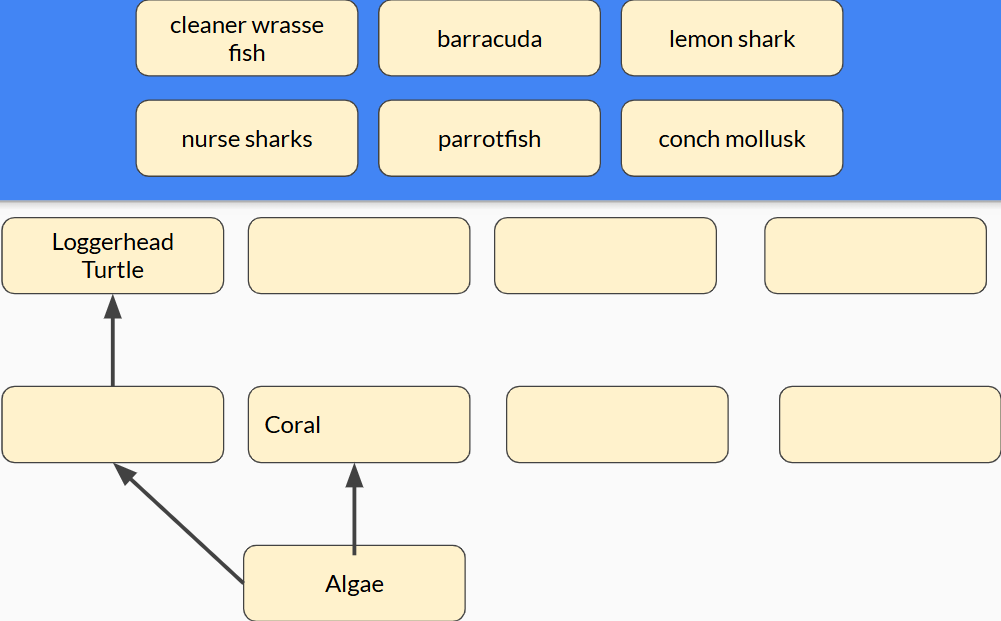
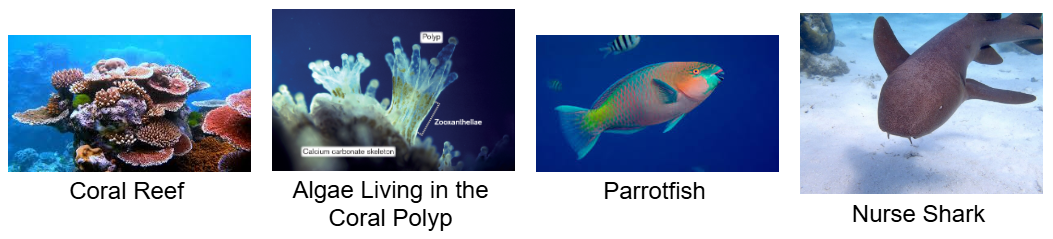
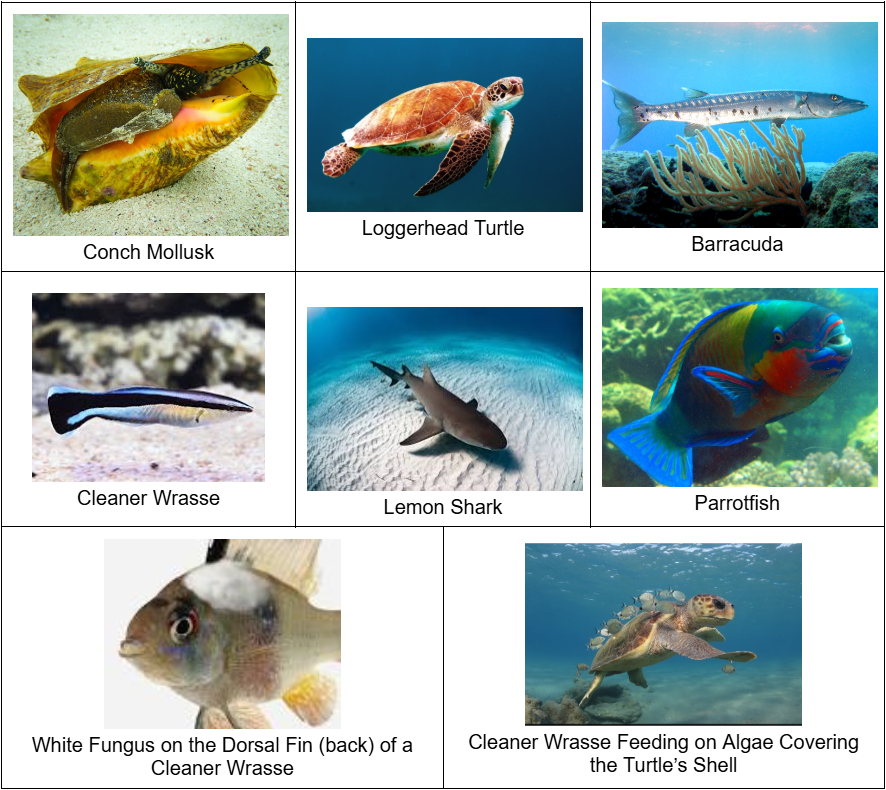
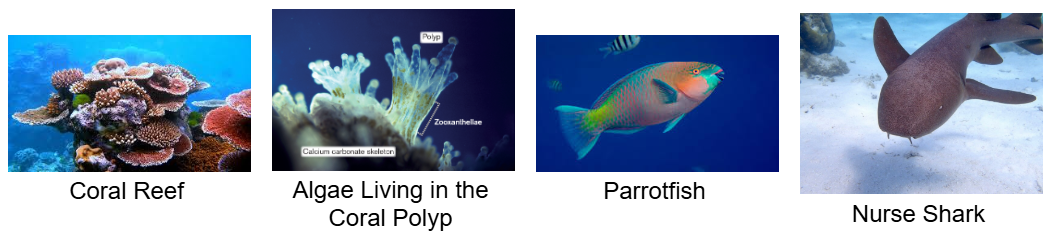
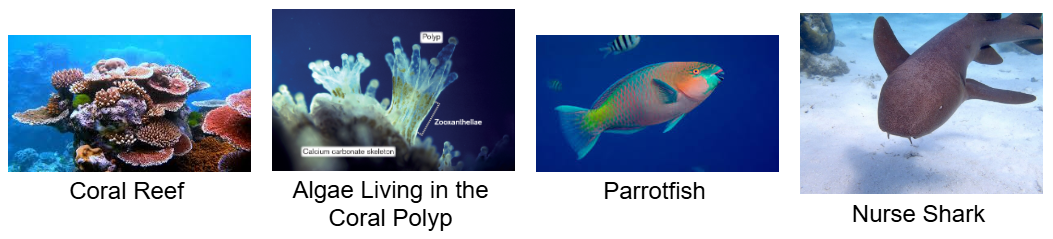
This area of the reef seems to have a healthy population of algae growing on and in the coral which supports a diverse reef ecosystem. There is a healthy diversity of bright colors of the coral species due to the presence of algae that live in the tissue of the coral polyps. These algae provide not only color to the coral but also energy, while safely protected in the tissue of the coral. There were four nurse sharks present on this dive. Two of them were actively feeding on the coral, alongside several parrotfish eating algae growing on the coral.
Dive 2 Journal (March 11, 2008)
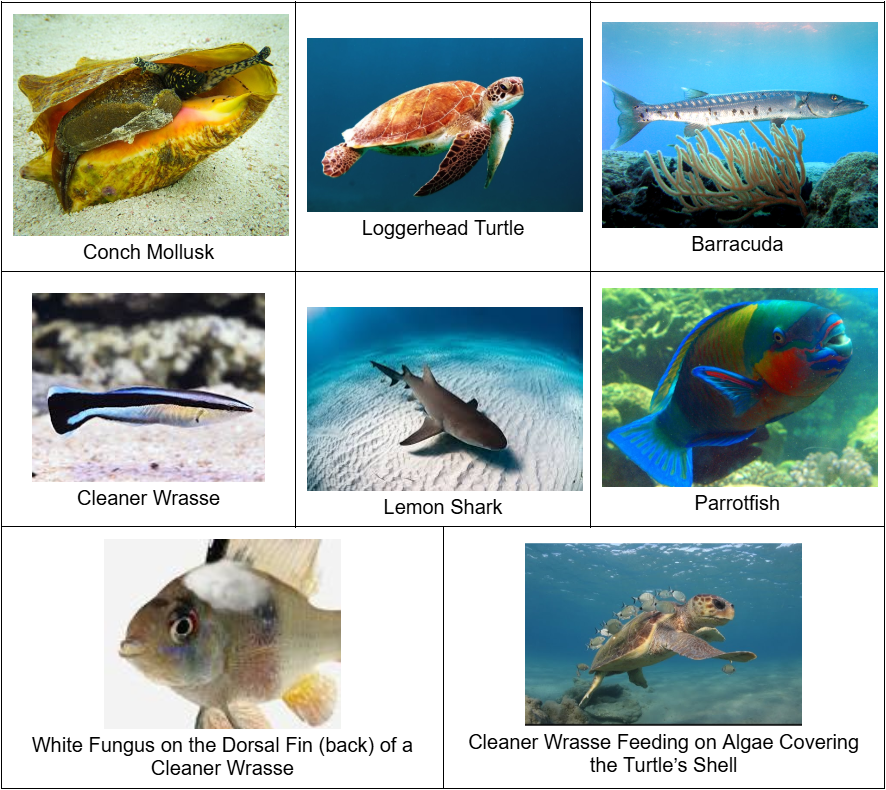
Today we recorded one female loggerhead turtle on the reef. She successfully preyed upon a large conch mollusk that was grazing on the algae on the coral. She was surrounded by dozens of small cleaner wrasse fish that were feeding on the algae covering her shell. We also noticed that one of the cleaner wrasses appears to have a puffy white fungus that is feeding on its dorsal fin tissue. We encountered one large barracuda and a lemon shark, both chasing a juvenile parrotfish.
For each example of species interaction from the previous question (#11), explain your reasoning.
Here is a written sample for the example of algae and coral: "Algae and coral is mutualism because both benefit. Algae provides coral with nutrients and coral receives protection from predation."
Now do the same for your choices for mutualism, parasitism, interspecific, and intraspecific competition.
In 2018, the marine biologist’s team returned to the Great Barrier Reef. They noticed sizable areas of coral bleaching due to a smaller algae population. They are concerned that warming ocean temperatures may be causing a decline of important algae populations.
If algae populations continue to decline, predict how this might impact the primary and secondary consumers in the Great Barrier Reef food web.
Your response should answer BOTH the following questions:
A. What will be the impact on primary consumer population?
B. What will be the impact on secondary consumer population?
Identify algae’s role in the Great Barrier Reef food web and describe why the algae population is so important to this ecosystem.
Your response should answer BOTH the following questions:
A. What is algae's role?
B. Why is algae important?
In 2008, a marine biologist and her research team were interested in the complex relationships that exist among the many organisms found within the Great Barrier Reef. They made several dives over the course of a few months and recorded their observations. Below are journal entries from two of their dives:
This area of the reef seems to have a healthy population of algae growing on and in the coral which supports a diverse reef ecosystem. There is a healthy diversity of bright colors of the coral species due to the presence of algae that live in the tissue of the coral polyps. These algae provide not only color to the coral but also energy, while safely protected in the tissue of the coral. There were four nurse sharks present on this dive. Two of them were actively feeding on the coral, alongside several parrotfish eating algae growing on the coral.
Dive 2 Journal (March 11, 2008)
Today we recorded one female loggerhead turtle on the reef. She successfully preyed upon a large conch mollusk that was grazing on the algae on the coral. She was surrounded by dozens of small cleaner wrasse fish that were feeding on the algae covering her shell. We also noticed that one of the cleaner wrasses appears to have a puffy white fungus that is feeding on its dorsal fin tissue. We encountered one large barracuda and a lemon shark, both chasing a juvenile parrotfish.

According to your food web, which of the following organisms in an autotroph?
According to your food web, which of the following organisms in an herbivore?
According to your food web, which of the following organisms in a carnivore?
Choose two organisms you classified under the 'Mark & Recapture Method' from the previous question (#8). List two species and explain why the mark-recapture method is appropriate for these organisms.
Which of the following best explains why the researcher chose to use the quadrat method rather than mark-recapture to sample the coral population?