Twa kɔ nsɛm atitiriw so
Log in
Sign up for FREE
arrow_back
Laabri

US History Interim: Spring 2026 TVAH

star
star
star
star
star
Last updated about 2 months ago
52 Nsɛmmisa

Do your best to answer each question. You must hit submit for this test to be counted as a grade.

1
USH.3.C
1
USH.12
1
USH.10.A
1
USH.27.B
1
USH.26.B
2
USH.16.E
1
USH.14.A
1
USH.9.F
2
1
USH.2.A
1
USH.23.A
1
USH.12
2
USH.16.B
1
USH.13.A
1
USH.17.E
1
USH.11.A
2
USH.10.C
1
USH.4.A
1
USH.25.A
1
1
USH.15.D
1
USH.10.B
1
USH.27.A
1
USH.9.D
2
USH.14.B
1
USH.15.C
1
USH.22.B
1
USH.4.F
2
USH.24.C
1
USH.7.D
2
USH.9.I
1
2
USH.26.C
1
USH.4.D
1
USH.8.A
1
USH.10.B
1
USH.11.C
1
USH.9.E
1
USH.5.A
1
USH.4.A
1
USH.15.A
1
USH.17.A
2
USH.8.C
1
USH.13.B
1
USH.4.C
1
USH.4.A
1
USH.22.A
1
Asemmisa {{asɛmmisaAhyɛnsode}}
1.

The National American Woman Suffrage Association (NAWSA) was founded in 1890 under the leadership of Elizabeth Cady Stanton. What was the PRIMARY goal of this organization?

Asemmisa {{asɛmmisaAhyɛnsode}}
2.

Which factors led to the Dust Bowl during the 1930s?

Asemmisa {{asɛmmisaAhyɛnsode}}
3.

How did President Richard Nixon's visit to China in 1972 represent a change in U.S. foreign relations?

This question has two parts.

This excerpt is from a play co-written by Zora Neale Hurston, a prominent contributor to the Harlem Renaissance.

Spanish moss drapes the trees. . .

The woods surround everything. Bull alligators can be heard booming like huge bass drums from the lake at night. . . .

The houses are of raw, second grade lumber, unpainted, each with a porch and two or three rooms. Each man with a "family" is allotted a house for which he is docked about fifty cents a week. . . . No fenced in yards, few flowers, and those poorly tended. Few attempts at any kind of decoration or relief of ugliness. Everyone lives temporary. . . .

. . . The woman of today may be forgotten tomorrow.

-Zora Neale Hurston and Dorothy Waring, Polk County, 1944

1
Asemmisa {{asɛmmisaAhyɛnsode}}
4a.

Based on the excerpt and your knowledge of U.S. history, how did the Harlem Renaissance influence U.S. society?

USH.24.B
1
USH.24.B
Asemmisa {{asɛmmisaAhyɛnsode}}
5.

This time line lists select events in the history of a widely used consumer product.

Selected Events from the History of the Mobile Phone
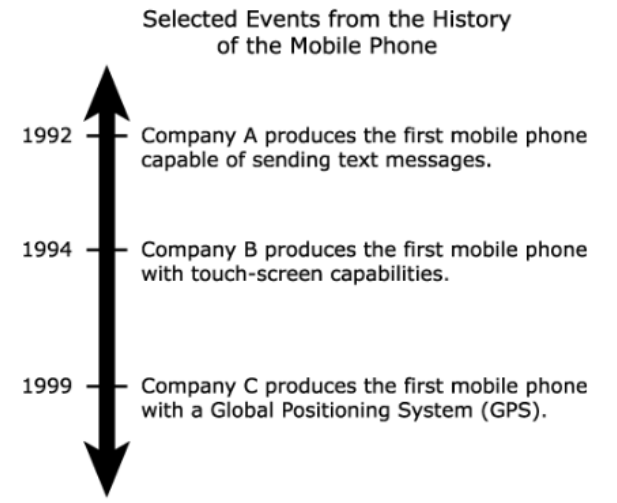
1992-Company A produces the first mobile phone capable of sending text messages.

1994-Company B produces the first mobile phone with touch-screen capabilities.

1999-Company C produces the first mobile phone with a Global Positioning System (GPS).

Which statement supports the information about the free-enterprise system in this time line?
Asemmisa {{asɛmmisaAhyɛnsode}}
6.

This excerpt describes advances in U.S. history.

Professor [George Washington] Carver has made almost everything

from the [common] peanut except dynamite. And those who have seen

him at work and know the wonders he has performed would not be

surprised if he did that in a pinch. By the way, he helped win . . . World

War [I], not by manufacturing explosives to destroy the lives of human

beings, but by converting sweet potatoes into flour, so as to provide

food for them and save them.

-Mary Church Terrell, "Dr. George Washington Carver of Tuskegee," 1929

Based on the excerpt, which statement describes the inventions of George Washington

Carver?

Asemmisa {{asɛmmisaAhyɛnsode}}
7.

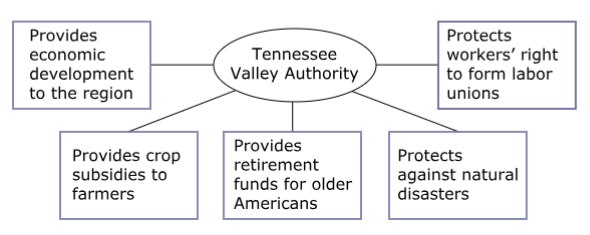
This excerpt describes a government agency established under the New Deal.

President Roosevelt signed the Tennessee Valley Authority Act on May 18, 1933, creating the TVA as a Federal corporation. The new agency was asked to tackle important problems facing the valley, such as flooding, providing electricity to

homes and businesses, and replanting forests.

-"Tennessee Valley Authority Act (1933)," National Archives

Select TWO correct answers.

Asemmisa {{asɛmmisaAhyɛnsode}}
8.

Which change is a DIRECT result of continued population growth in the United States?

Asemmisa {{asɛmmisaAhyɛnsode}}
9.

This excerpt describes an opinion from Martin Luther King, Jr.

And so, many bright [intelligent] young men and women... realize

that the new frontier will be "integration" rather than "desegregation"

and that this makes quite a difference.

-Martin Luther King, Jr., "After Desegregation-What," April 27, 1961

Which action did Dr. King recommend for achieving the "new frontier" described in this excerpt?

Asemmisa {{asɛmmisaAhyɛnsode}}
10.

This excerpt describes the creation of The Heritage Foundation.

Since our founding in 1973, The Heritage Foundation has been working

to advance the principles of free enterprise, limited government,

individual freedom, traditional American values, and a strong national

defense. Our hard work has paid off time and again.

-The Heritage Foundation, "About Heritage," April 23, 2020

Which actions MOST reflect the influence of the organization described in the excerpt?

Select TWO correct answers.

Asemmisa {{asɛmmisaAhyɛnsode}}
11.

Which statement describes the time period of the 1950s in the United States?

Asemmisa {{asɛmmisaAhyɛnsode}}
12.
Mmuae Afoforo a Wobɛpaw:

The first woman to argue a case in front of a federal judge

The first woman to lead the Office of the Attorney General

The first woman to issue a legal ruling as an appellate judge

The first woman to be considered for the vice presidency

The first woman to serve as a justice on the Supreme Court

Asemmisa {{asɛmmisaAhyɛnsode}}
13.

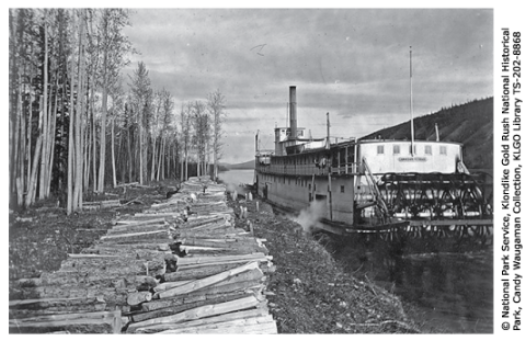
This photograph shows a geographical impact during the Klondike Gold Rush of 1897-1898.

A steamboat pulls up to the riverbank, ready to load

up many cords of wood to continue its journey.

Based on this photograph, which statement explains one geographical impact of the use of technology during the Klondike Gold Rush?

Asemmisa {{asɛmmisaAhyɛnsode}}
14.

Determine whether each action was a cause or an effect of back failures during the Great Depression.

Select the correct answer in each row.

Cause of the Bank Failures

Effect of Bank Failures

Stock market speculation increased.

Many people lost their life savings.

Financial institutions were closed to determine their stability.

Financial Institutions lacked cash reserves because they had invested deposits.

Businesses were unable to take out loans.

Asemmisa {{asɛmmisaAhyɛnsode}}
15.

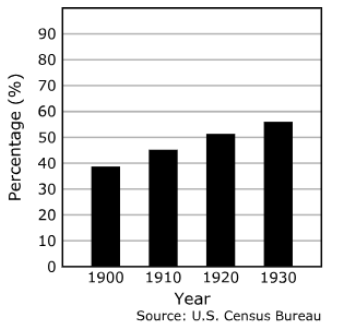
This graph shows U.S. population data from the 1900s.

Percentage of U.S. Urban Population,

1900-1930

Based on the graph and your knowledge of U.S. history, which factor describes the PRIMARY cause for the population shift shown in the graph?

Asemmisa {{asɛmmisaAhyɛnsode}}
16.

How did the North American Free Trade Agreement (NAFTA) affect the U.S. Economy?

Asemmisa {{asɛmmisaAhyɛnsode}}
17.

This list describes events that occurred from 1990 to 1991.

Events of the First Gulf War

  • _________________________________________________________

  • President George H. W. Bush created an international coalition.

  • NATO allies joined Saudi Arabia, Syria, and Egypt.

Asemmisa {{asɛmmisaAhyɛnsode}}
18.
Asemmisa {{asɛmmisaAhyɛnsode}}
19.

This excerpt is from a book by an influential American author of the nineteenth century.

The influence of the government will be felt in its most legitimate manner in maintaining an armed navy, of a size commensurate with the growth of its shipping and the importance of the interests connected with it.

—Captain Alfred T. Mahan, 1890

During the late 1800s, how did the U.S. government support implementation of the policy described in this excerpt?

Asemmisa {{asɛmmisaAhyɛnsode}}
20.

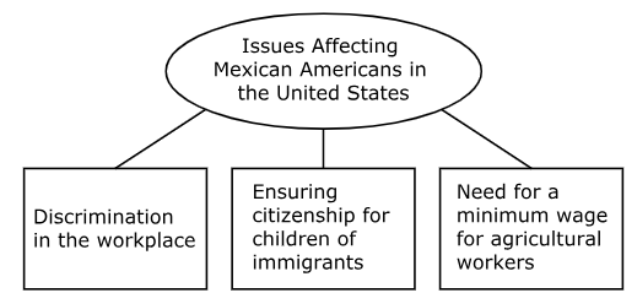
This diagram is related to the Civil Rights Movement.

Which action did Cesar Chavez take to address some of the issues described in the diagram?

Asemmisa {{asɛmmisaAhyɛnsode}}
21.

This excerpt describes working conditions in the late 1800s and early 1900s.

The working conditions in factories were often harsh. Hours were long, typically ten to twelve hours a day. Working conditions were frequently unsafe and led to deadly accidents. Tasks tended to be divided for efficiency’s sake which led to repetitive and monotonous work for employees.

—“America at Work,” Library of Congress, www.loc.gov (accessed April 3, 2019)

What was one response to the conditions described in this excerpt?

Asemmisa {{asɛmmisaAhyɛnsode}}
22.

This excerpt is about the U.S. economy during World War I.

Entry into the war in 1917 unleashed massive U.S. federal spending which shifted national production from civilian to war goods. Between 1914 and 1918, some 3 million people were added to the military and half a million to the government.

—Carlos Lozada, “The Economics of World War I,” National Bureau of Economic Research, January 2005

How was the U.S. economy affected during World War I?

Asemmisa {{asɛmmisaAhyɛnsode}}
23.

This excerpt is from a congressional hearing about an economic policy supported by presidential candidate Ronald Reagan.

This time around, tax reduction should be preferred to spending increases. Furthermore, tax reductions should be aimed at creating incentives to save and invest, or to work harder, rather than to spend more. We need to increase the supply of savings. We need to increase the supply of plant and equipment. We need to increase the supply of skilled manpower, and we need to increase the supply of goods on the shelves—not just to increase the demand for them.

—Hon. Clarence J. Brown, U.S. Congress, May 21, 1980

Which statement describes how President Reagan’s economic policies intended to stimulate job growth?

Asemmisa {{asɛmmisaAhyɛnsode}}
24.

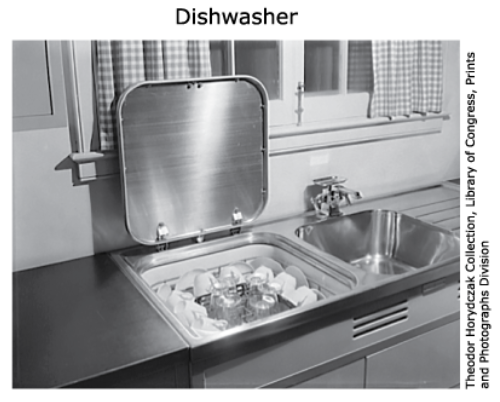
This photograph shows an electric appliance from the 1920s and 1930s

Which statement describes a result of this innovation?

Asemmisa {{asɛmmisaAhyɛnsode}}
25.

What was one way that Betty Friedan influenced the women’s movement of the 1960s and 1970s?

Asemmisa {{asɛmmisaAhyɛnsode}}
26.
Asemmisa {{asɛmmisaAhyɛnsode}}
27.

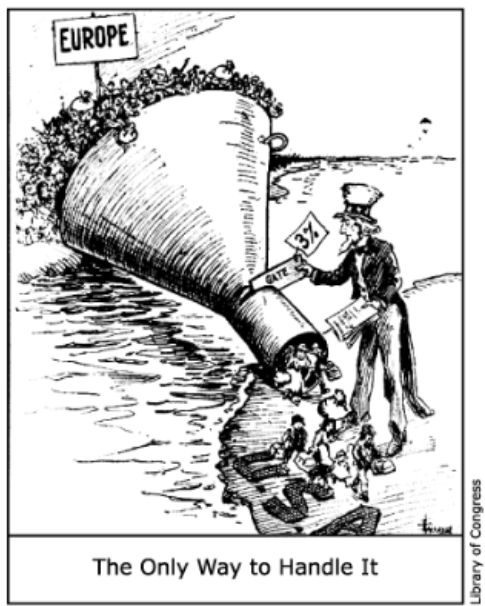
This political cartoon was published in 1921.

Which statement explains the governmental action being portrayed by this political cartoon?

Which statement explains the governmental action being portrayed by this political cartoon?

Asemmisa {{asɛmmisaAhyɛnsode}}
28.

This excerpt describes tactics used by the National Woman's Party (NWP) during the suffrage movement.

Following the lead of Burns, Paul, and others, imprisoned pickets

[protesters] instituted a campaign of nonviolent, "passive" resistance.

They refused to do their assigned sweatshop sewing and manual labor.

Further, they refused to eat. . . . Hunger strikes became one of the

most powerful and graphic tools used by the NWP. . . .

-"Tactics and Techniques of the National Woman's Party Suffrage

Campaign," Library of

Congress, www.loc.gov (accessed February 26, 2019)

Why was this strategy effective?

Asemmisa {{asɛmmisaAhyɛnsode}}
29.

This excerpt is from a presidential address to Congress requesting a declaration of war

against Germany.

I have called the Congress into extraordinary session because there

are serious... choices of policy to be made. . . .

... The Imperial German Government . . . use[d] its submarines to

sink every vessel that sought to approach either the ports of Great

Britain and Ireland or the western coasts of Europe. . . .

It is a war against all nations. American ships have been sunk,

American lives taken . . . but the ships and people of other neutral and

friendly nations have been sunk and overwhelmed in the waters in the

same way. There has been no discrimination. The challenge is to all

mankind.

President Woodrow Wilson, Message to Congress, April 2, 1917

How did President Wilson justify his request for a declaration of war?

Asemmisa {{asɛmmisaAhyɛnsode}}
30.

This excerpt provides some information about a U.S. author.

J.D. Salinger, who has died aged 91, was the reclusive author of The Catcher in the Rye (1951), one of the most beloved novels in the English language since the second world war....

[A]lthough [the main character] Holden is an American, his appeal

transcended national borders. The Catcher in the Rye has been

translated into 30 languages, and sold more than 65 [million] copies

worldwide. In his biography of Salinger, the British poet and critic Ian

Hamilton wrote of his shock of recognition when, at the age of 17, he

read Holden's story. Other non-American male critics have expressed a

similar sense of wonder about how Salinger could have so

perfectly captured their sense of their own adolescent selves.

-The Guardian, "J.D. Salinger Obituary," January 28, 2010

Based on the excerpt, which effects are highlighted by this author's work?

Select TWO correct answers.

Asemmisa {{asɛmmisaAhyɛnsode}}
31.

Selected World War II Events

Date

Event

1941

Attack on Pearl Harbor

1942

Invasion of North Africa

1943

Surrender of Axis troops in Africa

1943

Invasion of Italy

1944

Italy surrenders

1944

?

1944

Liberation of Paris

What event correctly replaces the question mark on this timeline?

Asemmisa {{asɛmmisaAhyɛnsode}}
32.

Which excerpts describe changes to society that resulted from the Civil Rights Movement?

Select TWO correct answers.

Asemmisa {{asɛmmisaAhyɛnsode}}
33.

Which statement describes one action Alabama Governor George Wallace took to maintain the status quo in the 1960s?

Asemmisa {{asɛmmisaAhyɛnsode}}
34.

This excerpt provides the definition of a workplace tool.

Industrial robot: A programmable, multi-function [worker] designed to

move material, parts, tools, or specialized devices through variable

programmed motions for the performance of a variety of tasks.

-"A Glossary of Terms for Robotics," U.S. Department of Commerce

How have industrial robots affected the American workplace?

Select TWO correct answers.

Asemmisa {{asɛmmisaAhyɛnsode}}
35.

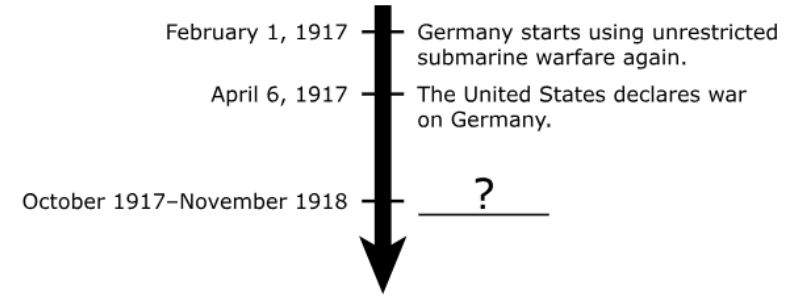
This timeline provides information about selected events of World War I.

February 1, 1917--Germany starts using unrestricted submarine warfare again.

April 6, 1917--The United States declares war on Germany.

October 1917-November 1918-- ?

Asemmisa {{asɛmmisaAhyɛnsode}}
36.

Why did the U.S. government adopt a policy of containment?

Asemmisa {{asɛmmisaAhyɛnsode}}
37.
Asemmisa {{asɛmmisaAhyɛnsode}}
38.

Which statement describes a common theory regarding the third-party candidacy of Ross

Perot in the U.S. presidential election of 1992?

Asemmisa {{asɛmmisaAhyɛnsode}}
39.

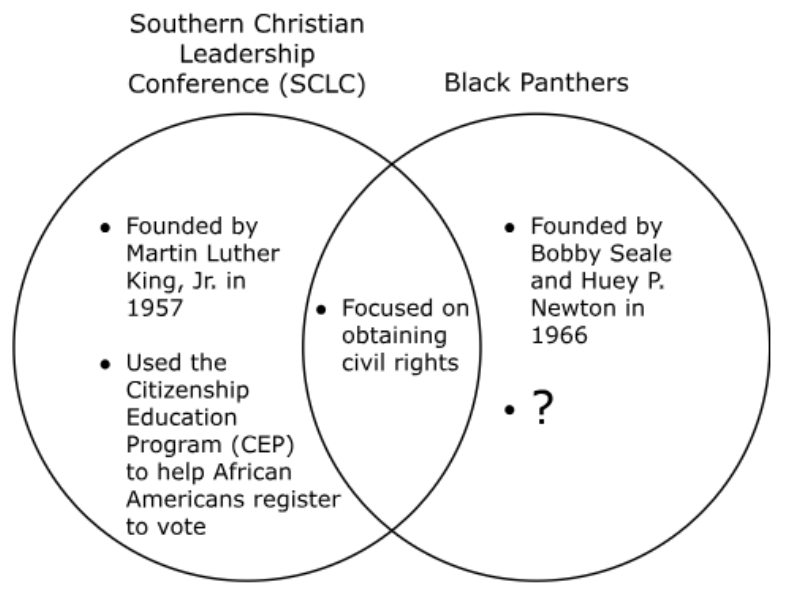
This diagram compares two civil rights organizations.

Which factor correctly replaces the question mark in this diagram?

Asemmisa {{asɛmmisaAhyɛnsode}}
40.

Which lasting impact resulted from changes to how the federal government collects revenue following passage of the Sixteenth Amendment in 1913?

Asemmisa {{asɛmmisaAhyɛnsode}}
41.

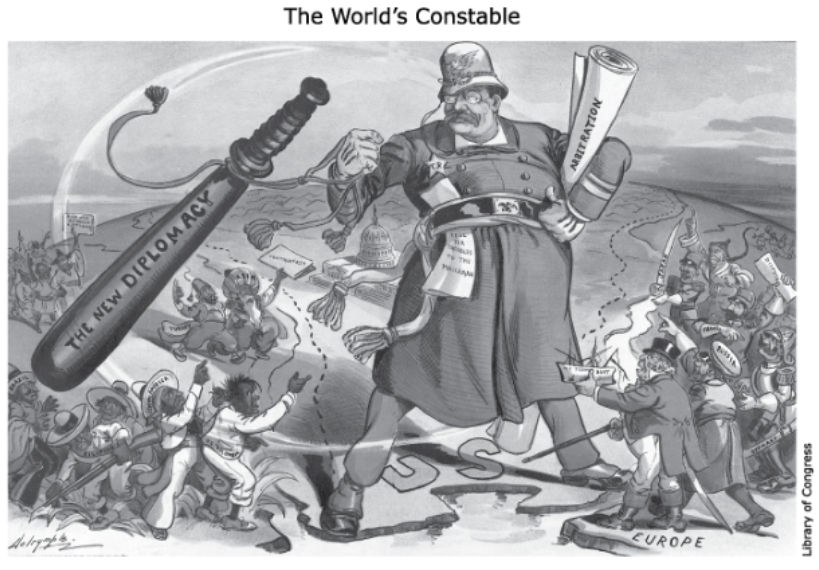
This cartoon of President Theodore Roosevelt was published in a magazine in 1905.

What was the main idea of this political cartoon?

Asemmisa {{asɛmmisaAhyɛnsode}}
42.

This excerpt is from an essay written in the 1890s.

Railroads, fostered by land grants, sent an increasing tide of

immigrants into the Far West. The United States Army fought a series

of Indian wars in Minnesota, Dakota, and the Indian Territory.

. . . The development of mines in Colorado had drawn isolated frontier]

settlements into that region, and Montana and Idaho were receiving

settlers. The frontier was found in these mining camps and the ranches

of the Great Plains. The superintendent of the census for 1890 reports

. . . that the settlements of the West lie so scattered over the region

that there can no longer be said to be a frontier line.

-Frederick Jackson Turner, "The Significance of the Frontier in

American History," July 12, 1893

Based on this excerpt, which statement summarizes Turner's main idea about the closing of

the American frontier in 1890?

Asemmisa {{asɛmmisaAhyɛnsode}}
43.

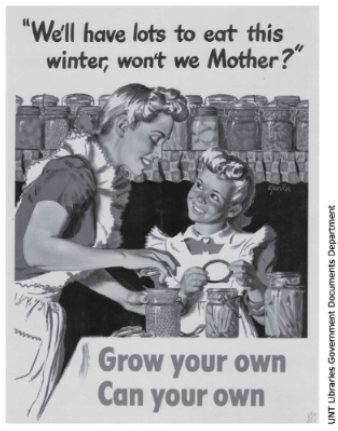
This poster was published by the Office of War Information during the 1940s.

Based on the poster and your knowledge of U.S. history, which factor explains the decreased availability of certain foods during this time period?

Asemmisa {{asɛmmisaAhyɛnsode}}
44.

Which factors led to U.S. involvement in the Korean War, and which situations were outcomes of the war?

Select ONE correct answer in each row.

Factors Leading to U.S.

Involvement

Outcomes of

the War

Communist takeover of mainland China

Long-term presence of the U.S. military

in South Korea

Invasion of South Korea by the North Korean military

Military stalemate along North Korean-

South Korean border

Asemmisa {{asɛmmisaAhyɛnsode}}
45.

Why did Congress pass the Chinese Exclusion Act of 1882?

Asemmisa {{asɛmmisaAhyɛnsode}}
46.

Which factor contributed to the start of World War I?

Asemmisa {{asɛmmisaAhyɛnsode}}
47.

This excerpt is from a presidential message.

It is an effort frankly directed to the increase of American trade upon

the [self-evident] principle that the Government of the United States

shall extend all proper support to every legitimate and beneficial

American enterprise abroad.

President William Howard Taft, December 3, 1912

Which statement describes one goal of the policy described in the excerpt?

Asemmisa {{asɛmmisaAhyɛnsode}}
48.

This table describes a selection of amendments to the U.S. Constitution.

Select Amendments to the U.S. Constitution

Year Ratified

Amendment

Description

1870

Fifteenth

Guarantees right to vote for all men

1920

Nineteenth

Extends right to vote for women

1961

Twenty-third

Extends right to vote for residents of District

of Columbia

1971

Twenty-sixth

Lowers the legal voting age from 21 to 18

Based on this table, which generalization can be made about constitutional amendments?

This excerpt is about technological innovation in the steel industry.

Bessemer's famous one-step process for producing cheap, high-quality

steel made it possible for engineers to envision transcontinental

railroads, sky-scraping office towers, bay-spanning bridges, unsinkable

ships, and mass-produced horseless carriages. . . .

Steel was the obvious choice of metal to replace cast iron. Yet it was

only producible in small batches, and the extremely high temperatures

required to burn off impurities... required large amounts of costly

fuels....

... As he refined the process, Bessemer found that his steel was

lighter and easier to shape than traditionally made metals, and that he

could produce far greater quantities of it at a rate 10 times faster.

-Michael MacRae, "Henry Bessemer," The American Society of

Mechanical Engineers, 2012

2
Asemmisa {{asɛmmisaAhyɛnsode}}
49a.

How did the Bessemer process influence the U.S. economy?

USH.26.A
1
USH.26.A
Asemmisa {{asɛmmisaAhyɛnsode}}
50.

50 This excerpt describes the practices of stock-market investors in 1928.

At the start of the business day, [Michael J.] Meehan sold 200 shares

of Radio stock at its opening price of $94.50 (94 1/2). His friend sold

the same 200 shares to another friend at $95 a share. The next sale

of the same stocks was at $96.00, followed by $97.50, before Meehan

bought back his original shares at $98.25 each. . . .

... By the end of March, [Radio] was selling for $195.00 - a gain of

$100 from the opening price of March 3rd. Now, Meehan and his

friends sold their shares of [Radio] and split a profit of $10 million

between them.

-Thomas Ladenburg, Digital History

Based on the excerpt and your knowledge of U.S. history, how did this practice lead to the

stock-market crash of 1929?

Asemmisa {{asɛmmisaAhyɛnsode}}
4b.

Which statement from the excerpt provides evidence for the answer to Part A?

Asemmisa {{asɛmmisaAhyɛnsode}}
49b.

Which statement provides evidence that supports the answer to Part A?