Twa kɔ nsɛm atitiriw so
Log in
Sign up for FREE
arrow_back
Laabri

Week 4.5: EOG Prep Week 1

star
star
star
star
star
Last updated about 2 hours ago
46 Nsɛmmisa
Excerpt from Crazy About Clouds
Excerpt from The Little Red Lighthouse and the Great Gray Bridge
Excerpt from Apple Day
Excerpt from Hide with the Ladybugs
Excerpt from Brothers on Ice
Excerpt from My Dadima Wears a Sari

Click submit when finished with all questions and check your answers. You may not be able to make corrections at this time.

Ɛhia
1
3R4
Ɛhia
1
3R8
Ɛhia
1
3R5
Ɛhia
1
3R3
Ɛhia
1
3R6
Ɛhia
1
3R2
Ɛhia
1
Ɛhia
1
Ɛhia
1
3R2
Ɛhia
1
3R5
Ɛhia
1
3R3
Ɛhia
1
3R8
Ɛhia
1
3R9
Ɛhia
1
Ɛhia
1
Ɛhia
1
3R2
Ɛhia
1
3R4
Ɛhia
1
3R6
Ɛhia
1
3R3
Ɛhia
1
3R2
Ɛhia
1
3R3
Ɛhia
1
Ɛhia
1
Ɛhia
1
Ɛhia
1
Ɛhia
1
Ɛhia
1
Ɛhia
1
Ɛhia
1
Ɛhia
1
Ɛhia
1
1
1
1
1
1
1
1
1
1
1
1
1
1
1
1

Directions: Read this passage. Then answer the questions.

Excerpt from Crazy About Clouds

by Rena Korb

1 Look up at the sky. Do you see any clouds today?

2 Look! There's one shaped like a fluffy, white bunny. A dark gray one floats by like a jellyfish.

Tiny, Floating Drops

3 Clouds look different. But they are all made of the same stuff-water.

4 Clouds form when tiny drops of water gather in the sky. Tiny chunks of ice make up clouds, too.

5 The tiny drops of water come together. They form heavier and heavier drops. Sometimes, the drops get too heavy to float.

6 Splat! Rain pours from the clouds. Or you might see drizzle, mist, or snow.

7 Clouds may look light and fluffy. But even the water in a small cloud weighs more than 500 tons. That's about as heavy as 100 elephants!

Changing Clouds

8 Watch a cloud closely. You will see it change before your very eyes.

9 Clouds can change shapes and sizes. They can look bright white or dark gray. Have you ever seen pink clouds at sunset?

10 Clouds dip and dance as the wind pushes them across the sky.

11 Some clouds travel as fast as race cars!

12 A cloud can speed along at 100 miles per hour (160 km/h).

High Clouds, Low Clouds

13 Scientists group clouds by where they are seen in the sky. High clouds sail with the jumbo jets. Birds fly through low clouds.

14 Other clouds float in the middle, and some move up and down.

15 Have you ever walked by a lake on a cool morning? The fog can be very thick. You can barely see the road ahead of you!

16 Fog is actually a cloud that creeps along the ground.

17 Cool weather can bring fog. As the day warms up, fog clears away.

Types of Clouds

18 Scientists also group clouds by how they look. Let's explore a few clouds.

19 Stratus clouds look like a gray blanket over the sky. They often gather in cool weather. These clouds mean rain may soon be falling.

20 Have you ever seen bright cotton balls in the sky? These are cumulus clouds.

21 They mostly drift along on a fine, sunny day.

22 Very high above your head float cirrus clouds. Their long tails curve through the sky.

23 When you see these clouds, the weather might soon change.

24 Run for cover!

25 Dark cumulonimbus clouds are gathering. These clouds cause powerful storms.

26 Cumulonimbus clouds usually only stay in the sky for about an hour. As they break open, they can let out millions of buckets of water.

Study the Clouds

27 Will it rain? Is a snowstorm coming? Clouds give clues about what the weather will be like.

28 Scientists study clouds to tell what kind of day you'll have tomorrow.

29 Cloudy days are usually cooler than clear days. But cloudy nights are a little bit warmer than clear nights.

30 You can study the clouds, too. What types of clouds do you see? Can you guess the weather ahead?

31 No matter what, you are sure to find many wonderful shapes drifting in the sky.

Asemmisa {{asɛmmisaAhyɛnsode}}
1.

The phrase “change before your very eyes” in paragraph 8 suggests that clouds

Asemmisa {{asɛmmisaAhyɛnsode}}
2.

What claim does the author make about cumulus clouds?

Asemmisa {{asɛmmisaAhyɛnsode}}
3.

In which section of the passage can the reader find information about how clouds are made?

Asemmisa {{asɛmmisaAhyɛnsode}}
4.

Which sentence from the passage shows a cause-and-effect relationship?

Asemmisa {{asɛmmisaAhyɛnsode}}
5.

Which detail best shows how the author feels about clouds?

Asemmisa {{asɛmmisaAhyɛnsode}}
6.

Which detail would be most important to include in a summary of the passage?

Asemmisa {{asɛmmisaAhyɛnsode}}
7.

What does studying clouds help scientists predict?

Asemmisa {{asɛmmisaAhyɛnsode}}
8.

What do stratus clouds indicate?

Directions: Read this story. Then answer the questions.

Lighthouses were once lit by gas. A gas lighthouse on the Hudson River closed and later became a park after the George Washington Bridge was built.

Excerpt from The Little Red Lighthouse and the Great Gray Bridge

by Hildegarde H. Swift and Lynd Ward

1 Once upon a time a little lighthouse was built on a sharp point of the shore by the Hudson River. ...

2 Behind it lay New York City where the people lived.

3 Before it sailed the boats on which the people rode. Up and down, up and down, sailed the boats. On and on and on rolled the river. All the way from Lake Tear of the Clouds, high up in the mountains, came the Hudson River. It rolled down the mountains. It rolled and rolled and rolled. It rolled past Albany. It rolled past New York. And it went on forever looking for the sea.

4 Now the boats on the river talked to the little red lighthouse as they passed.

5 "Hoot, hoot, hoot! How are you?" said the big steamer, with its deep, throaty whistle..

6 By day the little red lighthouse did not answer....

7 But every night, just at fall of dark, a man came to tend the little red lighthouse. He took out his jingling keys. He unlocked the small red door in its side. He climbed its steep and winding stairs, up, up, up, to the very top. He took off the thick white cap that let it sleep by day. He turned on the gas with a funny small black key.

8 Up, up, up, flowed the gas from the six red tanks below.

9 Then the little red lighthouse spoke out plainly. Flash! Flash! Flash! ...

10 It felt big and useful and important. What would the boats do without me? it thought.

11 It felt VERY, VERY PROUD.

12 The boats saw the light and were safe. The boats saw it, and they kept to the channel. The boats were grateful to the little red lighthouse.....

13 Why, I am MASTER OF THE RIVER, it thought.

14 Then one day a gang of workmen came and began to dig....

15 Every day it watched the strange new gray thing beside it grow and grow. Huge towers seemed to touch the sky. Strong loops of steel swept across the river. How big it was! How wonderful! How powerful! A great gray bridge, spanning the Hudson River from shore to shore. It made the little red lighthouse feel very, very small.

16 Then one night a great beam of light flashed from the top of the nearest gray tower. ...

17 Now I am needed no longer, thought the little red lighthouse. My light is so little and this one so big!..

18 Then in the middle of the night there came a storm. The wind moaned. The waves beat against the shore....

19 Then the great gray bridge called to the little red lighthouse: "Little brother, where is your light?"

20 "Am I a brother of yours, bridge?" wondered the lighthouse. "Your light was so bright that I thought mine was not needed anymore."

21 "I call to the airplanes" cried the bridge. "I flash to the ships of the air.

But you are still master of the river. Quick, let your light shine again. Each to his own place, little brother!"

22 So the little red lighthouse tried to shine once more, but though it tried and tried and tried, it could not turn itself on..

23 But at last it heard the door opening far below. At last it heard steps rushing up the stairs...

24 Now the little red lighthouse knew that it was needed...

25 It sent a long, bright, flashing ray out into the night...

26 And now beside the great beacon of the bridge, the small beam of the lighthouse still flashes.

27 Beside the towering gray bridge the lighthouse still bravely stands. Though it knows now that it is little, it is still VERY, VERY PROUD.

Asemmisa {{asɛmmisaAhyɛnsode}}
9.

Which event would be most important to include in a summary of the story?

Asemmisa {{asɛmmisaAhyɛnsode}}
10.

How are the details in paragraphs 1 through 6 important to the story?

Asemmisa {{asɛmmisaAhyɛnsode}}
11.

How does the building of the great gray bridge affect the little red lighthouse?

Asemmisa {{asɛmmisaAhyɛnsode}}
12.

The great gray bridge believes that the little red lighthouse

Asemmisa {{asɛmmisaAhyɛnsode}}
13.

Lighthouses are important because they guide boats. They can help keep boats safe when weather is bad or water is dangerous. Which detail best shows how this idea connects to the events in the story?

Asemmisa {{asɛmmisaAhyɛnsode}}
14.

What did the lighthouse use to shine at night?

Asemmisa {{asɛmmisaAhyɛnsode}}
15.

How did the lighthouse feel about its light?

Directions: Read this story. Then answer the questions.

Molly is in the apple orchard picking apples with her dad.

Excerpt from Apple Day

by Kimberly Long Cockroft

1 Sunlight filters through the branches, dappling Molly’s hands as she twists each stem. She is careful to pick only the best apples. Every year, her family’s applesauce is the best in Montana—well, almost the best. Last year, their jar of special McIntosh applesauce won the red ribbon at the state fair.

2 There's just something missing from our sauce, Molly muses as she picks. If only they could figure out what it is, they might win the blue ribbon this year. Molly strains for an apple just out of reach and - CRASH-tumbles, dizzy, to the ground. It feels like a bobcat has wrapped his paws around her legs.

3 But it's not a bobcat. I's Sam, her messy little cousin who lives next door.

4 "Molly, I came to pick apples, too!" He waves an old, battered purse above his head.

5 Sam's mom waves from the edge of the orchard, her hair still in curlers. Dad waves back and calls, "We'll watch him this morning!" ...

6 "Go pick apples over there," Molly snaps. She points to an ancient, twisted apple tree. Nobody knows what kinds of apples it grows, but they are tiny and too tart to eat.

7 Sam doesn't care. He fills his mom's old purse with them, then stuffs his raincoat pockets full, too. ...

8 Then Dad calls, "Time to sauce!"

9 Sam lifts up his bulging purse. "I picked a bunch!"

10 Molly sighs. She hopes Sam will stay out of the way.

11 At home, Dad cinches the iron clamps of the applesauce mill to the table while Molly rinses the apples.

12 "They're beauties," Mom says, and Molly smiles with pride. Then into the big pot on the stove they go.

13 Suddenly, before she can stop him, Sam shakes the purse of tiny, sour apples into the pot, too.

14 "No!" Molly cries, reaching into the pot to pull out Sam's apples.

15 "I's OK," Dad chuckles. "I know a secret about good applesauce." ...

16 Molly isn't so sure.

17 While the apples soften in the pot, filling the kitchen with sweet steam, Sam bangs on the empty bowl with a spoon and belts out a song about Apple Day. ...

18 Molly and Dad take turns cranking the handle, smashing the apples into sauce. Sam tries, too, but it is too hard for him. The sauce slips down into the bowl, golden and smooth. A pile of seeds and skin slip out the back of the mill, and Molly empties them onto the compost heap, a treat for the bees.

19 Finally, all the apples, even Sam's tiny tart ones, have been made into a huge bowl of applesauce. Dad holds a spoon to Molly's lips.

20 Molly screws up her mouth. She sticks out her tongue to taste just a little. Then she gobbles the whole bite. "Wow!"

21 Dad's eyes twinkle. "The secret to really good sauce is making it from different kinds of apples." He ruffles Sam's hair. "We may even have a chance at that blue ribbon this year."

22 "Who would have known that you had the missing ingredient?" Molly asks her cousin.

23 Sam grins, licking sauce from his fingers. "I love Apple Day!"

24 Molly smiles. "Me, too, Sam."

Asemmisa {{asɛmmisaAhyɛnsode}}
16.

Which sentence best shows a theme of the story?

Asemmisa {{asɛmmisaAhyɛnsode}}
17.

What does the word “muses” mean as it is used in paragraph 2?

Asemmisa {{asɛmmisaAhyɛnsode}}
18.

In paragraph 3 of the story, whose thoughts are being shown?

Asemmisa {{asɛmmisaAhyɛnsode}}
19.

Read these sentences from paragraph 20.

Molly screws up her mouth. She sticks out her tongue to taste just a little.

Which sentence best explains why Molly acts this way?

Asemmisa {{asɛmmisaAhyɛnsode}}
20.

Which quote from the story best shows that Molly has learned a lesson?

Asemmisa {{asɛmmisaAhyɛnsode}}
21.

Which sentence best shows how Molly’s feelings about Sam change in the story?

Asemmisa {{asɛmmisaAhyɛnsode}}
22.

What did Molly hope Sam would do?

Asemmisa {{asɛmmisaAhyɛnsode}}
23.

What secret does Dad say makes good applesauce?

Directions: Read this story. Then answer the questions.

Excerpt from Hide with the Ladybugs

by Karen Latchana Kenney

Lovely Ladybug

1 Crawl, crawl, crawl. A ladybug looks like a colorful, crawling bump. From the side, it's shaped like half a pea. Then it opens its wings. It's gone in a second.

2 More than 5,000 kinds of ladybugs crawl and fly around Earth. Ladybugs gather in gardens and forests. They live almost everywhere except for very cold places.

3 Ladybugs are a kind of beetle. Even males are called ladybugs! Ladybugs are also called lady beetles or ladybird beetles.

Growing Ladybugs

4 In the spring, a female ladybug crawls on the underside of a leaf. She is looking for a safe place to lay eggs. Here, the eggs will be safe from hungry birds or insects flying above.

5 The mother ladybug lays her eggs. Then she flies away. The tiny, yellow eggs look like shiny jellybeans. A mother ladybug doesn't just lay her eggs anywhere. She chooses a place with lots of tiny bugs called aphids. When the eggs hatch, her young will have plenty to eat.

6 A few days later, larvae hatch from the eggs. These tiny creatures have legs but no wings. They are very hungry! They hunt for aphids. A larva can eat 400 aphids before it is three weeks old!

7 The larvae are growing quickly. To grow, a larva breaks out of its old skin. Underneath it has new, bigger skin. This is called molting.

8 Next, a larva finds a safe place and attaches to a leaf. A hard cover surrounds the larva. It becomes a pupa. Inside the cover, the pupa grows and changes. . . .

9 After a few days, an adult ladybug climbs out of the hard casing. Its body is soft and pale. It does not have spots.

10 The ladybug's skin soon hardens into a shell. This shell protects the ladybug. Some ladybugs slowly turn red. Their black spots appear.

11 Ladybugs can be orange, yellow, pink, or black. Some have spots. Some are spotless, and some have stripes.

Flying and Feeling

12 Soon, ladybugs are flying. Each one has two sets of wings. Unlike other insects, beetles have elytra. The elytra are hard, front wings. They cover a pair of thin, see-through back wings.

13 To fly, the ladybug opens its front wings. Then the thin wings flutter. They lift the ladybug into the air.

14 The two elytra are a mirror image of each other. They have the exact same color and spots.

15 Ladybugs cannot see faraway things well. How do they find food?

16 A ladybug uses its two antennae to explore its world. Like wands, they wave in all directions. They can feel, smell, and taste.

Helpful Bugs

17 Ladybugs eat aphids or scale bugs. These tiny creatures are pests. They harm crops. That's why farmers and gardeners love to see ladybugs crawling around. More ladybugs means fewer pests. An adult ladybug can eat 75 aphids a day! A few kinds of ladybugs eat plant parts. Some eat pollen, the sticky dust on flowers.

Staying Safe

18 The air has a chill. Winter is coming. Ladybugs find a dry place away from the wind. It can be in a house or in a dead tree. Sometimes, they form large groups.

19 The ladybugs stay there through winter. They do not eat anything. They could stay like this for nine months.

New Lives

20 When the air is warm again, the ladybugs go back outside. They fly around the garden. They hunt for aphids. The females lay eggs. New ladybugs begin their lives.

Asemmisa {{asɛmmisaAhyɛnsode}}
24.

What does a ladybug look like when it crawls?

Asemmisa {{asɛmmisaAhyɛnsode}}
25.

Where do ladybugs lay their eggs?

Asemmisa {{asɛmmisaAhyɛnsode}}
26.

What do ladybug larvae eat?

Asemmisa {{asɛmmisaAhyɛnsode}}
27.

What happens during molting?

Asemmisa {{asɛmmisaAhyɛnsode}}
28.

What do ladybugs do in winter?

Asemmisa {{asɛmmisaAhyɛnsode}}
29.

What protects the ladybug after it comes out of its pupa?

Asemmisa {{asɛmmisaAhyɛnsode}}
30.

What is one reason farmers like ladybugs?

Asemmisa {{asɛmmisaAhyɛnsode}}
31.

In which section would you be able to find information about how ladybugs find food?

In this story, Troy and his family are celebrating the birthday of his younger brother, Trent. As is their tradition, the boys’ mother measures their height on the side of the door.

Excerpt from Brothers on Ice

by John Danakas

1 “It’s time to see how much you’ve grown since last year,” Mom answered. 

2 How could Trent and I have forgotten? Every year on our birthday Mom has us stand up straight against the bedroom doorjamb and she makes a mark to indicate how much we’d grown since the year before. My marks are in blue pencil crayon. Trent’s are in red. 

3 “Do I have to right now, Mom?” Trent pleaded. “I want to get this aquarium ready for my new discus fish.” . . . 

4 “Come on now, it won’t take long,” Mom persisted. She held out a red pencil crayon and directed Trent to the door. “Head and shoulders straight, back against the doorjamb. Let’s go!” 

5 In a hurry to get this over with, Trent trotted to the doorway and stood up against the jamb. He waited as Mom made sure he wasn’t slouching or stretching and carefully marked the spot on the jamb where the top of his head reached. 

6 “Done?” Trent asked. 

7 Mom ignored him. “Isn’t that interesting,” she said. 

8 “What?” Dad inquired. 

9 “Yeah, what?” Trent echoed. 

10 “Well,” Mom smiled, “your mark is higher than Troy’s last mark. That’s the first time that’s ever happened.” 

11 “No way,” Trent squealed with delight. 

12 “Take a look for yourself,” Mom instructed. 

13 I rushed over to the doorway and actually nudged Trent out of the way to get a better look. I couldn’t believe my eyes. The red mark was indeed a little higher than the blue. 

14 “I’m taller than Troy!” Trent celebrated. “Awesome!” 

15 “You must have made a mistake,” I protested to Mom. I could feel my stomach churning. 

16 “No, honey. I’m really careful with this.” Mom looked me in the eyes, patted my shoulder. “Anyhow, there’s very little difference.” . . .

17 “Why don’t the two of you stand back to back?” Dad suggested. Then you’ll see exactly who’s taller.” Now Dad was really thinking. 

18 “Sure,” I volunteered. I wanted to lay this matter to rest as soon as possible. 

19 “Sounds good to me,” Trent echoed. 

20 Trent and I turned and stepped backwards towards each other. We jostled a few seconds, adjusting ourselves to the tallest possible posture. His bony shoulder blades dug into my back. His long hair tickled my neck. 

21 “Well, what do you say?” I asked. 

22 “Hold on,” Dad answered. He had moved in close and was making sure neither of us were standing on our tiptoes or stretching our necks. His hands rested on each of our heads, keeping us in place. Meanwhile, Mom tilted her head to inspect us closely. 

23 “Well?” I asked again. 

24 Mom emitted a nervous little cough. “I could be wrong, but . . .” 

25 “But what?” I prodded. 

26 “I think Trent is just a smidgen taller.” She coughed again. “Of course, that could be because he has more hair.” 

27 Trent hurriedly lifted his hand to his head and patted down his hair. “How about now?” he asked. 

28 “Um . . .” Mom stalled.

29 “Dad?” I pleaded. Standing tall, I kept my head forward and my back straight. I trusted his judgment. 

30 “Well, Troy, you may not like to hear this, but as far as I can tell Trent is in fact taller. Not by much, that’s for sure, but there is a difference. Nine-tenths of a centimeter, I’d say.” 

31 “Nine-tenths of a centimeter?” I repeated. 

32 “Yes!” Trent celebrated. 

33 “I can’t believe this,” I whined. “There’s just no way.” My mind raced. Something had to be wrong about this. Even Dad could make mistakes sometimes. “Bring me a mirror,” I demanded.

34 “A mirror?” Mom gasped. 

35 “Don’t be ridiculous,” Dad scoffed. 

36 “Just bring me a mirror, please,” I begged. “Please!”

37 Mom shuffled off to her and Dad’s room and came back with her make-up mirror, round-faced with a long handle, almost like the kind you see in old fairytale picture books. I grabbed it roughly and held it out to the side. Immediately Trent and I both turned our heads to see the evidence. It was tough to make out the difference between us, but there it was, reflected back at me, as undeniable as the pain that was settling right now into the pit of my stomach.

38 Trent was taller than I was.

Asemmisa {{asɛmmisaAhyɛnsode}}
32.

Which theme is best supported by paragraphs 10 through 13 in the story?

Asemmisa {{asɛmmisaAhyɛnsode}}
33.

What do the details in paragraphs 3 and 14 show about Trent?

Asemmisa {{asɛmmisaAhyɛnsode}}
34.

In paragraph 18, what does it mean when the narrator says, “I wanted to lay this matter to rest ...”?

Asemmisa {{asɛmmisaAhyɛnsode}}
35.

Which detail from the story shows the best evidence for the claim that Trent is taller than Troy?

Asemmisa {{asɛmmisaAhyɛnsode}}
36.

How is the information in paragraph 37 important to the story?

Asemmisa {{asɛmmisaAhyɛnsode}}
37.

Which detail would be best to include in a summary of the story?

Asemmisa {{asɛmmisaAhyɛnsode}}
38.

What did Dad suggest to resolve the height question?

Asemmisa {{asɛmmisaAhyɛnsode}}
39.

What was Troy's initial reaction to Trent's height?

In this excerpt, the narrator visits her Dadima, her grandmother. She learns about the Indian custom of wearing long flowing dresses called saris.

Excerpt from My Dadima Wears a Sari

by Kashmira Sheth

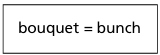
1 Every day my dadima wears saris—saris as bright and cheerful as a bouquet of wildflowers. . . .

2 She wears them around the house. She wears them around the town. She wears them made out of cotton. She wears them made out of silk. 

3 Sometimes she tucks the pallu, the end of her sari, tightly. And sometimes she lets it dance in the breeze. 

4 “Your saris are beautiful, Dadima,” I say one day. “But don’t you get tired of wearing them?”

5 “Never, Rupa,” Dadima says. . . .

6 “Why not?” I want to know.

7 “Because a sari is a sari and I can do so much with it,” she says.

8 “What can you do with a sari?” I ask. 

9 “Suppose you and I are sitting out on the porch and it gets hot,” Dadima says. “Then we can keep cool.” She begins to fan the two of us with the end of her sari.

10 “Oh,” I say. “That’s nice.” 

11 “If we go to the beach and collect seashells, we can wrap the shells in my sari,” Dadima says. 

12 “Like this?” I ask. I make a pouch with the end of her sari.

13 “Yes,” Dadima answers.

14 “What else?” I ask. 

15 “Suppose we go for a walk and it begins to sprinkle,” Dadima says. “I can make an umbrella.” And right then she covers both our heads with her sari.

16 I like the feel of it, light and cool as a breeze. . . .

17 Just then my little sister Neha comes to find me. “Rupa, Rupa, where are you?” she calls. 

18 I decide to play a game with Neha. Quickly, I cover myself with Dadima’s sari. While I am hiding under there, I make a secret knot in the corner of her pallu. That way Dadima will remember to give me a hug. 

19 “I found you, Rupa!” Neha says. “My turn to hide.”

20 I come out and Neha hides under the pallu.

21 “Dadima, did your dadima wear a sari too?” I ask.

22 “Yes,” Dadima answers. “And so did my dadima’s dadima.”

23 Neha pokes her head out. “When I grow up, will you make me a sari?” she asks.

24 “You and Rupa can wear my saris,” Dadima says.

25 “But they won’t fit,” Neha says. She looks sad.  

26 “A sari can fit anyone,” Dadima tells her. “Come with me.”

27 We all go to Dadima’s room.

28 Dadima takes out a bright yellow sari from her closet. “Unfold this,” she says.

29 Neha and I unfold and unfold and unfold some more.

30 “But this is just a lot of cloth,” I say, shaking my head. 

31 “That’s right,” Dadima says. “A sari is a long piece of material that you wrap around yourself in a special way.” . . .

32 Dadima takes out many saris. . . . 

33 “Which one is your favorite, Dadima?” I ask.  

34 “I like all of them,” Dadima says. “But I have three special saris.”

35 Dadima takes out a pale yellow sari with rainbow-colored polka dots. “This one is a half-sari. It is special because it was my first sari,” she tells us.

36 Next she picks up a pink sari as soft as Neha’s cheeks. “I wore this sari on the plane when I came from India to America,” she says. 

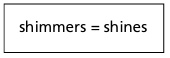
37 Then Dadima shows Neha and me a sari that shimmers. It is red with a pallu stitched in gold.

38 “is is my wedding sari,” she whispers. . . .
39 Dadima puts the sari with polka dots on Neha and the soft pink one on me. . . .

40 Dressed in our saris, all three of us stand in front of the mirror.

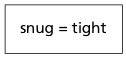
41 Dadima draws her sari over her head, making a snug frame around her face. Neha and I do the same. Our eyes twinkle in the mirror like the golden threads in Dadima’s wedding pallu.

42 “We look like you, Dadima,” I say.

43 “Yes,” she says, taking Neha and me in her arms. “Very much so.”

44 I hug Dadima back.

45 Then I untie the secret knot I made in her sari.

Asemmisa {{asɛmmisaAhyɛnsode}}
40.

What does Rupa most likely think about saris at the beginning of the story?

Asemmisa {{asɛmmisaAhyɛnsode}}
41.

How does Dadima best support her claim that she never gets tired of wearing saris?

Asemmisa {{asɛmmisaAhyɛnsode}}
42.

Why does Dadima show the girls some of her saris?

Asemmisa {{asɛmmisaAhyɛnsode}}
43.

In paragraph 29, the phrase “unfold and unfold and unfold some more” suggests that:

Asemmisa {{asɛmmisaAhyɛnsode}}
44.

Sometimes people have customs of wearing special clothing for certain occasions. Which detail from the story best connects to this idea?

Asemmisa {{asɛmmisaAhyɛnsode}}
45.

What is a sari described as?

Asemmisa {{asɛmmisaAhyɛnsode}}
46.

What does Dadima say a sari can fit?