Roger is new in town, and it has been hard to make friends. The kids at school are nice, but Roger is shy. His birthday is coming up soon. He is planning a big party. It will be a lot of fun. There will be cake, and ice cream, and a treasure hunt. But what if none of the other kids want to come?
One week before his party, Roger and his dad go to their favorite restaurant. Benny’s Pizza Parlor makes the best pizza in town. Roger orders a large pie, with four kinds of cheese and extra pepperoni. He loves every bite. When he is finished, Roger and his dad go to the kitchen to talk to Benny.
“How was the pie?” Benny asks.
“It was an ooey-gooey mess!” says Roger. “That means I liked it.”
“Thank you!” says Benny.
Suddenly, Roger gets a great idea. “Benny,” he says. “Will you cook pizza for my birthday party?”
“Hold on, Roger,” says Roger’s dad. “Benny is very busy. He might not have time to make pizza for your party.”
“But everyone loves his pizza!” says Roger. “If we have it, I’ll be the most popular boy in school.”
“I know what to do,” says Benny. “I won’t cook pizza for your party. Instead, I’ll show you how to make it yourself!”
That week, Roger goes to Benny’s Pizza Parlor every day after school. Benny shows him how to combine flour and yeast and water into a dough. Then, after the dough has had time to sit, they pound it down and roll it as flat as a quarter. The most exciting part is when they get to throw the dough up into the air. When Benny throws the dough, it looks easy. But Roger is afraid to try.
“Don’t worry!” says Benny. “If you drop it, we can make more.”
But Roger doesn’t drop it. He throws the dough way up into the air. It spins around like a top. Before it hits the counter, Roger catches it on his knuckles—just like Benny showed him.
Next, they talk about toppings. Making cheese pizza is easy. You just choose all the cheese you want and sprinkle it on the dough. Then there is Roger’s favorite: pepperoni. That’s not hard either. Benny slices the pepperoni and lays it on top of the cheese. After that, it starts to get complicated. There is a meat lover’s pizza. There is Hawaiian, with ham and pineapple. There is even anchovy pizza, which Roger does not want to try.
“Come on,” says Benny. “Have a bite. It’s good.”
Roger takes a tiny bite. The anchovies taste like cat food. He makes a face, and says, “I think I’ll stick to pepperoni for now.”
They sprinkle the cheese on the dough. On top of the cheese, they put pepperoni—lots and lots of it. When Benny takes the pizza out of the oven, it is an ooey-gooey mess. It is also the best pizza Roger has ever tasted.
“Very nice,” says Benny. “I could not have done it better myself.”
Roger tells the kids at school that his party will have pizza from Benny’s. Everyone is excited. Everyone loves Benny’s pizza. But when they come to his house, Benny isn’t there. Instead, they see Roger, wearing an apron and a chef’s hat. The kids don’t believe that Roger knows how to make pizza. He’s ready to prove them wrong. Roger pounds down the dough, rolls it out, and throws it up into the air.
“Wow!” they say. “You look just like Benny.”
Roger makes them his favorite pie, with four kinds of cheese, and extra pepperoni. Everyone agrees the pizza tastes just like Benny’s. It might even be just a little bit better.
Luke’s father is a farmer. To be more precise, his dad is a fruit-and-vegetable farmer. Instead of cows, pigs, sheep, and horses, Luke’s house is surrounded by corn, squash, lettuce, and tomatoes.
Luke does not mind that there are no animals. In fact, he likes living on a fruit-and-vegetable farm much better. If you asked Luke, he would say that a fruit-and-vegetable farm is magical.
“What do you mean, magical?” Luke’s friend Tom asked one day.
“Well, it’s like this,” said Luke. “My dad casts a spell, and soon enough the fruits and vegetables appear where there used to be bare dirt!”
Now, Luke knows that this is not really magic. But all the same, he feels it is pretty special that his dad is able to create something as grand as a corn field where there used to be nothing. Sometimes, Luke sets his alarm clock, so he can wake up before the sunrise, too. He eats cereal with his dad and asks him what spells he is going to cast.
“I’m planting tomatoes today, son,” Luke’s father explained. “Tomatoes ripen best in very hot summer heat, so I need to plant the seeds early in spring. That way there will be tall, healthy tomato vines once August arrives.”
“How do you make sure the vines grow tall and healthy?” Luke asked.
“They grow strong when you give them care and attention and have a little bit of hope,” his father laughed.
“Can I help?” Luke begged.
“Of course!” exclaimed his father.
So on days Luke did not have school, he helped his father, and Luke learned more about his dad’s magical work.
Luke learned that a tomato plant indeed needs a lot of care. He spent one whole day in the early June sun, sinking wooden stakes into the ground by young tomato sprouts. After the tomato vines had grown a little taller, Luke tied them to the stakes so that they would not topple over and lose their special fruit.
“The tomatoes sure need a lot of attention!” Luke exclaimed one late afternoon. He had been double and triple tying the vines, because the weather forecaster had predicted wind and rain for that night. Luke’s father wanted to make sure his tomatoes did not get blown over in the storm.
“Most worthwhile things do require a lot of attention, Luke,” replied his father with a smile.
“What do you mean?” asked Luke.
“Well,” said his father, standing up straight and wiping the sweat from his forehead. “We should pay close attention to things that make our lives better.”
“That is why you pay attention to Mom?” asked Luke.
“Yes,” replied his father. “I pay close attention to you and Mom, because you both make my life better. You both make me very happy.”
The rest of Luke’s work that day went by a lot quicker. Taking care of the tomato plants, Luke imagined he was taking care of his mom and dad. With a little bit of family magic and a lot of attention, Luke was certain these would be the most beautiful tomatoes he had ever seen once August arrived.
Choose the answer that best completes the sentence below.
Luke asks about his father’s work on the farm; he starts helping his father with work on the farm.
Have you ever seen anyone prepare food with butter? Maybe you’ve seen someone spread a pat of solid butter on toast, or cook meat or vegetables in a pan with melted butter. Butter is a great option for adding flavor to a dish. It also happens to be a great way to learn about how a substance can change from a solid to a liquid!
Butter from the store is almost always in a solid form. If you hold butter from the store in your hand, you can tell it is cold and hard. Butter is usually kept in the refrigerator, which keeps the butter cold so that it stays solid. When the butter is solid, it holds its own shape.
Some solids become liquids when you add heat to them. Butter is one of them! When you heat up butter, it melts and turns into a liquid. For example, think about how someone cooks on the stove with butter. They probably put some solid butter into a pan, then turn up the heat. As the butter gets hotter, it becomes a liquid.
When the butter becomes a liquid, it flows. It doesn’t have a shape of its own. Instead, it takes the shape of its container. You can measure how hot liquid butter is with a thermometer. A thermometer measures the amount of heat in a substance. If you measured the temperature of liquid butter and solid butter, you’d find that the liquid butter is warmer. But be careful— if liquid butter gets too hot over the stove, it can burn! If that happens, the food you’re cooking won’t taste the same.
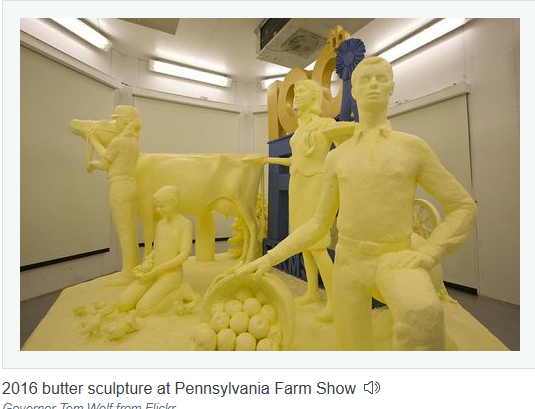
Cooking isn’t the only time it’s a good idea to keep track of the temperature of your butter. In fact, some places in the United States have butter sculptures at their state fairs. Artists carve complex sculptures out of large blocks of butter. These sculptures have to stay cold all the time in order to keep their shape. If a sculpture got too warm, it would lose its shape as it melted. If it got even warmer, the sculpture would become a huge puddle of butter! You could cool the butter down again to solidify it, but it'd be a tough task to return it to the special shape it once held.
At least you’d be able to spread it on toast!
Who suggests that Roger make his own pizza for the party?
Why is Roger worried in the beginning of the story?
Roger wants Benny to make pizza for his birthday party. Roger says that everyone loves Benny’s pizza. Roger states, “If we have it, I’ll be the most popular boy in school.”
What can be concluded based on this information
Why does Roger want the other kids at school to come to his birthday party?
What is this story mainly about?
Read the sentences:
“The kids don’t believe that Roger knows how to make pizza. He’s ready to prove them wrong.”
What does the author mean by the phrase “prove them wrong”?
Choose the answer that best completes the sentence below.
Benny and Roger roll the dough very flat. , Benny throws the dough in the air.
What kind of farmer is Luke’s dad?
One effect in this story is that Luke learns about tomatoes and farming. What is the cause?
Luke’s father pays a lot of attention to his son.
What evidence from the story supports this statement?
What is Luke’s opinion of the work his father does?
What is a theme of this story
Read the following sentences:
“Luke’s father is a farmer. To be more precise, his dad is a fruit-and-vegetable farmer.”
Why does the author start the second sentence with the words, “To be more precise”?
What are the two forms that butter takes?
What causes butter to go from solid to liquid?
The text says that liquid butter is warmer in temperature than solid butter. What evidence from the text supports this conclusion?
Read these sentences from the passage.
“When the butter is solid, it holds its own shape… When the butter becomes a liquid, it flows. It doesn’t have a shape of its own. Instead, it takes the shape of its container.”
Based on this information, what would happen if you put melted butter into a square container, then cooled the butter down
What is the main idea of this passage?
What does a thermometer measure?
What happens if a butter sculpture warms up?