Finding the simulation: Navigate to the website for the Simulation by clicking here or use a search engine to find “PhET Simulation Forces and Motion Basics
Explore the computer simulation to find answers to the questions.
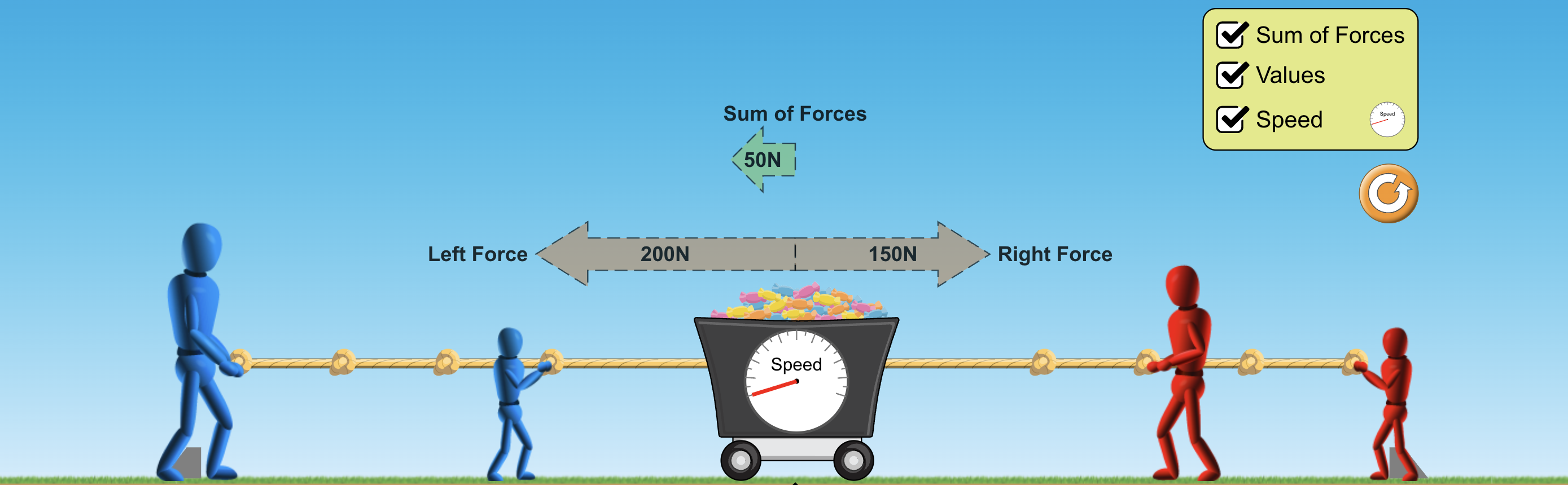
What is the exact measurement of force that the small figure can pull the rope?
What is the exact measurement of force that the medium figure can pull the rope?

What is the resulting motion or speed?
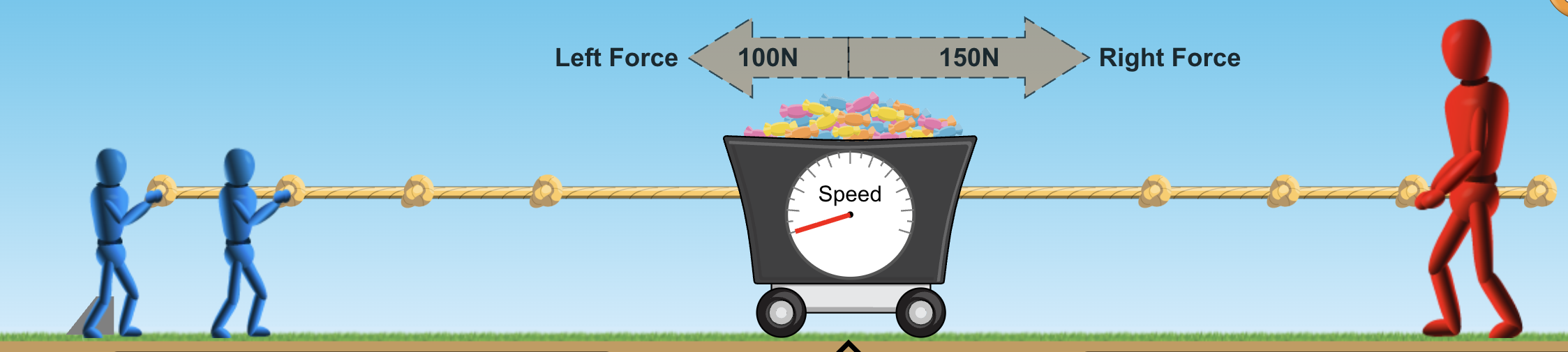
What is the resulting motion or speed?
What happens to the speed of the cart when one side is winning the tug of war?
When one side is winning the tug of war, is that type of motion considered acceleration? Why or why not?
What happens to the speed of the cart when the tug of war is a tie?
When the tug of war is a tie, is that type of motion considered acceleration? Why or why not?
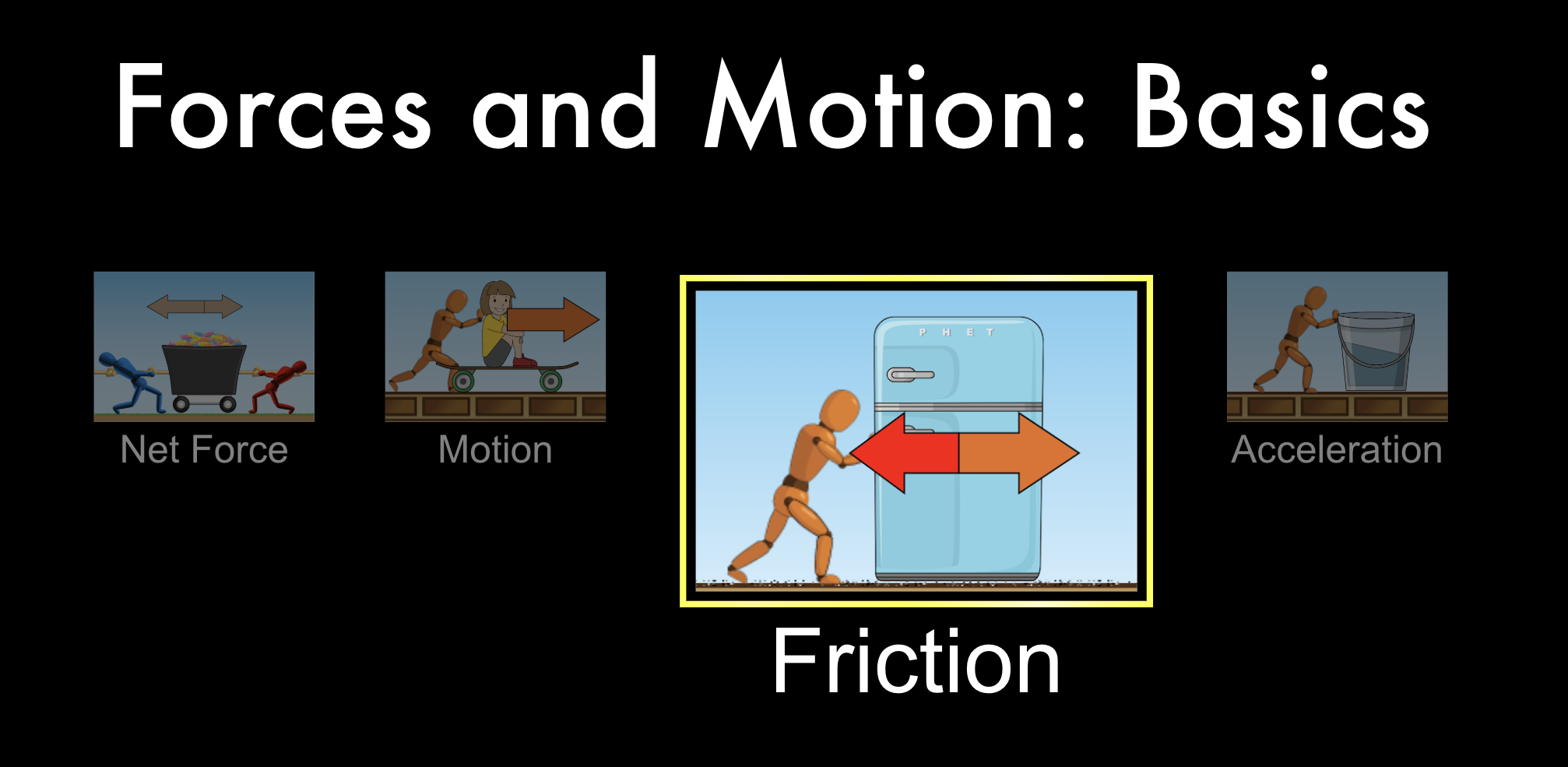
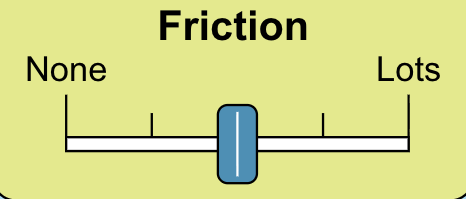
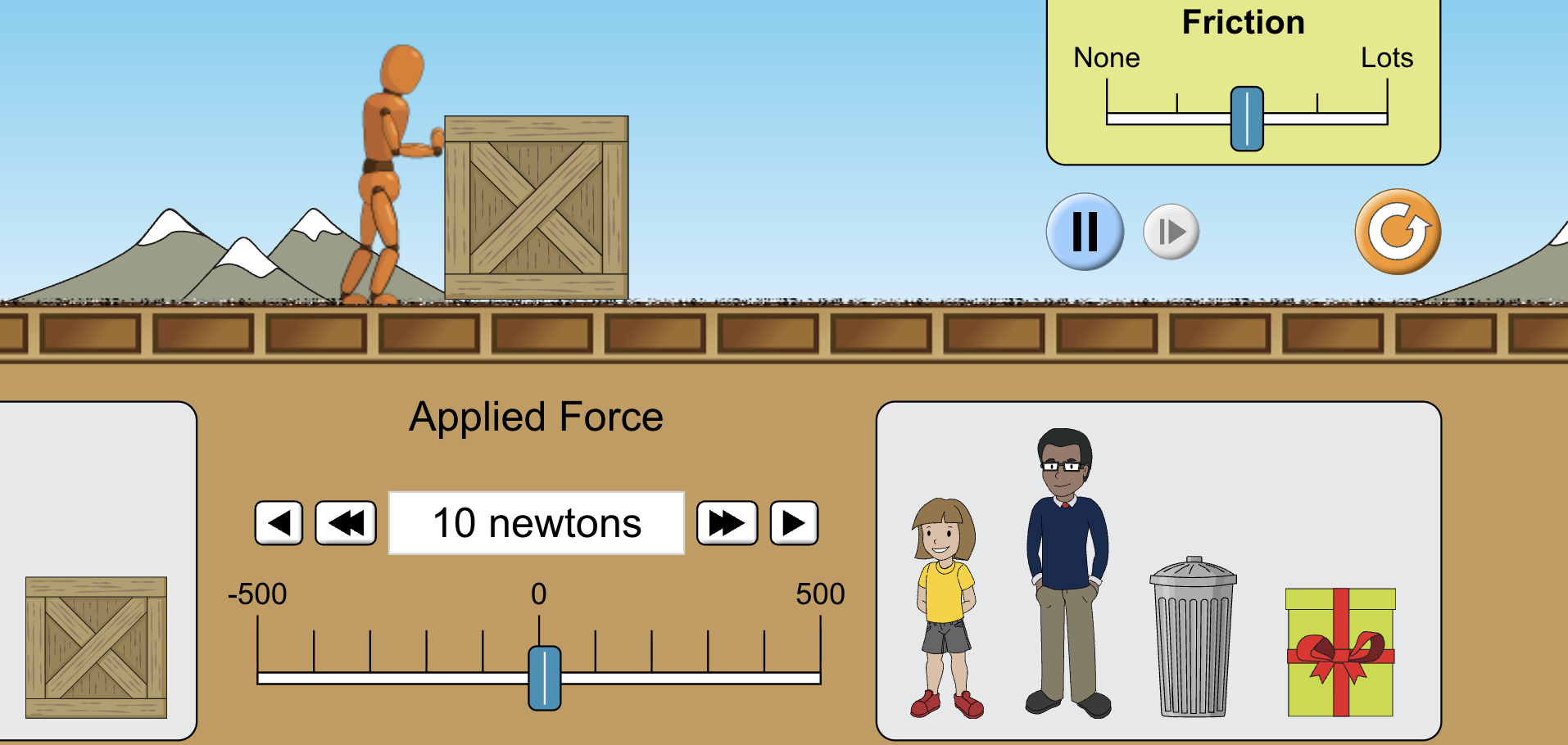
What is the friction force?
What is the sum of the forces?
In which direction?
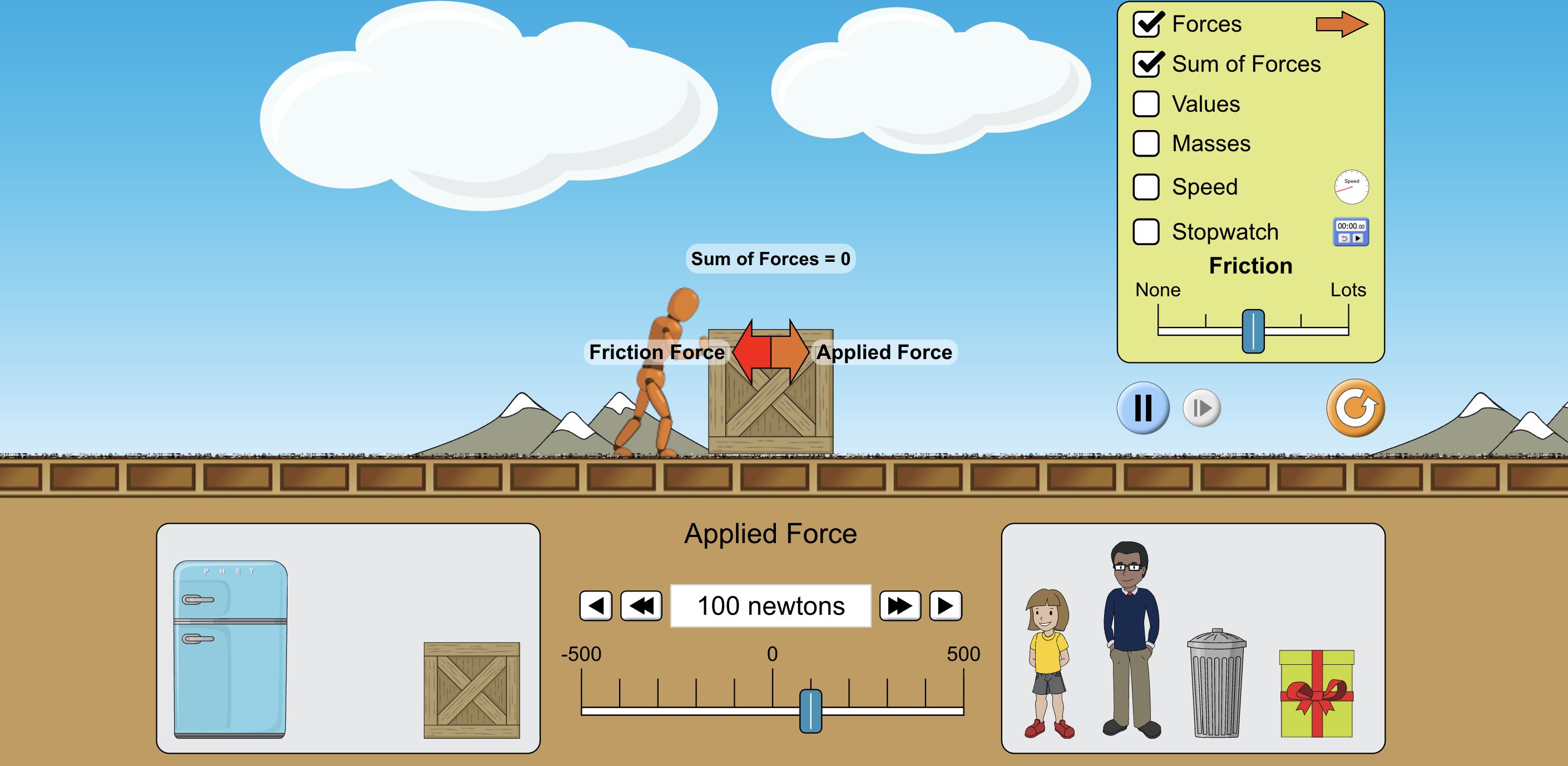
What is the friction force?
What is the sum of the forces?
In which direction is the sum of the forces?
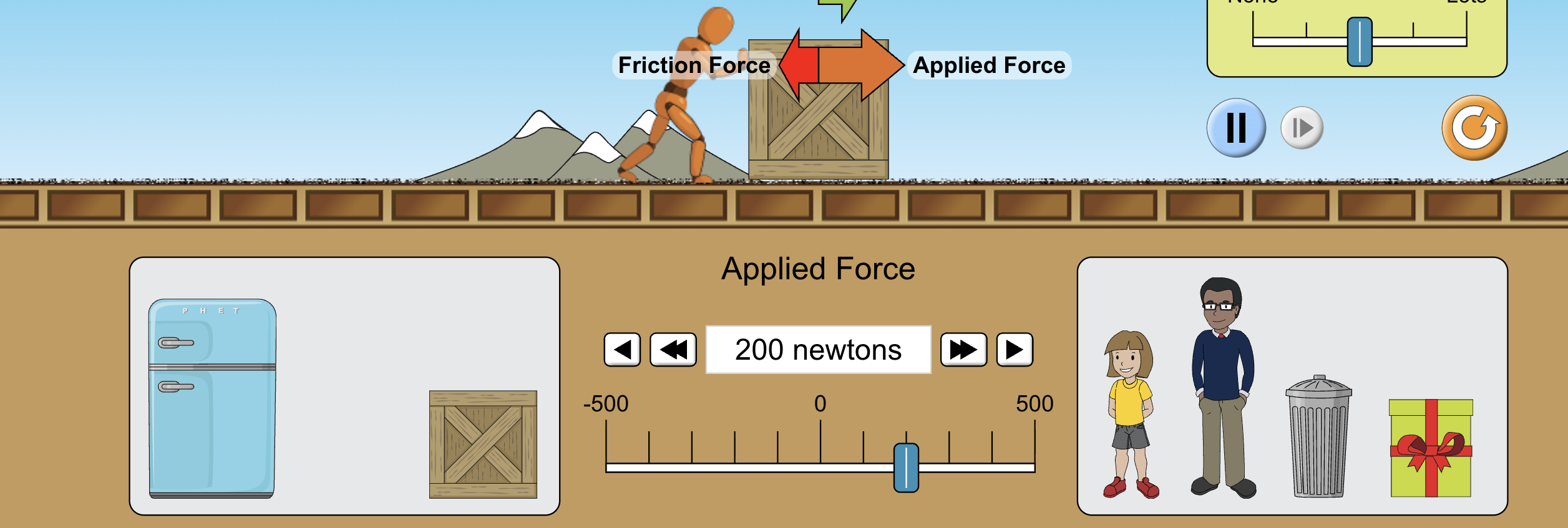
What is the friction force?
What is the sum of the forces?
In which direction is the sum of the forces?
What happens to the box when the frictional force is greater than the applied force?
Compare the applied force required to move a 50-kg crate and the applied force required to move something much more massive, like the 200-kg refrigerator
Compare the applied force required to move a 50-kg crate when there is LOTS of friction, MEDIUM friction, and NONE friction
Which figure can pull with the most force?
What is the exact measurement of force that the large figure can pull the rope?
What is the sum of the forces (net force)?
Use a math equation to show how the net force was calculated.
Are the forces balanced or unbalanced?
How do you know if the forces are balanced or unbalanced?
What is the sum of the forces (net force)?
Use a math equation to show how the net force was calculated.
Are the forces balanced or unbalanced?
How do you know if the forces are unbalanced or balanced?
Is the crate accelerating? (speeding up, slowing down or changing direction)
Is the crate accelerating (speeding up, slowing down, or changing direction)?
Is the crate accelerating (speeding up, slowing down, or changing direction)?