Log in
Sign up for FREE
arrow_back
Library

Biodiversity, Ecosystem Stability, Abiotic Cycles_HB_JV

star
star
star
star
star
Last updated about 3 hours ago
13 questions
1
1
HS-LS2-6
1
HS-LS2-6
1
1
1
1
Required
1
Required
1
1
1
1
1
Question 1
1.

Which region would likely have the greatest amount of biodiversity?

Question 2
2.

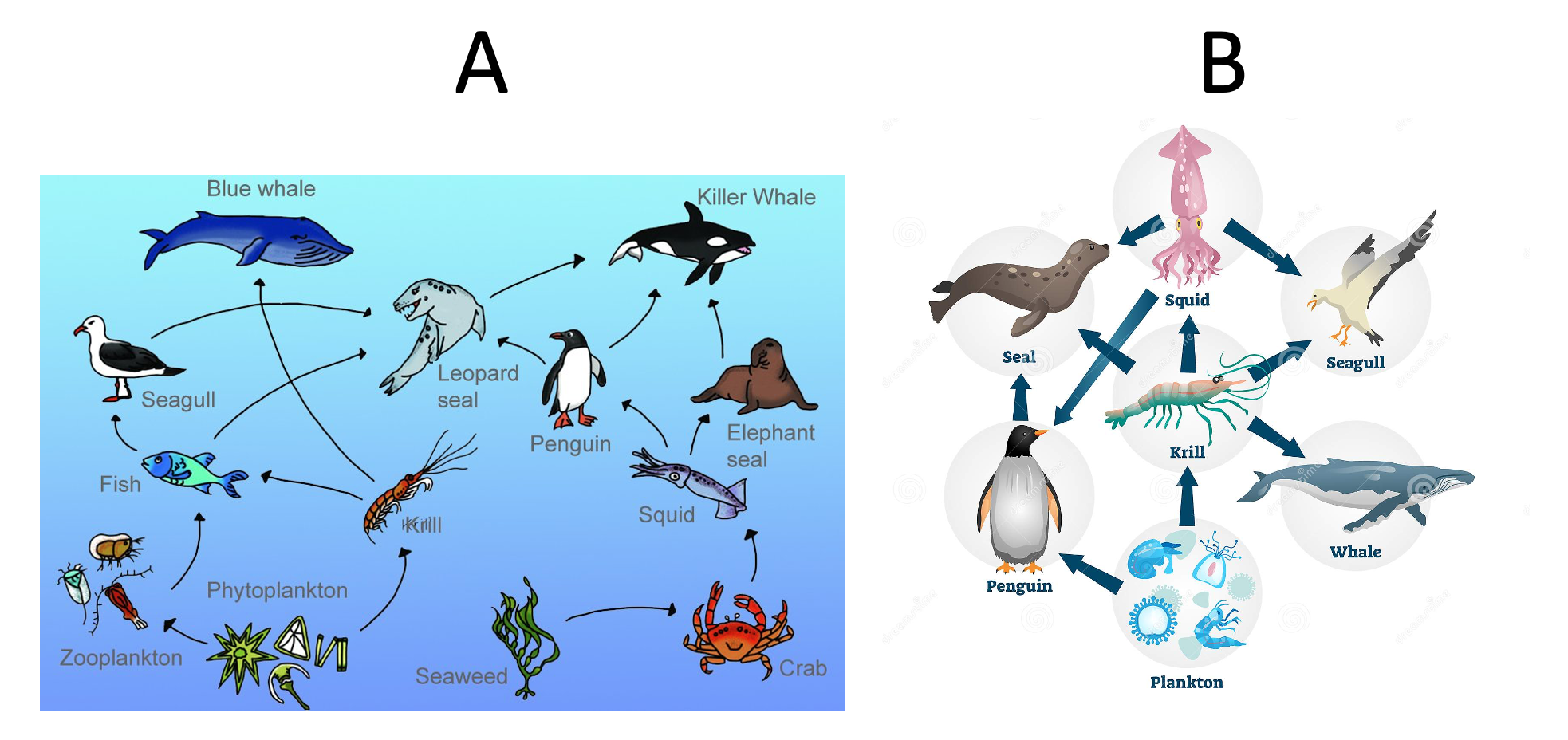
Which of the following provides evidence to support the claim: If all the phytoplankton were killed in both ecosystems, ecosystem A would remain more stable.
Question 3
3.

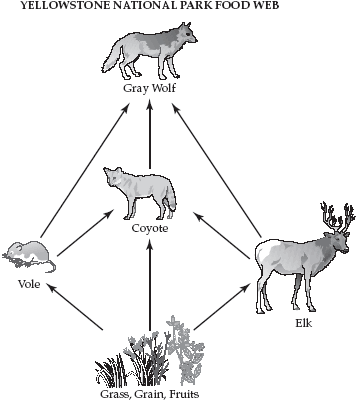
Which of the following statements would be included in a reasoning that supports the claim: This ecosystem would not remain stable if the wolves were removed. SELECT 1 ANSWER!

Question 4
4.

Corals, and the zooxanthellae algae they contain, form the base of a coral reef ecosystem. Organisms like sea urchins feed on microorganisms that grow on the corals. Organisms including seahorses feed on plankton and fish that also inhabit the reef. Larger animals like sea turtles frequently enter the reef to forage. Seaweeds, which are competitors of corals, may grow along the reef bottom.
The biodiversity in a coral reef ecosystem can be changed by both natural and human activities. What is a natural factor that would have the greatest negative impact on the ecosystem's biodiversity?

Question 5
5.

If a scientist discovers a new synthetic chemical that appears to have many potential uses, why must society be extremely cautious after the new chemical is manufactured?

Question 6
6.

The Marianas flying fox is a species of bat found in the Pacific islands that plays an important role in pollination and seed dispersal. Hunting and habitat destruction have contributed to a drastic decline in their population. If this continues, what would be a consequence of the extinction of the Marianas flying fox?

Question 7
7.

Most deforestation occurs for agricultural purposes as farmers cut and burn forests to grow crops. On a local scale, animals living in the forested area will either die or be forced from their habitat. On a larger scale, many plant and animal species may become extinct. What is another global effect of deforestation?

Question 8
8.

What would happen if all producers disappeared?

Question 9
9.

Which level of the trophic pyramid has the most energy and biomass?

Question 10
10.

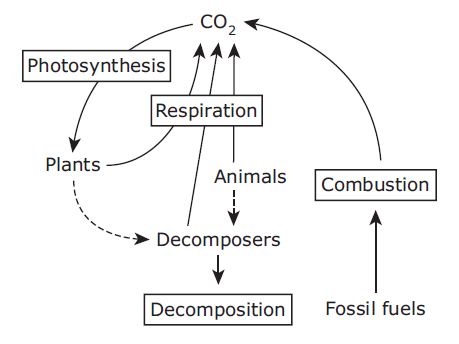
Which of the processes shown in the diagram is responsible for cycling carbon from the atmosphere to the biosphere?

Question 11
11.

The geosphere is the earth's crust (oil deposits and rock). Which of the processes shown in the diagram is responsible for cycling carbon from the geosphere back into the atmosphere? Hint: you are burning fossil fuels found in the earth

Question 12
12.

Which of the following occurs during photosynthesis?

Question 13
13.

Which of the following occurs during decomposition?

In ecosystem A the absence of phytoplankton would result in the absence of 6 species, in ecosystem B the absence of phytoplankton would result in the absence of all species.
If the voles were removed the gray wolves would eat coyote or elk instead.
If the wolves were removed the elk, coyote and vole would increase to too large of a population size that they would completely destroy all the grass grains and fruits and eventually decrease in population size themselves due to overgrazing. (Just like the rabbits did that were introduced to Australia)
If the wolves were removed the elk, coyote and vole would increase in population but not drastically.
If the voles were removed, the elk and coyote would keep the grass grains and fruits in check.
If the voles were removed the gray wolves would die.
If the voles were removed, the grasses, grains and fruits would grow out of control.
The overgrowth of a population of seaweed, which prevents light from reaching the reef.