Diet and Greenhouse Gas Emissions
Reducing climate change impacts from the global food system through diet shifts
How much and what we eat and where it is produced can create huge differences in GHG emissions. (Greenhouse gas (GHG) emissions are the release of gases into the atmosphere that contribute to the greenhouse effect and global warming.) On the basis of detailed household-expenditure data, we evaluate the unequal distribution of dietary emissions from 140 food products in 139 countries or areas and further model changes in emissions of global diet shifts. Within countries, consumer groups with higher expenditures generally cause more dietary emissions due to higher red meat and dairy intake. The present global annual dietary emissions would fall by 17% with the worldwide adoption of the EAT–Lancet planetary health diet, primarily attributed to shifts from red meat to legumes and nuts as principal protein sources. More than half (56.9%) of the global population, which is presently overconsuming, would save 32.4% of global emissions through diet shifts, offsetting the 15.4% increase in global emissions from presently underconsuming populations moving towards healthier diets.
Research has shown that widespread shifts towards healthier diets, offer solutions to this complex problem by eradicating hunger, ensuring health and mitigating emissions. Numerous dietary options have been proposed as guidelines or directions. The planetary health diet, stands out as a prominent option. It aims to improve health while limiting the impacts of the food system within planetary boundaries by providing reference intake levels for different food categories. It is flexibly compatible with diversities and preferences of regional and local diet.
Food consumption and associated emissions differ as a result of disparities in consumer choices guided by social and cultural preferences, wealth and income. Quantifying food-related emissions along the entire supply chain for different products and population groups provides information for emission mitigation through changing consumer choices. With the improved availability of household consumption data, recent studies have revealed inequality in energy consumption and carbon emissions. Reducing the overconsumption of wealthy or otherwise overconsuming groups can increase the availability of resources for reducing hunger and malnutrition.
To fill these gaps, this study evaluates GHG emissions ($CO_2$, $CH_4$ and $N_2O$) throughout the global food supply chains (including agricultural land use and land-use change, agricultural production and beyond-farm processes) induced by diets, termed ‘dietary emissions’, in 2019 and the potential emission changes of global diet shifts. Food loss and waste during household consumption have been subtracted from the national food supply to obtain dietary intake. We quantify dietary emissions of 140 food products (classified into 13 food categories) on the basis of the global consumption-based emissions inventory of detailed food products. By linking detailed food emissions to the food consumption patterns of 201 global expenditure groups (grouped according to the per capita total expenditure of each group) from the household-expenditure dataset based on the World Bank Global Consumption Database, we analyse the unequal distribution of dietary emissions in 139 countries or areas, covering 95% of the global population. Despite limitations, the total expenditure of consumers, which effectively reflects patterns in household income, consumption and asset accumulation, is a useful approximation to represent levels of income and wealth. Additionally, we build a scenario of shifting from diets in 2019 to the global planetary health diet to estimate emission changes. This study investigates differences in dietary emissions among regions, countries and population groups, identifying areas where efforts are needed to mitigate emissions during the global transition towards a healthier and more planet-friendly diet.
Present dietary emissions across countries
In this study, dietary emissions account for emissions along the entire global food production supply chains, which are allocated to final consumers of diets. We use the term ‘GHG footprints’ to specifically refer to the dietary emissions of an individual over 1 year. The total dietary emissions and country-average per capita GHG footprints show different distributions across countries in 2019.
China (contributing 13.5% of emissions) and India (8.9%), the world’s most populous countries, are the largest contributors to global dietary emissions. Alongside Indonesia, Brazil, the United States, the Democratic Republic of Congo, Pakistan, Russia, Japan and Mexico, the top ten contributors represent 57.3% of global dietary emissions but with very unequal per capita emissions within and between countries. We find the highest country-average per capita footprints in Bolivia, followed by Luxembourg, Slovakia, Mongolia, the Netherlands and Namibia. Haiti and Yemen have the lowest country-average footprints, followed by Burundi, Ghana and Togo. Insufficient food intake of residents due to limited food affordability is the root cause of low footprints in these low- and lower-middle-income countries.
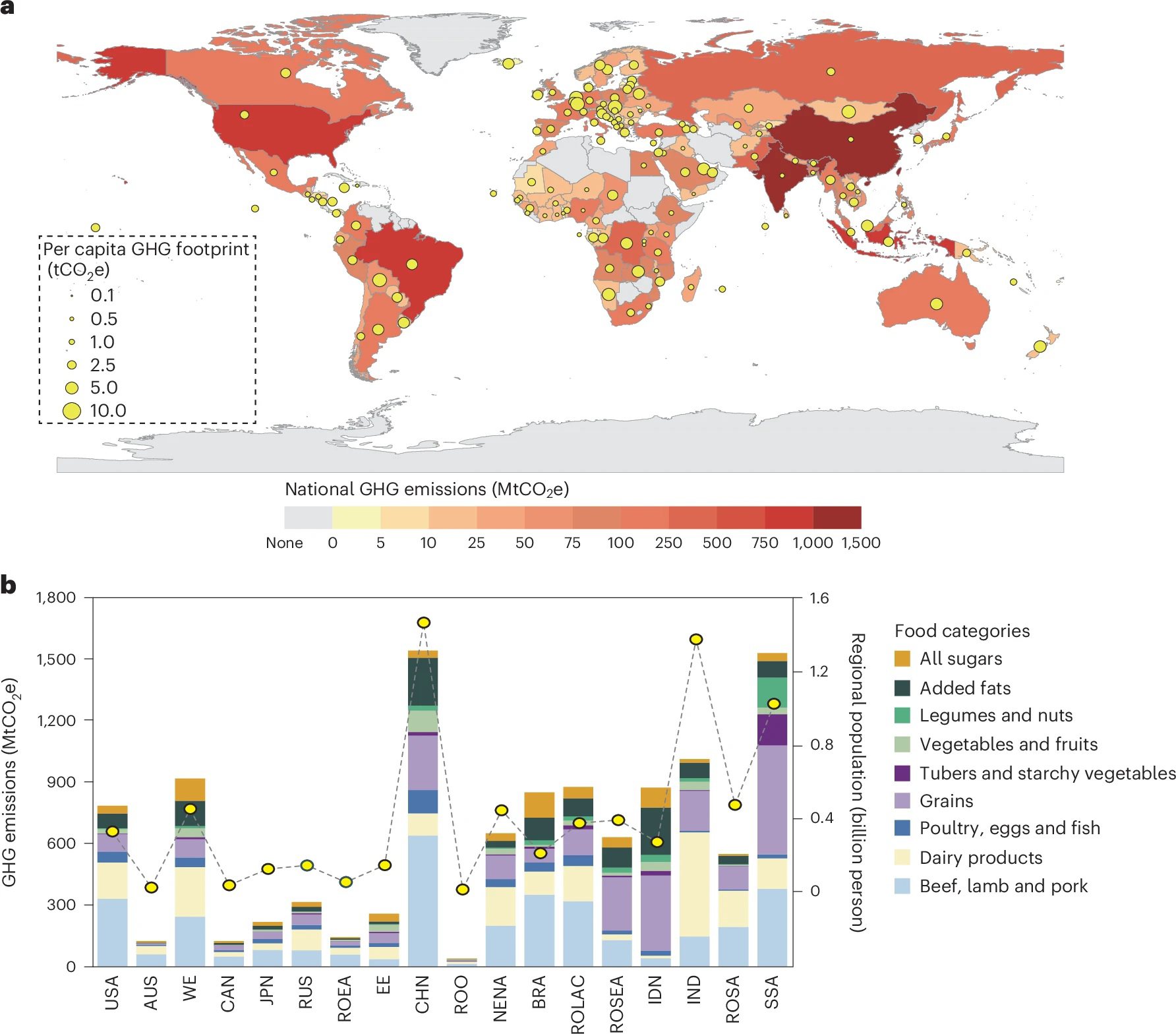
Figure 1a: Total and per capita dietary emissions for 139 countries/areas.
Figure 1b: Regional dietary emissions from different food categories and populations. The bar chart (left primary axis) shows the regional emission amounts and the line chart (right secondary axis) shows the number of regional populations. Columns are ordered by the descending per capita GDP of regions.
KEY: USA, United States; AUS, Australia; WE, Western Europe; CAN, Canada; JPN, Japan; RUS, Russia; ROEA, Rest of East Asia; EE, East Europe; CHN, China; ROO, Rest of Oceania; NENA, Near East and North Africa; BRA, Brazil; ROLAC, Rest of Latin America and the Caribbean; ROSEA, Rest of Southeast Asia; IDN, Indonesia; IND, India; ROSA, Rest of South Asia; and SSA, Sub-Saharan Africa.
Dietary emission shares across consumer groups
There are notable differences in dietary emission shares associated with food categories across expenditure deciles between regions. In high-income countries, expenditure groups have relatively similar patterns of dietary emissions, with large shares of red meat and dairy products contributing the largest amount of emissions. Even poor consumer groups in high-income countries tend to be more likely to be able to afford animal-based products as a result of relatively lower prices for dairy products, eggs, white meat and processed red meat.
This contrasts with the high prices of animal-based products due to supply constraints in most low- and lower-middle-income countries. Except in high-income countries, starchy staple foods (including grains and tubers), with low prices but high-carbohydrate content, constitute a large proportion of dietary emissions because of the high level of consumption, especially in Southeast Asia and Sub-Saharan Africa. As individuals’ expenditures increase in these countries, emission shares from starchy staple foods in total emissions decrease substantially. These changes demonstrate that as the affordability of food increases, populations tend to adopt instead more diverse diets composed of fewer starchy staple foods and more meat, dairy products, vegetables and fruits.
For example, research shows that with rapid economic growth, China’s urban or high-income groups increase their intake of non-starchy foods to fulfil their requirements of dietary diversity, while poorer groups, often engaging in strenuous physical jobs, predominantly consume inexpensive starchy staple foods. One exception is Rest of Oceania, where poorer groups have higher percentages of emissions from not only tubers but also vegetables and fruits. Owing to relatively low expenditure on food, poor populations in this island region usually choose locally cultivated tubers and fruits (such as cassava, taro and bananas) with high intensities of land-use emissions.
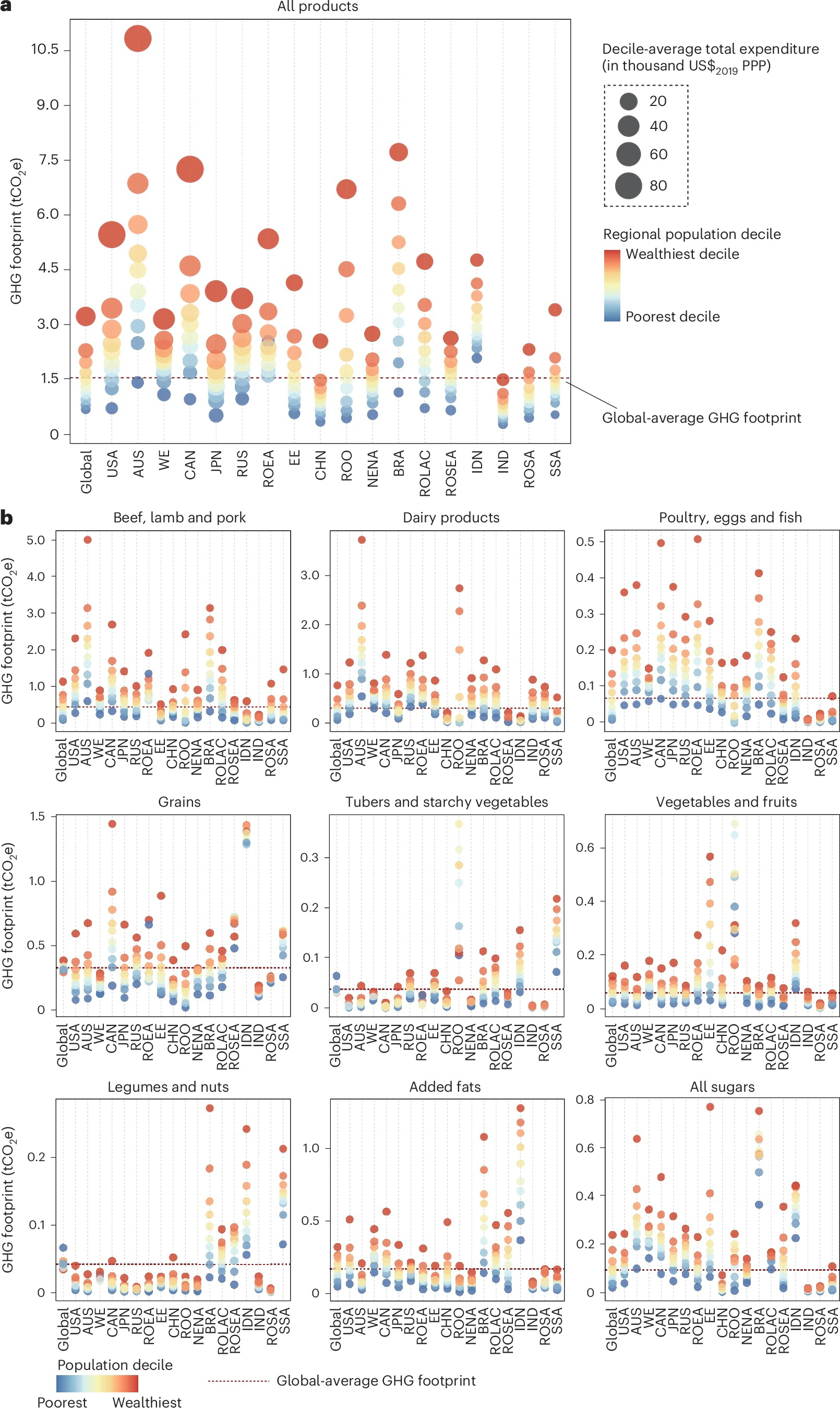
Figure 2a: GHG footprints from all types of food categories. The size of the bubble refers to the average total expenditure represented by the decile.
Figure 2b: GHG footprints from different food categories. The colours of bubbles in a and b indicate expenditure deciles ranging from the poorest in blue to the wealthiest in red and are comparable only within each region.
Emission changes from adopting the planetary health diet
To estimate the emission changes from a global diet shift, we build a hypothetical scenario by assuming that everyone in all countries adopts the planetary health diet. Results indicate that the global dietary emissions would decrease by 17% compared with the 2019 level. The presently overconsuming groups (56.9% of the global population) would save 32.4% of global emissions through diet shifts, more than offsetting the 15.4% increase in global emissions from the presently underconsuming groups (43.1% of the global population) as a result of adopting healthier diets.
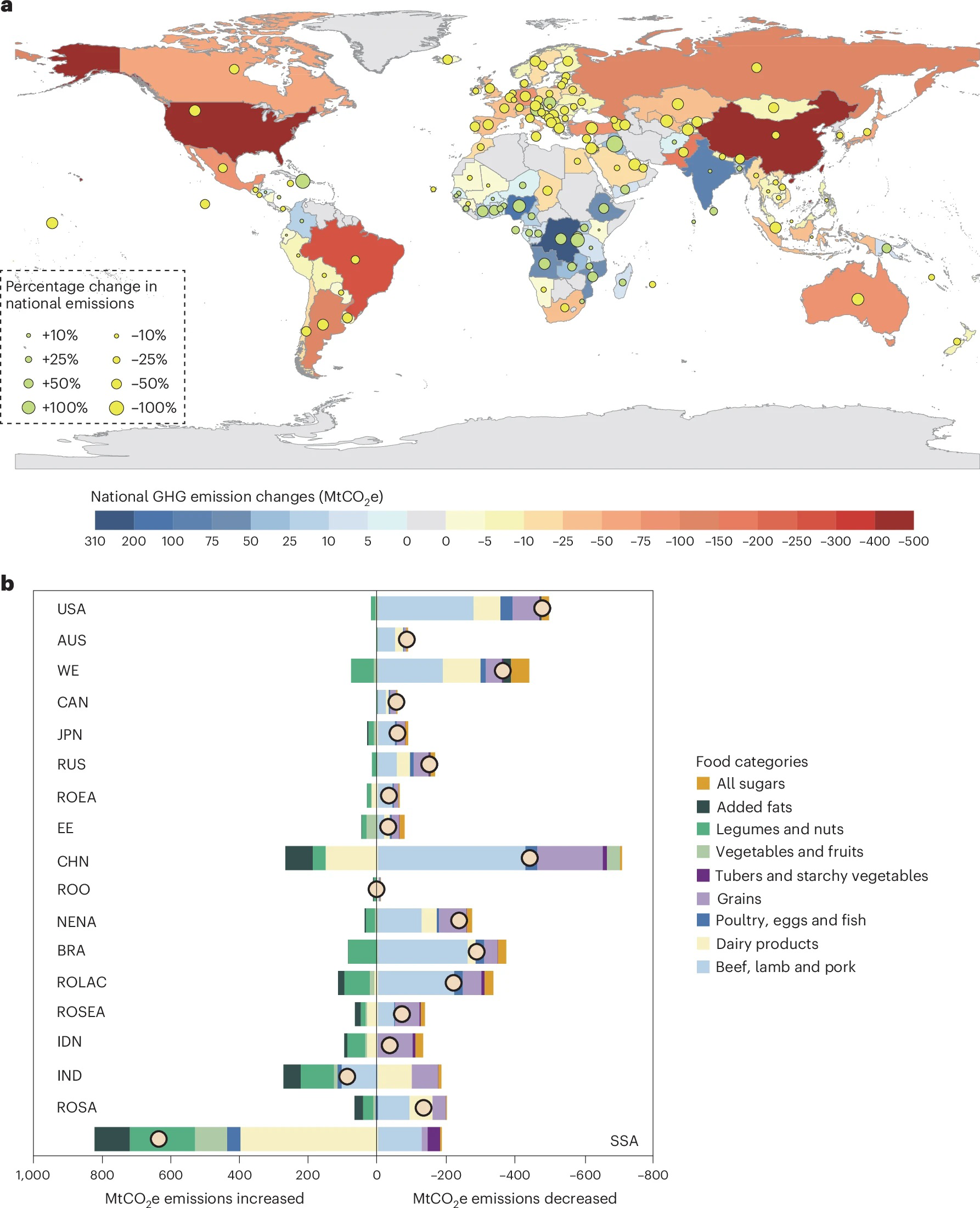
Figure 3a: Volume changes and percentage changes of national emissions for 139 countries/areas.
Figure 3b: Regional emission changes from different food categories. Columns are ordered by the descending per capita GDP of regions.
KEY: USA, United States; AUS, Australia; WE, Western Europe; CAN, Canada; JPN, Japan; RUS, Russia; ROEA, Rest of East Asia; EE, East Europe; CHN, China; ROO, Rest of Oceania; NENA, Near East and North Africa; BRA, Brazil; ROLAC, Rest of Latin America and the Caribbean; ROSEA, Rest of Southeast Asia; IDN, Indonesia; IND, India; ROSA, Rest of South Asia; and SSA, Sub-Saharan Africa.
Emission changes from adopting the planetary health diet
The decline in per capita GHG footprints would be achieved primarily in wealthy consumer groups in high- and upper-middle-income countries, while increased footprints would occur mainly in poor groups in most countries. Results show that the shifts of chief protein sources from animal-based to plant-based proteins according to the planetary health diet would contribute the most to changes in footprints globally. For example, in Australia, Brazil, Canada and the United States where diets are dominated by red meat and dairy products, the top and upper-middle expenditure groups would have notable reductions in footprints. However, most populations in South and Southeast Asia and Sub-Saharan Africa would have a considerable increase in footprints because of the present low levels of red meat intake. Meanwhile, the present intake of plant-based proteins in all countries is below the recommended level. Footprints related to legumes and nuts would increase for most expenditure groups in all regions to meet nutrient demands. This increase is particularly substantial in Rest of Oceania, Brazil, Indonesia and Sub-Saharan Africa, where most of the consumed legumes and nuts are domestically produced with high land-use emission intensities, assuming the present production and trade patterns remain unchanged.
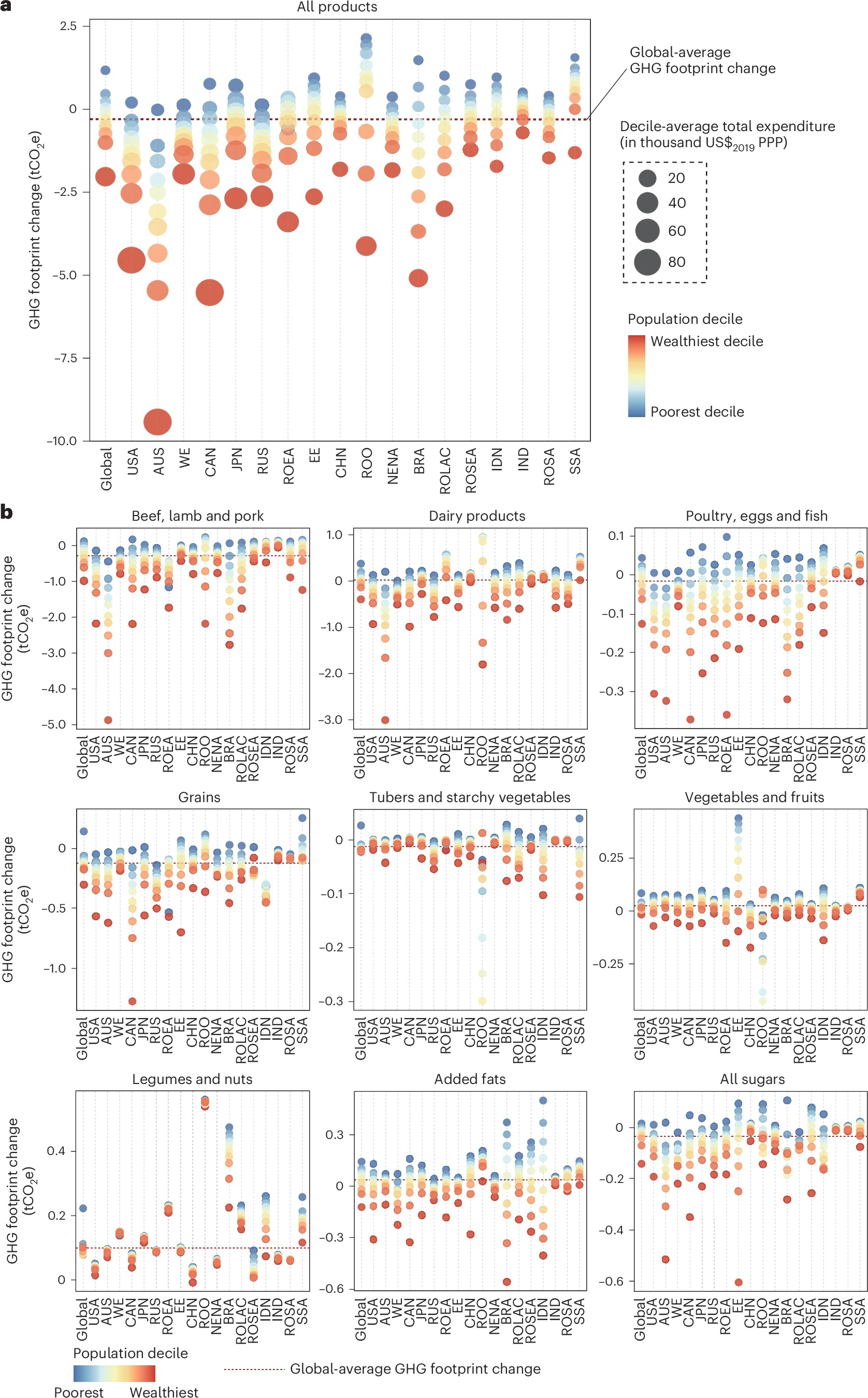
Figure 4a: Changes in GHG footprints from all types of food categories. The size of the bubble refers to the average total expenditure represented by the decile.
Figure 4b: Changes in GHG footprints from different food categories. The colours of bubbles in a and b indicate expenditure deciles ranging from the poorest in blue to the wealthiest in red and are comparable only within each region.