Sustainable Use of Natural Resources
The Sustainable Use of Natural Resources:
The Governance Challenge
Still Only One Earth:
Lessons from 50 years of UN sustainable development policy
Over-exploitation of natural resources harms the health of ecosystems and the well-being of people. In the face of environmental crises and growing inequality, we need to act, including developing extended producer responsibility and supply chain legislation, guaranteeing green public procurement, supporting technical innovation to enhance resource circularity, and adopting decision-making processes that include and respect women, Indigenous Peoples, and local communities.
Natural resources are central to human well-being. We cannot live without the clean air we breathe, the plants we eat, or the water we drink. We need natural resources to put roofs over our heads and heat our homes. We need them to survive and to thrive.
The concept of natural resources refers to naturally occurring living and non-living elements of the Earth system, including plants, fish, and fungi, but also water, soil, and minerals. A prominent way to think about natural resources is to look at them in terms of depletion risk: do they regenerate, and, if so, at what pace? Some resources, such as trees and plants, are renewable because they regenerate relatively quickly. Others, such as copper and oil, take much longer to form and are considered non-renewable. Together, natural resources make up a dense web of interdependence, forming ecosystems that also include humans. As such, the distribution of resources shapes the face of our planet and the local distinctiveness of our environments. People have formed different types of cultural, spiritual, and subsistence-based relationships with the natural environment, adopting value-systems that go beyond economic framings.
“Nature makes human development possible but our relentless demand for the earth’s resources is accelerating extinction rates and devastating the world’s ecosystems.”
- Joyce Msuya, Deputy Executive Director, United Nations Environment Programme
Natural resources are often viewed as key assets driving development and wealth creation. Over time and with progressive industrialization, resource use increased. In some cases, exploitation levels came to exceed resources’ natural regeneration rates. Such overexploitation ultimately threatens the livelihoods and well-being of people who depend on these resources, and jeopardizes the health of ecosystems. This risk of resource depletion, notably manifesting in the form of fishery collapses, demonstrates the need to regulate natural resource use to better preserve resources and their ecosystems. The very first UN conference on environmental issues, the 1972 UN Conference on the Human Environment held in Stockholm, Sweden, adopted fundamental principles in this regard.
Fostering Sustainable Resource Governance
A vast array of norms, institutions, and actors influence decisions on natural resources, which is why we speak of natural resource governance. A plethora of national legislation, intergovernmental agreements, regional organizations, certification mechanisms, corporate codes of conduct, and multi-stakeholder partnerships create a complex web of rules affecting how natural resources are used and benefits thereof are distributed.
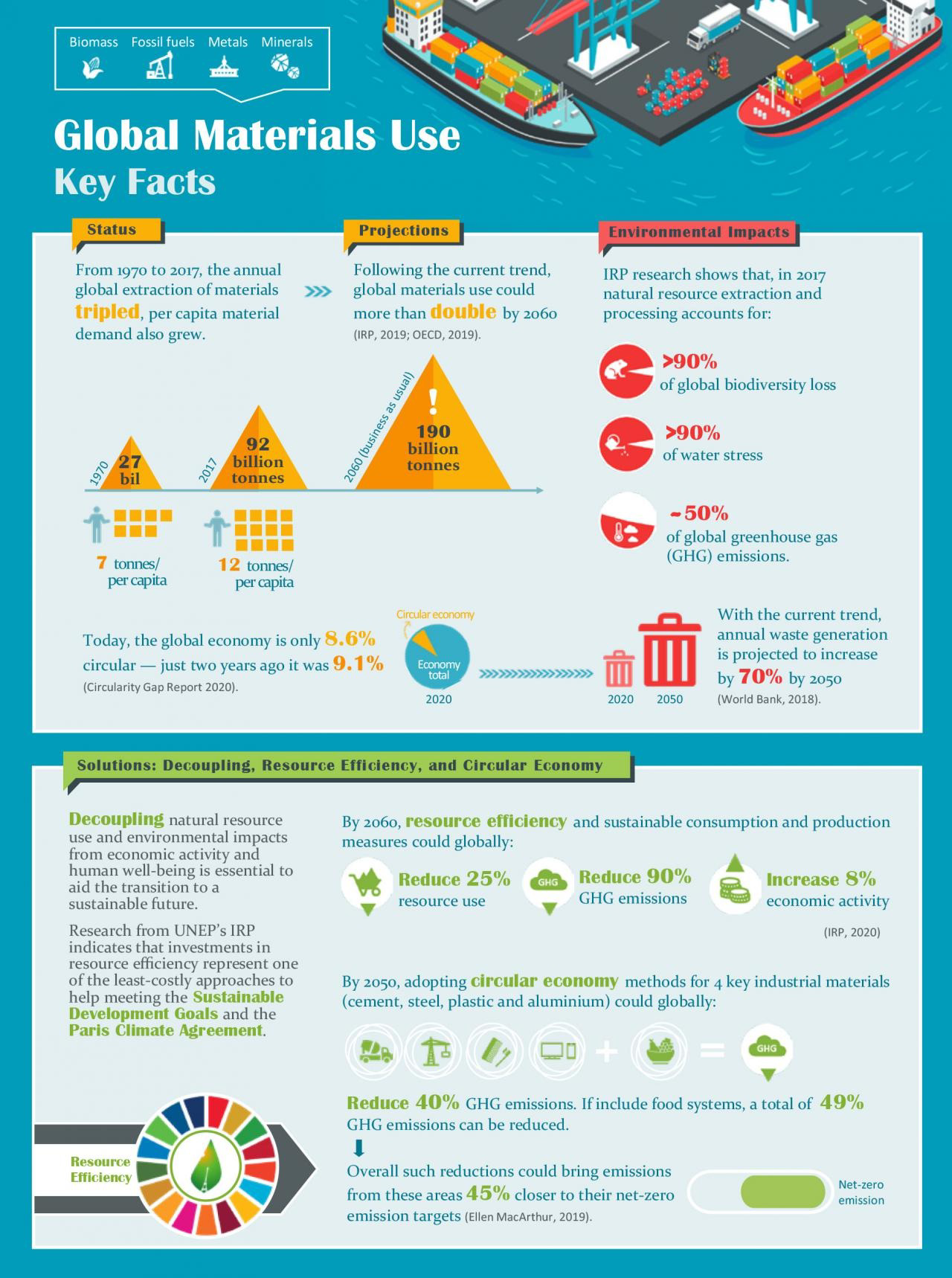
Source: UNEP and IRP (2020). Sustainable Trade in Resources: Global Material Flows, Circularity and Trade. United Nations Environment Programme.