Carbon Dioxide Emissions
Carbon Dioxide (CO2)
Carbon dioxide (CO2) is the primary greenhouse gas emitted through human activities. Carbon dioxide is
naturally present in the atmosphere as part of the Earth's carbon cycle (the natural circulation of carbon among
the atmosphere, oceans, soil, plants, and animals). Human activities are altering the carbon cycle – both by
adding more CO2 to the atmosphere and by influencing the ability of natural sinks, like forests and soils, to
remove and store CO2 from the atmosphere. While CO2 emissions come from a variety of natural sources,
human-related emissions are responsible for the increase that has occurred in the atmosphere since the industrial revolution.
Coal combustion is more carbon-intensive than burning natural gas or petroleum for electric power production.
Although coal use accounted for 50% of CO2 emissions from the sector, it represented only 16% of the electricity generated in the United States in 2023. Natural gas use accounted for 49% of CO2 emissions and 43% of electricity generation in 2023.
In April of 2024, EPA issued final carbon pollution standards for power plants that set carbon dioxide (CO2)
limits for new gas-fired combustion turbines and CO2 emission guidelines for existing coal, oil and gas-fired
steam generating units, securing important climate benefits and protecting public health.. These rules will
significantly reduce greenhouse gas emissions from existing coal-fired power plants and from new natural gas
turbines, ensuring that all long-term coal-fired plants and base load new gas-fired plants control 90% of their
carbon pollution.
Figure 1.
CO2 Emissions from All Sources 1995-2023
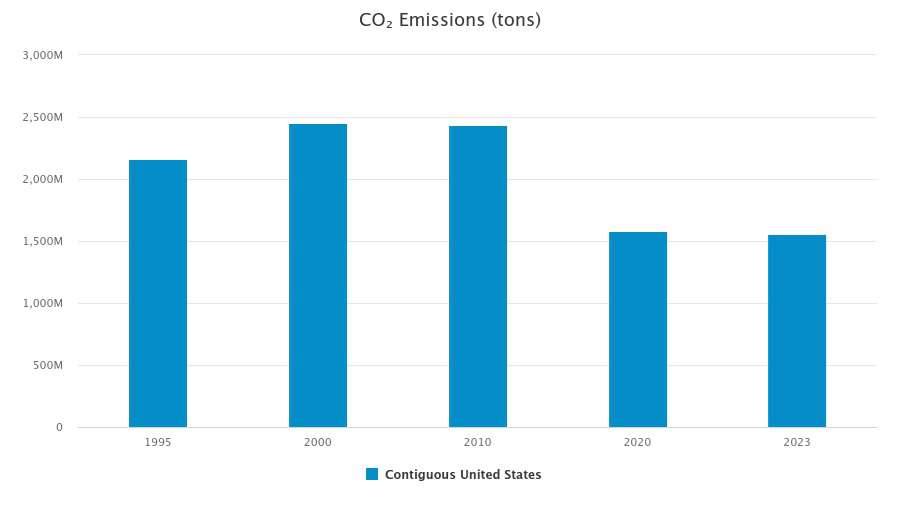
Figure 2.
State-By-State CO2 Emissions, 1995
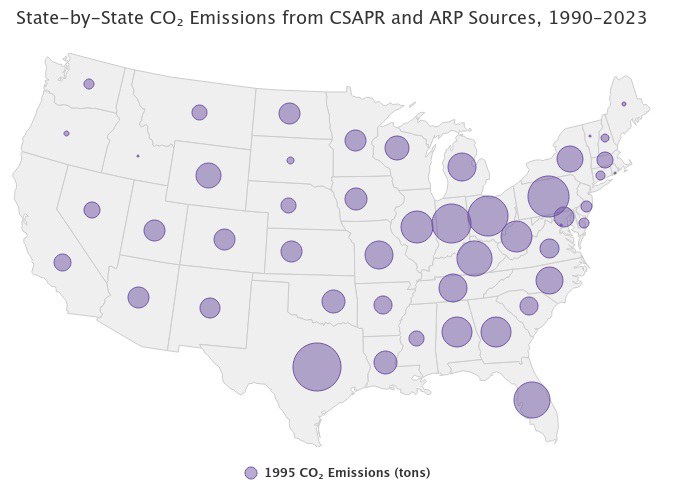
Figure 3.
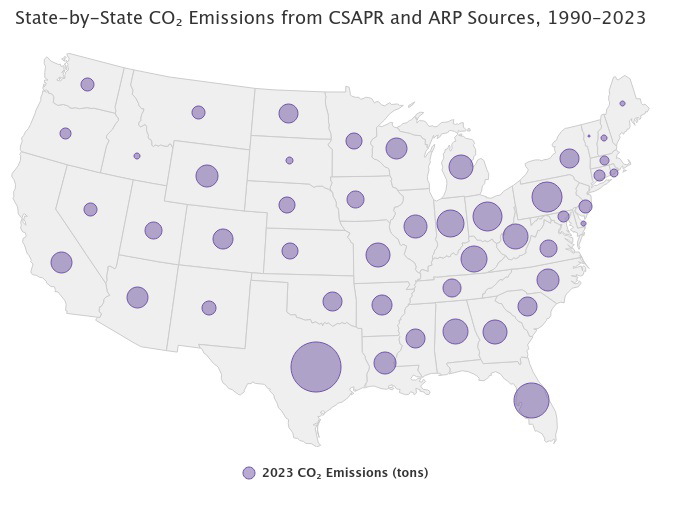
State-By-State CO2 Emissions, 2023