Health-related Effects of Global Climate Change
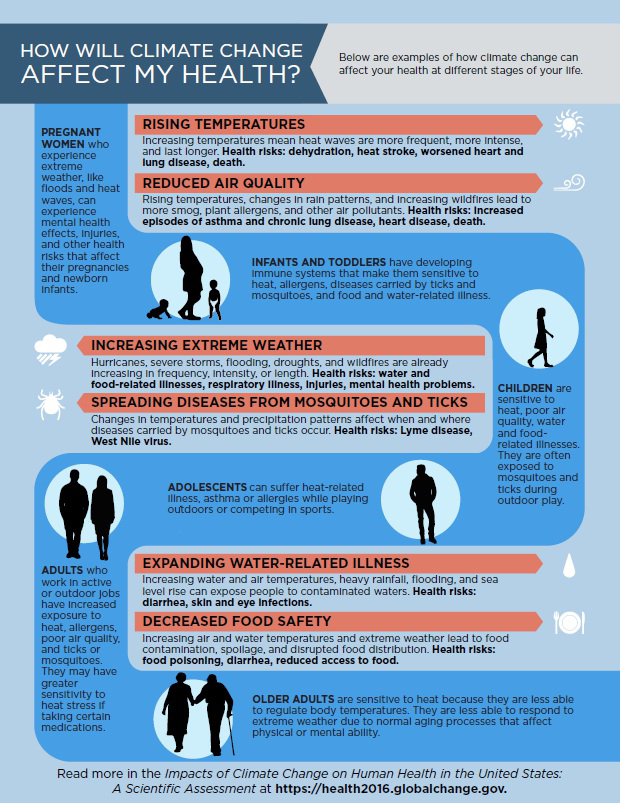
The impacts of climate change include warming temperatures, changes in precipitation, increases in the frequency or intensity of some extreme weather events, and rising sea levels. These impacts threaten our health by affecting the food we eat, the water we drink, the air we breathe, and the weather we experience.
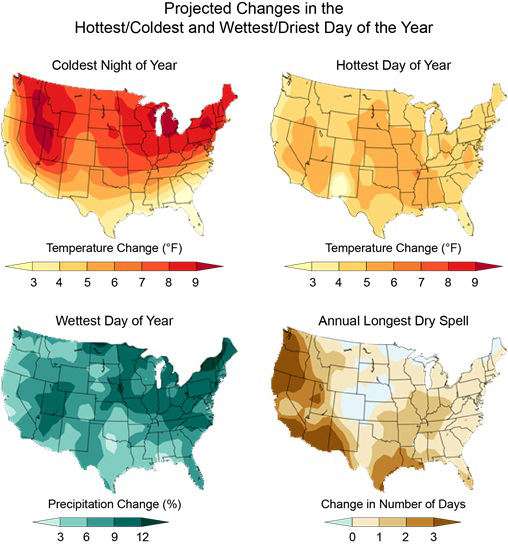
Figure 1. Projected changes in several climate variables for 2046–2065 with respect to the 1981–2000 average for the RCP6.0 scenario. These include the coldest night of the year (top left) and the hottest day of the year (top right). By the middle of this century, the coldest night of the year is projected to warm by $6^\circ\text{F}$ to $10^\circ\text{F}$ over most of the country, with slightly smaller changes in the south. The warmest day of the year is projected to be $4^\circ\text{F}$ to $6^\circ\text{F}$ warmer in most areas. Also shown are projections of the wettest day of the year (bottom left) and the annual longest consecutive dry day spell (bottom right). Extreme precipitation is projected to increase, with an average change of 5% to 15% in the precipitation falling on the wettest day of the year. The length of the annual longest dry spell is projected to increase in most areas, but these changes are small: less than two days in most areas.
Exposure to extreme heat can lead to heat stroke and dehydration, as well as cardiovascular, respiratory, and cerebrovascular disease. Excessive heat is more likely to affect populations in northern latitudes where people are less prepared to cope with excessive temperatures. Certain types of populations are more vulnerable than others: for example, outdoor workers, student athletes, and homeless people tend to be more exposed to extreme heat because they spend more time outdoors. Low-income households and older adults may lack access to air conditioning which also increases exposure to extreme heat. Additionally, young children, pregnant women, older adults, and people with certain medical conditions are less able to regulate their body temperature and can therefore be more vulnerable to extreme heat.
Urban areas are typically warmer than their rural surroundings. Large metropolitan areas such as St. Louis, Philadelphia, Chicago, and Cincinnati have seen notable increases in death rates during heat waves. Climate change is projected to increase the vulnerability of urban populations to heat-related health impacts in the future. Heat waves are also often accompanied by periods of stagnant air, leading to increases in air pollution and associated health effects.
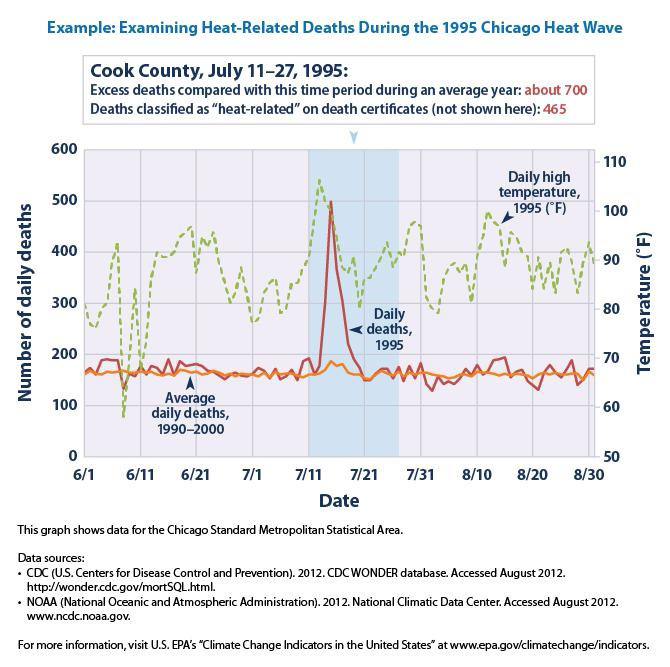
Figure 2.
Heat-Related Deaths During the 1995 Chicago Heat Wave
Air Quality Impacts
Changes in the climate affect the air we breathe both indoors and outdoors. Warmer temperatures and shifting weather patterns can worsen air quality, which can lead to asthma attacks and other respiratory and cardiovascular health effects. Wildfires, which are expected to continue to increase in number and severity as the climate changes, create smoke and other unhealthy air pollutants. Rising carbon dioxide levels and warmer temperatures also affect airborne allergens, such as ragweed pollen. Despite significant improvements in U.S. air quality since the 1970s, as of 2014 about 57 million Americans lived in counties that did not meet national air quality standards. Climate change may make it even harder for states to meet these standards in the future, exposing more people to unhealthy air.
Increases in Ozone
Scientists project that warmer temperatures from climate change will increase the frequency of days with unhealthy levels of ground-level ozone, a harmful air pollutant, and a component in smog. People exposed to higher levels of ground-level ozone are at greater risk of dying prematurely or being admitted to the hospital for respiratory problems. Ground-level ozone can damage lung tissue, reduce lung function, and inflame airways. This can aggravate asthma or other lung diseases. Children, older adults, outdoor workers, and those with asthma and other chronic lung diseases are particularly at risk. Because warm, stagnant air tends to increase the formation of ozone, climate change is likely to increase levels of ground-level ozone in already-polluted areas of the United States and increase the number of days with poor air quality. The higher concentrations of ozone due to climate change may result in tens to thousands of additional ozone-related illnesses and premature deaths per year by 2030 in the United States, assuming no change in projected air quality policies.
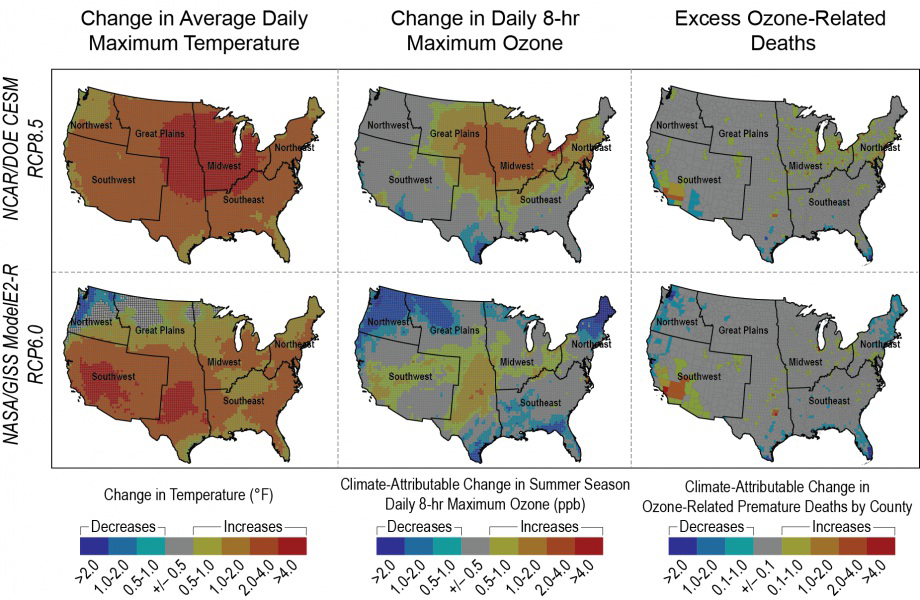
Figure 3. The air quality response to climate change can vary substantially by region across scenarios. Two downscaled global climate model projections using two greenhouse gas concentration pathways estimate increases in average daily maximum temperatures of 1.8°F to 7.2°F (1°C to 4°C) and increases of 1 to 5 parts per billion (ppb) in daily 8-hour maximum ozone in the year 2030 relative to the year 2000 throughout the continental United States. Unless reductions in ozone precursor emissions offset the influence of climate change, this “climate penalty” of increased ozone concentrations due to climate change would result in tens to thousands of additional ozone-related premature deaths per year, shown here as incidences per year by county.
Changes in Allergens and Asthma Triggers
Allergic illnesses, including hay fever, affect about one-third of the U.S. population, and more than 34 million Americans have been diagnosed with asthma. Climate change may affect allergies and respiratory health. The spring pollen season is already occurring earlier in the United States for certain types of plants, and the length of the season has increased for some plants with highly allergenic pollen such as ragweed. In addition to lengthening the ragweed pollen season, rising carbon dioxide concentrations and temperatures may also lead to earlier flowering, more flowers, and increased pollen levels in ragweed.
Figure 4.
Length of Growing Season in the Contiguous 48 States, 1895–2015
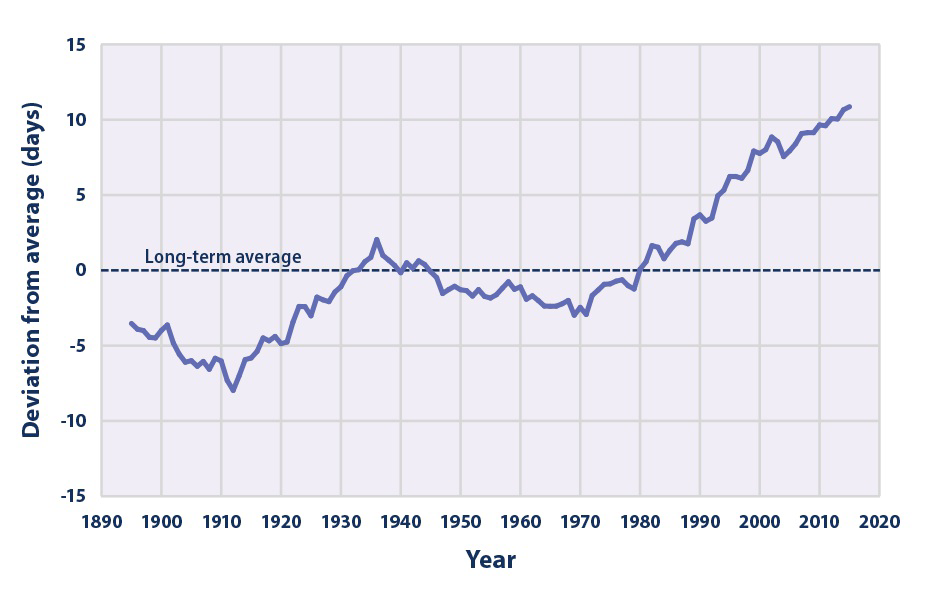
This figure shows the length of the growing season in the contiguous 48 states compared with a long-term average. For each year, the line represents the number of days shorter or longer than average. The line was smoothed using an 11-year moving average. Choosing a different long-term average for comparison would not change the shape of the data over time.
Extreme Events
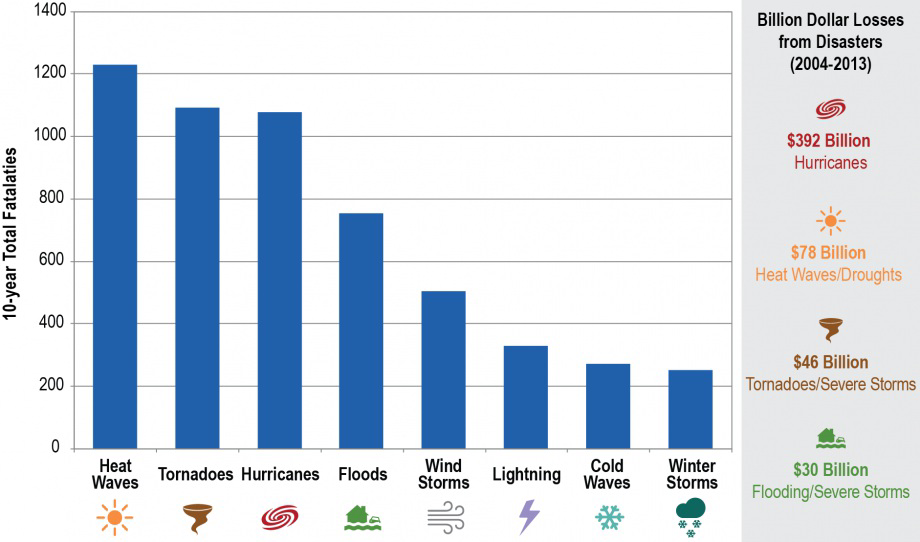
Climate change projections show that there will be continuing increases in the occurrence and severity of some extreme events by the end of the century, while for other extremes the links to climate change are more uncertain. Some regions of the United States have already experienced costly impacts—in terms of both lives lost and economic damages (Figure 5)—from observed changes in the frequency, intensity, or duration of certain extreme events. While it is intuitive that extremes can have health impacts such as death or injury during an event (for example, drowning during floods), health impacts can also occur before or after an extreme event, as individuals may be involved in activities that put their health at risk, such as disaster preparation and post-event cleanup. Health risks may also arise long after the event, or in places outside the area where the event took place, as a result of damage to property, destruction of assets, loss of infrastructure and public services, social and economic impacts, environmental degradation, and other factors. Extreme events also pose unique health risks if multiple events occur simultaneously or in succession in a given location. The severity and extent of health effects associated with extreme events depend on the physical impacts of the extreme events themselves as well as the unique human, societal, and environmental circumstances at the time and place where events occur.
Figure 5:
Estimated Deaths and Billion Dollar Losses from Extreme Events in the United States, 2004–2013
Vector-Borne Diseases
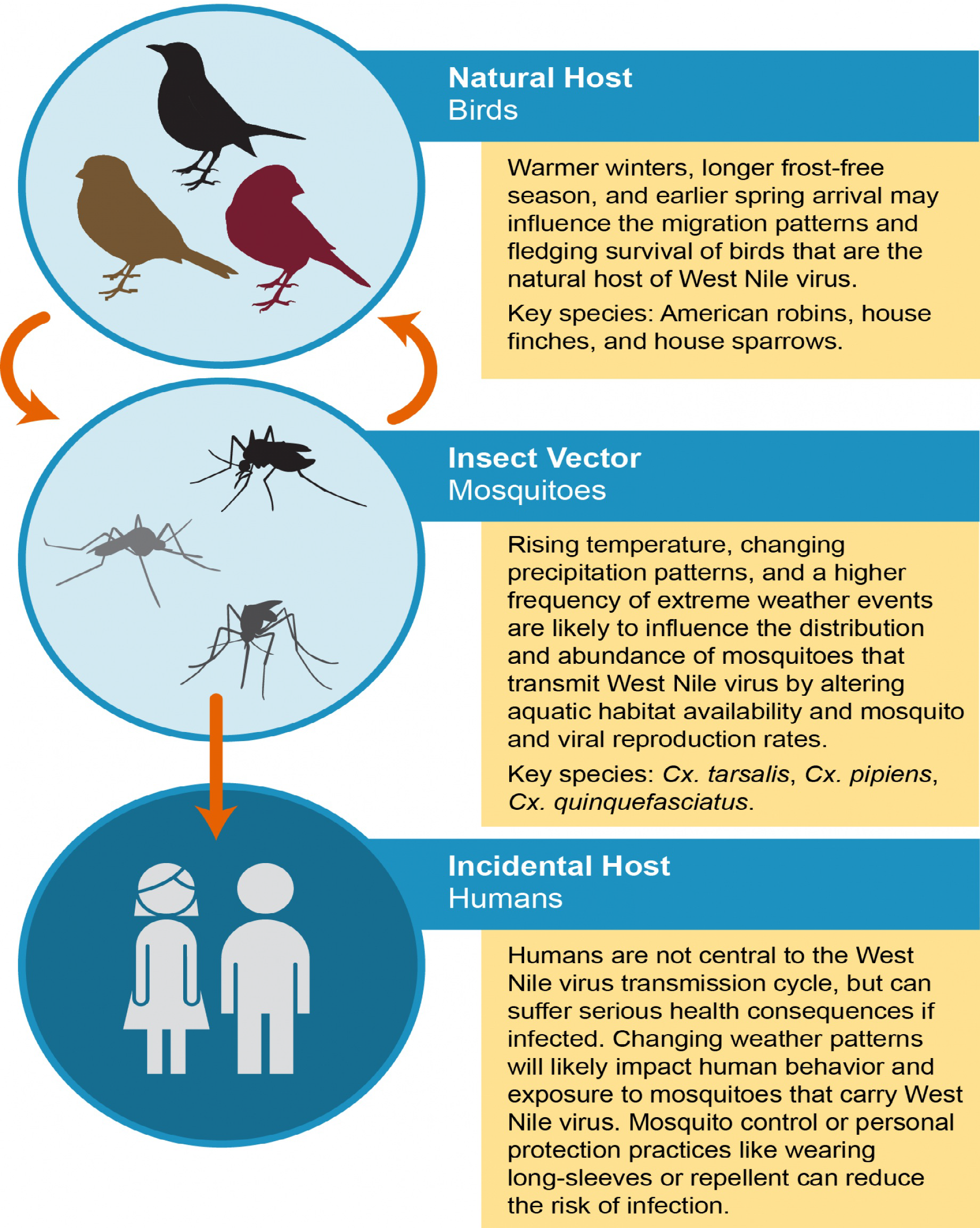
Vector-borne diseases are illnesses that are transmitted by vectors, which include mosquitoes, ticks, and fleas. These vectors can carry infective pathogens such as viruses, bacteria, and protozoa, which can be transferred from one host (carrier) to another. The seasonality, distribution, and prevalence of vector-borne diseases are influenced significantly by climate factors, primarily high and low temperature extremes and precipitation patterns. Climate change is likely to have both short- and long-term effects on vector-borne disease transmission and infection patterns, affecting both seasonal risk and broad geographic changes in disease occurrence over decades (see Figure 6). While climate variability and climate change both alter the transmission of vector-borne diseases, they will likely interact with many other factors, including how pathogens adapt and change, the availability of hosts, changing ecosystems and land use, demographics, human behavior, and adaptive capacity. These complex interactions make it difficult to predict the effects of climate change on vector-borne diseases.
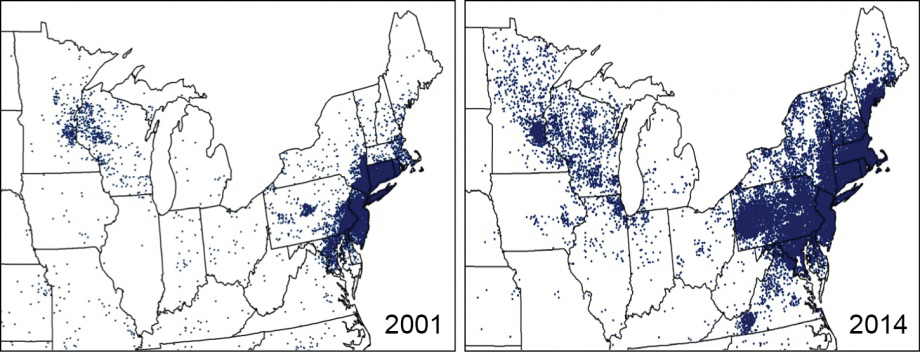
Figure 6: Changes in Lyme Disease Case Report Distribution
Maps show the reported cases of Lyme disease in 2001 and 2014 for the areas of the country where Lyme disease is most common (the Northeast and Upper Midwest).
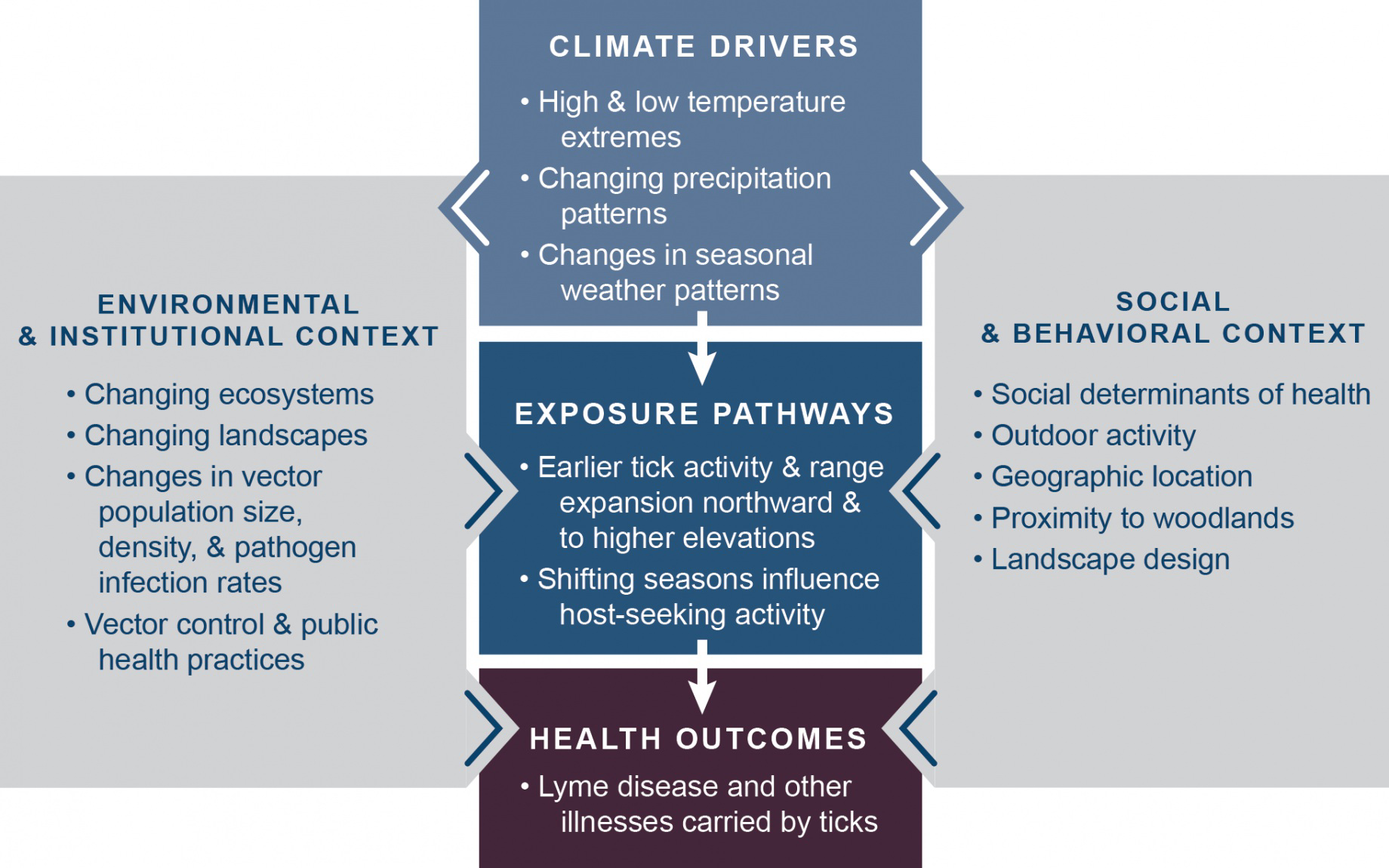
Figure 7:
Incidence of West Nile Neuroinvasive Disease by County in the United States
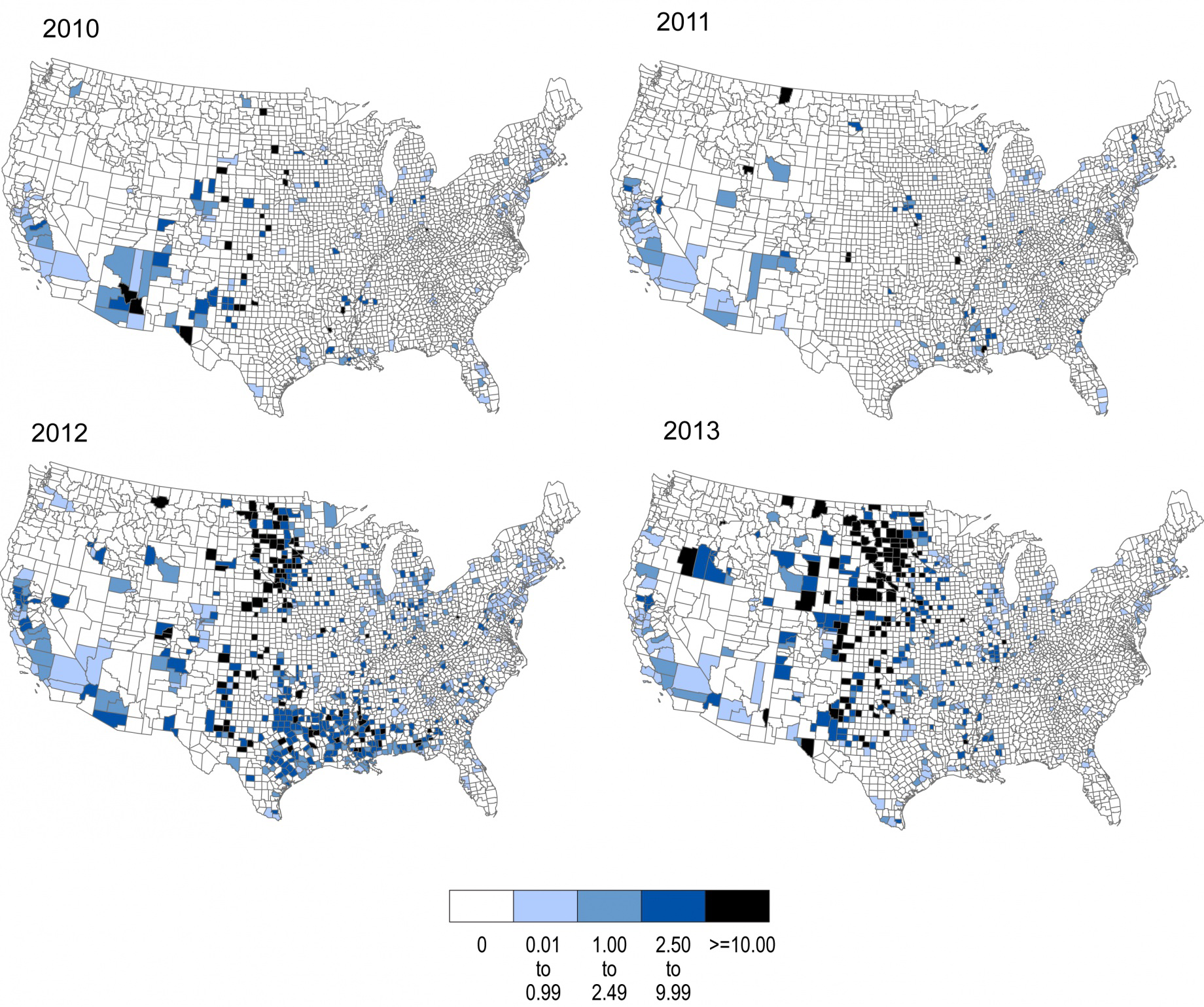
Maps show the incidence of West Nile neuroinvasive disease in the United States for 2010 through 2013. Shown as cases per 100,000 people.