Human Society Adapting
Constructing an explanation based on evidence shows how the availability of natural resources, the occurrence of natural hazards, and changes in climate have significantly influenced human activity. The distribution of resources like water, minerals, and fossil fuels affects where and how societies develop. Natural hazards, such as earthquakes and hurricanes, shape infrastructure and emergency planning. Climate changes impact agriculture, settlement patterns, and economic activities. Understanding these factors helps explain how human societies adapt to and manage their environments. The main concepts include:
Natural resources are materials or substances that occur naturally in the environment and are used by humans to fulfill their needs. The availability and access to natural resources have played a significant role in human development, economic growth, and societal well-being. Examples of natural resources include minerals, fossil fuels, timber, fresh water, fertile soils, and wildlife. Understanding the location, abundance, and quality of natural resources is essential for planning and managing their use sustainably.
Natural hazards are naturally occurring phenomena or processes that pose a threat to human life or property. They can be caused by geological or atmospheric events such as earthquakes, volcanic eruptions, landslides, floods, hurricanes, tornadoes, and droughts. The impact of natural hazards on human societies can be devastating, leading to loss of life, displacement of populations, destruction of infrastructure, and economic losses. Understanding the mechanisms and impacts of natural hazards is crucial for developing effective strategies for hazard mitigation, preparedness, and response.
Changes in climate refer to long-term alterations in temperature, precipitation, and other weather patterns that occur over decades or centuries. Climate change can have significant impacts on human societies, including alterations in the distribution and productivity of ecosystems, changes in water availability, and increased frequency and intensity of extreme weather events. Understanding the causes and consequences of climate change is essential for developing effective policies and strategies to mitigate its impacts and adapt to its effects. This includes reducing greenhouse gas emissions, increasing resilience to climate impacts, and promoting sustainable land use and resource management practices.
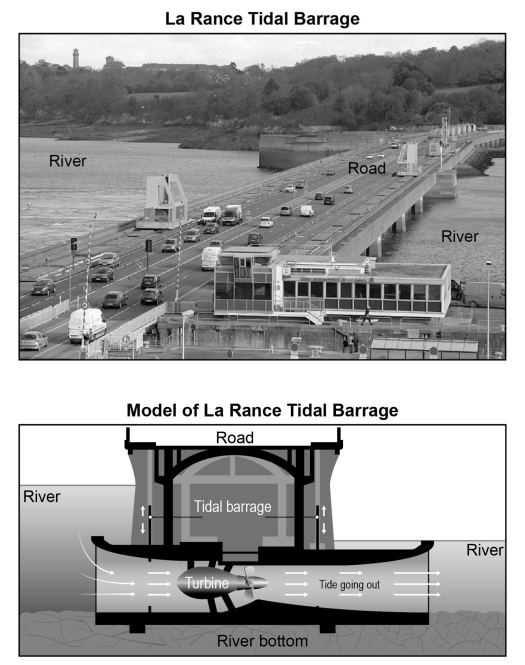
The La Rance Tidal Barrage in western France is a dam-like structure built to take advantage of the periodic
cycling of tidal waters. The model below shows the position of a turbine and the movement of tidal water.