Twa kɔ nsɛm atitiriw so
Log in
Sign up for FREE
arrow_back
Laabri

Week 4.2: Nature's Wonders

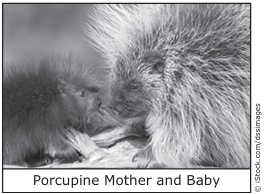
star
star
star
star
star
Last updated about 2 hours ago
43 Nsɛmmisa
Excerpt from Nature’s Fireworks: A Book About Lightning
Excerpt from Crabbing for Supper
A Gift from Nature
Life on Venus
A Nighttime Show
Prickly Porcupines

Click submit when finished with all questions and check your answers. You may not be able to make corrections at this time.

Excerpt from Nature’s Fireworks: A Book About Lightning

by Josepha Sherman

1 Flash! Lightning streaks from a dark cloud.

2 Crash! Thunder shakes our roofs and windows. A lightning storm dazzles the sky like flickering fireworks. 

Lightning Begins 

3 High above the ground, water droplets and ice crystals swirl and swarm inside the moving clouds. The tiny particles bump into one another. When the particles rush together, they become charged. Electricity is created. 

Lightning is Electricity

4 A single stroke of lightning carries millions of volts of electricity. Each stroke heats the air in its path to as much as 50,000 degrees Fahrenheit (27,760 degrees Celsius). That is five times as hot as the surface of the sun. 
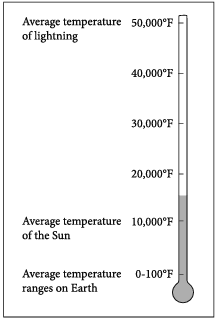
Thunder and Lightning

5 The heat from lightning makes the air expand quickly. Expanding air makes a booming, bursting sound like a firecracker. This is the sound of thunder. Thunder and lightning happen at the same time. Light travels faster than sound. This is why we often see the flash before we hear the boom.

How Far Lightning Travels

6 Lightning can flash faster than you can blink. During a single flash, lightning can streak down to the ground and back up to the clouds. A lightning stroke that flashes down to earth can stretch up to nine miles (14 kilometers). That's taller than the world's highest mountain. Lightning flashes from cloud to cloud an travel even longer distances.

7 Ribbon lightning darts from the sky. It looks like jagged streaks side by side. Forked lightning looks like an upside-down tree. The branches of electricity reach through the clouds. Sheet lightning streaks inside a cloud. The cloud lights up like a bright, white sheet. Heat lightning happens during the hot summer. It looks like faraway flashes in the sky. Heat lightning is too far away for its thunder to be heard.
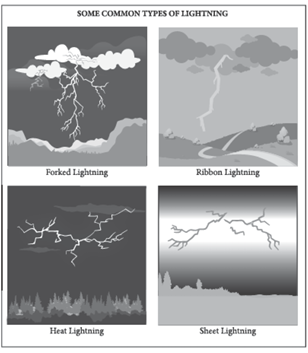
Lightning A round the World 

8 Every day, lightning flashes from thousands of thunderstorms around the world. Every second, more than 100 lightning bolts hit the ground. Lightning can strike a tree or dry grass. When this happens, a wildfire can start. Lightning bolts can hit tall buildings. They also can hit electrical towers, houses, and cars. 

9 Flash! Lightning is streaking through the clouds. Every flash is another display of nature’s fireworks. 

Fast Facts

10 It does not have to be raining outside for lightning to strike. Lightning can strike both before and after the rain falls, or even when there is no rain at all. Lightning helps nature by putting nitrogen into the ground and air. Nitrogen is a nutrient. That means it feeds plants and helps them grow. 

Safety Tips

11 Windows, water faucets, pipes, telephones, and electrical outlets can be dangerous when there is lightning in the sky. You should not run water or talk on the phone if you see lightning. You could get an electrical shock. 

12 Benjamin Franklin once flew a kite in a lightning storm. at is how he learned about electricity. But today, we know lightning is very dangerous. If you see lightning, you should go indoors right away. 
1
1
1
1
1
1
1
1
1
1
1
1
1
1
1
1
1
1
1
1
1
1
1
1

Read the selection and choose the best answer to each question.

Cruz is writing a paper about a recent discovery. Read the first paragraph of Cruz's paper and look for corrections he needs to make. Then answer the questions that follow.

Life on Venus

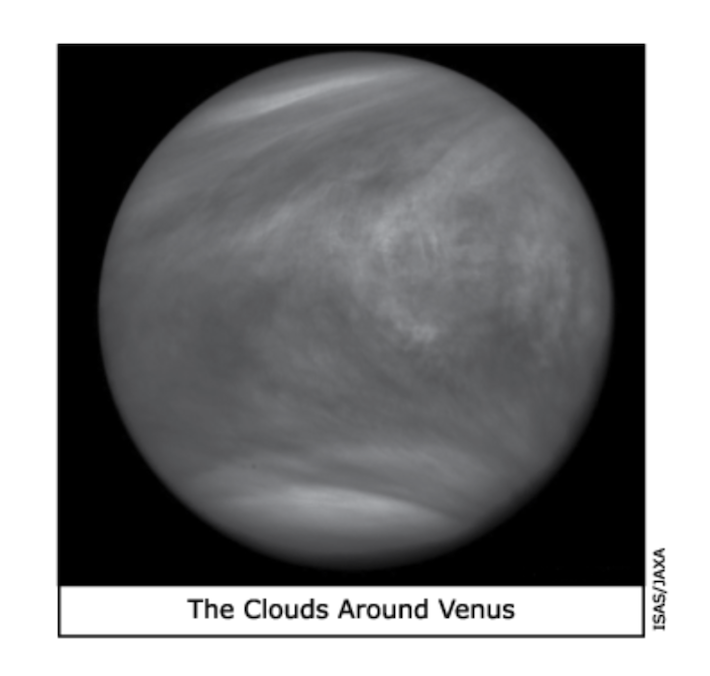
(1) Venus is Earth's closest neighbor. (2) The planets similar in size but many differences. (3) Venus is the most hottest planet in the solar system. (4) Big, poisonous clouds cover the planet. (5) Scientists didnt used to think that any life could survive there. (6) But in September 2020, they learned something new. (7) Venus releases a gas, and it smell like garlic or rotten fish. (8) This discovery suggests the possibility of a form of life on this planet.

1
3.11.D.i
1
3.11.D.iv
1
3.11.D.x
1
3.11.D.i
1
1
1

Read the selection and choose the best answer to each question.

Jafari is writing a paper to tell about an experience he recently had with his family. Read these paragraphs from the beginning of Jafari's paper and look for the corrections he needs to make. Then answer the questions that follow.

A Nighttime Show

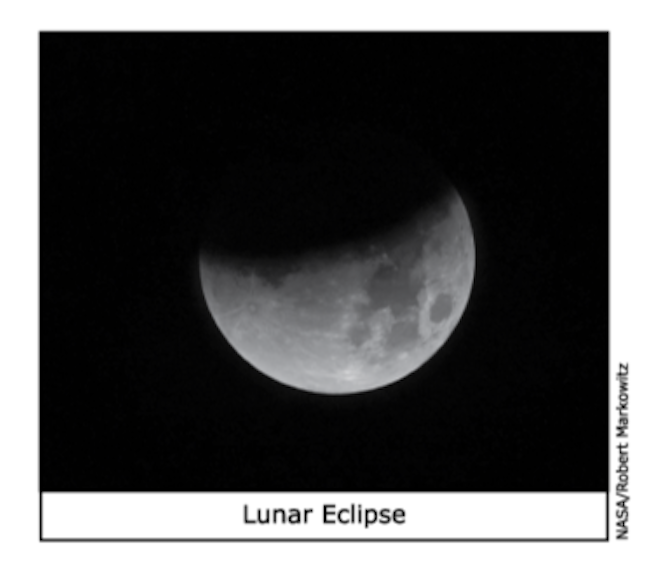
(1) The sun sank slowly below the horizon. (2) Tiny stars began to twinkle in the darkening sky. (3) It was bedtime for most people but I wasn't going to bed yet. (4) Tonight I was going to stay up late and watch a lunar eclipse.

(5) A crisp Fall breeze filled the air, and I snuggled comfortably into my lawn chair. (6) The glowing moon rose in the sky, so I could see pretty patterns on its surface. (7) Very slowly things began to change. (8) First a fuzzy shadow appeared on the side in the moon. (9) Little by little, the shadow grew. (10) Before long it started to look like someone had takken a bite out of the moon.

1
3.11.D.x
1
3.11.D.ix
1
Asemmisa {{asɛmmisaAhyɛnsode}}
34.

Sentence 8 contains an error. Select the response that corrects the error in this sentence.

First a fuzzy shadow appeared on the side

Asemmisa {{asɛmmisaAhyɛnsode}}
2.

What is the main idea of paragraph 6?

Asemmisa {{asɛmmisaAhyɛnsode}}
3.

Which idea from the passage does the second illustration best support?

Asemmisa {{asɛmmisaAhyɛnsode}}
4.

What does the word “nutrient” mean as it is used in paragraph 10?

Asemmisa {{asɛmmisaAhyɛnsode}}
5.

Which question does the section “Fast Facts” help to answer?

Asemmisa {{asɛmmisaAhyɛnsode}}
6.

Which sentence shows a cause and effect relationship that is stated in the passage?

Asemmisa {{asɛmmisaAhyɛnsode}}
7.

Why do we usually see lightning before hearing thunder?

Excerpt from Crabbing for Supper

by Laurel Sheridan

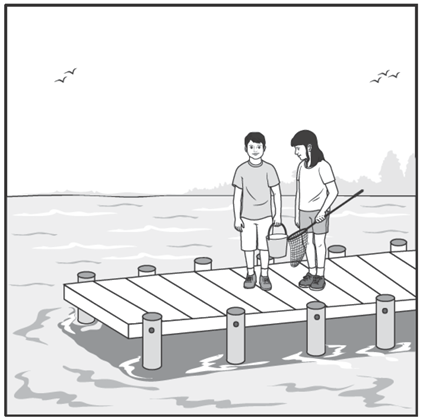
1 Dad handed me the bucket and the net with a long, wooden handle. He gave Paulie two dead fish wrapped in newspaper. They were tied up with string like a present. I held my nose, but Paulie held those fish like they were his best baseball cards.

2 The briny air from Chesapeake Bay filled our noses. This was the best place in the world to catch blue crabs. They like grassy, shadowy water, so Paulie and I headed for our old wooden dock. It was hot for June, and I sat down and swung my legs over the edge, into the cool water. Paulie struggled to tie the string to one of the slippery fish. Then he slid the extra fish into the bucket and set it in the dark water under the dock for later.

3 “Here.” Paulie handed me the baited string. “Dangle this down in the water to call the crabs.”

4 Crabs love stinky old fish, so our first crab didn’t take long to come. Its big claw clamped the bait, and I raised the string real slow so Paulie could net it. But my legs swishing in the water startled that crab, and it let go and floated back to the bottom like a leaf off a tree. Paulie brought up the net and stood there with the handle on the dock. . . .

5 I went back to dangling the fish.

6 “Well, get ready,” he urged. “Here comes another one.”

7 The sun was hot on our backs. My clothes were already sticking to me, and sweat trickled down our faces. A fly buzzed around my head. I remembered what Paulie had said and sat perfectly still as the new crab clamped onto the fish. But as Paulie scootched forward on his belly to lower the net, he knocked a pebble off the dock and scared that crab away, too. . . .

8 “Crabs are scaredy-cats,” I said, pulling up the line to check the bait. “This smells disgusting. How can they eat this?”

9 “I don’t know. How can Mom and Dad eat broccoli casserole? I really hate that stuff,” Paulie moaned.

10 “Me, too,” I said. “Blech!”

11 We thought about the big pot waiting and Dad dropping the crabs into the spicy, boiling water. They would turn a beautiful bright red after a few moments, and we’d have a crab feast, cracking the shells and pulling out the sweet white meat. We had to keep trying. I smacked a mosquito off Paulie’s arm and dangled the bait some more. We squinted past the sun’s reflection on the water.

12 “Sit still now. Here comes another one,” said Paulie.

13 He inched the net into the water.

14 “Got him!”

15 Paulie hauled up the net with the crab inside, but that crab was all claws and those mad pincers were waving all over the place!

16 “Look out!” I screamed, but the crab’s big claw already had hold of Paulie’s finger.

17 “Ow! OW! Get him off! Get him off!”

18 Paulie hopped around, shaking his hand up and down, swinging that crab all over the place.

19 I yelled, “Let go!” but the crab didn’t seem to understand English. Finally, Paulie swung his arm in a giant arc, and the crab landed back in the water. Paulie’s finger was all red and puffy. I could tell he was trying not to cry.

20 “What should we do now?” I asked.

21 We both thought about broccoli casserole.

22 “Keep trying,” said Paulie, dunking his sore finger into the cold water.

23 But the harder we tried, the darker it got. When the sun began to set, we couldn’t see into the water anymore. We heard Mom yell from the house, “Bring all you’ve got and come on in now.”

24 Paulie let go of the string and wiped his hands clean on his shorts as the stinky bait sank to the bottom.

25 “Guess what’s for supper,” I sighed.

26 “Broccoli, here we come,” Paulie groaned.

27 “Remember to get the bucket with the spare bait,” I reminded him, slumping along with the net dragging behind me.

28 Suddenly, Paulie grabbed my arm. “Listen,” he whispered.

29 Noises came from the bucket Paulie was carrying. We leaned in close, but it was too dark to see.

30 “What’s all that scratching?” I asked. We ran through the sand to the light of the screened-in porch.

31 “Well, would you look at that?” exclaimed Paulie with a high-five. There, in the bucket, was a mountain of beautiful blue crabs fighting over our extra fish.

32 “Let’s go!” I yelled.

33 We raced to give Dad the crabs.

34 “Whoa!” he said. “You caught a lot!”

35 “Great!” Mom said. “Well, I don’t think that the leftover casserole will keep for another day . . .” She started scraping the broccoli into the garbage disposal.

36 I looked at Paulie. “Yes!” we mouthed silently to each other with huge grins.

Asemmisa {{asɛmmisaAhyɛnsode}}
8.

What does the word “clamped” mean as it is used in paragraph 4?

Asemmisa {{asɛmmisaAhyɛnsode}}
9.

Which detail from the story best shows the narrator's point of view about catching crabs for supper?

Asemmisa {{asɛmmisaAhyɛnsode}}
10.

Which detail from the story best shows why Paulie and the narrator keep trying to catch a crab?

Asemmisa {{asɛmmisaAhyɛnsode}}
11.

What happens right before Paulie and the narrator reach the porch in paragraph 30?

Asemmisa {{asɛmmisaAhyɛnsode}}
12.

How does paragraph 31 connect to the problem in paragraph 26?

Asemmisa {{asɛmmisaAhyɛnsode}}
13.

What best states the lesson of paragraphs 27 through 31?

Asemmisa {{asɛmmisaAhyɛnsode}}
14.

What did the narrator say was disgusting?

A Gift from Nature

1 Layla knew the grin on her face stretched from ear to ear. She just couldn’t help it. Was there anything better than spending a school day exploring a national park? Layla didn’t think so. She loved being outside because there was always something new to discover. This was only the second field trip she had ever been on, but Layla was certain this would be the best one of her school career.

2 The group’s hike had just begun, yet Layla had already seen and learned about many interesting things. She listened carefully as the tour guide pointed to a plant covered with tiny yellow flowers. The guide explained that butterflies loved this native Texas plant called lantana. Then she gathered the group to move ahead.

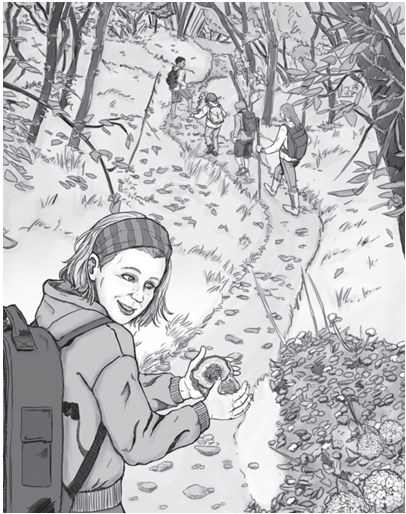
3 As Layla got close to the lantana, she couldn’t believe her luck. A beautiful orange butterfly with black and white spots had landed on one of the tiny yellow flowers. Layla quickly grabbed her camera and snapped a picture. As she tucked her camera back in her backpack, something on the trail caught her eye. Layla picked up the object. It looked like a rock that had been broken in half. When she turned it over in her hand, Layla gasped in surprise. She could see that the rock was not solid all the way through. Along the inside wall of the hollow rock were tiny, beautiful crystals.

4 Layla gazed at the little twinkling gift tucked inside the rock. She was so absorbed in her discovery that she did not hear her classmate Cooper walking behind her. Cooper leaned over Layla’s shoulder and said, “You found a geode? Cool!”

5 Layla jumped. “A what?” she asked.

6 “A geode. It’s a kind of rock with crystals inside. That’s a nice one. Quick! Hide it before the tour guide sees it.”

7 Layla quickly shoved it into the pocket of her jacket. Then she turned, looking over her shoulder to see where the tour guide was. She breathed a sigh of relief when she saw the guide far down the trail with the rest of the group.
8 “I’m not sure I should keep it,” Layla said. “The tour guide might like to see it and tell us what she knows about it. Besides, don’t you remember what she told us?”

9 Cooper rolled his eyes. “Yeah, yeah. ‘Take only pictures. Leave only footprints.’ But there are probably a million of those rocks lying around in this area. Do you really think they are going to miss this one rock? You know what I think? It will make an awesome souvenir.” With that, Cooper jogged down the trail to catch up with the rest of the class.

10 Layla bit her lip uncertainly as her fingers touched the rock inside her pocket. “It would give me something to help me remember the trip,” she thought. But Layla could not ignore the heavy feeling that had settled in her heart.

11 Take only pictures. Leave only footprints. The tour guide’s words played over and over in Layla’s mind.

12 As she stood on the edge of the trail, Layla suddenly noticed the cool breeze, and it comforted her. The sweet scent of the honeysuckle blossoms brought a smile to her face. The songs of nearby birds seemed to speak to her and tell her what she should do.

13 Carefully, Layla removed the geode from her pocket. As she held it, she felt the heaviness lift from inside her. She smiled when the sunlight bounced off the crystals, sending the rays in a thousand directions at once. “You sure are pretty,” she murmured.

14 She was still smiling as she looked ahead at her classmates, who were down the trail with the tour guide. As she started to jog toward them, Layla cradled the geode gently in her hands.

15 “I know just who to show you to,” Layla said with confidence as she ran to join the group and talk to the guide.

Asemmisa {{asɛmmisaAhyɛnsode}}
15.

Which words from paragraph 14 best help the reader understand what cradled means?

Asemmisa {{asɛmmisaAhyɛnsode}}
16.

The details in paragraph 1 are important to the plot of the story because they help the reader understand that Layla —

Asemmisa {{asɛmmisaAhyɛnsode}}
17.

What is the main message of the story?

Asemmisa {{asɛmmisaAhyɛnsode}}
18.

Which of these events leads to Layla finding the geode?

Asemmisa {{asɛmmisaAhyɛnsode}}
19.

Read this sentence from paragraph 10.

But Layla could not ignore the heavy feeling that had settled in her heart.

The imagery in this sentence suggests that Layla feels —

Asemmisa {{asɛmmisaAhyɛnsode}}
20.

Read paragraph 11.

Take only pictures. Leave only footprints. The tour guide’s words played over and over in Layla’s mind.

What do these sentences show about Layla?

Asemmisa {{asɛmmisaAhyɛnsode}}
21.

What is the most likely reason Layla decides against taking the geode home?

Asemmisa {{asɛmmisaAhyɛnsode}}
22.

What can the reader tell about how Layla feels toward the tour guide?

Asemmisa {{asɛmmisaAhyɛnsode}}
23.

The imagery in the first sentence of the story helps the reader understand that Layla is —

Asemmisa {{asɛmmisaAhyɛnsode}}
24.

Read this sentence from paragraph 13.

She smiled when the sunlight bounced off the crystals, sending the rays in a thousand directions at once.

The author uses this description to suggest that —

Asemmisa {{asɛmmisaAhyɛnsode}}
25.

What is the correct way to write sentence 2?

Asemmisa {{asɛmmisaAhyɛnsode}}
26.

What change needs to be made in sentence 3?

Asemmisa {{asɛmmisaAhyɛnsode}}
27.

What change needs to be made in sentence 5?

Asemmisa {{asɛmmisaAhyɛnsode}}
28.

What change needs to be made in sentence 7?

Asemmisa {{asɛmmisaAhyɛnsode}}
29.

What is similar about Venus and Earth?

Asemmisa {{asɛmmisaAhyɛnsode}}
30.

What did scientists think about life on Venus?

Asemmisa {{asɛmmisaAhyɛnsode}}
31.

What is a key feature of Venus mentioned?

Asemmisa {{asɛmmisaAhyɛnsode}}
32.

What change needs to be made in sentence 3?

Asemmisa {{asɛmmisaAhyɛnsode}}
33.

What change is needed in sentence 5?

Asemmisa {{asɛmmisaAhyɛnsode}}
35.

What change is needed in sentence 10?

Asemmisa {{asɛmmisaAhyɛnsode}}
36.

How did Jafari describe the moon's appearance?

Asemmisa {{asɛmmisaAhyɛnsode}}
37.

What happened first during the eclipse?

Prickly Porcupines

by Kathy Kranking

1 What’s the first thing you think of when you hear the word “porcupine”? Maybe it’s those famous pointy quills. A porcupine has 30,000 or more of them!

2 You might have seen cartoons showing porcupines that could “shoot” their quills. Real porcupines can’t do that. But if a predator attacks a porcupine, the animal whirls around with its sharp quills raised. It swishes its tail from side to side. And if the attacker gets whacked, the quills will easily get stuck in its skin.

On the Menu

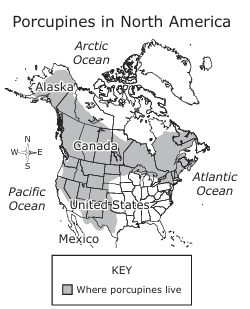
3 The name porcupine means “quill pig.” The quill part is right, but porcupines aren’t pigs at all. Like mice, squirrels, and beavers, they’re rodents. North American porcupines live in much of the United States and Canada.
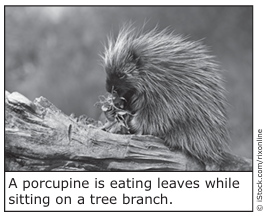
4 Porcupines are out and about both day and night, though more at night. They don’t hibernate, so during different times of the year different things are on a porcupine’s menu. In the spring, for example, they nibble on buds, flowers, leaves, and more. During winter, there’s less to eat, so porcupines live mostly on bark and evergreen needles then.

5 Porcupines have long, orange front teeth that never stop growing. But that’s OK, because porcupines hardly ever stop gnawing! That keeps their teeth worn down. Besides chewing their normal food, they’ll also gnaw at things such as picnic tables, rake handles, cabins, and even shoes!

Little Pricklies

6 In the spring, a mother porcupine gives birth to one baby. Some newborn animals are helpless, but not baby porcupines. They’re born with their eyes open and are able to walk right away.

7 At first, their quills are soft and wet. But in just a few hours, the quills dry out and become stiff little stabbers. They aren’t long enough to hurt a predator, though. So if a baby feels threatened, it quickly finds a place to hide.

8 A baby porcupine nurses from its mom for about four months. But it also begins eating soft plant parts when it’s just a few days old. After it stops nursing, a young porcupine will separate from its mom for longer and longer periods, until it’s ready to live on its own.

At Home up a Tree

9 Porcupines are great climbers and spend a lot of their time in trees. Long claws and rough paw pads help them get a grip. When they’re just a few weeks old, even babies can climb young, skinny trees. Climbing can be a good way to help porcupines avoid enemies.

10 Speaking of enemies, porcupines don’t have very many. Only a few kinds of animals know how to get around a porcupine’s prickly defenses. Some predators of porcupines include cougars, wolves, and bears.

Super Quills

11 Most animals, though, won’t mess with a porcupine. Its quills are amazing weapons. They’re on every part of the animal’s body except for its belly, face, and ears. But most are on the porcupine’s back and tail. Quills are actually sharp, stiff hairs. And some of them can be up to four inches long!

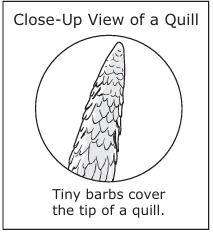
12 The tips of the quills are covered with tiny hook-like barbs. The barbs make the quills very hard to pull out. And the ends of the quills are covered with greasy stuff that makes it easier for them to keep moving in deeper. As they do, they can cause more problems inside a victim’s body.

13 An animal brave (or foolish) enough to attack a porcupine does get some warning. When a porcupine feels threatened, it clacks its teeth together. Then it lets off a strong warning smell as it raises its quills. If that doesn’t work, the porcupine whirls around, swishing its prickly tail back and forth. Some animals might give up at this point and go find an easier meal. But if an animal does attack, it will end up with a face or foot full of sharp quills. Yow!

14 Porcupines have one of the best self-defense systems in nature. These walking pincushions sure can take care of themselves!

Asemmisa {{asɛmmisaAhyɛnsode}}
38.

In paragraph 6, the suffix -less helps the reader know that the word helpless means —

Asemmisa {{asɛmmisaAhyɛnsode}}
39.

Which text feature helps the reader locate information about why many animals leave porcupines alone?

Asemmisa {{asɛmmisaAhyɛnsode}}
40.

What is the most likely reason the author wrote this selection?

Asemmisa {{asɛmmisaAhyɛnsode}}
41.

Which section is most likely to give information about what a porcupine eats?

Asemmisa {{asɛmmisaAhyɛnsode}}
42.

Which word is a synonym for nibble in paragraph 4?

Asemmisa {{asɛmmisaAhyɛnsode}}
43.

What is the most likely reason the author includes the map in the selection?